
Double Edged Sword vs Single Edged Sword: Blade Differences Explained
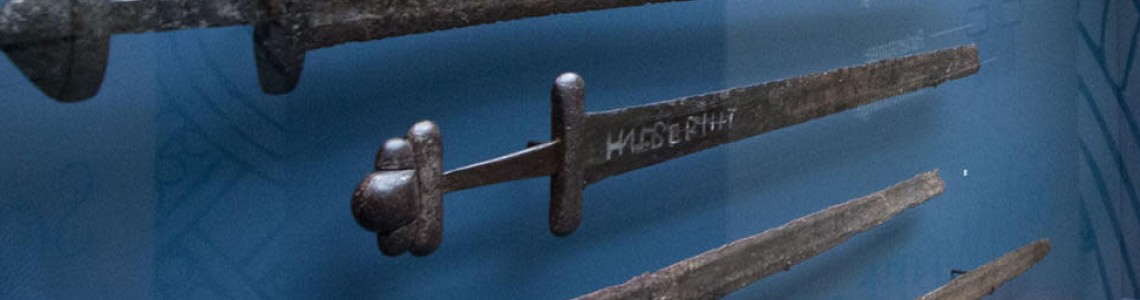
Double Edged Sword vs Single Edged Sword: Why Do Some Swords Have Two Edges?
When people imagine a sword, they often picture either a European knight's sword with two sharp edges or a Japanese katana with a curved single-edged blade.
Both designs have existed for centuries, but they were created for different fighting styles, materials, and historical environments.
So why are some swords double edged, while others are single edged?
The answer is not simply that one design is better than the other.
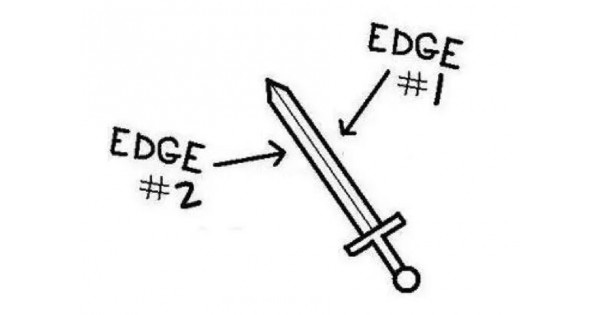
A sword's blade shape is the result of many factors, including:
Fighting techniques
Battlefield conditions
Armor types
Steel quality
Manufacturing methods
Cultural traditions
Understanding the differences between double edged swords and single edged swords helps explain why weapons from different regions developed such unique designs.
What Is a Double Edged Sword?
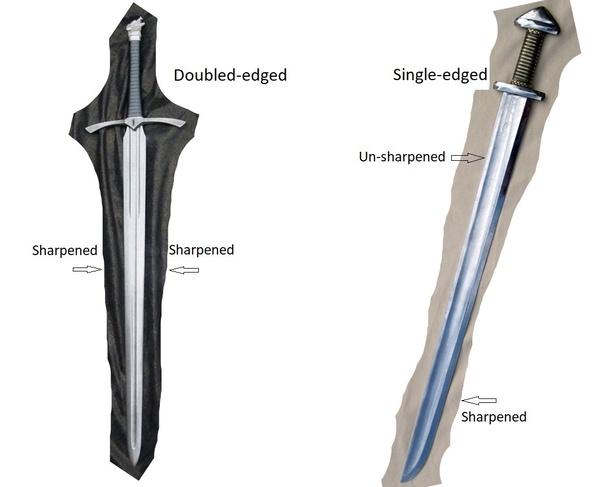
A double edged sword is a blade with two sharpened edges running along both sides of the blade.
Unlike a traditional katana, which has one cutting edge and a reinforced spine called the mune, a double edged sword can cut from either side.
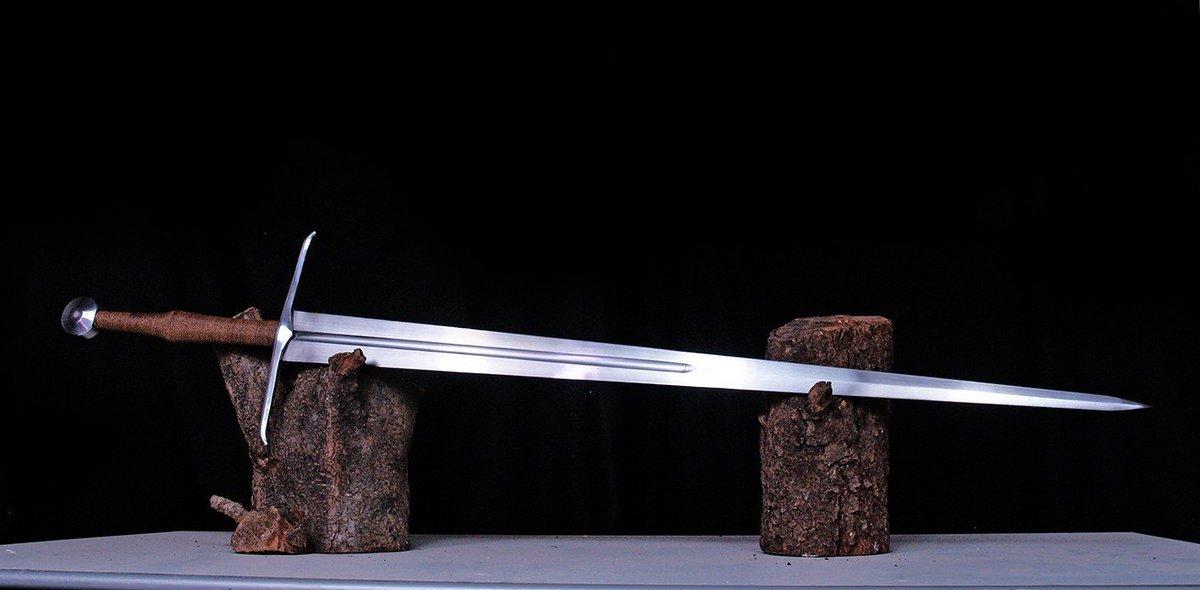
Common examples include:
European medieval swords
Ancient Greek swords
Roman gladius
Some ancient Asian swords
The design was especially useful for warriors who relied heavily on thrusting attacks and quick directional changes.
What Is a Single Edged Sword?
A single edged sword has only one sharpened cutting edge.
The opposite side of the blade is usually thicker and unsharpened, creating a stronger spine.
The Japanese katana is one of the most famous examples of a single edged sword.
Traditional Japanese swords such as:
were generally designed with a single cutting edge.
This design allowed Japanese swordsmiths to create a blade that combined:
A hard cutting edge
A flexible spine
Excellent slicing ability
Strong structural support
Why Are Some Swords Double Edged?
There are several reasons why swordsmiths developed double edged blades.
1. Better for Thrusting Attacks
One major advantage of a double edged sword is its ability to perform effective thrusting attacks.
Because both sides of the blade are sharpened, the sword can continue cutting even when the blade angle changes during combat.
Straight double edged swords were particularly effective for:
Forward thrusts
Close combat
Penetrating gaps in armor
This design was common in many European sword traditions, where thrusting attacks played an important role.
2. More Versatile Cutting Directions
A double edged sword allows the user to attack with either side of the blade.
This provides advantages such as:
Faster follow-up attacks
More attack angles
Easier transitions between strikes
A warrior does not need to rotate the sword to use the opposite edge.
However, this advantage comes with additional manufacturing challenges because both edges must be carefully shaped and maintained.
3. Designed for Armor Combat
During periods when warriors wore heavy armor, thrusting ability became increasingly important.
A pointed double edged sword could concentrate force into a small area, helping it target weak points in armor.
However, the effectiveness of a sword against armor depended on many factors, including:
Blade shape
Point design
Sword weight
User skill
Type of armor
A double edge alone did not guarantee armor penetration.
4. No Safe Edge to Grab
Another theoretical advantage of double edged swords is that both sides are sharp.
With a single edged sword, the blunt spine could sometimes be used for certain defensive techniques or controlled handling.
A double edged sword offers no unsharpened side.
However, grabbing any sword blade in combat is extremely dangerous and not a reliable defensive method.
Why Are Japanese Swords Usually Single Edged?
The Japanese katana became famous for its curved, single-edged design.
This was not an accident.
The shape developed from the needs of Japanese warriors and the techniques used with the weapon.
1. Better Cutting Performance
The curved single edge of a katana is extremely effective for slicing cuts.
The curvature helps create a natural drawing motion during a strike.
Instead of hitting like a straight chopping tool, the blade moves through the target with a slicing action.
This is one reason why the katana became closely associated with cutting techniques.
2. Stronger Blade Structure
A single edged blade has a thicker spine.
This provides several benefits:
Increased durability
Better resistance to impact
Improved control of blade flexibility
Japanese swordsmiths used this structure together with differential heat treatment to create a blade with:
Hard edge steel
Softer supporting spine
The result was a balance between sharpness and toughness.
3. Easier Maintenance
Maintaining one sharpened edge is generally simpler than maintaining two.
A single edged sword requires attention mainly on:
The cutting edge
The blade surface
The polished areas
A double edged sword requires both edges to maintain proper geometry and sharpness.
Double Edged Sword vs Single Edged Sword: Key Differences
| Feature | Double Edged Sword | Single Edged Sword |
|---|---|---|
| Cutting edges | Two | One |
| Common examples | European swords, gladius | Katana, wakizashi |
| Best advantage | Thrusting and attack flexibility | Cutting efficiency and durability |
| Blade shape | Usually straight | Often curved |
| Maintenance | More complex | Easier |
| Spine strength | Less reinforced | Stronger back section |
| Historical use | Armor combat and thrusting | Cutting-focused swordsmanship |
Are Double Edged Swords Better Than Single Edged Swords?
No.
The better design depends on the purpose of the sword.
A double edged sword is excellent for:
Thrusting attacks
Two-direction cutting
Straight blade techniques
A single edged sword is excellent for:
Powerful slicing cuts
Strong blade structure
Controlled edge alignment
Neither design is universally superior.
Each developed as a solution to different historical requirements.
Why Did Japan Move Away From Double Edged Swords?
Early Japanese swords included double edged designs such as the ken (剣), a straight double-edged sword.
However, Japanese sword development eventually moved toward curved single-edged blades.
The evolution was influenced by:
Changes in warfare
Mounted combat
Cutting techniques
Improvements in sword forging
The curved single-edged format became the dominant design for later Japanese swords such as the katana.
Can a Katana Be Double Edged?
Yes.
Although the traditional katana is single edged, some Japanese-style swords have been made with double edged designs.
These are usually custom creations or based on earlier Japanese sword forms.
Examples include:
Moroha-zukuri blades
Ken-style swords
Custom double edged katana
However, the classic katana design remains a curved single-edged blade.
Advantages of Double Edged Swords
Pros
✔ Can attack with both edges
✔ Effective for thrusting
✔ Good for straight blade combat styles
✔ Offers more attack angles
Cons
✘ More difficult to maintain
✘ Less reinforced spine
✘ More complex manufacturing
✘ Not always ideal for cutting-focused techniques
Advantages of Single Edged Swords
Pros
✔ Stronger spine structure
✔ Excellent slicing ability
✔ Easier maintenance
✔ Effective traditional cutting design
Cons
✘ Only one cutting edge
✘ Requires correct edge alignment
✘ Less suitable for some thrust-focused techniques
Frequently Asked Questions About Double Edged and Single Edged Swords
Why are some swords double edged?
Some swords are double edged because the design provides advantages for thrusting attacks, multiple cutting angles, and certain combat styles.
Is a katana double edged or single edged?
A traditional katana is single edged. It has one sharpened cutting edge and a thicker unsharpened spine.
Are double edged swords stronger?
Not necessarily. Strength depends on blade design, steel quality, heat treatment, and construction methods.
Why do European swords usually have two edges?
Many European swords developed with double edges because thrusting attacks and straight blade combat techniques were important parts of their fighting systems.
Why are Japanese swords usually single edged?
Japanese swords became single edged because the design worked well with curved blades, slicing techniques, and traditional Japanese forging methods.
Which is better: a double edged sword or a single edged sword?
Neither is always better. Each design has advantages depending on the intended use, fighting style, and historical environment.
Can a single edged sword stab?
Yes. A single edged sword can perform effective thrusting attacks. Blade shape and point geometry are often more important than whether the sword has one or two edges.
Can a double edged sword cut better than a katana?
Not necessarily. Cutting performance depends on many factors, including blade geometry, sharpness, balance, and user technique.
Final Thoughts
The difference between a double edged sword and a single edged sword reflects the creativity of swordsmiths throughout history.
Double edged swords were developed for versatility, thrusting, and two-sided attacks.
Single edged swords, such as the Japanese katana, were designed around efficient cutting, strong blade structure, and specialized forging techniques.
Neither design is simply better.
Each sword represents the technology, battlefield needs, and craftsmanship of the culture that created it.
Understanding these differences allows sword enthusiasts to appreciate why every blade has its own unique purpose and history.
Explore HanBon Forge handmade katana and custom sword collections to discover different blade designs inspired by traditional craftsmanship.