
The Ultimate Guide to Choosing Your First Katana: 5 Things You Must Know
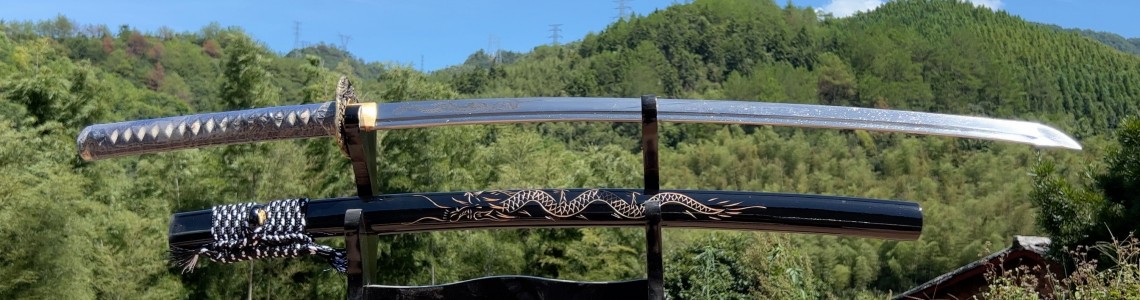
Buying your first katana? Before choosing a Japanese sword, consider five essential factors: intended use, blade steel, tang and handle construction, heat treatment, and customization. This beginner-friendly guide from HanBon Forge explains how to compare 1060, 1095, T10, 9260, and folded steel, understand genuine hamon, inspect sword fittings, and select a katana that fits your needs and budget.
The Ultimate Guide to Choosing Your First Katana: 5 Things You Must Know
Stepping into the world of Japanese swords is an exciting experience. Whether you are interested in Japanese history, martial arts, traditional craftsmanship, or collecting, choosing your first handmade Katana can be a meaningful decision.
However, beginners quickly discover that not all katana are made the same way.
Different swords use different steels, heat-treatment methods, blade geometries, handle constructions, and mounting materials. Prices can vary considerably, and a sword that looks impressive in photographs may not necessarily be the right choice for your intended purpose.
At HanBon Forge, we produce handmade and custom Japanese-style swords and work with customers who have different preferences, budgets, and levels of experience.
This guide explains the five most important factors to consider before buying your first katana, including practical manufacturing details that are often overlooked in beginner buying guides.
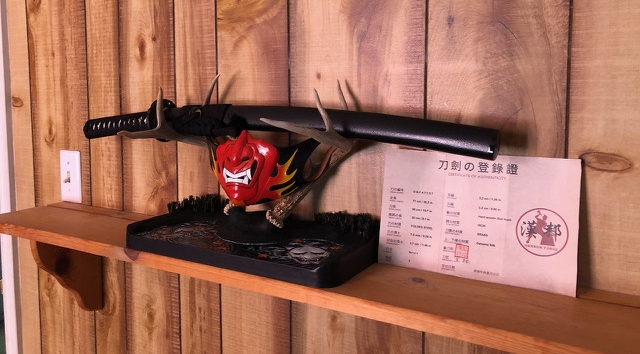
Start with your intended use, then evaluate the blade steel, heat treatment, blade geometry, tang and handle construction, fittings, and overall workmanship.
For many beginner collectors, a well-made 1060 carbon steel katana offers an accessible starting point. Buyers who particularly appreciate a genuine hamon may prefer a suitable clay-tempered T10 or 1095 blade.
Most importantly: The steel name or decorative appearance alone does not determine whether a katana is well made, safe, or suitable for its intended use.
1. Identify Your Purpose: Why Are You Buying a Katana?
The first step is to decide what you want from your sword.
This decision influences everything else, including blade sharpness, construction requirements, available customization options, and the appropriate budget.
For Collecting and Display
If your katana will primarily be displayed on a sword stand, visual design and traditional-inspired craftsmanship may be your main priorities.
Consider features such as:
- The blade shape and polishing finish.
- Traditional or modern tsuba designs.
- Tsuka-ito material and color.
- Genuine samegawa beneath the handle wrapping.
- Saya color, finish, and decoration.
- Genuine hamon or visible folded-steel grain.
- The historical inspiration behind the complete sword.
A decorative sword may be appropriate for static display, but it should never be assumed suitable for swinging or cutting unless its construction has been specifically evaluated for that purpose.
For Martial Arts Training
If you practice Iaido, Kenjutsu, or another Japanese martial art, the most important consideration is your instructor's requirements.
For many forms of practice, a purpose-built unsharpened iaito or another appropriate training sword is preferable to a sharpened blade.
Your instructor may have specific requirements concerning blade length, weight, curvature, balance, handle length, and fittings.
Do not purchase a sharpened katana for training without confirming that it is appropriate for the activity.
For Supervised Cutting Practice
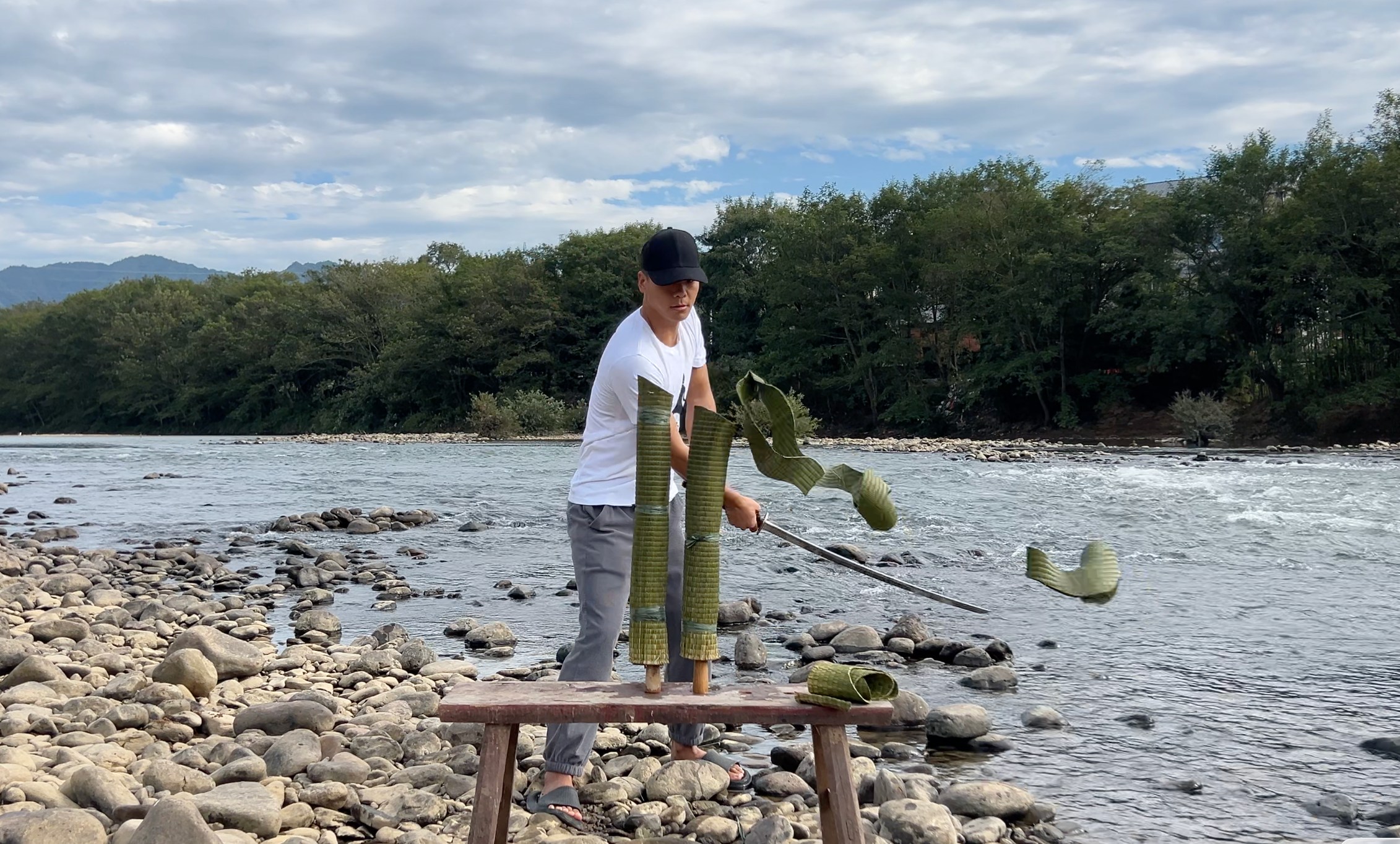
Traditional target cutting, commonly called tameshigiri, places different demands on a sword than static display or non-contact forms practice.
For appropriate cutting applications, consider:
- Suitable blade steel and heat treatment.
- Appropriate edge sharpness and geometry.
- Secure tang and handle construction.
- Correctly fitted tsuba and other components.
- Sound blade condition without cracks or loose fittings.
- Blade balance suitable for the practitioner's experience.
- Use only with approved targets and qualified supervision.
Both appropriately made through-hardened and differentially hardened blades can be used for suitable cutting activities. A genuine hamon is not a mandatory requirement for every cutting application.
| Your Main Purpose | What to Prioritize | Suggested Direction |
|---|---|---|
| Collection and Display | Appearance, craftsmanship, historical interest | Choose the design and materials you appreciate |
| Iaido or Forms Training | Instructor requirements, balance, appropriate blade type | Consider a purpose-built iaito |
| Supervised Cutting | Steel, heat treatment, edge geometry, secure assembly | Suitable functional katana |
| Personalized Gift | Design, engraving, presentation, recipient preferences | Custom or decorative configuration as appropriate |
2. Understanding Katana Steel: Which Steel Should a Beginner Choose?
Steel is one of the most commonly discussed aspects of Japanese sword manufacturing.
However, many beginner buying guides oversimplify steel by treating one grade as automatically stronger or better than another.
In reality, steel selection works together with heat treatment, blade geometry, polishing, and construction quality.
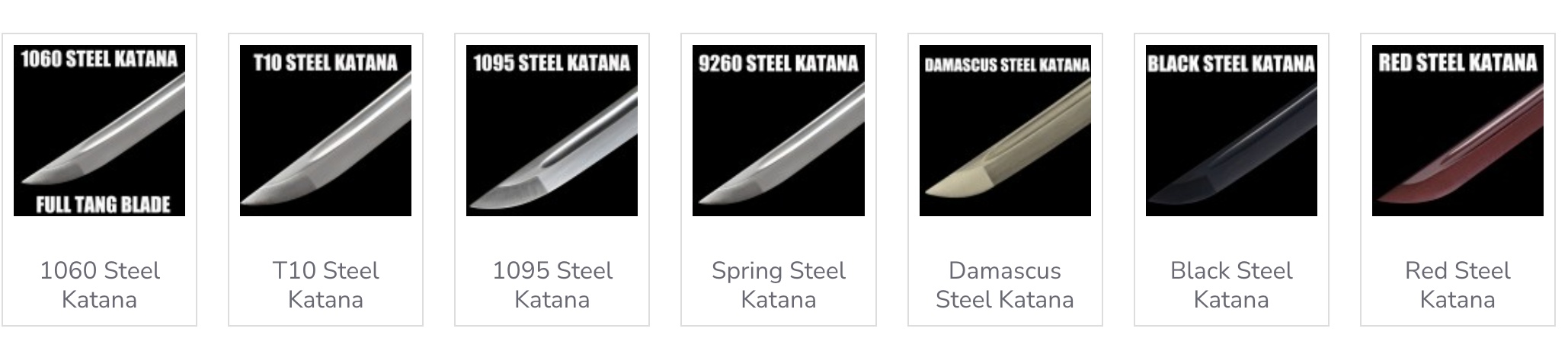
1060 Carbon Steel: A Practical Starting Point
1060 carbon steel is commonly used in modern functional Japanese-style swords.
When appropriately heat treated, it can provide a practical balance of hardness, toughness, and affordability.
For a buyer seeking a first handmade katana without prioritizing a genuine hamon, 1060 is often worth considering.
Its actual performance still depends on manufacturing quality and should not be judged by steel grade alone.
1095 High-Carbon Steel: Popular for Traditional-Inspired Blades
1095 high-carbon steel contains more carbon than 1060, allowing it to reach relatively high hardness under suitable heat-treatment conditions.
It is commonly used for clay-tempered katana featuring a genuine hamon.
However, higher potential hardness does not automatically mean greater toughness or better cutting performance.
Correct quenching, tempering, edge geometry, and suitable use remain important.
T10 Tool Steel: A Popular Choice for Genuine Hamon
T10 tool steel is frequently used in handmade Japanese-style swords with differential hardening.
It can produce a genuine hamon when appropriately heat treated and polished.
Collectors often appreciate T10 blades for their traditional-style hardened-edge patterns.
However, the T10 designation does not guarantee that every finished sword has a particular hardness, edge retention, or level of craftsmanship.
9260 Spring Steel: An Option for Resilience
9260 spring steel is a silicon-alloyed steel that can offer useful toughness and elastic properties when properly heat treated.
It is often selected for through-hardened Japanese-style swords.
For buyers who value resilience, 9260 can be a suitable option, but no steel is immune to bending, edge damage, or fracture.
Folded Steel: Aesthetic Grain and Traditional Inspiration
Folded steel, sometimes marketed as Damascus steel, is often chosen for the visible patterns created by its forging construction.
The grain pattern is related to the concept of hada in Japanese sword appreciation, although modern pattern-welded steel and traditional Japanese tamahagane are not necessarily identical.
Folded steel does not automatically provide superior strength or cutting performance.
Its quality depends on steel selection, forging, sound welds, heat treatment, and the finished blade's geometry.
Katana Steel Comparison for Beginners
| Steel Type | Typical Appeal | What Beginners Should Know |
|---|---|---|
| 1060 Carbon Steel | Practical value | Often a sensible first functional katana option |
| 1095 Carbon Steel | High-carbon blade characteristics | Frequently used for genuine hamon configurations |
| T10 Tool Steel | Traditional-style hamon | Heat treatment and polishing strongly affect results |
| 9260 Spring Steel | Potential toughness and resilience | Commonly found in through-hardened designs |
| Folded Steel | Visible forging grain | Folding alone does not guarantee better performance |
3. Why the Tang and Handle Construction Matter
When selecting a functional Japanese-style sword, the construction of the blade tang and handle is essential.
The Japanese term nakago (茎) refers to the portion of the blade extending into the handle, known as the tsuka.
Unlike the thin, threaded rod or decorative handle attachment found on some inexpensive replica swords, a properly constructed Japanese-style sword has a substantial tang designed to work with a fitted handle assembly.
What Does Full Tang Mean on a Katana?
The term full tang is commonly used by modern retailers to describe a blade with a substantial tang extending through much of the handle.
In traditional Japanese sword construction, the precise nakago length, shape, fit, and attachment method matter more than a simple marketing label.
A proper katana tang is generally secured in the wooden handle using one or more mekugi pegs, with the complete assembly supported by correctly fitted components.
Two mekugi are common on many modern functional swords, but the number of pegs alone does not prove that a handle is well made.
What Is a Rat-Tail Tang?
A rat-tail tang is a narrow, rod-like tang construction often found on decorative sword replicas.
Such construction may be unsuitable for the forces involved in sword use.
Never swing or attempt cutting with a decorative sword that has not been designed and manufactured for those activities.
What Else Should You Inspect?
- Nakago: Suitable shape, material continuity, and construction.
- Tsuka Core: Properly fitted wooden handle core without significant cracks.
- Mekugi: Securely installed pegs appropriate to the assembly.
- Fuchi and Kashira: Correctly fitted handle components.
- Tsuba: Secure guard without unwanted movement.
- Samegawa: Correctly installed handle covering.
- Tsuka-Ito: Firm, consistent wrapping without excessive movement.
These components work together. A substantial tang is important, but it cannot compensate for poor handle fitting or a damaged assembly.
For more details about evaluating craftsmanship, read How to Tell if a Katana Is Well Made.
4. Clay Tempered vs Through Hardened: Which Is Better for Your First Katana?
Another important decision involves the blade's heat treatment.
Two common options are clay-tempered (differentially hardened) and through-hardened blades.
What Is Clay Tempering?
The term clay tempering is widely used in the modern katana market, but the process primarily involves clay-assisted differential hardening.
During production, a refractory clay coating helps influence the blade's cooling behavior during quenching.
When successful, the process can produce a harder cutting-edge region and comparatively softer areas toward the spine.
The distinctive hardened-edge pattern associated with this process is called the hamon (刃文).
A genuine hamon is especially appreciated by collectors interested in traditional Japanese swordmaking techniques.
What Is Through Hardening?
Through hardening generally aims to produce a relatively uniform hardness distribution across the blade, followed by appropriate tempering.
A well-designed through-hardened katana can provide excellent practical performance, depending on the steel, heat treatment, and geometry.
It does not ordinarily display the traditional genuine hamon associated with differential hardening.
Which Should a Beginner Choose?
For a first katana, consider the purpose of the sword:
| Feature | Clay Tempered | Through Hardened |
|---|---|---|
| Heat Treatment | Differential hardening | Relatively uniform hardening |
| Genuine Hamon | Characteristic feature | Normally absent |
| Appearance | Traditional hardening pattern | Often a simpler blade finish |
| Performance | Depends on steel and manufacture | Depends on steel and manufacture |
| Typical Cost | Often higher for comparable models | Often more affordable |
| Buyer Priority | Genuine hamon and traditional aesthetics | Practical value and appropriate durability |
Neither method is universally better, and neither makes a sword indestructible.
For beginners seeking an accessible functional katana, an appropriately manufactured through-hardened blade can be a practical starting point.
For collectors who particularly appreciate a genuine hamon, a properly made clay-tempered T10 or 1095 katana may be preferable.
Read our Clay Tempered vs Through Hardened Katana Guide and Real vs Fake Hamon Guide for more information.
5. Customization: Making Your First Katana Truly Yours
One of the most enjoyable aspects of choosing a handmade Japanese-style sword is selecting its individual components.
Customizing a katana allows you to coordinate the blade, handle, fittings, and saya according to your personal preferences.
However, it is important to remember that certain design choices affect the sword's balance, fit, and intended use.
Choose Your Blade Geometry
Japanese sword blades are made in several different geometries, including Shinogi-zukuri, Hira-zukuri, Shobu-zukuri, and other traditional-inspired designs.
For a first katana, a conventional Shinogi-zukuri blade is a straightforward and familiar choice.
Customers may also choose whether to include a bohi, the groove commonly found on certain Japanese sword blades.
A bohi removes some material and can influence blade weight and balance. It may also produce an audible sound during a properly aligned swing, but it is not simply a feature that guarantees better performance.
Learn more in our Japanese Sword Blade Shapes Guide.
Select the Tsuba and Metal Fittings
The tsuba is the sword guard, while the fuchi, kashira, and menuki form important parts of the traditional mounting.
Different designs may include iron, brass, copper, or other suitable materials, with decorative themes such as dragons, waves, flowers, or traditional geometric patterns.
For a coherent appearance, consider coordinating the fittings rather than choosing each component independently.
Choose Tsuka-Ito and Samegawa
The tsuka-ito is the material wrapped around the wooden handle.
HanBon Forge offers various cotton, silk, and genuine leather options, depending on the selected sword configuration.
Beneath the wrapping, samegawa (ray skin) contributes to the traditional handle appearance.
Customers can choose different colors and may select full-wrap genuine rayskin on compatible custom swords.
The correct wrapping tension, handle core construction, and secure fittings are more important than color alone.
Learn how to distinguish genuine materials in our Genuine vs Fake Samegawa Guide.
Select the Saya
The saya is the Japanese sword scabbard.
Available designs may include glossy black, matte black, colored coatings, wood-grain finishes, rayskin coverings, and other decorative styles.
Although appearance is important, the saya must fit the specific blade and habaki correctly.
A saya should not be assumed interchangeable between different swords merely because their blade lengths are similar.
Explore our Guide to Choosing the Right Katana Saya.
Match the Sageo
The sageo is the cord associated with the sword's scabbard mounting.
It can be selected to complement or contrast with the tsuka-ito and saya colors.
A restrained color combination often provides a more cohesive appearance than using too many unrelated colors.
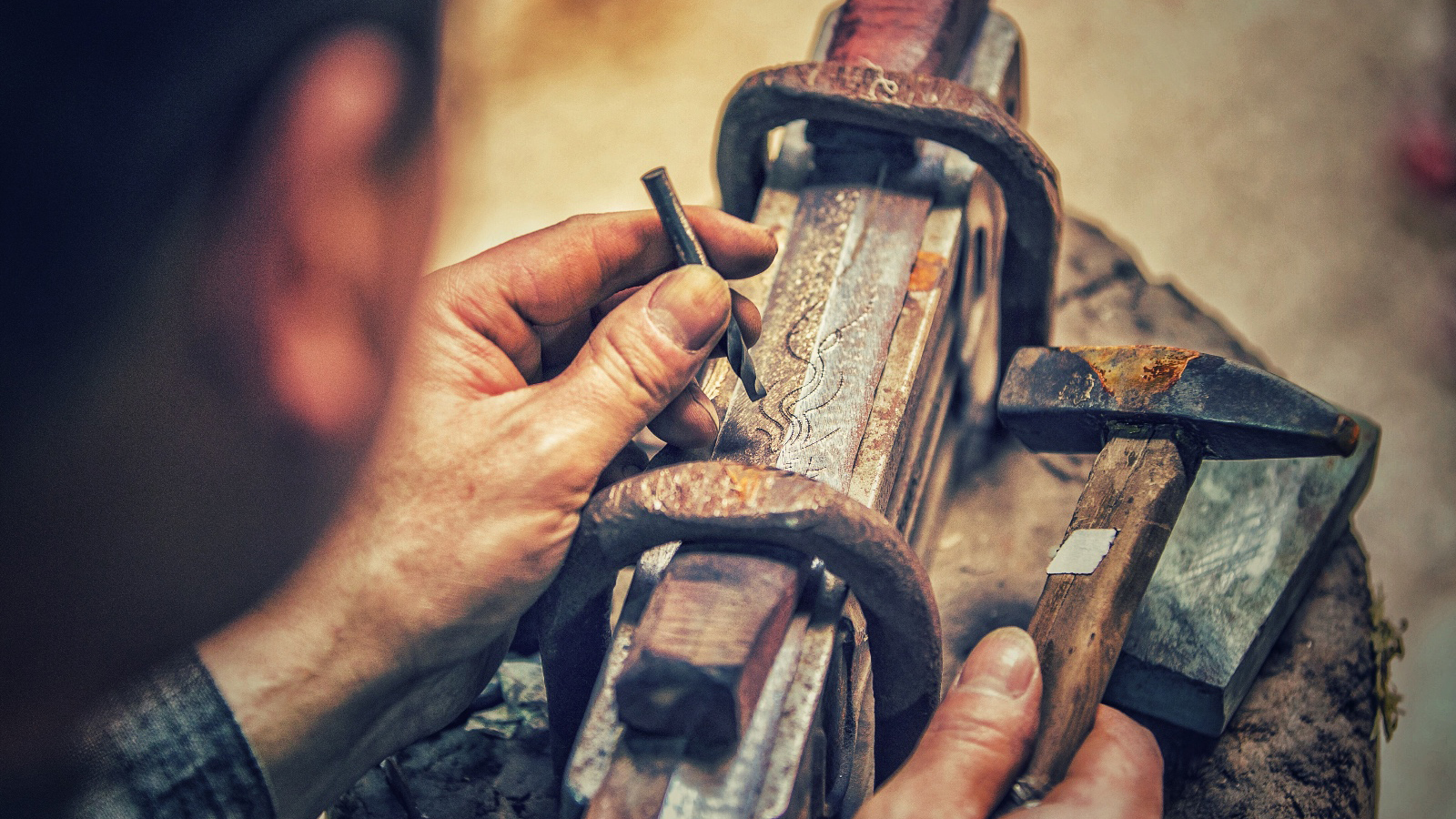
Add Personalized Engraving
Engraving can make a custom katana more meaningful.
Depending on feasibility, customers may request names, initials, selected phrases, or decorative motifs in suitable locations.
Before ordering, confirm the requested design, placement, dimensions, and any additional engraving charges.
How to Keep Your First Custom Katana Balanced
For your first custom sword, begin with the blade specifications and intended use before choosing decorative components.
Once the blade length, geometry, steel, and heat treatment are established, choose compatible handle fittings and a suitable saya.
This approach reduces the risk of creating a sword that looks appealing but is poorly matched to your needs.
6. How Much Should You Spend on Your First Katana?
A first katana does not have to be the most expensive sword available.
Instead of choosing only by price, evaluate what the purchase includes.
Some important questions are:
- Is the blade steel clearly identified?
- Is the heat-treatment method explained?
- Is the sword intended for display, training, or suitable cutting use?
- Does the seller provide meaningful information about the tang and handle?
- Are genuine materials clearly distinguished from synthetic alternatives?
- Are photographs of the finished sword available?
- What are the applicable shipping costs and import requirements?
- What support is available if an issue is discovered?
Higher pricing may reflect additional materials, specialized heat treatment, decorative components, customization labor, or more elaborate polishing.
However, a higher price alone does not guarantee better craftsmanship or superior cutting performance.
A Practical First-Katana Buying Checklist
| What to Check | Why It Matters |
|---|---|
| Intended Use | Determines the suitable sword category |
| Blade Steel | Influences possible heat-treatment characteristics |
| Heat Treatment | Important for hardness and toughness |
| Blade Geometry | Affects handling and cutting characteristics |
| Nakago and Tsuka | Essential to a sound assembly |
| Mekugi and Fittings | Help secure the complete sword |
| Saya Fit | Supports blade retention and protection |
| Materials | Check genuine versus imitation components |
| Shipping and Support | Understand costs, restrictions, and service |
7. What Katana Length Is Best for a Beginner?
Blade length affects how a katana feels and handles.
For a conventional Japanese-style katana, a blade around 28 inches with an approximately 11-inch handle is a common modern configuration.
However, this is only an example, not a universal recommendation.
The appropriate sword length depends on the user's physique, experience, training discipline, and personal preferences.
Blade Length
A longer blade generally requires more clearance and may change the sword's weight distribution.
A shorter blade may be more convenient for display or particular preferences, but it should not automatically be considered safer for beginners.
Handle Length
The handle must provide appropriate proportions and secure construction for the intended sword.
Longer handles are not automatically better, and unusual proportions can affect balance and handling.
Weight and Balance
Two swords of the same length can feel different because of blade thickness, distal taper, bohi, fittings, and overall mass distribution.
When choosing a training sword, always follow the requirements of your instructor or discipline.
For related sword-size comparisons, read our Katana vs Wakizashi vs Tanto Guide.
8. Common Mistakes First-Time Katana Buyers Make
Many first-time buyers focus on a single appealing feature rather than evaluating the entire sword. The following are common misconceptions.
Is the Most Expensive Katana Always the Best?
No. Price can reflect materials, labor, finishing, and decoration, but it does not automatically establish the best choice for a particular buyer.
Is T10 Steel Always Better Than 1060 or 1095?
No. Different steels have different characteristics, and finished performance depends heavily on heat treatment, blade geometry, and manufacturing quality.
Does a Genuine Hamon Guarantee Better Cutting?
No. A genuine hamon is associated with differential hardening. Cutting performance also depends on steel, edge geometry, sharpening, toughness, and appropriate technique.
Does Full Tang Alone Make a Sword Safe?
No. Tang construction is important, but handle fit, wooden core condition, mekugi installation, fittings, and blade integrity are also essential.
Is Folded Steel Always Stronger?
No. Folding does not automatically improve strength or toughness. A properly made modern monosteel blade can perform very well without visible forged grain.
Is a Sharper Katana Always Better?
No. Sharpness must suit the intended application. Edge geometry, supporting material behind the edge, steel properties, and safe handling are equally important.
Can I Use Any Katana Saya with a Same-Length Blade?
No. Curvature, thickness, width, blade geometry, and habaki dimensions vary. A saya should be fitted to the individual sword.
Should Beginners Buy the Longest Katana Available?
Not necessarily. Suitable length depends on the user's purpose, handling requirements, and training context. An unusually long blade may introduce additional practical challenges.
9. HanBon Forge: Practical Advice from Custom Sword Production
HanBon Forge produces handmade and custom Japanese-style swords with different steels, blade dimensions, heat-treatment methods, fittings, and finishes.
From a manufacturing perspective, one of the most important lessons for a first-time buyer is that the quality of the complete sword matters more than one advertised feature.
For example, a katana may feature an attractive genuine hamon yet still require careful inspection of the handle assembly and blade finish.
Likewise, a through-hardened 1060 or 9260 blade may be a sensible practical choice when its geometry, heat treatment, and fittings are properly matched.
Our Production and Inspection Considerations
When reviewing finished custom swords, important points include:
- Blade geometry, finish, and kissaki condition.
- Visible quality of the cutting edge.
- Secure tsuba and related fittings.
- Handle construction and wrapping consistency.
- Correct menuki and fitting orientation.
- Saya retention and blade fit.
- Requested engraving and customization details.
Customer Photo Approval
For custom orders, HanBon Forge provides photographs of the finished sword for customer approval before shipment.
This allows customers to review visible craftsmanship and confirm whether their requested design details have been completed.
Photographs are valuable for reviewing appearance, but they cannot independently verify every metallurgical or structural property of the sword.
Choosing Custom Features
If you are purchasing your first handmade katana, we recommend beginning with essential specifications such as steel, blade dimensions, and intended use.
Next, select your preferred fittings, handle wrapping, and saya design.
For specialized configurations, customers can contact our team to discuss whether the requested combination is suitable and available before production.
10. Frequently Asked Questions About Buying Your First Katana
These answers address common questions from first-time buyers about katana steel, safety, craftsmanship, and customization.
What is the best steel for a first katana?
For many first-time buyers, a well-made 1060 carbon steel katana can offer practical value. Other steels such as 1095, T10, and 9260 may be appropriate depending on intended use, heat treatment, and budget.
Is a 1060 steel katana good for beginners?
Yes, a properly heat-treated and securely assembled 1060 katana can be a sensible starting point. The steel designation alone does not guarantee quality.
Should my first katana be clay tempered?
Not necessarily. Clay tempering may appeal to buyers who want a genuine hamon and traditional-style aesthetics, while a properly manufactured through-hardened blade can also be an excellent choice.
What does full tang mean on a katana?
In modern product descriptions, full tang generally refers to a substantial extension of the blade into the handle. Proper nakago geometry, tsuka fitting, mekugi installation, and assembly quality remain essential.
Are two mekugi necessary for every katana?
No universal number alone proves that a sword is safe or well made. Many modern functional katana use two mekugi, but appropriate tang construction, peg installation, and handle fit are more important than the number by itself.
Is a folded steel katana better than a monosteel katana?
Not automatically. Folded steel may provide distinctive visual grain, but steel quality, heat treatment, sound forging, blade geometry, and assembly determine the finished sword's performance.
Is a 28-inch blade a good first katana length?
A 28-inch blade is a common modern katana configuration, but the appropriate length depends on the user's purpose, physique, and training requirements.
Can I customize my first katana?
Yes. HanBon Forge offers compatible options for blade steel, geometry, heat treatment, handle wrapping, fittings, saya, and engraving. Specialized requests should be confirmed before ordering.
What is the difference between genuine and fake hamon?
A genuine hamon is associated with differential hardening, while a fake hamon is a decorative surface pattern that does not by itself prove differential hardening.
Should a beginner buy a sharp or unsharpened katana?
It depends on the intended use. For many martial arts training activities, an appropriate unsharpened training sword is preferable. A sharpened katana should only be chosen when suitable for the activity and the user's experience.
What should I inspect when my new katana arrives?
With appropriate care and safe handling, check the visible blade condition, handle wrapping, fittings, saya fit, and whether the sword matches the agreed specifications. Do not use a sword with cracks, loose components, or other safety concerns.
Does HanBon Forge provide finished-sword photographs?
Yes. For custom orders, HanBon Forge provides photographs of the completed sword for customer review and approval before shipment.
Final Thoughts: Choose Your First Katana with Confidence
Choosing your first katana is not simply about selecting the sharpest blade, the most expensive steel, or the most elaborate fittings.
The five essential decisions are:
- Define Your Purpose: Collection, display, appropriate training, or supervised cutting.
- Understand Your Steel: Compare material characteristics without assuming one steel is always superior.
- Evaluate the Tang and Handle: Secure construction is essential.
- Choose the Right Heat Treatment: Understand the difference between genuine hamon and through hardening.
- Personalize Carefully: Select compatible fittings and finishes that match your intended design.
A well-chosen beginner katana should meet your practical requirements, reflect your personal interests, and provide a satisfying introduction to Japanese sword craftsmanship.
At HanBon Forge, we encourage customers to evaluate the complete sword and make informed decisions based on accurate specifications and appropriate expectations.
Ready to Choose Your First Katana?
Explore handmade Japanese-style swords in different steels and mounting styles, or create a personalized katana with your preferred blade, fittings, and saya.
Explore Handmade KatanaCustomize Your KatanaReferences & Further Reading
The following museum resources, technical references, and detailed HanBon Forge guides offer additional information about Japanese sword construction, traditional craftsmanship, and modern buying considerations.
-
The Metropolitan Museum of Art — The Japanese Blade: Technology and Manufacture.
A historical overview of Japanese swordmaking and traditional blade construction.
Read the Museum Article. -
Leon Kapp, Hiroko Kapp, and Yoshindo Yoshihara — The Craft of the Japanese Sword.
A reference describing traditional Japanese sword forging, hardening, polishing, and related craftsmanship.
-
Kokan Nagayama — The Connoisseur's Book of Japanese Swords.
A reference covering Japanese sword terminology, blade forms, appraisal, and historical characteristics.
-
HanBon Forge — Clay Tempered vs Through Hardened Katana.
Compare different heat-treatment approaches and their implications for blade characteristics.
Read the Heat Treatment Guide. -
HanBon Forge — Katana Hamon vs Hada.
Understand the distinction between genuine hardened-edge patterns and forged steel grain.
Read the Hamon vs Hada Guide. -
HanBon Forge — How to Choose the Right Katana Saya.
Learn about scabbard materials, fit, decoration, and customization.
Read the Saya Guide.
Editorial Note: This guide is intended to support informed sword purchasing and appreciation. Modern katana vary considerably in materials, construction, and intended use. No individual specification should be treated as an automatic guarantee of quality or safety.
About This Guide & Editorial Experience
Prepared by: HanBon Forge Team
Topic: Beginner Katana Buying Guide, Japanese Sword Steel, Heat Treatment, Nakago, and Customization.
Content Focus: Practical considerations for selecting a first handmade Japanese-style sword, based on traditional swordmaking references and modern production experience.
HanBon Forge specializes in handmade and custom Japanese-style swords, including katana, wakizashi, tanto, and other traditional-inspired blade designs.
Our team works with different steel grades, heat-treatment configurations, blade geometries, genuine rayskin, handle-wrapping materials, and sword fittings.
For custom orders, finished-sword photographs are provided for customer confirmation before shipment, helping buyers review visible details of the completed sword.
Last Reviewed: October 2026