
How Japanese Swords Were Sharpened: Traditional Katana Polishing Process Explained

How Japanese Swords Were Sharpened: The Traditional Katana Polishing Process
The Japanese sword, especially the katana, is famous around the world for its elegant shape, incredible craftsmanship, and legendary sharpness. However, the sharp edge of a Japanese sword does not come only from forging. The final sharpening and polishing process plays an equally important role in creating a functional and beautiful blade.
Unlike modern factory sharpening methods, traditional Japanese sword polishing is a highly skilled craft performed by specialized craftsmen known as togishi (研師). A professional sword polisher does much more than simply sharpen the edge — they refine the blade geometry, reveal the hamon, and bring out the natural beauty of the steel.
The Importance of Sharpening a Japanese Sword
A Japanese sword must achieve a balance between sharpness, strength, and durability.
During the forging process, the swordsmith creates the blade structure through heating, folding, shaping, and heat treatment. After forging, however, the blade surface is still rough and the cutting edge has not reached its final condition.
The sharpening and polishing process helps to:
- Create a refined cutting edge
- Correct the blade shape and geometry
- Remove forging marks and imperfections
- Reveal the hamon (temper line)
- Highlight the steel grain pattern (jihada)
- Improve the overall appearance of the sword
Traditional Japanese sword polishing is therefore both a functional process and an artistic discipline.
Who Sharpened Japanese Swords?
In historical Japan, sword polishing was not usually completed by the swordsmith himself.
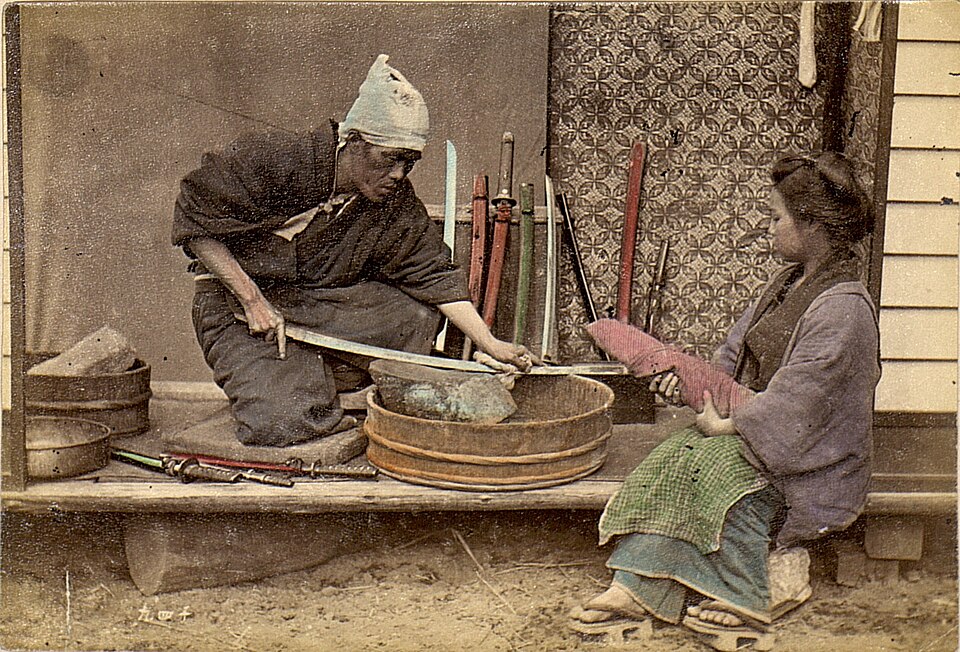
After forging, the unfinished blade was passed to a professional sword polisher called a togishi.
A skilled togishi required many years of training because every sword had different characteristics. The polisher needed to understand:
- Blade shape
- Steel hardness
- Hamon patterns
- Sword geometry
- Different types of polishing stones
A mistake during polishing could permanently damage the blade by changing its original shape or removing too much steel.
Traditional Japanese Sword Sharpening Tools
The most important tools used for sharpening Japanese swords are Japanese water stones (toishi).
Unlike ordinary grinding machines, traditional sword polishing relies on carefully selected stones that gradually refine the blade surface.
The stones are used from coarse to extremely fine:
1. Coarse Stones (Foundation Polishing)
The first stage uses rough stones to:
- Remove scratches from forging
- Correct blade geometry
- Establish the proper shape
Common stones include:
- Arato
- Binsuido
- Kaisei stone
These stones remove more steel and prepare the blade for finer polishing.
2. Medium Polishing Stones
After the basic shape is corrected, the polisher moves to finer stones.
This stage removes marks left by coarse stones and smooths the surface.
Examples include:
- Nagura stones
- Fine Nagura stones
The goal is to create an even surface while maintaining the original blade structure.
3. Fine Polishing Stones
The final polishing stage uses extremely fine stones to reveal the true beauty of the Japanese sword.
Fine polishing helps display:
- Hamon patterns
- Jihada steel grain
- Blade texture
- Contrast between hardened edge and softer body
Special stones such as uchigumori are traditionally used during finishing work.
How Does the Katana Sharpening Process Work?
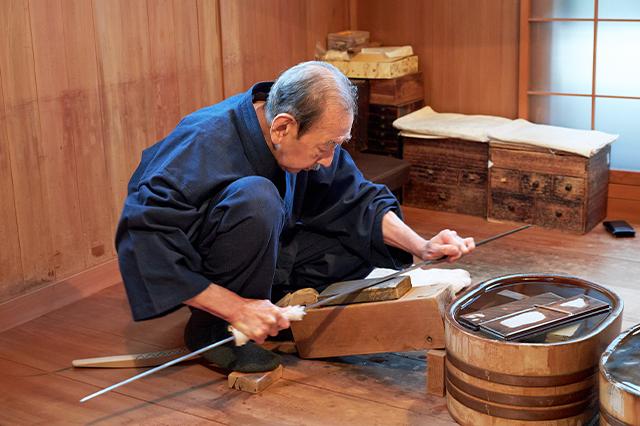
The traditional katana polishing process can generally be divided into two major stages:
1. Foundation Polishing (Shitaji Togi)
The first stage focuses on restoring and refining the blade shape.
The togishi carefully works on:
- Edge angle
- Shinogi line
- Blade curvature
- Surface condition
Large water stones are used first, gradually moving toward finer stones.
This stage determines the final geometry of the sword, making it one of the most important parts of the process.
2. Finishing Polishing (Shiage Togi)
The finishing stage is where the Japanese sword becomes visually stunning.
The polisher uses smaller and finer stones to:
- Enhance the hamon
- Reveal the folded steel pattern
- Create the final surface appearance
- Produce the characteristic Japanese sword finish
Techniques such as:
- Hazuya polishing
- Jizuya polishing
- Hadori polishing
are used to highlight different parts of the blade.
Why Japanese Sword Sharpening Takes So Much Time
A common misunderstanding is that sharpening a sword is simply making the edge thinner.
In reality, Japanese sword polishing is a detailed process requiring precision and patience.
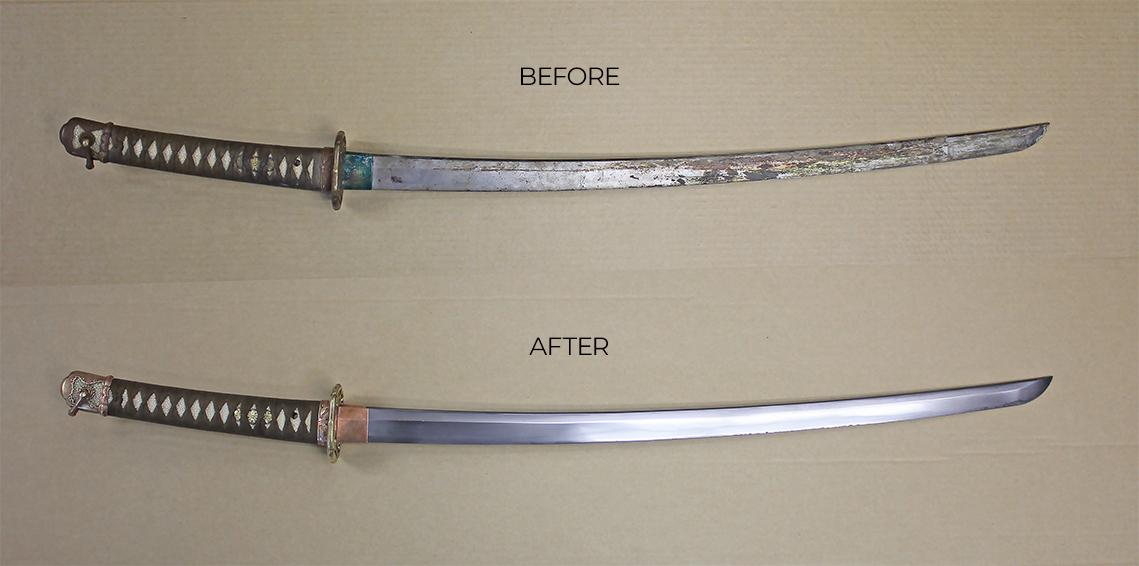
A professional polish may take weeks or even months depending on:
- Blade condition
- Sword size
- Required finish
- Experience of the polisher
The goal is not only maximum sharpness but also preserving the balance and beauty created by the swordsmith.
Japanese Sword Sharpening vs Modern Knife Sharpening
Although both use abrasive materials, Japanese sword polishing is very different from sharpening a kitchen knife.
| Modern Knife Sharpening | Japanese Sword Polishing |
|---|---|
| Focuses mainly on edge sharpness | Focuses on edge + blade structure |
| Often uses machines | Uses hand-selected stones |
| Faster process | Requires weeks or months |
| Functional purpose | Functional + artistic purpose |
A katana is not simply a cutting tool. It is a combination of metallurgy, craftsmanship, and traditional Japanese art.
Can You Sharpen a Katana Yourself?
For decorative swords or modern production katanas, basic maintenance can be performed carefully.
However, traditional Japanese sword polishing should not be attempted without proper training.
Using incorrect tools or techniques can:
- Damage the blade geometry
- Remove the hamon appearance
- Reduce the sword's value
- Create an uneven edge
Professional polishing requires years of experience.
How HanBon Forge Creates Sharp Katana Blades
At HanBon Forge, each handmade katana combines traditional Japanese sword aesthetics with modern craftsmanship.
Our swords feature:
- Hand forged blades
- Full tang construction
- Proper heat treatment
- Carefully finished edges
- Traditional Japanese fittings
Whether you are looking for a functional katana, a custom sword, or a collector piece, craftsmanship and blade quality remain the foundation of every sword we create.
Explore our collection of:
- Handmade Katana
- Custom Japanese Swords
- Samurai Swords
FAQ About Japanese Sword Sharpening
1. How were Japanese swords sharpened?
Japanese swords were traditionally sharpened using a series of water stones. Sword polishers gradually moved from coarse stones to finer stones to refine the edge and polish the blade surface.
2. How sharp is a Japanese katana?
A properly polished katana can have an extremely sharp cutting edge. However, its effectiveness depends on blade geometry, steel quality, heat treatment, and polishing skill.
3. What stones are used to polish a Japanese sword?
Traditional Japanese sword polishing uses different natural stones, including coarse foundation stones and fine finishing stones such as uchigumori.
4. How long does it take to polish a katana?
A professional Japanese sword polish can take several weeks or longer depending on the blade condition and required finish.
5. Can a normal person sharpen a katana?
Basic maintenance is possible, but traditional katana polishing requires specialized knowledge and should be performed by an experienced sword polisher.
6. What is the difference between sharpening and polishing a Japanese sword?
Sharpening focuses mainly on improving the cutting edge, while Japanese sword polishing also restores blade geometry, reveals the hamon, and enhances the beauty of the steel.
7. Why are Japanese sword polishers important?
A skilled togishi protects the sword's structure and brings out the artistic features created by the swordsmith.
Conclusion
The sharpness of a Japanese sword is not created by the forging process alone. The traditional polishing process transforms a forged blade into a refined weapon and a work of art.
From carefully selected water stones to the hands of an experienced togishi, every step contributes to the legendary reputation of the katana.
Understanding how Japanese swords were sharpened also helps collectors appreciate the craftsmanship behind every blade.