
Zhanmadao: The Legendary Chinese Horse-Cutting Sword History
-1140x300w.jpg "Zhanmadao: The Legendary Chinese Horse-Cutting Sword History")
Zhanmadao: The Legendary Chinese Horse-Cutting Sword
Among the many traditional weapons created throughout Chinese history, few are as impressive and mysterious as the Zhanmadao (斬馬刀).
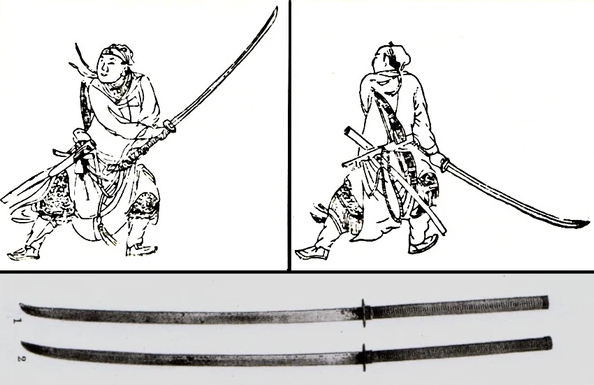
Often translated as the “horse-cutting sword” or “horse-chopping saber,” the Zhanmadao was a large Chinese two-handed sword designed around reach, power and battlefield effectiveness.
Unlike the smaller one-handed Chinese dao commonly seen in historical collections, the Zhanmadao was a massive weapon that required both hands to control. Its long blade and extended grip gave infantry soldiers an advantage when facing mounted opponents.
Although popular stories often describe the Zhanmadao as a weapon capable of cutting horses in half, the historical reality is more practical. The weapon was designed as part of military strategies against cavalry forces, especially during periods when Chinese armies needed effective ways to counter powerful mounted enemies.
The Zhanmadao represents an important chapter in the development of Chinese swords, Chinese dao and traditional Chinese military weapons.
What Is Zhanmadao?
The Zhanmadao (斬馬刀) is a traditional Chinese single-edged sword with a long blade and a two-handed handle.
The name is composed of:
斬 (zhan) — to cut or chop
馬 (ma) — horse
刀 (dao) — single-edged blade or saber
Together, Zhanmadao is commonly translated as “horse-cutting saber.”
However, the meaning should be understood historically. The name does not necessarily mean soldiers literally cut horses in half. Instead, it reflects the weapon’s powerful cutting ability and its association with anti-cavalry warfare.
Historical examples describe the Zhanmadao as a large battlefield weapon with:
A long single-edged blade
A two-handed grip
Strong cutting power
Extended reach
Heavy battlefield presence
Because of its size and design, it belongs to the category of Chinese great swords and long dao weapons.
The History of Zhanmadao
The history of the Zhanmadao is closely connected with the evolution of long Chinese blades.
Early Origins
The concept of a “horse-cutting sword” appears in early Chinese historical records.
During the Han Dynasty (206 BC–220 AD), references existed to weapons with the name Zhanmajian (斬馬劍), meaning “horse-cutting sword.”
However, this early weapon was not necessarily identical to the later Zhanmadao. Historical terminology changed over time, and different weapons could share similar names.
The later Zhanmadao that is recognized as a large single-edged saber is most strongly associated with Chinese military development during later dynasties.
Zhanmadao During the Song Dynasty
The Song Dynasty (960–1279) is the period most strongly connected with the military use of Zhanmadao.
During this era, Chinese armies faced powerful northern cavalry forces, including the Liao, Western Xia and Jin.
Because cavalry units had advantages in mobility and battlefield control, Song military planners developed specialized infantry weapons to improve their ability to fight mounted enemies.
The Zhanmadao provided several advantages:
Longer reach than ordinary swords
Powerful two-handed cutting attacks
Ability to threaten both rider and horse
Strong defensive capability against cavalry charges
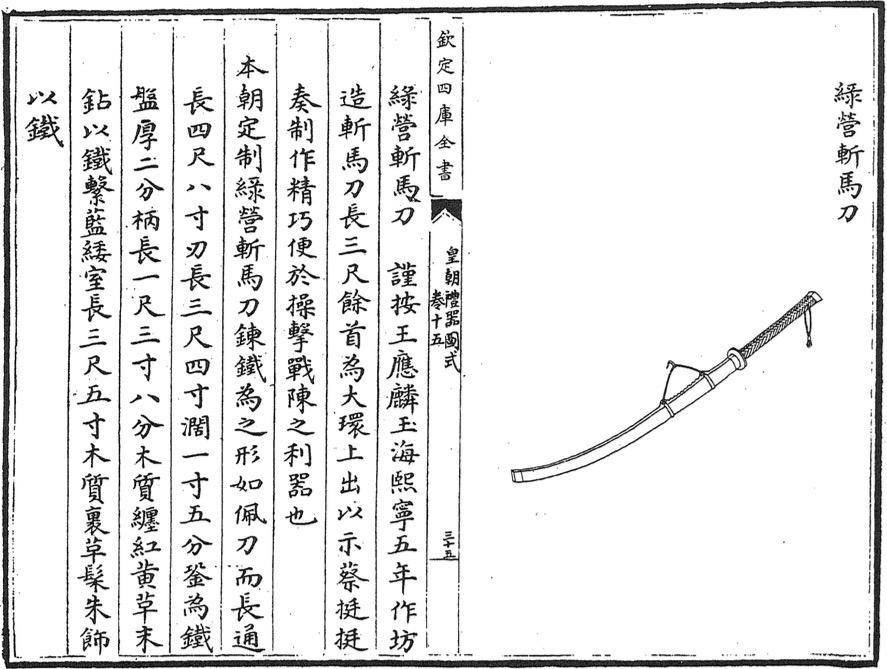
Historical military texts such as the Wujing Zongyao (武經總要) mention specialized weapons used by Song armies, including long blades designed for battlefield purposes.
Design and Characteristics of Zhanmadao
The Zhanmadao was designed for maximum cutting power.
Typical characteristics include:
Long Blade
The blade was significantly longer than ordinary Chinese swords.
Some historical descriptions place the overall length around two meters or more, with very long blades designed for battlefield reach.
Two-Handed Handle
Unlike a standard dao carried at the waist, the Zhanmadao used a longer handle.
This allowed soldiers to:
Generate more power
Control the large blade
Deliver stronger cuts
Maintain distance from mounted opponents
Single-Edged Blade
Like many Chinese dao weapons, the Zhanmadao generally used a single-edged blade.
This design was effective for powerful chopping and cutting techniques.
Large Battlefield Presence
The size of the Zhanmadao made it different from ordinary swords.
It was not designed as a daily sidearm. Instead, it was a specialized battlefield weapon used for specific military situations.
How Was Zhanmadao Used?
The main purpose of the Zhanmadao was to give infantry soldiers an effective weapon against cavalry.
Mounted warriors had advantages in:
Speed
Mobility
Reach
A long two-handed sword helped infantry create a larger defensive range.
Possible battlefield uses included:
Striking at cavalry horses
Attacking riders
Breaking enemy formations
Supporting infantry formations
However, the idea of a soldier standing alone and simply “cutting a horse in half” is more legend than realistic battlefield practice.
Like many historical weapons, the true value of the Zhanmadao came from tactics, training and formation combat.
Zhanmadao vs Normal Chinese Dao
The Zhanmadao is very different from common Chinese dao.
| Feature | Zhanmadao | Regular Chinese Dao |
|---|---|---|
| Blade Length | Very long | Medium length |
| Grip | Two-handed | Usually one-handed |
| Purpose | Battlefield anti-cavalry weapon | General combat weapon |
| Fighting Style | Powerful long-range cuts | Faster close combat |
| Historical Role | Specialized military weapon | Common sidearm |
The Zhanmadao was not meant to replace ordinary dao. It served a very specific military purpose.
Zhanmadao vs Miao Dao
The Zhanmadao and Miao Dao are sometimes confused because both are long Chinese swords.
However, they are different weapons.
Zhanmadao
Ancient military weapon
Strongly associated with Song Dynasty warfare
Designed for battlefield use against cavalry
Generally straighter and heavier
Miao Dao
Modern Chinese long saber tradition
Developed from earlier long blade concepts
Commonly used in Chinese martial arts today
Usually has a more curved blade
Both represent the Chinese tradition of large two-handed blades, but their histories are different.
Did Zhanmadao Influence Japanese Swords?
The relationship between Chinese long swords and Japanese swords is a complex historical topic.
China and Japan exchanged technology, culture and military knowledge for centuries. Some Chinese long-blade traditions may have influenced Japanese weapon development.
However, it is not accurate to say that the Zhanmadao directly created the Japanese katana.
Japanese sword development followed its own path, influenced by Japanese warfare, metallurgy and fighting methods.
The Zhanmadao and Japanese ōdachi share similarities because both are examples of large two-handed swords developed for battlefield purposes.
Why Is Zhanmadao Important in Chinese Sword History?
The Zhanmadao is important because it shows how Chinese weapons evolved to solve specific military problems.
It represents:
Chinese military innovation
Development of long swords
Anti-cavalry strategy
Advanced sword craftsmanship
The diversity of Chinese dao weapons
While many people know Japanese katana, the Zhanmadao demonstrates that Chinese sword history also includes many unique and powerful designs.
Are There Surviving Zhanmadao Today?
Compared with famous Japanese swords, surviving original Zhanmadao examples are extremely rare.
Many historical weapons were:
Destroyed during wars
Lost over centuries
Reused or modified
Because of this, modern Zhanmadao reproductions are often based on historical descriptions, illustrations and related Chinese long sword traditions.
Collectors interested in Zhanmadao should pay attention to:
Blade proportions
Historical references
Construction quality
Materials
Intended use
Frequently Asked Questions About Zhanmadao
1. What is a Zhanmadao?
Zhanmadao is a traditional Chinese two-handed single-edged sword associated with anti-cavalry warfare. It is one of the most famous long Chinese dao weapons.
2. What does Zhanmadao mean?
Zhanmadao (斬馬刀) means “horse-cutting saber” or “horse-chopping sword.”
3. Was Zhanmadao really used to cut horses?
The weapon was designed for fighting cavalry, but stories about easily cutting horses in half are exaggerated. Its real advantage was reach and powerful cutting ability.
4. How long is a Zhanmadao?
Historical examples and descriptions vary, but some Zhanmadao were extremely large, reaching around two meters in overall length.
5. Was Zhanmadao a sword or a saber?
Zhanmadao is usually classified as a Chinese dao, meaning a single-edged saber or sword.
6. Was Zhanmadao used by samurai?
No. Zhanmadao is a Chinese weapon. Although China and Japan exchanged military ideas, the Zhanmadao developed within Chinese warfare.
7. What dynasty used Zhanmadao?
The weapon is strongly associated with the Song Dynasty, although the name and related long-blade concepts appeared across different periods.
8. Is Zhanmadao the same as Miao Dao?
No. They are related long Chinese blade traditions but developed in different historical contexts.
9. Why was Zhanmadao so large?
Its large size provided infantry soldiers with greater reach and stronger cutting power against cavalry.
10. Can you buy a modern Zhanmadao reproduction?
Yes. Modern craftsmen create Zhanmadao-inspired swords for collectors, martial arts practitioners and historical enthusiasts.
Final Thoughts
The Zhanmadao is one of the most fascinating weapons in Chinese sword history.
Its enormous size, two-handed design and connection with anti-cavalry warfare make it stand apart from ordinary swords.
More than simply a legendary “horse-cutting sword,” the Zhanmadao represents the creativity of ancient Chinese military engineering and the constant evolution of battlefield weapons.
For collectors and enthusiasts of traditional Chinese weapons, the Zhanmadao offers a unique perspective on the history of Chinese swords beyond the better-known jian and dao.