
Saya (Scabbard) for Katana: Parts, Materials and Complete Guide
-for-Katana-Sword/saya_3-1140x300w.jpg "Saya (Scabbard) for Katana: Parts, Materials and Complete Guide")
Saya (Scabbard) for Katana: Parts, Materials and Complete Guide
The saya (鞘) is the traditional scabbard used for a Japanese sword. While it may appear to be a simple wooden sheath, a well-made katana saya plays an important role in protecting the blade, supporting the sword's fittings, and completing the overall appearance of the koshirae.
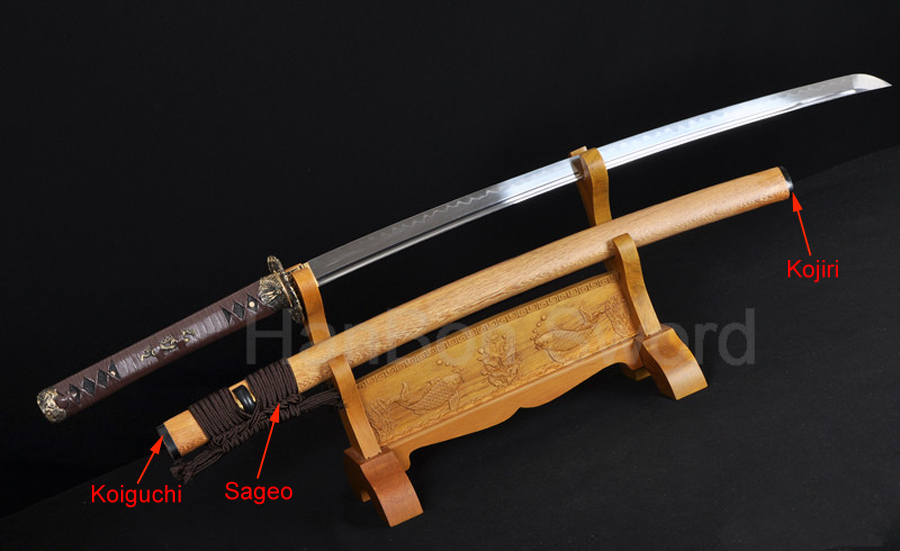
A properly fitted Japanese sword scabbard should protect the blade while allowing the sword to be drawn and returned smoothly. The saya is also an important visual element of a katana, with finishes ranging from simple black lacquer to highly decorative lacquer, rayskin, and other traditional styles.
In this guide, we will look at what a katana saya is, what materials are used to make it, and the main parts of a traditional Japanese sword scabbard.
What Is a Saya?
A saya is the scabbard or sheath used to hold the blade of a Japanese sword. The Japanese word "saya" can apply to different types of Japanese blades, including the katana, wakizashi, and tanto.
The primary purpose of a katana scabbard is to protect the blade when it is not being used. A properly made saya helps prevent unnecessary contact with the cutting edge and keeps the blade protected during storage, transportation, and normal handling.
Unlike many Western sword scabbards, the traditional Japanese saya is generally made from wood and carefully fitted to the individual blade. The fit is especially important around the mouth of the scabbard, where the habaki helps keep the sword securely seated.
A good saya should hold the sword securely while still allowing the blade to be drawn smoothly. If the fit is too loose, the sword may move inside the scabbard. If it is too tight or poorly shaped, repeated contact may affect the blade or make drawing uncomfortable.
What Is a Katana Saya Made Of?
The main body of a traditional Japanese sword scabbard is usually made from wood. Historically, lightweight wood has been favored because it can be shaped precisely around the blade without adding unnecessary weight.
A saya is commonly constructed from two carefully shaped halves. The interior is carved to match the general shape of the blade, and the two halves are joined together to create the finished scabbard.
Depending on the style and quality of the sword mounting, additional materials may be used for the fittings and decoration.
- Wood for the main body of the saya
- Buffalo horn for certain protective fittings
- Metal such as brass or copper for decorative fittings
- Lacquer for the exterior finish
- Rayskin for decorative saya designs
Modern katana saya designs are available in many different finishes. Simple black lacquer remains one of the most recognizable styles, but red, brown, blue, textured, patterned, and rayskin-wrapped saya are also popular.
The Main Parts of a Katana Saya
A traditional saya consists of more than just the wooden scabbard body. Several fittings work together to protect the scabbard and support the way the sword is carried.
The most commonly discussed parts include the koiguchi, kurikata, sageo, shitodome, and kojiri.
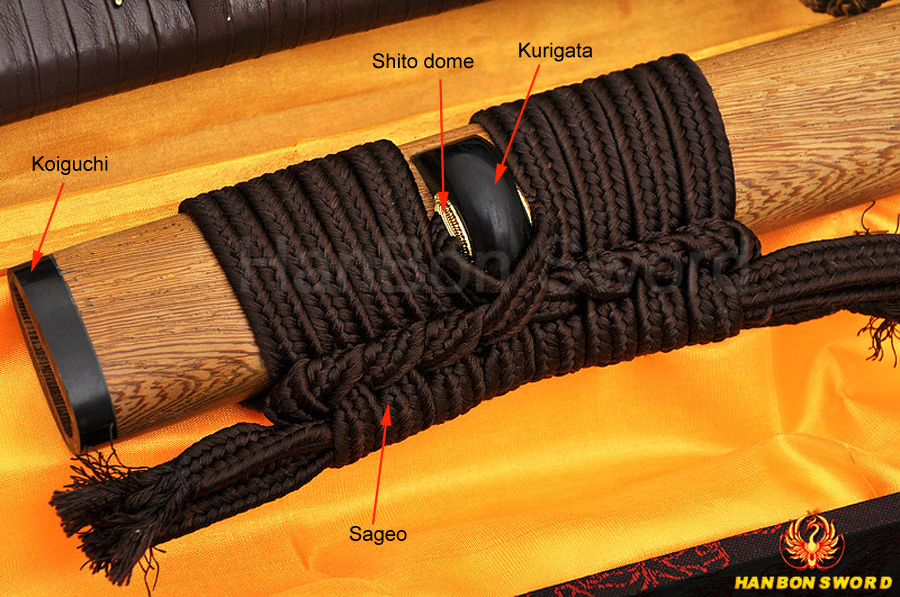
1. Sageo – The Cord Attached to the Saya
The sageo (下緒) is the cord attached to the saya. It passes through the kurikata and can be used to help secure the scabbard to the obi, or belt.
The sageo is an important part of the overall Japanese sword mounting. In addition to its practical purpose, it contributes significantly to the appearance of the sword. Different colors, materials, and tying styles can completely change the visual character of a katana.
Traditional and modern sageo may be made from several materials, including:
- Silk
- Cotton
- Leather
- Other woven materials
The sageo is often selected to match or complement the tsuka-ito, the wrapping material used on the sword handle.
For collectors and custom sword buyers, changing the sageo is one of the easiest ways to personalize the appearance of a katana without changing the blade or major fittings.
2. Kurikata – The Attachment Point for the Sageo
The kurikata (栗形) is a small fitting attached to the side of the saya. It contains an opening through which the sageo passes.
The kurikata serves as the connection point between the saya and sageo. This allows the cord to be attached to the scabbard and used when securing the sword to an obi.
Although the kurikata is relatively small, it is one of the most recognizable parts of a Japanese sword scabbard. Its shape, material, and placement can vary depending on the style of the sword mounting.
On many katana, the kurikata is made from horn or another durable material. Decorative versions may also include metal accents or other ornamental details.
3. Koiguchi – The Mouth of the Saya
The koiguchi literally refers to the mouth or opening of the saya. It is the point where the blade enters the scabbard.
The koiguchi is one of the most important functional areas of a katana scabbard because it works together with the habaki to help keep the sword properly seated.
A properly fitted koiguchi should provide secure retention without making the sword difficult to draw. The blade should remain stable inside the saya while still allowing smooth movement when the sword is drawn or returned.
Depending on the construction of the saya, the koiguchi may be reinforced with a durable material such as buffalo horn.
Because this area experiences repeated contact during drawing and sheathing, the quality of the koiguchi can have a major effect on the overall function of the saya.
4. Kojiri – The End of the Katana Scabbard
The kojiri (小尻) is the fitting located at the end or tip of the saya.
Its purpose is both practical and decorative. The kojiri finishes the end of the scabbard and can help protect this area from wear or impact.
Depending on the style of the sword, the kojiri may be made from:
- Buffalo horn
- Brass
- Copper
- Other metal fittings
- Finished wood
On simple katana, the end of the saya may have a minimal design. On more decorative Japanese sword mountings, the kojiri can become an important visual feature.
5. Shitodome – Decorative Fittings for the Kurikata
The shitodome is a small decorative fitting associated with the kurikata. It is usually placed around or inside the opening where the sageo passes through.
In addition to adding visual detail, shitodome can create a more refined appearance around the kurikata. These fittings are commonly made from metal and may be found in different shapes and styles.
On decorative katana and custom sword mountings, small details such as shitodome can make a noticeable difference in the overall appearance of the saya.
Although it is a relatively small component, it demonstrates the level of attention traditionally given to Japanese sword fittings.
Why Does the Fit of a Saya Matter?
The fit of the katana saya is extremely important. A saya is not simply a container for the blade. It must work together with the habaki and the shape of the sword.
If a saya is too loose, the blade may move or rattle inside the scabbard. If it is too tight, drawing and sheathing the sword can become difficult.
A well-fitted saya should provide a balance between security and smooth operation.
- The sword should remain securely seated.
- The blade should not move excessively inside the saya.
- The sword should be able to be drawn smoothly.
- The koiguchi should fit correctly around the habaki.
- The interior should avoid unnecessary contact with the cutting edge.
This is why a replacement saya should ideally be selected or made specifically for the blade it will hold. Even two katana with similar blade lengths may have different curvature, width, thickness, or habaki dimensions.
Different Styles of Katana Saya
One of the most interesting features of the Japanese sword is the variety of saya styles available. The saya covers a large portion of the sword and therefore has a major influence on the overall appearance of the koshirae.
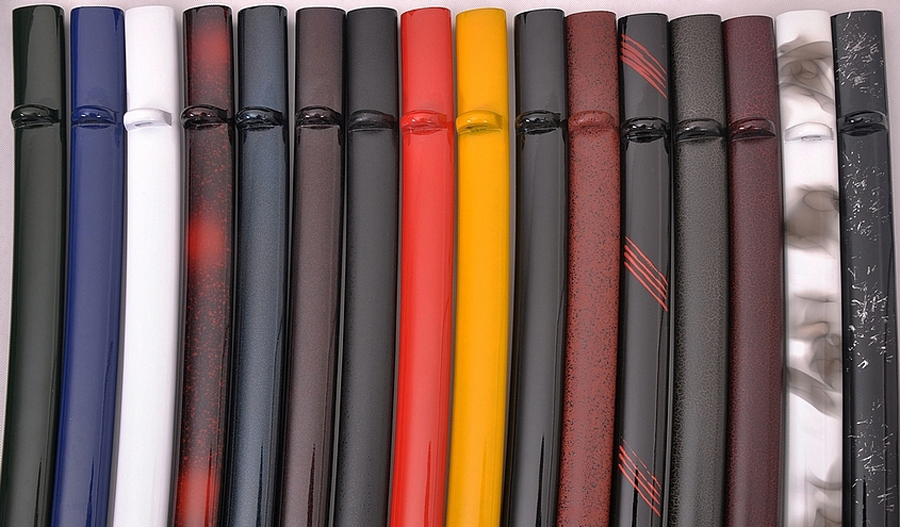
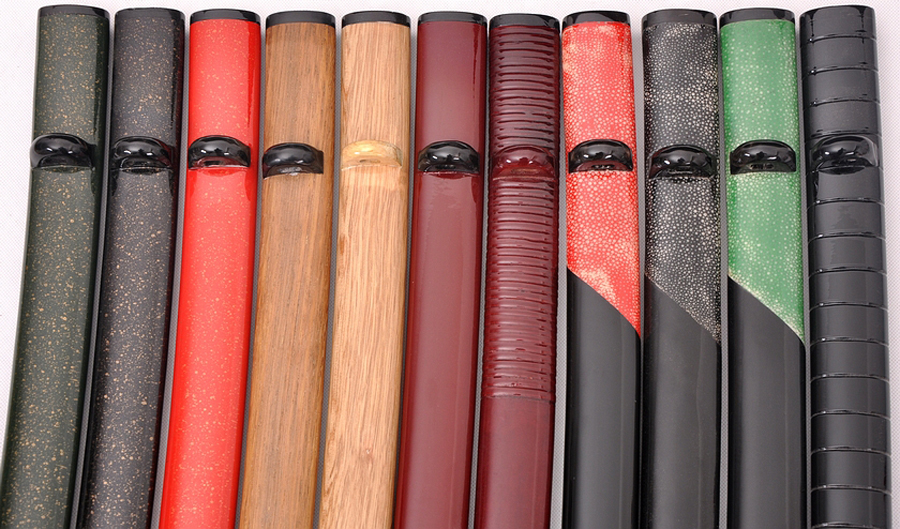
Some common styles include:
- Black lacquer saya – A classic and traditional-looking design.
- Colored lacquer saya – Red, brown, blue, white, and other finishes.
- Gloss lacquer saya – A smooth, polished appearance.
- Textured saya – Designed with a more distinctive surface.
- Rayskin wrapped saya – A decorative style using samegawa or rayskin.
- Patterned saya – Featuring artistic designs or contrasting finishes.
When choosing a custom katana saya, many collectors coordinate the scabbard with the tsuka, tsuba, sageo, and other sword fittings.
Replacement Saya for Katana: What Should You Consider?
A replacement saya can be useful when an existing scabbard has been damaged, cracked, or no longer fits properly. However, replacing a katana saya requires more attention than simply matching the overall blade length.
Before choosing a replacement katana scabbard, consider the following:
- Blade length
- Blade curvature
- Blade width
- Blade thickness
- Habaki dimensions
- Koiguchi fit
- Overall saya shape
For the best fit, a custom katana saya is often preferable to a generic replacement. A saya made specifically for a particular blade can provide better fit and improve the overall appearance of the sword.
Collectors should also remember that a poorly fitted scabbard may cause unnecessary contact with the blade during repeated drawing and sheathing.
How to Care for a Katana Saya
Proper care can help extend the life of a Japanese sword scabbard. Although the saya is primarily designed to protect the blade, the scabbard itself also requires careful handling.
Here are a few basic saya care tips:
- Avoid dropping or striking the saya against hard surfaces.
- Keep the scabbard away from excessive moisture.
- Avoid sudden and extreme temperature changes.
- Check the koiguchi for cracks or looseness.
- Do not force a blade into a saya that does not fit properly.
- Keep decorative lacquer surfaces clean and dry.
If a saya becomes cracked or damaged, it should be inspected before continuing to use it. Damage around the koiguchi or along the wooden body may affect the fit of the blade.
The Saya as Part of Japanese Sword Koshirae
The saya is an important part of the complete Japanese sword mounting, known as koshirae.
A complete katana is made up of many individual components, including the blade, tsuka, tsuba, habaki, seppa, saya, sageo, and other fittings.
While the blade often receives the most attention, the saya has an equally important role in the everyday handling and appearance of the sword.
The combination of the saya finish, sageo color, kurikata, kojiri, and other details can give a katana its own distinctive character.
For this reason, collectors often consider the saya when designing a custom Japanese sword. A carefully selected scabbard can complement the blade and bring all of the sword's fittings together into a complete design.
Choosing the Right Katana Saya
When choosing a katana saya, appearance is important, but fit should always be a priority.
A beautiful lacquer finish or decorative rayskin design may improve the appearance of a sword, but the saya must also fit the blade correctly.
For collectors looking for a replacement or custom option, it is helpful to consider:
- Whether the saya is made for a specific blade
- The material used for the main body
- The quality of the koiguchi
- The style of lacquer or exterior finish
- The materials used for the kurikata and kojiri
- The type and color of sageo
- Whether the overall design matches the rest of the koshirae
A well-designed Japanese sword scabbard should combine function, durability, and appearance. Even small fittings can contribute to the final character of a katana.
Conclusion
The saya is much more than a simple katana scabbard. It protects the blade, supports the way the sword is carried, and forms a major part of the sword's overall appearance.
From the koiguchi at the mouth of the scabbard to the kojiri at the tip, every part of the saya has a purpose. The kurikata and sageo provide a connection for carrying and securing the sword, while decorative fittings such as shitodome add additional detail.
Whether you are learning about Japanese sword parts, choosing a replacement saya, or designing a custom katana, understanding the construction of the katana saya can help you appreciate one of the most important components of traditional Japanese sword koshirae.
Frequently Asked Questions About Katana Saya
What is a saya on a katana?
A saya (鞘) is the traditional scabbard of a Japanese sword. On a katana, it protects the blade when the sword is not being used and forms an important part of the sword's complete mounting.
What is a katana saya made of?
The main body of a katana saya is traditionally made from wood. Depending on the design, additional materials such as lacquer, buffalo horn, brass, copper, metal fittings, or rayskin may also be used.
What is the koiguchi?
The koiguchi is the mouth or opening of the saya. It is the area where the blade enters the scabbard and works with the habaki to help keep the sword securely seated.
What is the kurikata on a katana?
The kurikata is a small fitting attached to the side of the saya. The sageo passes through it and can be used to help secure the sword scabbard to an obi.
What is a sageo?
A sageo is the cord attached to the saya through the kurikata. It may be made from materials such as silk, cotton, or leather and is also an important decorative element of Japanese sword koshirae.
What is the kojiri?
The kojiri is the fitting located at the end or tip of the saya. It can be made from horn, metal, or other materials and helps finish and protect the end of the scabbard.
Can I use a replacement saya for my katana?
Yes, but the replacement saya must fit the blade correctly. Blade length alone is not enough because blade curvature, width, thickness, and habaki dimensions can also affect the fit.
Can I order a custom katana saya?
A custom katana saya can be made to match a specific blade and chosen sword fittings. Custom options may include different lacquer finishes, colors, rayskin designs, kurikata styles, kojiri fittings, and sageo colors.