
Katana Hamon vs Hada: What is the Difference?
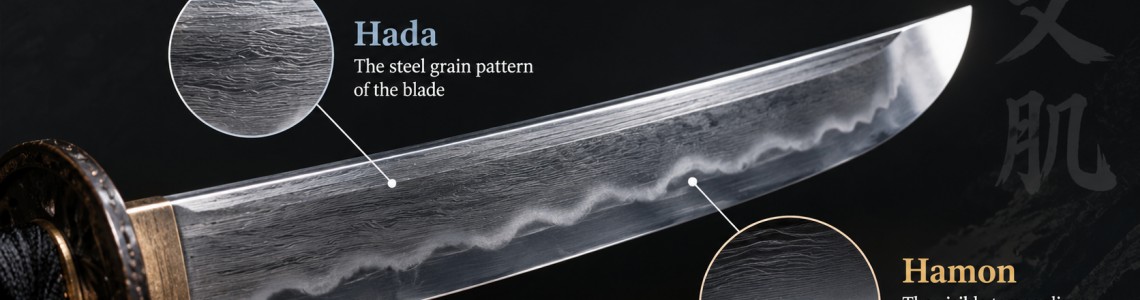
Katana Hamon vs Hada: What's the Difference?
When looking at a traditionally styled katana, two blade features often attract the most attention: the hamon and the hada. Both can create beautiful patterns on the blade, but they are not the same thing. They come from different aspects of Japanese sword construction and reveal different characteristics of the steel.
For anyone shopping for a katana, understanding the difference between hamon and hada can make it much easier to evaluate a blade. One is primarily associated with the hardening pattern along the cutting edge, while the other refers to the visible grain structure created through forging and folding.
In this guide, we will explain what katana hamon and hada are, how they are formed, how they look, and what to consider when choosing a Japanese-style sword.
What Is a Katana Hamon?
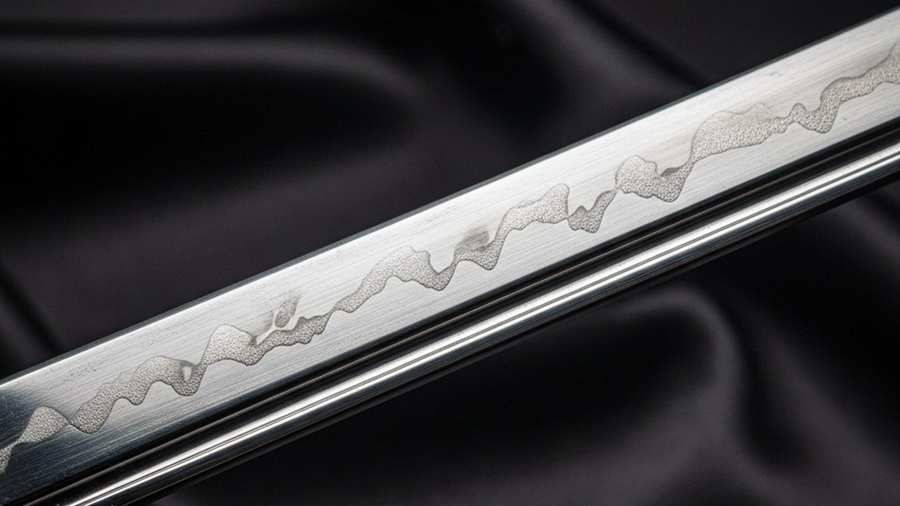
The hamon is the visible hardening pattern that appears along the edge of a traditionally differentially hardened Japanese sword. It is created during the heat-treatment process rather than simply being a decorative line added to the blade.
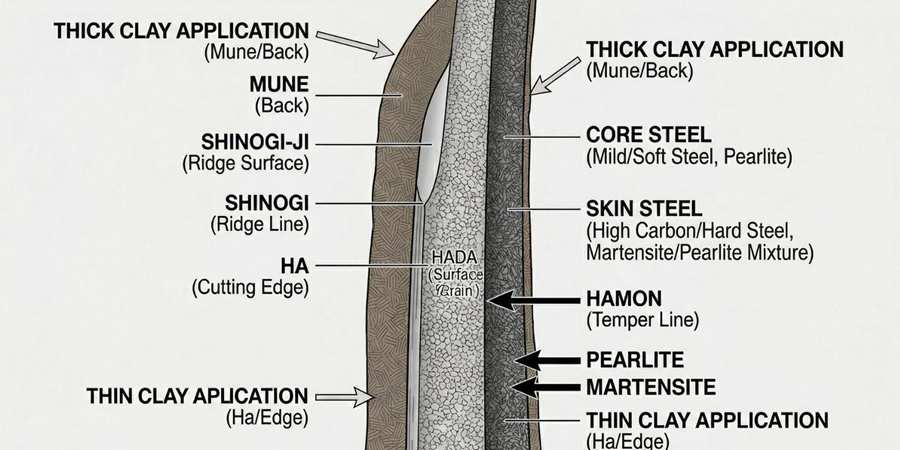
During traditional clay tempering, clay or a similar insulating material is applied to different areas of the blade. The cutting edge is generally exposed to faster cooling, while the thicker clay coating on the spine and other areas slows the cooling process. This creates different structures within the steel.
After polishing, the boundary between these differently hardened areas can become visible as the hamon. Depending on the heat treatment, blade geometry, polishing method, and steel, the hamon may appear as a clear, soft, or highly detailed pattern.
Common Hamon Styles
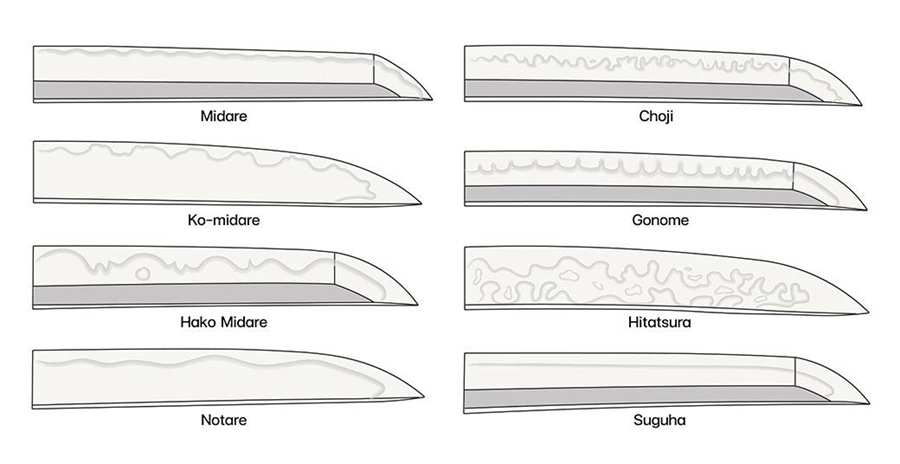
Japanese swordsmiths have developed many different hamon patterns over the centuries. Some common styles include:
- Suguha: A relatively straight hamon running along the edge.
- Gunome: A series of rounded or wave-like patterns.
- Notare: A broader, flowing wave pattern.
- Choji: A pattern with shapes that can resemble cloves or flowering forms.
- Midare: An irregular or undulating hamon pattern.
On modern handmade katana, these traditional pattern names are often used to describe the intended appearance of the hamon.
What Is Katana Hada?
Hada refers to the visible grain pattern of the steel on a Japanese sword. Unlike hamon, hada is primarily associated with the forging process and the internal grain structure that becomes visible through polishing.
Traditional Japanese swordsmiths repeatedly forge and fold steel as part of the sword-making process. This helps distribute the carbon and work the material into a suitable billet. The resulting layers and forging patterns can become visible on the finished blade.
The appearance of hada depends on the steel, forging method, number and direction of folds, polishing technique, and the skill of the swordsmith and polisher. Because of this, two blades made using different processes can have very different grain patterns.
Common Types of Hada
Traditional Japanese sword terminology includes several descriptions for different hada patterns. Some commonly discussed examples include:
- Itame: A wood-grain-like pattern with rounded or swirling shapes.
- Masame: A straighter grain pattern that follows the direction of the blade.
- Ayasugi: A distinctive wavy or undulating grain pattern.
- Jitetsu: A broader term relating to the visible surface characteristics and steel texture of a Japanese blade.
The hada can be subtle and difficult to see on some blades, especially when viewed under ordinary lighting. A properly polished blade and suitable lighting can make the grain structure much easier to appreciate.
Hamon vs Hada: The Main Difference
The simplest way to remember the difference is this:
| Feature | Hamon | Hada |
|---|---|---|
| What it is | Visible hardening pattern | Visible steel grain pattern |
| Main origin | Heat treatment and differential hardening | Forging and steel-working process |
| Typical location | Along the cutting edge | Across the blade surface |
| Common patterns | Suguha, Gunome, Notare, Choji | Itame, Masame, Ayasugi |
| Main process | Heat treatment | Forging and polishing |
In simple terms, hamon tells you about the blade's hardening pattern, while hada reveals aspects of the steel's forging structure.
How Does Hamon Affect a Katana?
A visible hamon on a traditionally differentially hardened blade is evidence of a particular heat-treatment approach. The harder edge and relatively tougher body are intended to provide a balance between edge hardness and overall blade resilience.
However, the appearance of a hamon should not be used by itself to judge the quality of a katana. Heat treatment, steel composition, blade geometry, polishing, and overall construction all matter when evaluating a sword.
For example, a beautiful Notare or Gunome pattern can make a blade visually attractive, but the pattern alone does not tell you everything about how well the blade was made.
How Does Hada Affect a Katana?
Hada primarily contributes to the visual character of the blade. It allows the viewer to see evidence of the forging process and gives traditionally forged Japanese swords much of their distinctive appearance.
A well-defined hada can add depth and texture to a polished blade. Collectors and enthusiasts may study the grain direction, consistency, and characteristics of the steel as part of appreciating the sword.
As with hamon, however, hada should be considered together with the overall construction and manufacturing process rather than treated as the only indicator of quality.
Can a Katana Have Hamon Without Visible Hada?
Yes. Hamon and hada are separate features, so the visibility of one does not necessarily mean the other will be equally visible.
A blade may have a clearly visible hamon while its hada is subtle or difficult to see. This can depend on the type of steel, forging process, polishing method, and surface finish.
Likewise, a traditionally forged blade may display visible grain while having a relatively subtle hamon.
Can a Modern Katana Have a Hamon and Hada?
Yes, depending on how the blade is manufactured. Modern handmade katana can use different steels and different forging and heat-treatment methods. Some are clay tempered to produce a genuine differential hardening pattern, while others use alternative heat-treatment methods.
Similarly, folded or pattern-forged blades can display visible grain characteristics, while monosteel blades may have little or no traditional hada.
When purchasing a modern katana, it is therefore important to read the manufacturer's specifications rather than assuming that every visible blade pattern has the same origin.
How to See Hamon and Hada on a Katana
Lighting has a major effect on how blade features appear. A hamon or hada that is difficult to see in a photograph may become much more obvious when the blade is viewed under suitable lighting and from different angles.
- Use soft, indirect lighting when examining the blade.
- Change the viewing angle to reveal subtle surface patterns.
- Look along the blade rather than directly at the reflected light.
- Use high-quality photographs when comparing online listings.
- Check the product specifications to understand how the blade was made.
For collectors and enthusiasts, learning to recognize these details can make examining a katana much more rewarding.
What Should You Look for When Buying a Katana?
If you are choosing a katana based on hamon and hada, start by determining what type of blade construction you want. A clay-tempered blade may be appropriate if you specifically want a visible differential hardening pattern, while a folded steel blade may be chosen for its forging texture and traditional appearance.
It is also useful to look beyond the blade patterns. Pay attention to the steel type, heat treatment, blade geometry, polishing, fittings, handle construction, saya, and the manufacturer's specifications.
For a custom katana, you can also discuss blade steel, hamon style, polishing, blade length, fittings, and other specifications with the sword maker before placing an order.
Frequently Asked Questions
Is hamon the same as hada?
No. Hamon is the visible pattern associated with the blade's differential hardening, while hada refers to the visible grain structure of the steel created through forging and related processes.
Which is more important, hamon or hada?
They represent different aspects of sword construction, so neither should be considered universally more important. Hamon relates primarily to heat treatment, while hada relates to the steel's forging structure and appearance.
Does every katana have a visible hamon?
No. Not every katana uses differential hardening, and even when a blade has been differentially hardened, the hamon may be subtle or difficult to see depending on the polishing and lighting.
Does every katana have hada?
No. Visible traditional hada is generally associated with particular forging processes. A modern monosteel blade may have little or no visible traditional grain pattern.
What is the difference between hamon and a decorative blade line?
A genuine hamon results from the blade's heat-treatment process and can reflect differences in the hardened structure of the steel. A decorative line may simply be a surface treatment or visual effect and does not necessarily indicate differential hardening.
Can T10 steel have a hamon?
Yes. T10 steel can be used for clay-tempered blades with differential hardening. The resulting hamon depends on the heat-treatment process, clay application, cooling process, polishing, and other manufacturing factors.
Can a folded katana have both hamon and hada?
Yes. Folding or forging can create visible hada, while differential heat treatment can create a hamon. These features come from different parts of the sword-making process and can appear together on the same blade.
Final Thoughts
Hamon and hada are two of the most interesting visual characteristics of a Japanese-style sword, but they tell different stories about the blade. The hamon is primarily connected to differential hardening and heat treatment, while the hada reflects the grain structure produced through forging and steel-working.
Understanding these differences can help beginners recognize what they are seeing when examining a katana and can also make it easier to compare different blade constructions.
Whether you prefer a flowing Notare hamon, a distinctive Gunome pattern, or the subtle texture of traditional hada, the most important step is to understand how the blade was made and to consider its complete construction rather than judging it by one visual feature alone.