
How to Fix a Loose Katana Saya: Complete Scabbard Repair Guide
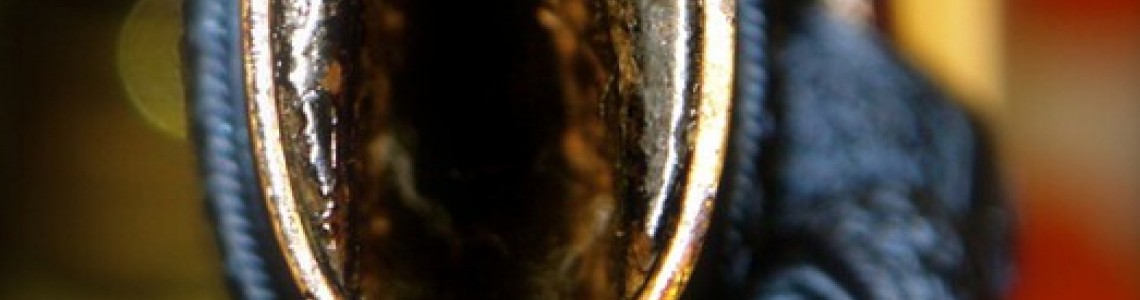
A loose katana saya can result from wear around the koiguchi, changes in humidity, or an imperfect fit between the scabbard and habaki. Minor looseness at the saya opening may sometimes be corrected with a carefully fitted thin wooden shim. However, blade rattling, structural cracks, or insecure retention can require different solutions. This guide explains how to identify the problem, understand the traditional fitting system, and decide when a repair or professional inspection is appropriate.
How to Fix a Loose Katana Saya: Complete Scabbard Repair & Maintenance Guide
A properly fitted saya (鞘) is an important part of a Japanese sword's construction. The saya protects the blade during storage and helps retain the sword securely when it is fully seated.
Over time, some katana owners notice that their sword no longer fits as securely inside its scabbard. The sword may become easier to draw, the habaki may no longer seat firmly, or unwanted movement may develop.
These symptoms are sometimes grouped together under the term loose saya, but they do not necessarily have the same cause or require the same repair.
One traditional approach to correcting minor looseness around the saya opening involves a carefully fitted thin wood shim. However, the suitability of this method depends on the location of the problem and the condition of the scabbard.
This guide from HanBon Forge explains how the habaki and koiguchi work together, common causes of loose fit, general repair considerations, mistakes to avoid, and when professional assistance is the safer option.
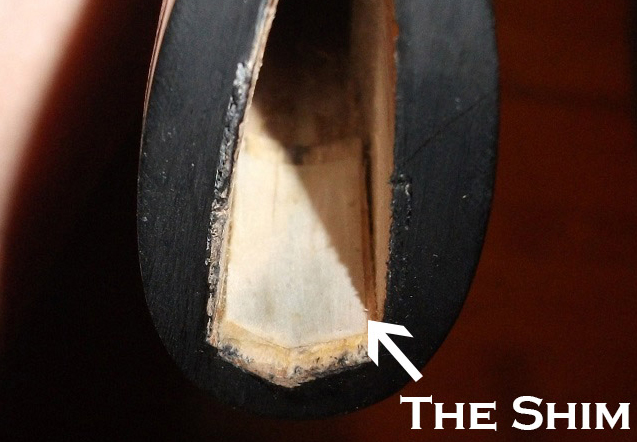
If the problem is minor wear at the koiguchi, a thin wooden shim may help restore the friction fit around the habaki. The adjustment must be properly positioned and securely attached without interfering with the blade.
Do not confuse loose retention with internal blade rattling. These problems may have different causes.
Safety first: If the blade slips out unexpectedly, the saya is cracked, or you are unsure where the looseness occurs, stop using the sword and consult a qualified sword fitter.
1. Why Does a Katana Saya Become Loose?
Most traditional-style katana saya have a wooden core. Because wood responds to moisture and environmental conditions, its dimensions can change slightly over time.
The contact surfaces around the opening can also wear through repeated use.
Repeated Drawing and Resheathing
Normal use creates repeated contact between the habaki and the internal surfaces of the koiguchi.
Over time, wear in this area may reduce the friction responsible for retaining the sword.
Humidity and Climate Changes
Wood absorbs and releases moisture in response to surrounding humidity. These changes can affect the fit between the saya and the blade assembly.
A sword that fits properly in one climate may become somewhat tighter or looser after being moved to another environment.
Wear or Damage at the Koiguchi
The koiguchi is the mouth of the scabbard where the habaki normally seats. Repeated use, impact, or poor fitting can affect the condition of this opening.
Incorrect Initial Fitting
In some cases, a newly received saya may already be too loose because its interior was not fitted accurately to the specific blade and habaki.
A mismatch between the original scabbard and the sword can also cause retention problems.
| Possible Cause | Typical Effect | Recommended Response |
|---|---|---|
| Koiguchi wear | Reduced habaki retention | Evaluate the opening for suitable repair |
| Humidity changes | Temporary or persistent fit changes | Maintain stable storage conditions |
| Poor original fit | Loose retention from the beginning | Contact the maker or qualified fitter |
| Internal clearance | Rattling deeper inside the saya | Identify contact areas before repair |
| Cracks or deformation | Unreliable retention or blade contact | Professional inspection or replacement |
2. Understanding How the Habaki Fits Inside the Saya
Before considering a repair, it is important to understand how the sword is normally retained inside the scabbard.
The habaki (鎺) is the metal collar fitted at the base of the sword blade.
When the sword is fully sheathed, the habaki seats into the koiguchi (鯉口), the opening of the saya.
This fitted relationship provides much of the friction that keeps the sword securely seated.
The blade itself should not depend on extensive contact with the interior of the scabbard to remain secure.
Why Is Correct Habaki Fit Important?
An accurately fitted habaki helps retain the sword without requiring excessive force.
If the fit is too loose, the sword may become unexpectedly unseated. If it is too tight, drawing and sheathing can become difficult or unsafe.
3. Loose Habaki Fit vs Blade Rattle: Know the Difference
Two of the most common saya complaints are loose retention and blade rattling. These symptoms can occur together, but they should be evaluated separately.
Loose Retention at the Koiguchi
The sword does not remain securely seated because the habaki-to-koiguchi friction has become insufficient.
This is the situation in which a correctly fitted wooden shim may be considered.
Rattling Inside the Saya
A rattling sound may indicate excessive clearance between the blade and the scabbard cavity.
A koiguchi adjustment does not necessarily resolve this problem, particularly when the blade is already securely seated at the opening.
The location of unwanted movement should be identified before attempting a repair.
A Saya That Is Too Tight
Excessive resistance is a different problem from looseness and should not be treated with a shim.
Possible causes include swelling, deformation, debris, or an incorrectly fitted habaki or scabbard.
Never force the blade into or out of a tight saya.
| Symptom | Possible Issue | Next Step |
|---|---|---|
| Sword does not seat securely | Loose habaki-to-koiguchi fit | Evaluate local fitting surfaces |
| Rattle with blade fully seated | Excessive interior clearance | Inspect internal fit separately |
| Sword is difficult to draw | Excessively tight fit or obstruction | Stop forcing; investigate the cause |
| Visible cracks at opening | Structural damage | Professional repair assessment |
4. Materials Used for a Minor Loose-Saya Adjustment
The original HanBon Forge article describes a repair using a small piece of thin wood veneer at the koiguchi.
This method is intended for localized fit adjustments rather than major structural repairs.
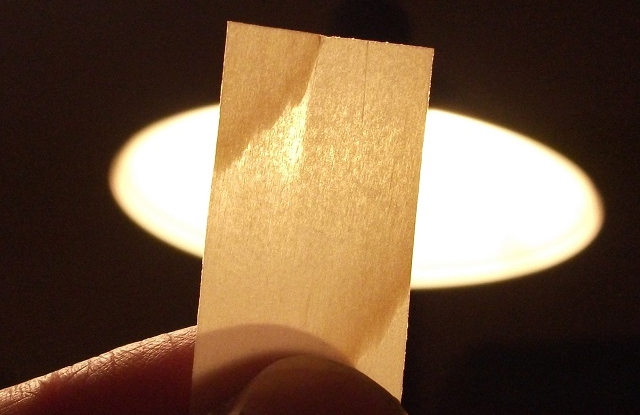
Thin Wood Veneer or Shim
A thin piece of suitable wood can be used to compensate for minor wear at the habaki seating area.
The material should be appropriately sized and selected for the scabbard construction.
Basic Preparation and Fitting Tools
A qualified repairer may use measuring, cutting, positioning, and suitable bonding tools to prepare and fit the shim.
The appropriate adhesive and method depend on the materials and the condition of the scabbard.
Why We Do Not Recommend Heated Screwdrivers for Beginners
The original article describes warming a screwdriver with a lighter or candle during the shim installation process.
However, an improvised heated-metal method can scorch wood, damage lacquer or adhesive, and create a fire or burn hazard.
For most owners, a carefully controlled non-heated fitting approach performed by someone experienced with Japanese sword scabbards is preferable.
5. How a Loose Katana Saya Is Repaired: Step-by-Step Overview
The following overview explains the main stages of a localized koiguchi adjustment. It is intended to help owners understand what the repair involves and when professional assistance is appropriate.
| Stage | Purpose |
|---|---|
| 1. Inspect | Determine whether the problem is retention, rattling, or structural damage |
| 2. Assess the Opening | Identify the actual habaki contact area |
| 3. Prepare the Shim | Select appropriately sized fitting material |
| 4. Fit and Secure | Restore localized friction without obstructing the blade |
| 5. Inspect the Result | Confirm secure seating without excessive resistance |
Step 1: Inspect the Sword and Saya
First, determine whether the sword has insufficient retention at the opening or unwanted movement deeper inside the scabbard.
Inspect the koiguchi for cracks, wear, loosened reinforcement, or other visible problems.
If the scabbard is structurally damaged, a simple shim may not be appropriate.
Step 2: Identify the Habaki Contact Area
The repairer examines where the habaki normally contacts the koiguchi.
The objective is to correct localized wear rather than reduce the entire internal cavity.
The appropriate location for a shim varies with the actual fitted surfaces and should not be assumed from a generic diagram.
Step 3: Prepare a Thin Wooden Shim
An appropriately sized piece of veneer is prepared for the area requiring adjustment.
A small, carefully controlled adjustment is preferable to adding excessive material.
A shim that is too thick can make the sword difficult to draw or introduce undesirable pressure at the scabbard opening.
Step 4: Fit and Secure the Shim
The shim is fitted to the identified contact surface and secured using an appropriate method.
It should not extend into the blade's travel path or create loose debris inside the saya.
Installation must allow any bonding material to cure fully before the sword is reintroduced.
Step 5: Check the Finished Fit
After the adjustment is complete, the finished fit should be inspected in controlled, safe conditions.
The sword should seat securely and should not require unusual force to draw or sheath.
Any unexpected resistance, grinding sensation, debris, or insecure retention means the fit should be reassessed.
6. Common Mistakes When Fixing a Loose Saya
Some seemingly convenient repair methods can create more serious problems than the original loose fit.
Removing Too Much Wood
Unnecessary sanding or filing inside a loose koiguchi increases clearance and can make the problem worse.
Using Excessive Glue
Excess adhesive can contaminate internal surfaces or create unwanted contact with the blade and habaki.
Using Improvised Heating Tools
Heating metal tools near a wooden scabbard creates unnecessary risks of scorching, finish damage, burns, and fire.
Adding Loose Padding Deep Inside the Saya
Loose foam, fabric, or adhesive-backed material placed inside the scabbard can shift, trap moisture, collect debris, or make unwanted contact with the blade.
Ignoring Cracks or Structural Damage
A cracked or deformed saya may require professional repair or replacement rather than a localized adjustment.
7. How to Prevent a Katana Saya from Becoming Loose
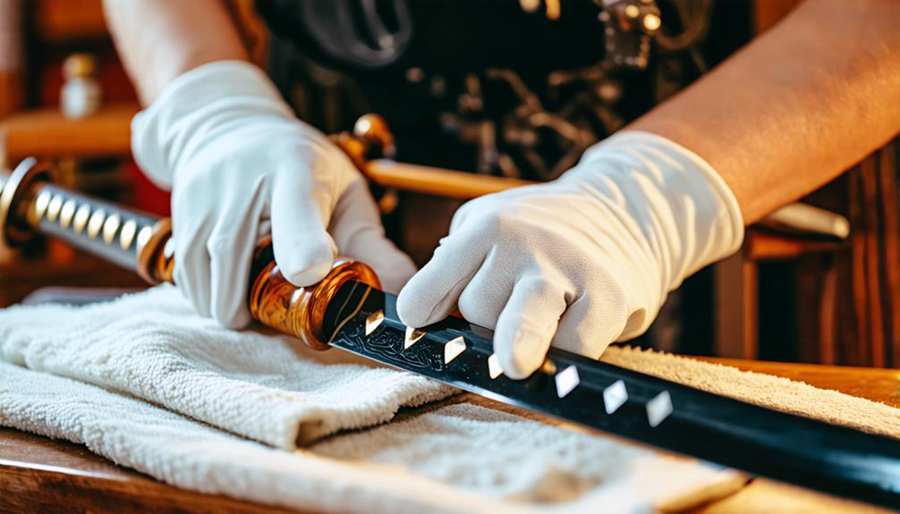
Good storage and maintenance practices help reduce avoidable changes to a wooden scabbard.
Maintain Stable Humidity
Avoid prolonged storage in damp conditions, direct sunlight, or locations subject to large temperature and humidity changes.
Use Controlled Drawing and Sheathing
Improper handling and forcing the blade can damage the koiguchi or other scabbard surfaces.
Keep the Blade Properly Maintained
Excessive blade oil, dust, and dirt can accumulate or contribute to problems inside the saya.
Maintain the blade using suitable methods, avoiding unnecessary application of oil inside the scabbard.
Inspect the Saya Periodically
Look for visible cracks, unexpected changes in retention, loose fittings, and unusual resistance during normal use.
For additional advice, read our Katana Saya Selection Guide.
8. When Does a Loose Saya Need Professional Repair or Replacement?
Minor localized wear at the koiguchi may be repairable. However, some problems require more substantial work.
Seek professional assessment if:
- The saya has visible cracks or splits.
- The wooden core is warped or deformed.
- The koiguchi has broken or separated.
- The sword cannot be retained securely after a suitable adjustment.
- The blade makes significant contact with the interior.
- The saya contains loose material or suspected contamination.
- A previous repair has failed or introduced excessive resistance.
9. HanBon Forge: Saya Fitting and Customer Support
HanBon Forge produces handmade and custom Japanese-style swords with different blade dimensions, saya designs, and fittings.
During production, the relationship between the blade, habaki, and saya is an important part of assembling the finished sword.
What We Consider During Saya Fitting
- Blade length and curvature.
- Blade width, thickness, and tip geometry.
- Habaki dimensions and seating.
- Koiguchi retention.
- Internal clearance and unwanted movement.
- Saya finish and visible condition.
If Your HanBon Forge Saya Becomes Loose
If you experience an unexpected fit problem, contact our team with your order information and clear photographs or a short video demonstrating the issue safely.
Our team can review the details and discuss an appropriate solution based on the specific problem.
Please do not attempt permanent modifications before contacting us if the issue relates to a recently received sword.
Why Replacement Saya Are Not Universally Interchangeable
We generally do not offer a newly manufactured replacement saya for an existing blade when that blade is unavailable for accurate fitting.
The reason is practical: small differences in blade and habaki geometry may prevent a replacement scabbard from fitting correctly.
For new custom sword orders, choosing the blade and saya together allows the components to be fitted as part of the production process.
Learn more about our Custom Katana Options.
10. Common Misconceptions About Loose Katana Saya
Click each question to see the explanation.
Frequently Asked Questions About Loose Katana Saya
Common questions about loose saya, habaki fitting, scabbard care, and repair.
Final Thoughts: Maintaining a Properly Fitted Katana Saya
A secure saya fit is an important part of Japanese sword care and safe handling.
Minor wear at the koiguchi can sometimes be repaired through a localized fitting adjustment, but not every loose or rattling scabbard requires the same solution.
Understanding how the habaki, koiguchi, and blade cavity interact helps owners distinguish normal material changes from problems that require attention.
If the sword can become unexpectedly unseated, the wooden core is damaged, or the cause of the problem is unclear, seek professional inspection instead of forcing or modifying the components.
At HanBon Forge, we encourage customers to consider both the appearance and functional quality of the complete sword mounting.
Explore Custom Katana Saya at HanBon Forge
Choose a handmade Japanese-style sword with a coordinated blade, habaki, saya, and fittings, or contact our team for assistance with an existing order.
Customize Your Katana Contact HanBon ForgeReferences & Further Reading
- Leon Kapp, Hiroko Kapp, and Yoshindo Yoshihara — The Craft of the Japanese Sword. A reference covering traditional swordmaking and associated craftsmanship.
- Kokan Nagayama — The Connoisseur's Book of Japanese Swords. A reference on Japanese sword construction, terminology, and appreciation.
- The Metropolitan Museum of Art — Japanese Arms and Armor Collection. Historical Japanese swords and mountings. Explore the Museum Collection.
- HanBon Forge — How to Choose the Right Katana Saya. Materials, styles, fit, and customization. Read the Saya Guide.
- HanBon Forge — How to Tell if a Katana Is Well Made. A checklist covering construction and fittings. Read the Quality Guide.
Editorial Note: This article provides general information about katana saya construction and maintenance. Individual scabbard repairs should be based on the actual blade, habaki, and saya condition. The original repair photographs illustrate one fitting approach and do not establish that the same method is suitable for every sword.
About This Guide & Editorial Experience
Prepared by: HanBon Forge Team
Topic: Loose Katana Saya, Koiguchi, Habaki, Scabbard Fitting and Maintenance.
Practical Experience: Custom Japanese-style sword production, blade-to-saya fitting, component selection, and pre-shipment quality inspection.
HanBon Forge produces handmade katana, wakizashi, tanto, and other custom Japanese-style swords with different blade shapes, dimensions, and saya configurations.
This article combines the original HanBon Forge loose-saya repair examples with additional maintenance and safety considerations.
For custom orders, finished-sword photographs are provided for customer review before shipment.
Last Reviewed: October 2026