
How to Cut Paper Properly with a Katana | Katana Cutting Technique Guide
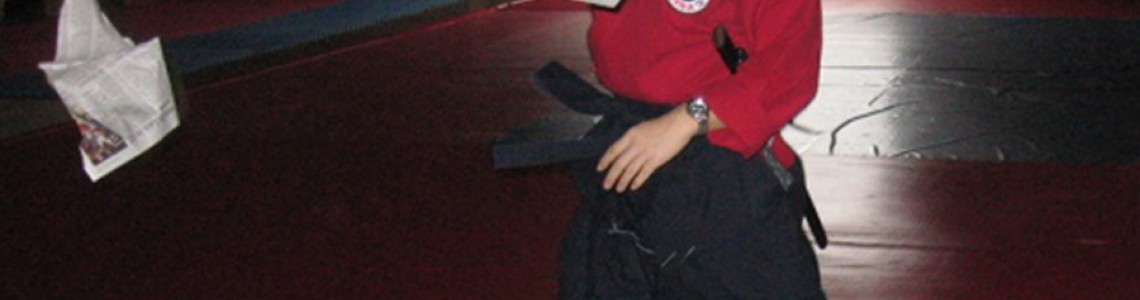
How to Cut Paper Properly with a Katana
Cutting a sheet of paper with a katana may look simple, but it can reveal a great deal about sword handling and cutting technique. A clean cut depends on more than strength. Blade sharpness, edge alignment, cutting angle, speed, and control all play an important role.
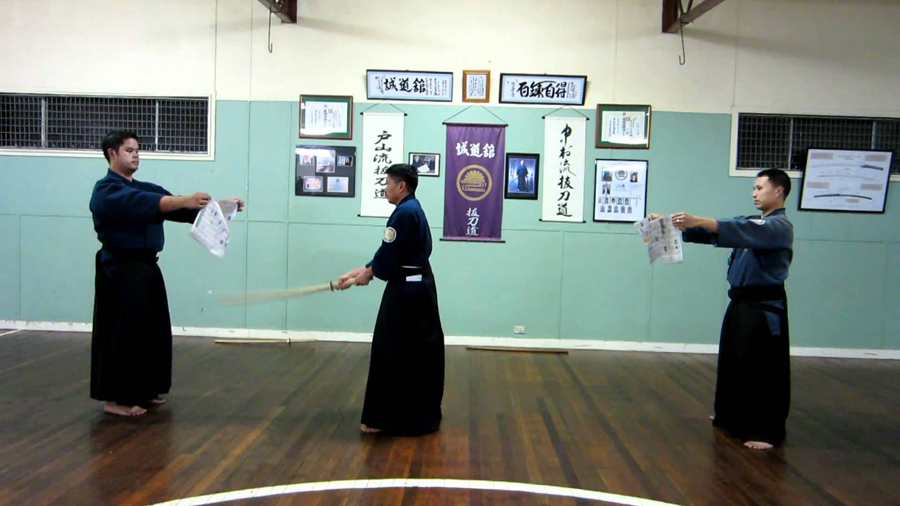
For beginners interested in how to cut paper with a katana, paper cutting can be an interesting way to understand the basic principles behind Japanese sword cutting. Because paper is extremely light, even small mistakes in blade alignment can cause the paper to move, fold, or tear instead of producing a clean cut.
The key is not to swing harder. A successful cut comes from good control, proper technique, and a sharp blade.
Why Is Cutting Paper with a Katana Difficult?
A suspended sheet of paper offers almost no resistance. Unlike heavier cutting targets, the paper can easily move away from the blade. This makes the target surprisingly difficult to cut cleanly.
When practicing katana paper cutting, several factors become immediately noticeable:
- The blade must be sufficiently sharp.
- The edge must meet the target at the correct angle.
- The sword must remain properly aligned during the motion.
- The movement must be smooth and controlled.
- Unnecessary tension can interfere with the cut.
A poorly aligned blade may push the paper aside or tear it unevenly. Even a sharp katana cannot compensate for poor edge alignment.
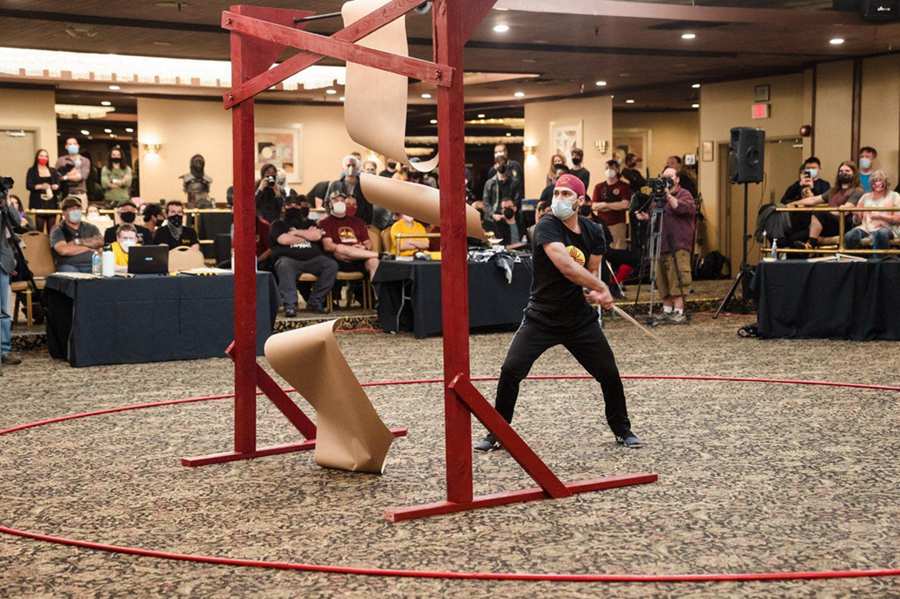
1. Start with a Sharp and Well-Maintained Blade
A clean paper cut requires a properly sharpened blade. A dull edge is more likely to drag, bend, or tear the paper.
However, sharpness alone is not enough. The blade must also be well maintained and free from damage. A katana intended for cutting practice should be inspected regularly to ensure that the blade and fittings are in good condition.
If you are using a real cutting sword, remember that a sharp katana can cause serious injury. Always handle the sword responsibly and follow appropriate safety practices.
2. Focus on Proper Edge Alignment
One of the most important elements of katana cutting technique is edge alignment. The cutting edge should travel through the target in the same direction as the movement of the sword.
If the blade twists during the swing, the edge may no longer contact the paper cleanly. Instead of cutting through the target, the flat of the blade may push the paper away.
This is why paper cutting can be useful for understanding sword control. A lightweight target quickly exposes problems with blade alignment.
Keep the motion natural and avoid forcing the sword. Good alignment should come from controlled handling rather than excessive muscle tension.
3. Use a Smooth and Controlled Cutting Motion
A common mistake is trying to force the katana straight down through the paper. A purely downward movement may not produce the clean result you expect.
Instead, the blade should move naturally through the target with a controlled cutting motion. The exact technique depends on the type of practice and the training method being used, but smooth movement is generally more effective than simply applying additional force.
When learning how to use a katana for cutting practice, beginners should focus on consistency rather than speed. A controlled movement is easier to evaluate and improve.
Trying to swing as fast as possible often leads to poor alignment and reduced control.
4. Relax Your Grip and Avoid Excessive Tension
Holding the sword too tightly can make the movement stiff and unnatural. Excessive tension may also cause the blade to rotate slightly during the swing.
A controlled grip allows the sword to move more naturally while maintaining proper direction. Your hands should guide the katana rather than fight against the motion.
Relaxation does not mean losing control. The goal is to maintain a secure and stable grip without unnecessary tension in the arms and shoulders.
Many experienced practitioners emphasize posture, balance, and relaxed movement because these elements contribute to better control of the blade.
5. Practice with Appropriate Cutting Targets
Suspended paper can be an interesting visual demonstration of blade alignment, but it is not the only target used for Japanese sword cutting practice.
Traditional cutting practice often uses specially prepared materials designed to provide predictable resistance. Different targets require different levels of skill, blade sharpness, and control.
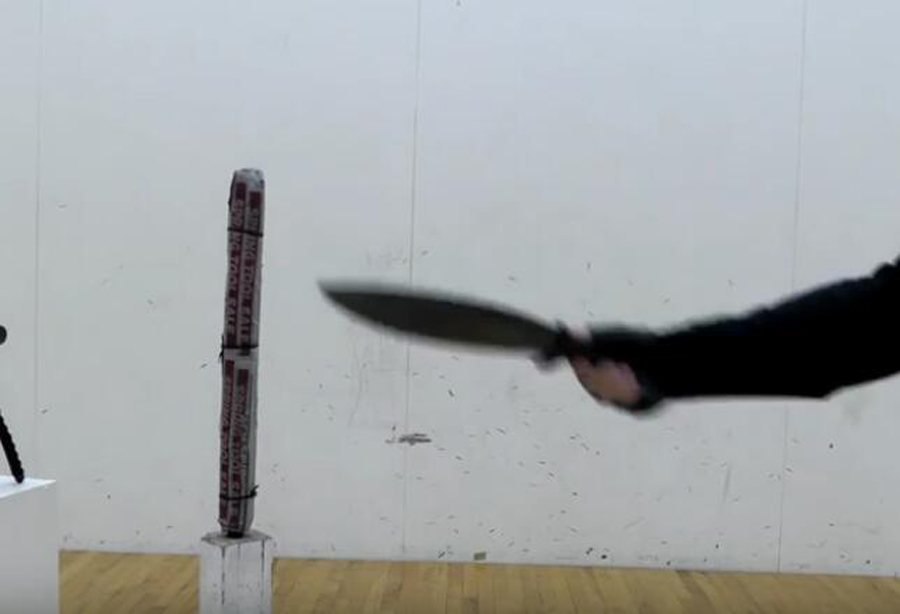
Some enthusiasts also experiment with tightly rolled newspaper that has been prepared and secured. This type of practice target is sometimes informally referred to as a “poor man's tatami” because it can provide more resistance than a single sheet of paper.
However, any cutting target should be used carefully. Improvised targets can behave unpredictably, so beginners should avoid advanced or potentially dangerous setups.
Common Mistakes When Cutting Paper with a Katana
If the paper does not cut cleanly, the problem is usually related to technique rather than strength. Here are some common mistakes:
Using Too Much Force
Swinging harder does not automatically produce a better cut. Excessive force can reduce control and make it more difficult to maintain proper edge alignment.
Poor Blade Alignment
If the blade twists during the motion, the edge may fail to contact the paper correctly. This can cause the paper to move away or tear unevenly.
Trying to Cut Too Slowly
A hesitant movement can allow a lightweight target to move before the blade passes through it. Smooth and committed motion is generally more effective than stopping or slowing down during the cut.
Over-Gripping the Handle
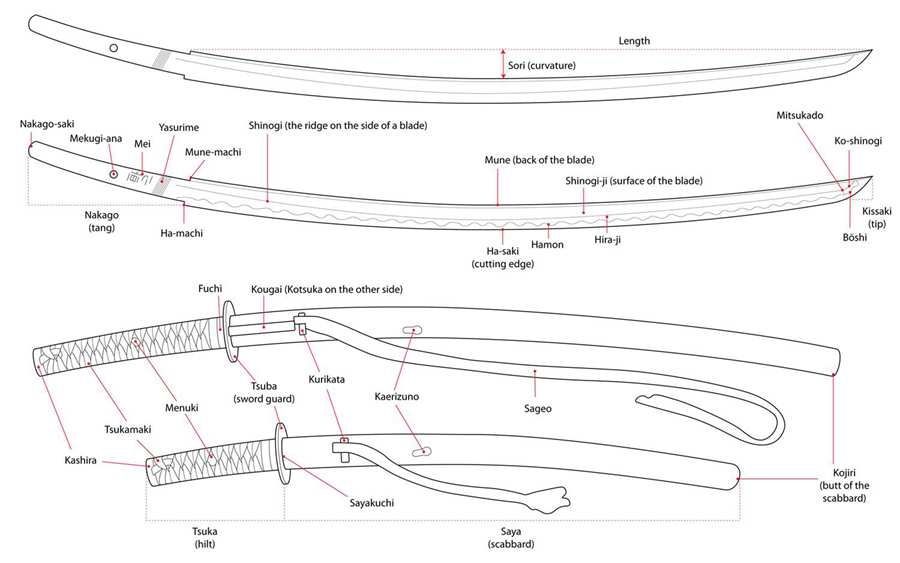
Holding the tsuka too tightly can create unnecessary tension. A stable but relaxed grip helps improve control.
Practicing Without Proper Space
Sword practice requires a clear and controlled environment. Never practice near other people, animals, fragile objects, or obstacles.
How to Improve Your Katana Cutting Technique
Improvement comes from repetition and observation. Instead of focusing only on whether the target was cut, pay attention to how the sword moved.
Ask yourself:
- Was the blade properly aligned?
- Did the sword move smoothly?
- Did the paper move before the blade reached it?
- Did the blade twist during the motion?
- Was your grip too tight?
- Did you maintain good posture and balance?
Recording practice sessions or observing experienced practitioners can also help identify areas that need improvement. Traditional sword arts place significant emphasis on posture, movement, timing, and consistency.
Beginners should learn from qualified instructors whenever possible, especially when handling a sharpened sword.
Safety Tips for Katana Cutting Practice
A real katana is not a toy. Even simple practice can become dangerous if basic safety precautions are ignored.
- Always make sure the surrounding area is clear.
- Never practice around other people or animals.
- Inspect the sword before use.
- Make sure the handle and fittings are secure.
- Use an appropriate practice environment.
- Avoid attempting advanced cutting techniques without training.
- Beginners should seek guidance from an experienced instructor.
Safety should always come before performance. A clean cut is never worth taking unnecessary risks.
Why Paper Cutting Is a Useful Test of Blade Control
Paper cutting is interesting because the target provides very little resistance. A heavier target may sometimes hide small mistakes, while a lightweight sheet of paper can react immediately to poor technique.
For this reason, cutting paper with a katana can demonstrate several important aspects of sword handling, including blade alignment, movement, timing, and control.
It should not be considered a replacement for formal Japanese sword training, but it can help sword enthusiasts better understand why correct technique matters.
Final Thoughts
Learning how to cut paper properly with a katana is less about power and more about precision. A sharp blade, proper edge alignment, smooth movement, and good control are the foundation of a clean cut.
If the paper tears, moves away, or refuses to cut cleanly, do not immediately assume that more force is needed. Instead, examine your blade alignment, posture, grip, and movement.
Like many aspects of Japanese sword practice, improvement comes from patience and careful attention to technique. Start slowly, prioritize safety, and focus on developing consistent control.
Frequently Asked Questions
Can a katana cut a sheet of paper?
Yes. A sufficiently sharp katana can cut paper, but producing a clean cut requires good edge alignment and controlled movement. A sharp blade alone does not guarantee success.
Why does my katana push the paper away instead of cutting it?
This is often caused by poor edge alignment or an incorrect cutting motion. If the blade twists or the edge does not contact the target properly, the paper may move away instead of being cut.
Do you need a very sharp katana to cut paper?
A sharp blade helps produce a clean cut, but technique is equally important. Poor blade alignment can prevent even a sharp katana from cutting properly.
Is cutting paper a good way to practice katana technique?
Paper can demonstrate problems with blade alignment and control because it is lightweight and moves easily. However, formal sword training should be learned under qualified instruction.
Should beginners practice cutting with a sharp katana?
Beginners should prioritize safety and proper instruction. Handling a sharpened sword carries significant risks, so inexperienced users should seek guidance from a qualified instructor before attempting cutting practice.
What is the most important factor in katana cutting?
Blade alignment is one of the most important factors. Properly aligning the cutting edge throughout the motion helps the blade pass through the target cleanly and efficiently.
Explore More Japanese Sword Guides
Understanding proper sword handling is an important part of appreciating the design and craftsmanship of Japanese swords. From blade geometry and sword maintenance to katana fittings and traditional cutting targets, learning more about these subjects can help you better understand the art and history behind the Japanese sword.
For more information about Japanese swords, katana construction, sword maintenance, and traditional sword culture, explore the HanBon Forge Sword Buyer Guide.