
How to Choose the Right Katana Saya: Styles, Materials & Customization
How to Choose the Right Katana Saya: Styles, Materials, and Customization Guide
When people choose a katana, most of the attention naturally goes to the blade. Steel type, hamon, blade shape, and polishing are often the first things collectors consider. However, the saya, or Japanese sword scabbard, is just as important to the overall design of the sword.
A well-designed katana saya protects the blade, provides a secure fit, and completes the visual style of the sword. The right saya can also change the character of a katana, from a simple and traditional appearance to a highly decorative custom design.
In this guide, we will look at the main katana saya styles, common materials and finishes, the difference between shirasaya and koshirae saya, and the most important factors to consider when choosing or customizing a Japanese sword scabbard.
What Is a Katana Saya?
Saya (鞘) is the Japanese term for the scabbard of a sword. On a katana, the saya houses the blade when it is not being drawn and forms an important part of the sword's overall mounting.
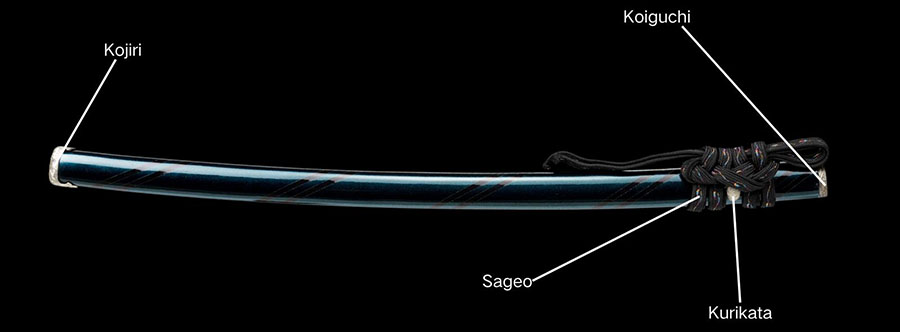
Traditional saya are made from wood and are carefully shaped to match the blade they are intended to hold. Important components include the koiguchi at the mouth of the scabbard, the kurikata used with the sageo cord, and the kojiri at the tip.
Because the saya is fitted to the individual blade, it should not be treated as a generic accessory. The length, curvature, width, thickness, and shape of the blade all influence how the scabbard should be constructed.
Why Does the Right Saya Matter?
The saya has both practical and aesthetic functions. A properly fitted scabbard keeps the sword secure while allowing the blade to be drawn and returned smoothly. It also protects the blade from unnecessary contact and helps complete the balance of the finished sword.
From a visual perspective, the saya is one of the largest parts of a mounted katana. Its color, texture, fittings, and finish can strongly influence the appearance of the entire sword.
For this reason, choosing a saya should not be an afterthought. The best design is one that works with the blade, fittings, handle, and intended use as a complete set.
Common Katana Saya Styles
Katana saya are available in many different styles. Some are simple and understated, while others use bold colors, textured finishes, or decorative details. The right choice depends largely on the overall style of the katana.
Black Lacquer Saya
Black is one of the most recognizable colors for a Japanese sword scabbard. A black lacquer saya creates a clean and traditional appearance and works well with many different blade and fitting combinations.
Glossy black finishes can give a katana a refined appearance, while textured or matte finishes create a more understated look.
Colored Saya
Red, blue, green, brown, and other colors can be used to create a more distinctive katana. Colored saya are especially useful for custom swords where the owner wants the scabbard to match the ito, tsuba, or other fittings.
Textured and Decorative Saya
Some saya use textured surfaces or decorative treatments to create additional visual depth. Depending on the design, decoration may be combined with lacquer, rayskin, metal fittings, or other materials.
When choosing a highly decorative saya, it is important to maintain a visual connection between the scabbard and the rest of the sword rather than selecting each component independently.
What Materials Are Used to Make a Katana Saya?
The traditional saya is primarily made from wood. Japanese sword scabbards have traditionally used lightweight magnolia wood, commonly known as honoki, because it is suitable for precise carving and is gentle on a polished blade.
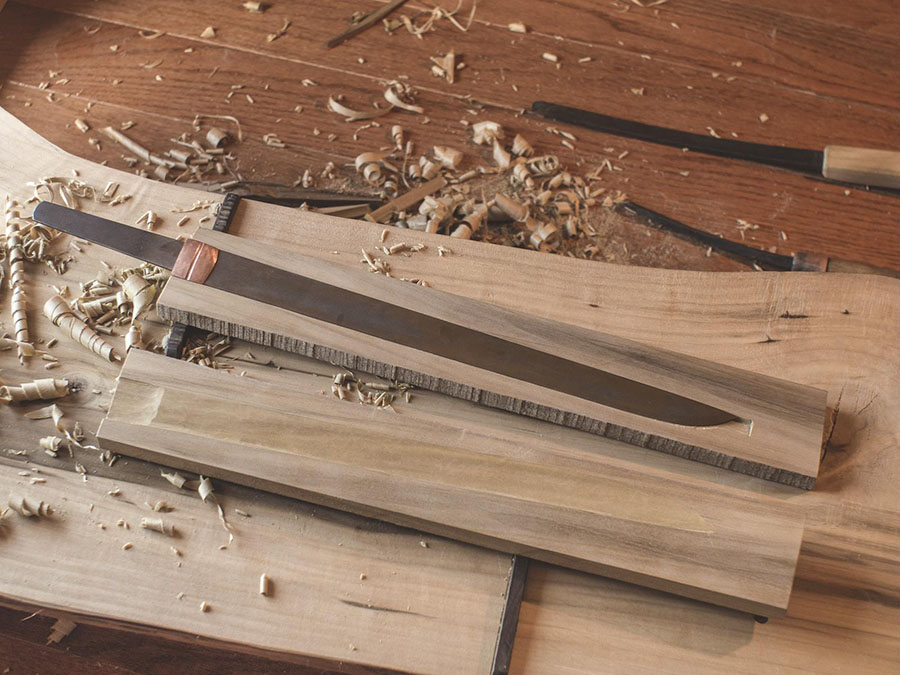
The wooden core may then be finished with lacquer or combined with additional materials depending on the design. Traditional and modern examples can include metal fittings, rayskin, decorative lacquer, and other finishing materials.
| Material / Finish | Main Characteristic |
| Honoki / Magnolia Wood | Traditional lightweight wooden core |
| Lacquer | Provides color, finish, and surface protection |
| Rayskin | Adds texture and a distinctive decorative appearance |
| Metal Fittings | Adds reinforcement and decorative detail |
The exact combination of materials depends on whether the saya is intended primarily for storage, display, carrying, or a custom aesthetic.
Shirasaya vs. Koshirae Saya
One of the most important distinctions to understand when choosing a Japanese sword scabbard is the difference between shirasaya and a saya used as part of a koshirae.
| Feature | Shirasaya | Koshirae Saya |
| Appearance | Plain natural wood | Decorative and finished |
| Main purpose | Blade storage and preservation | Complete mounting, display, and carrying |
| Lacquer | Normally none | Often lacquered |
| Decorative fittings | Minimal | May include various fittings |
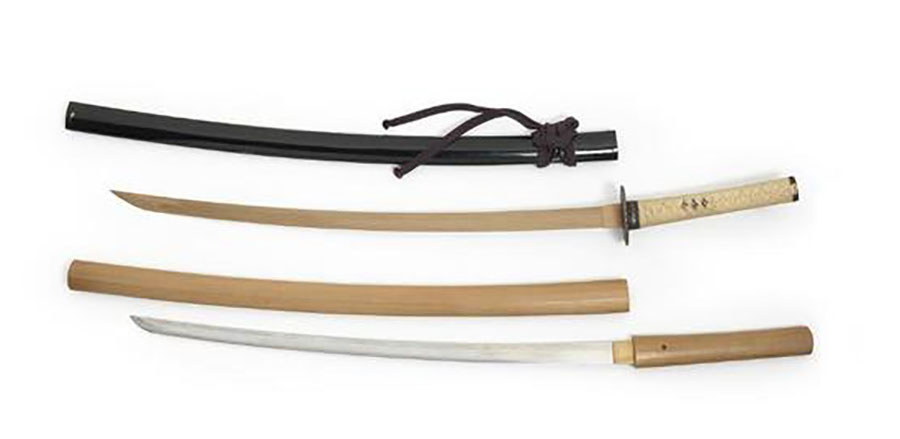
A shirasaya is a plain wooden storage mounting designed primarily for preserving a blade. A koshirae is a complete sword mounting, and its saya is normally finished and coordinated with the other components of the sword.
For collectors, understanding this difference is important because a storage saya and a decorative or carrying saya serve different purposes.
How to Match a Saya with Your Katana
When selecting a saya for a katana, it is helpful to consider the sword as one complete design. The saya should complement the blade rather than compete with it.
Match the Saya with the Tsuba
The tsuba is one of the most visible fittings on a katana. A simple black saya can work particularly well with ornate metal fittings, while a more decorative saya may be better paired with simpler fittings.
Consider the Ito Color
The color of the tsuka ito can be used to connect the handle and saya visually. For example, a black, dark blue, brown, or green ito can be paired with a complementary saya color to create a balanced appearance.
Think About the Overall Theme
Traditional, minimalist, elegant, historical, and highly decorative swords can each call for a different saya style. Choosing a theme before selecting individual fittings makes it easier to create a consistent final design.
How to Choose the Right Saya for Your Katana
If you are ordering a new katana or replacing an existing scabbard, consider the following factors before making your choice.
| Factor | What to Consider |
| Blade Dimensions | Blade length, width, thickness, curvature, and shape |
| Purpose | Storage, display, collection, or carrying |
| Style | Traditional, minimalist, modern, or decorative |
| Color | Match or complement the sword's fittings |
| Finish | Glossy, matte, textured, or decorative |
| Fittings | Kurikata, kojiri, sageo, and other details |
Most importantly, make sure the saya is properly fitted to the specific blade. A scabbard that is too loose can allow unwanted movement, while a poor fit can make drawing and sheathing difficult.
Custom Katana Saya: What Can Be Customized?
One of the advantages of ordering a custom katana is the ability to create a coordinated design. Instead of choosing a standard scabbard, collectors can select details that match their preferred style.
Depending on the sword maker and available options, customization may include the saya color, surface finish, decorative pattern, fittings, sageo, and other design elements.
For a custom katana, the saya should be considered together with the blade, hamon, tsuba, tsuka-ito, and kashira. A coordinated design usually creates a more natural and complete appearance than selecting each component separately.
Common Mistakes When Choosing a Katana Saya
Choosing Appearance Before Fit
A beautiful saya is not a good choice if it does not fit the blade correctly. Fit and compatibility should always come before decorative details.
Ignoring the Blade Shape
Different blade lengths, widths, thicknesses, and curves require different internal dimensions. A saya should be designed around the blade rather than selected only according to its external appearance.
Mixing Too Many Decorative Elements
A katana can become visually unbalanced when the saya, tsuba, menuki, ito, and other fittings all use competing colors and patterns. A consistent theme usually produces a cleaner result.
How to Maintain a Katana Saya
A katana saya should be kept clean, dry, and protected from unnecessary moisture. Wooden scabbards can respond to changes in humidity, so stable storage conditions are helpful.
Check the mouth of the saya and other high-wear areas periodically for damage or changes in fit. If the blade becomes unusually tight, loose, or difficult to draw and return, the scabbard should be inspected by a qualified sword professional rather than forced.
Never use excessive force to insert a katana into its saya. A properly fitted scabbard should hold the sword securely while allowing controlled drawing and sheathing.
Final Thoughts: Choosing the Right Katana Saya
The saya is much more than a cover for a katana. It protects the blade, contributes to the sword's balance and appearance, and can express the owner's personal taste.
When choosing a katana saya, start with the most important factor: proper fit. From there, consider the purpose of the sword, the blade's characteristics, the color and style of the fittings, and the overall design you want to create.
Whether you prefer a simple black lacquer saya, a colorful custom design, or a traditional shirasaya for storage, choosing the right scabbard can make a significant difference to the finished Japanese sword.
FAQ: Katana Saya
What is a katana saya?
A katana saya is the traditional Japanese scabbard designed to house and protect a katana blade. It is normally made with a wooden core and may feature lacquer, fittings, and other decorative details.
What is the difference between a saya and a katana sheath?
Saya is the traditional Japanese term for a sword scabbard. Katana sheath is the more general English expression used to describe the same type of protective covering.
What wood is traditionally used for a katana saya?
Traditional Japanese saya are commonly made from honoki, or Japanese magnolia wood. The material is lightweight and suitable for the precise construction required for a sword scabbard.
What is the difference between shirasaya and koshirae?
A shirasaya is a plain wooden storage mounting designed primarily for preserving a blade. Koshirae refers to a complete decorative sword mounting, which normally includes a finished saya along with the tsuka, tsuba, and other fittings.
Can a katana saya be customized?
Yes. Depending on the sword maker and available options, a custom katana saya can be designed with different colors, finishes, decorative details, fittings, and sageo styles.
Can one saya fit different katana blades?
A properly fitted saya is designed for a specific blade. Different blades can have different lengths, curves, widths, thicknesses, and habaki dimensions, so a saya should not be assumed to fit another katana without checking its dimensions and fit.
How do I choose the best saya color for my katana?
Start by considering the color and style of the blade fittings, especially the tsuba, tsuka, ito, menuki, and kashira. A saya that complements these elements can create a more balanced overall design.