
Clay Tempered Katana Guide | Japanese Sword Clay Tempering Explained

Clay Tempered Katana: Understanding Clay Tempering and Japanese Sword Making
When choosing a high-quality Japanese sword, many collectors and sword enthusiasts look for terms such as clay tempered katana, real hamon, and differential hardening. These traditional techniques are closely connected with the craftsmanship and performance of Japanese swords.
Clay tempering is a traditional heat treatment method used to create different hardness levels between the edge and spine of a blade. This process produces a harder cutting edge while maintaining a softer and more flexible spine, creating the famous Japanese sword temper line known as the hamon.
For centuries, Japanese swordsmiths have used this technique to balance sharpness, durability, and flexibility. Today, clay tempered blades remain one of the most popular choices for handmade katana because they combine traditional craftsmanship with practical performance.
What Is Clay Tempering?
Clay tempering, also known as differential hardening, is a blade heat treatment process where clay is applied to different areas of the sword before quenching.
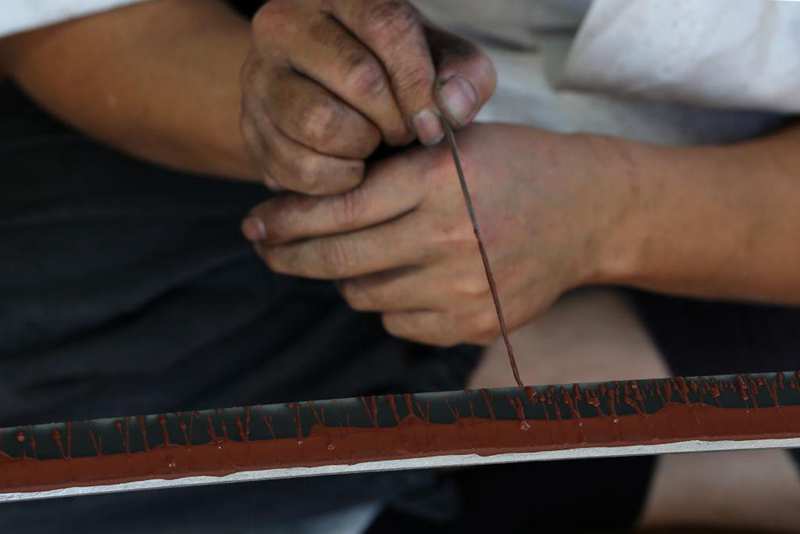
A thin layer of clay is applied along the cutting edge, while a thicker layer covers the spine and sides of the blade. During the quenching process, the exposed edge cools faster and becomes harder, while the protected areas cool more slowly and remain relatively softer.
This difference in hardness creates a blade with two important characteristics:
- Hard cutting edge: Provides better edge retention and cutting ability.
- Softer spine: Allows more flexibility and helps absorb impact.
- Visible hamon: Creates the traditional temper line found on Japanese swords.
The clay tempering process is one of the main reasons why authentic Japanese swords have their unique appearance and performance characteristics.
The History of Clay Tempering in Japanese Sword Making
The development of clay tempering is closely connected with the evolution of Japanese sword craftsmanship. Ancient swordsmiths discovered that controlling the cooling speed of steel could improve both the cutting ability and strength of a blade.
Traditional Japanese swordsmiths applied clay mixtures to the blade before the yaki-ire (hardening process). By controlling the thickness and shape of the clay coating, smiths could create different hamon patterns and adjust the characteristics of the blade.
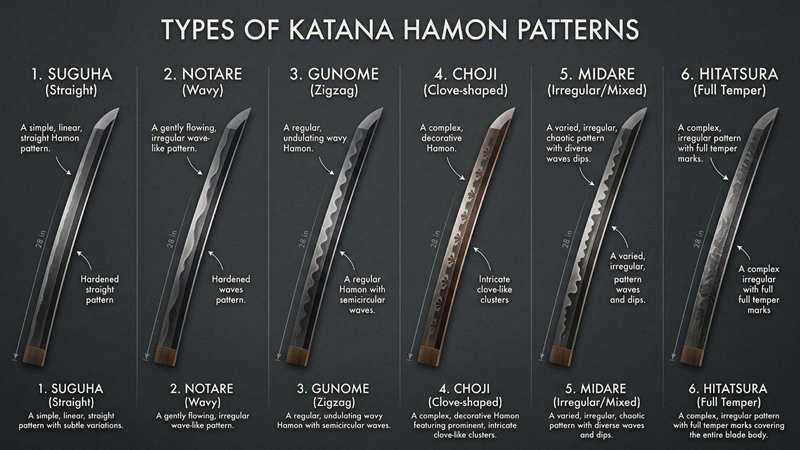
Different sword schools developed their own clay application methods, resulting in various hamon styles such as Suguha, Gunome, Choji, and Notare.
How Does Clay Tempering Work?
The clay tempering process involves several important steps. Each stage requires experience and precise control because temperature, clay thickness, and cooling speed directly influence the final blade quality.
Step 1: Applying Clay (Tsuchioki)
The first step is applying a special clay mixture onto the blade surface. This process is called tsuchioki.
The smith carefully controls the thickness and pattern of the clay. The edge usually receives a thinner coating, while the spine receives a thicker layer to slow down cooling.
The shape of the clay application directly influences the final hamon pattern visible after polishing.
Step 2: Heating the Blade
After applying clay, the blade is heated to a carefully controlled temperature. This stage requires experience because overheating or uneven heating can affect the steel structure.
Traditional swordsmiths judge the temperature by experience, visual observation, and knowledge accumulated through years of practice.
Step 3: Quenching the Blade
After reaching the correct temperature, the heated blade is quickly cooled through quenching. This is the most critical stage of clay tempering.
Because the cutting edge has less clay protection, it cools faster and transforms into harder martensite. The spine cools more slowly and retains a softer structure, improving flexibility.
The result is a differentially hardened blade with a strong edge, flexible spine, and visible hamon line after polishing.
Clay Tempered Blade vs Oil Quenched Blade
When choosing a handmade katana, many buyers compare clay tempered blades with oil quenched blades. Both methods are used to harden steel, but the final characteristics of the blades are different.
| Feature | Clay Tempered Blade | Oil Quenched Blade |
| Hardening Method | Differential hardening using clay coating. | Uniform hardening through oil cooling. |
| Hamon | Produces a natural visible hamon line. | Usually does not create a traditional hamon. |
| Blade Structure | Hard edge with softer flexible spine. | More consistent hardness throughout the blade. |
| Traditional Appearance | Closer to traditional Japanese sword forging methods. | Modern and practical heat treatment method. |
Both methods can produce high-quality swords when performed correctly. The choice depends on whether the owner prefers traditional craftsmanship, visible hamon, or a specific performance requirement.
Benefits of a Clay Tempered Katana
A clay tempered katana is highly valued because it combines traditional forging techniques with functional advantages.
1. Strong Cutting Edge
The edge of a clay tempered blade becomes extremely hard after quenching. This improves sharpness and helps the blade maintain its cutting ability.
2. Improved Flexibility
Because the spine remains softer, the blade can absorb impact better than a blade with completely uniform hardness.
3. Beautiful Hamon Pattern
One of the most attractive features of clay tempering is the creation of a natural hamon. Each hamon pattern is unique and reflects the skill of the swordsmith.
4. Traditional Japanese Sword Appearance
For collectors, a clay tempered katana represents the traditional spirit of Japanese sword making and preserves the visual characteristics of historical swords.
What Is Hamon and Why Is It Important?
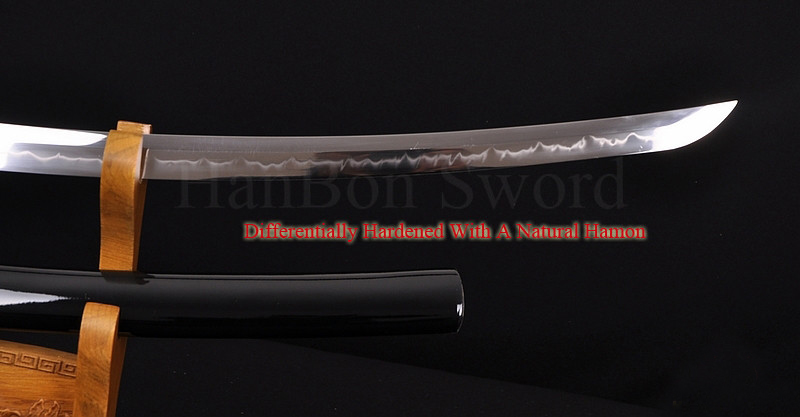
The hamon is the visible temper line that appears near the cutting edge of a Japanese sword after polishing. It is created during the clay tempering process and shows the boundary between different hardness areas of the blade.
A genuine hamon is not simply a decorative pattern. It is the result of the actual hardening process and reflects the interaction between steel, clay application, temperature control, and quenching.
Different swordsmiths create different hamon styles depending on their techniques and artistic preferences.
Common Hamon Types on Clay Tempered Katana
The clay application method influences the final hamon shape. Throughout Japanese sword history, many different hamon styles have been developed.
| Hamon Style | Description |
| Suguha | A straight and elegant temper line. |
| Gunome | A wave-like pattern with repeated curves. |
| Choji | A clove-shaped pattern with rounded formations. |
| Notare | A large flowing wave pattern. |
Does Clay Tempering Make a Katana Stronger?
Clay tempering improves the balance between hardness and flexibility, but it does not automatically make every blade stronger. The final quality depends on many factors, including steel type, forging method, heat treatment control, geometry, and craftsmanship.
A well-made clay tempered katana can achieve excellent performance because it combines a hard cutting edge with a more flexible spine.
How to Identify a Real Clay Tempered Katana
Many sword buyers want to know how to identify a genuine clay tempered katana. Since the hamon is one of the most recognizable features of traditional Japanese swords, it is important to understand the difference between a real temper line and decorative imitation.
A real clay tempered blade usually shows natural activity within the hamon, including subtle changes in brightness, texture, and steel structure. These details become visible after proper polishing.
- Natural Hamon: A genuine hamon is created through differential hardening, not simply painted or chemically added.
- Blade Structure: A clay tempered blade has different hardness zones between the edge and spine.
- Forging Information: Reliable sellers should provide details about steel type, heat treatment, and manufacturing process.
- Professional Polishing: Proper polishing reveals the characteristics of the hamon and the steel surface.
Clay Tempered Katana Maintenance Guide
A clay tempered katana requires proper maintenance to preserve the blade condition and the beauty of the hamon. Although hardened steel provides excellent performance, the blade surface can still be affected by moisture and improper handling.
- Apply a thin layer of quality sword oil regularly to prevent rust.
- Avoid touching the blade surface directly with bare hands.
- Store the sword in a dry environment away from humidity.
- Use a soft cloth when cleaning the blade.
- Avoid unnecessary polishing, as improper polishing can damage the hamon.
Proper care allows a clay tempered Japanese sword to maintain both its functional quality and traditional appearance for many years.
Frequently Asked Questions About Clay Tempered Katana
What is a clay tempered katana?
A clay tempered katana is a Japanese sword that has undergone differential hardening using clay coating. This process creates a harder cutting edge and a softer, more flexible spine.
Why do Japanese swords use clay tempering?
Japanese swordsmiths use clay tempering to achieve a balance between sharpness, durability, and flexibility while creating the traditional hamon pattern.
Does every katana have a real hamon?
No. Some katana have artificial hamon created through polishing or surface treatment. A genuine hamon is produced through the actual hardening process.
Is a clay tempered katana better than an oil quenched katana?
Neither method is always better. Clay tempering provides traditional appearance and differential hardness, while oil quenching offers consistent hardness and practical durability.
Can a clay tempered katana be used for cutting?
Yes. A properly made clay tempered katana can be suitable for cutting practice when designed with the correct blade geometry, steel quality, and heat treatment.
What steel is commonly used for clay tempered katana?
Common steels used for clay tempered katana include T10 steel, 1095 carbon steel, and other high-carbon steels suitable for differential hardening.
How is a hamon created on a katana?
A hamon is created when clay coating controls the cooling speed of different parts of the blade during quenching, producing different hardness areas.
Final Thoughts
A clay tempered katana represents one of the most important traditional techniques in Japanese sword making. By carefully controlling the hardening process, swordsmiths create blades that combine a sharp cutting edge with flexibility and durability.
The unique hamon pattern created through clay tempering is not only visually impressive but also a reflection of the craftsmanship behind every handmade Japanese sword.
For collectors and sword enthusiasts, understanding clay tempering helps them better appreciate the skill, history, and technology behind traditional katana production.