
Types of Bo-Hi on Katana: Japanese Sword Fuller Guide
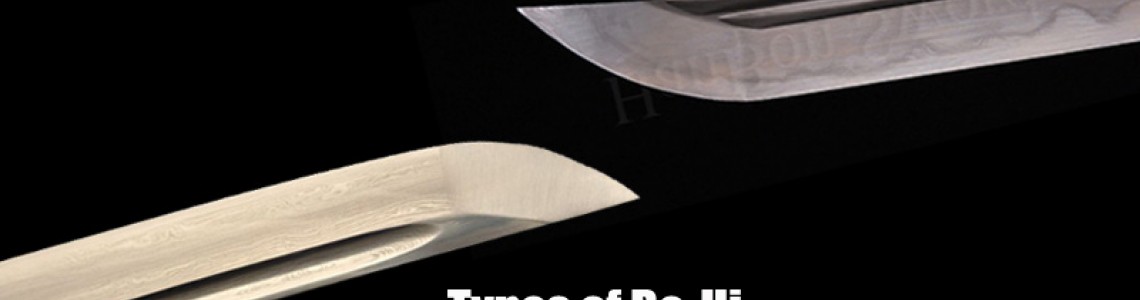
Types of Bo-Hi on Samurai Katana Swords: A Complete Guide to Japanese Sword Grooves
A Bo-Hi katana is one of the most recognizable designs among Japanese swords. The long groove carved into the blade not only creates a unique appearance but also affects the weight, balance, handling, and sound of the sword.
Many people refer to Bo-Hi as a "blood groove," but this name is misleading. In Japanese sword terminology, Bo-Hi (棒樋) simply refers to a carved groove or channel on the blade surface. Its purpose is mainly related to sword construction, balance, and aesthetics rather than allowing blood to flow from the blade. :contentReference[oaicite:0]{index=0}
Different styles of katana with Bo-Hi have developed throughout Japanese sword history. The shape, length, and placement of the groove can change depending on the blade design, sword school, and the desired performance characteristics.
What Is Bo-Hi on a Katana?
Bo-Hi is a long, straight groove carved into the blade of a Japanese sword. It is usually located on the shinogi-ji area, between the shinogi ridge and the back of the blade.
On a traditional samurai katana, the groove is carefully carved by skilled craftsmen. The depth, width, and ending point of the Bo-Hi must be precisely controlled because removing too much material can affect the strength and structure of the blade.
A well-made Bo-Hi does not weaken a properly constructed katana. Instead, it reduces unnecessary weight while maintaining the blade's overall integrity and improving handling characteristics. :contentReference
Why Do Katana Swords Have Bo-Hi?
A katana fuller serves several important functions. Although the appearance of the groove is often the first thing noticed, its design has both practical and artistic purposes.
1. Reducing Blade Weight
One of the main functions of Bo-Hi is reducing the overall weight of the sword. By carefully removing steel from specific areas of the blade, sword makers can create a lighter katana without changing its basic structure.
A lighter blade can feel faster in the hands and may provide improved control during movements such as Iaido drawing techniques or martial arts practice.
2. Improving Balance and Handling
The position and size of a Bo-Hi influence the balance point of a katana. Removing material from the blade can shift the weight closer to the handle, creating a more responsive feeling during use.
For martial artists and collectors, the difference between a sword with Bo-Hi and a solid blade without grooves can be noticeable when handling the sword.
3. Creating the Tachikaze Sword Sound
A properly executed cut with a Bo-Hi katana can create a distinctive sound called tachikaze, often described as the sound of the blade moving through the air.
This sound provides feedback during training and is one reason many Iaido practitioners prefer swords with Bo-Hi. However, the sound depends on correct technique rather than the groove alone.
Common Types of Bo-Hi on Japanese Swords
Japanese sword makers developed different groove styles depending on blade shape, historical period, and intended purpose. The following are some of the most common types found on samurai katana swords.
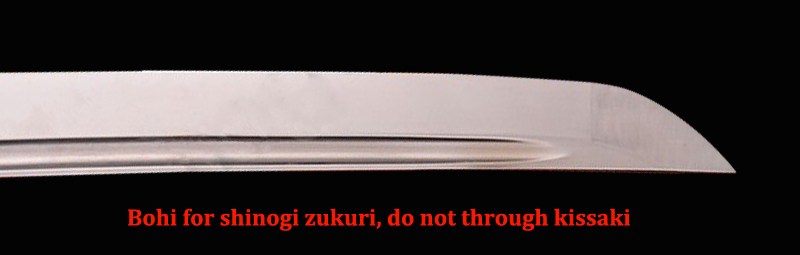
Standard Bo-Hi on Shinogi-Zukuri Katana
The standard Bo-Hi on a Shinogi-Zukuri katana is the most common groove style. It appears as a single long groove running along the blade body.
This type usually begins near the base of the blade and continues toward the tip. Some versions stop before the kissaki, while others extend further toward the blade point depending on the design.
Because of its simple and balanced appearance, this is the style most commonly seen on modern handmade katana and training swords.
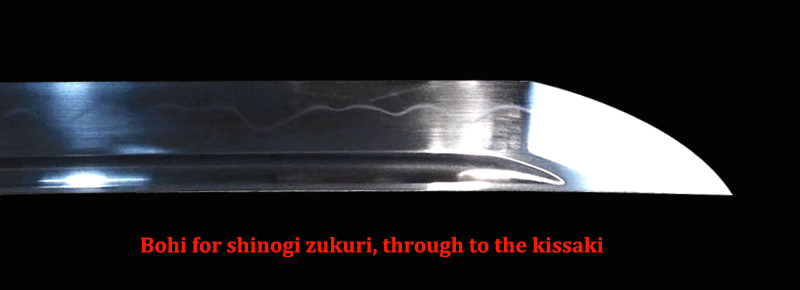
Bo-Hi Extending Through the Kissaki
Some katana designs feature a Bo-Hi that continues toward the kissaki area. This creates a more dramatic visual line and gives the blade a distinctive appearance.
This style requires careful craftsmanship because the groove termination must follow the geometry of the blade tip. A properly shaped ending shows the skill of the sword maker.
Unokubi-Zukuri Bo-Hi Style
The Unokubi-Zukuri katana is a unique Japanese sword style that uses a special blade shape combined with groove design. The name "Unokubi" means "cormorant's neck," referring to the distinctive narrowing shape of the blade.
In this style, the blade becomes thinner in the middle section while maintaining a stronger structure near the tip and cutting area. The Bo-Hi design helps reduce weight while preserving the balance of the sword.
Because of its special construction, Unokubi-Zukuri blades require advanced craftsmanship. They are less common than standard Shinogi-Zukuri katana but are highly appreciated by collectors who value unique Japanese sword designs.
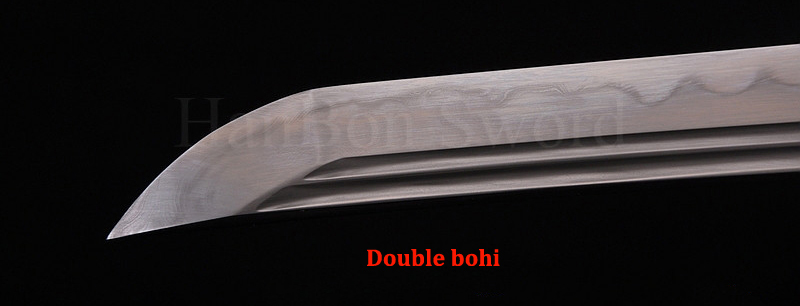
Double Bo-Hi (Futasuji-Hi) on Katana
A Double Bo-Hi, also called Futasuji-Hi, features two parallel grooves carved into the blade. This design creates a more decorative appearance compared with the standard single Bo-Hi.
Double grooves can reduce additional weight and create a more detailed visual effect. They are often chosen for custom katana because of their elegant and distinctive appearance.
The creation of Futasuji-Hi requires precision because both grooves must remain symmetrical and properly aligned along the blade.
Bo-Hi vs No-Hi Katana: What Is the Difference?
When choosing a Japanese sword, many collectors compare a katana with Bo-Hi and a blade without grooves, known as No-Hi.
| Feature | Bo-Hi Katana | No-Hi Katana |
| Blade Design | Contains carved groove | Solid blade surface |
| Weight | Generally lighter | Usually heavier |
| Handling | Faster and more responsive | More solid and powerful feeling |
| Appearance | Decorative blade line | Traditional plain blade surface |
Neither design is automatically better. The choice depends on personal preference, intended use, and the desired feeling of the sword.
How Bo-Hi Changes Katana Balance and Handling
The presence of a Bo-Hi changes the overall characteristics of a katana. By removing steel from the blade, the sword becomes lighter and can feel quicker during movement.
For Iaido and sword practice, many practitioners prefer Bo-Hi blades because they provide clear feedback through sound and movement. A properly executed technique produces a noticeable tachikaze sound, helping practitioners improve their cutting form.
However, the groove itself does not replace proper technique. A skilled swordsman depends on correct posture, control, and timing rather than the blade design alone.
How to Choose a Katana with Bo-Hi
Choosing the right Bo-Hi katana depends on your purpose, experience level, and personal preference. A collector may focus on appearance, while a martial artist may pay more attention to balance and handling.
- Blade Style: Choose a groove design that matches the overall shape and purpose of the sword.
- Balance: A good katana should feel comfortable and natural when held.
- Craftsmanship: Pay attention to blade polish, hamon, groove quality, and fittings.
- Purpose: Display swords, training swords, and collectible swords may require different designs.
A professionally crafted katana with Bo-Hi combines traditional Japanese sword aesthetics with practical handling characteristics.
Bo-Hi Katana Maintenance Tips
A katana with Bo-Hi requires the same careful maintenance as any other Japanese sword. The groove should be kept clean because dust and moisture can collect inside the carved area.
- Clean the blade regularly with a soft cloth.
- Apply a thin layer of sword oil to prevent rust.
- Avoid touching the steel surface directly.
- Store the sword properly inside the saya.
Frequently Asked Questions About Bo-Hi Katana Swords
What does Bo-Hi mean on a katana?
Bo-Hi refers to a long carved groove on the blade of a Japanese sword. It is designed to reduce weight, improve balance, and create a distinctive appearance on the katana blade.
Is Bo-Hi the same as a blood groove?
Many people call Bo-Hi a "blood groove," but this term is not historically accurate. The main purpose of a Bo-Hi is related to blade construction, weight reduction, balance, and aesthetics rather than allowing blood to drain from the sword.
Does a Bo-Hi make a katana weaker?
A properly made Bo-Hi katana is not necessarily weaker than a solid blade. Skilled sword makers carefully control the depth and placement of the groove to maintain the strength and structure of the sword.
Why do martial artists prefer katana with Bo-Hi?
Many martial artists prefer katana with Bo-Hi because the lighter weight and balance can make the sword easier to control. The groove can also create the characteristic tachikaze sound, which provides feedback during practice.
What is the difference between Bo-Hi and Double Bo-Hi?
A standard Bo-Hi has one main groove along the blade, while a Double Bo-Hi or Futasuji-Hi has two parallel grooves. Double grooves create a more decorative appearance and require more detailed craftsmanship.
Should I choose a katana with Bo-Hi or without Bo-Hi?
The choice depends on personal preference and purpose. A Bo-Hi katana is often preferred for lighter handling and martial arts practice, while a No-Hi katana provides a heavier and more solid blade feeling.
Final Thoughts: Understanding the Beauty of Bo-Hi Katana Swords
The Bo-Hi katana represents the combination of Japanese sword engineering and artistic craftsmanship. The groove is not simply a decorative feature but an important part of traditional blade design.
From standard single Bo-Hi designs to advanced styles such as Double Bo-Hi and Unokubi-Zukuri blades, each groove style reflects different approaches to balance, appearance, and sword construction.
For collectors, martial artists, and Japanese sword enthusiasts, understanding the different types of Bo-Hi helps create a deeper appreciation for the skill and tradition behind every handmade katana.