
Tsuba Parts Explained: A Complete Guide to Japanese Sword Guards
Tsuba Parts Explained: A Complete Guide to the Japanese Sword Guard
The tsuba (鍔 or 鐔) is the traditional Japanese sword guard found on weapons such as the katana, wakizashi, and tanto. Positioned between the blade and the handle, the tsuba is one of the most recognizable parts of a Japanese sword mounting.
A tsuba is more than a simple hand guard. Traditional examples can display remarkable craftsmanship through their shape, materials, carving, openwork, inlay, surface texture, and patina. Understanding the different tsuba parts and related terminology can help collectors and sword enthusiasts appreciate how Japanese sword fittings were designed and made.
This guide explains the main parts of a tsuba, common tsuba features, decorative techniques, materials, and important Japanese terms used when describing a traditional Japanese sword guard.
What Is a Tsuba?
A tsuba is the guard of a Japanese sword. It is mounted between the blade and the handle and forms part of the sword's overall mounting, known as koshirae.
On a katana, the tsuba helps define the position between the blade and the handle. However, the tsuba also became an important artistic component of Japanese sword culture. Sword guards were produced in many shapes and could be decorated with carving, piercing, inlay, engraving, and other metalworking techniques.
Traditional tsuba were commonly made from iron, copper alloys, shakudo, brass, and other metals. Their appearance could range from simple and functional to highly detailed works of decorative art.
The Main Parts of a Tsuba
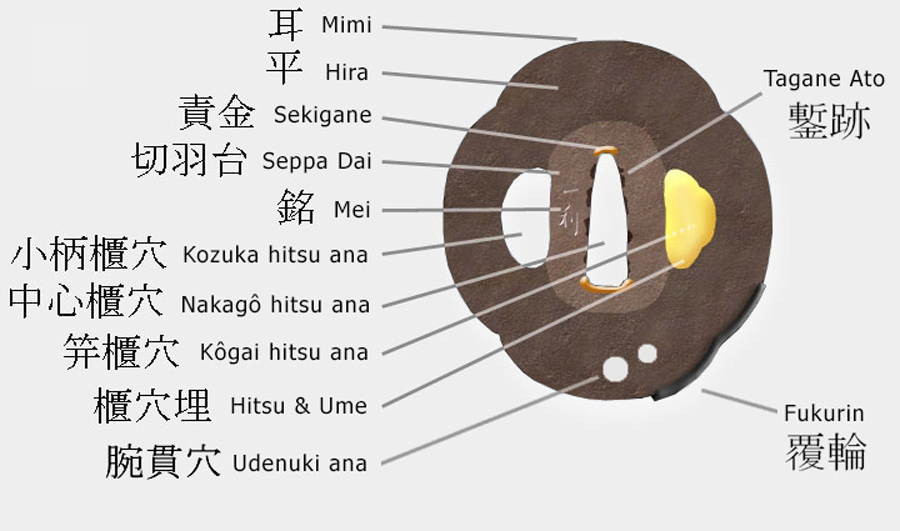
Although tsuba designs vary greatly, several structural features appear frequently. Learning these parts makes it easier to identify and describe a katana tsuba.
Nakago-Ana (中心穴) – The Tang Hole
The nakago-ana is the opening in the center of the tsuba through which the sword's tang, or nakago, passes.
The shape of the nakago-ana varies depending on the sword and the period in which the tsuba was made. A properly fitted opening is important because the tsuba must sit securely as part of the sword mounting.
Seppa-Dai (切羽台) – The Seppa Seat
The seppa-dai is the flat area surrounding the nakago-ana. This section provides a seating surface for the seppa, which are thin spacer washers placed on both sides of the tsuba.
The seppa-dai is often visually important as well. On some tsuba, it may contain inscriptions, signatures, or decorative details.
Mimi (耳) – The Rim of the Tsuba
The mimi is the outer rim or edge of the tsuba. The shape and thickness of the rim can significantly affect the overall appearance of the sword guard.
Common types of tsuba rims include:
- Maru-mimi – a rounded rim.
- Kaku-mimi – a square or angular rim.
- Dote-mimi – a rounded and raised rim.
- Kan-mimi – a thicker and more rounded raised rim.
- Koniku-kaku-mimi – a slightly rounded square rim.
- Uchikaeshi-mimi – a raised or folded rim found on certain traditional tsuba styles.
Collectors often examine the mimi carefully because the rim can reveal details about the construction, material, and style of the tsuba.
Hitsu-Ana: Openings for Japanese Sword Accessories
Some tsuba contain additional openings called hitsu-ana (櫃穴). These holes were designed to accommodate accessories associated with certain Japanese sword mountings.
Kozuka-Bitsu (小柄櫃)
The kozuka-bitsu is the opening intended for the kozuka, the handle of a small utility knife known as a kogatana.
Kogai-Bitsu (笄櫃)
The kogai-bitsu is the opening designed for the kogai, a slender accessory traditionally carried with certain Japanese sword mountings.
Together, these openings are commonly referred to as hitsu-ana. Their presence and shape can help identify the style and intended mounting of a tsuba.
Udenuki-Ana (腕貫穴)
The udenuki-ana are small holes found near the lower portion of some tsuba. Historically, these openings could be used for passing a cord through the guard.
Seppa and Sekigane
Seppa (切羽) – Spacer Washers
The seppa are thin metal washers used on both sides of the tsuba. They help ensure that the different parts of the sword mounting fit together securely.
Seppa are positioned around the seppa-dai and form part of the overall assembly of the Japanese sword fittings.
Sekigane (責金) – Fitting Inserts
Sekigane are small pieces of softer metal inserted around the nakago-ana to improve the fit between the tsuba and the sword tang.
Copper is commonly used for sekigane. These inserts can indicate that a tsuba was adjusted to fit a particular sword.
Tagane-Ato (鏨跡) – Punch Marks
Tagane-ato are small punch marks found around the nakago-ana. These marks were used to help adjust the fit of the tsuba to the sword's tang.
Such details may be subtle, but they are often important when examining traditional Japanese sword fittings.
The Surface and Base Metal of a Tsuba
Hira (平) – The Main Surface
The hira refers to the main flat surface of the tsuba. This area may be plain or decorated with carving, engraving, openwork, hammer marks, or metal inlay.
Jigane (地金) – Base Metal
Jigane refers to the base metal or fundamental material from which a tsuba is made.
The material can have a major influence on the appearance, texture, weight, and patina of a Japanese sword guard.
Tekkotsu (鉄骨) – Iron Texture
Tekkotsu, literally associated with "iron bones," describes distinctive structural features or texture visible in the iron of some tsuba, particularly around the rim.
Variations in the iron can create visible patterns and textures. These characteristics are often appreciated by collectors when studying traditional iron tsuba.
Sukashi: Openwork Designs in Tsuba
One of the most recognizable decorative techniques used on Japanese sword guards is sukashi, or openwork.
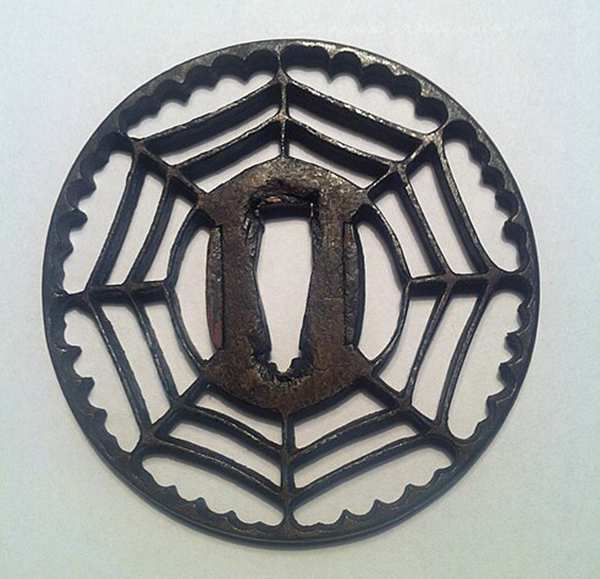
A sukashi tsuba contains areas where metal has been removed to create decorative openings. These designs may include plants, family crests, animals, geometric patterns, or symbolic shapes.
Ji-Sukashi (地透)
Ji-sukashi is an openwork technique in which portions of the main body of the tsuba are removed to create a larger decorative design.
Mon-Sukashi (文透)
Mon-sukashi refers to decorative shapes pierced through the body of the tsuba. The design is created by removing material from the base plate.
Ko-Sukashi (小透)
Ko-sukashi describes smaller openwork details used as part of a larger design.
Kage-Sukashi and Yo-Sukashi
Kage-sukashi refers to a negative silhouette effect used in openwork designs, while yo-sukashi describes a positive silhouette effect.
These techniques demonstrate how tsuba craftsmen could create visual images through the careful removal of metal.
Common Tsuba Shapes
Japanese sword guards were produced in many different shapes. The Japanese word gata generally refers to shape or form.
Some common tsuba shapes include:
- Maru-gata – a round tsuba.
- Mokko-gata – a lobed shape resembling a cut melon.
- Nade-maru – an oval-shaped tsuba.
- Nade-mokko-gata – a lobed form based on an oval shape.
- Otafuku-gata – a distinctive rounded or irregular shape.
The shape of a tsuba can strongly influence the visual character of the entire sword. A simple round guard creates a very different impression from a large lobed or heavily decorated design.
Tsuba Decoration and Metalworking Techniques
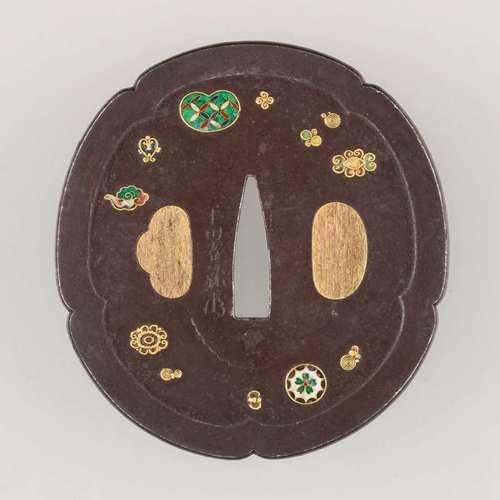
Traditional Japanese tsuba could be decorated using a wide variety of metalworking techniques. These methods allowed craftsmen to transform a functional sword fitting into a detailed piece of decorative art.
Kebori (毛彫) – Fine Line Carving
Kebori is a fine line engraving technique in which decorative lines are carved into the surface of the tsuba.
Zogan (象嵌) – Metal Inlay
Zogan refers to metal inlay work. Metals such as brass and copper may be inserted into the surface of a tsuba to create decorative patterns and contrasting colors.
Suemon-Zogan (据紋象嵌)
Suemon-zogan refers to a form of raised metal inlay. Different metals can be used to create decorative designs that stand out from the surface.
Tsuchime-Ji (槌目地) – Hammered Surface
Tsuchime-ji describes a hammered surface texture. Visible hammer marks create a distinctive handmade appearance and add texture to the tsuba.
Materials Used for Tsuba
The choice of material was an important part of tsuba production. Different metals could produce very different colors, textures, and surface characteristics.
Iron
Iron was widely used for Japanese sword guards. Iron tsuba can develop distinctive surface textures and natural patina over time.
Shakudo (赤銅)
Shakudo is a traditional Japanese alloy primarily associated with copper and a small amount of gold. When properly treated and finished, it can develop a deep, dark surface color.
Yamagane (山銅)
Yamagane refers to an older form of unrefined copper containing natural impurities. Its appearance can differ from highly refined copper.
Fukurin (覆輪)
Fukurin is a decorative outer rim covering applied to some tsuba. Softer metals may be used to create a contrasting border around the edge of the sword guard.
Patina and Surface Appearance
The surface appearance of a traditional tsuba is an important part of its character. Over time, metal can develop a natural patina that changes its color and texture.
Different metals and finishing techniques can produce a wide range of surface colors. On iron tsuba, collectors often pay close attention to the texture and condition of the metal because these characteristics can contribute greatly to the overall appearance of the piece.
Another traditional finishing method is yakite, a process involving the heating and controlled cooling of iron. This treatment can emphasize the natural character and texture of the metal.
For collectors, the surface of an old tsuba can provide valuable visual information about the material, craftsmanship, and history of the piece.
Mei: The Tsuba Maker's Signature
A mei (銘) is a signature or inscription carved into a tsuba.
When present, the signature may identify the maker, school, location, or other information. The mei is often found near the nakago-ana or seppa-dai area.
Not every tsuba has a signature, but signed examples can provide useful information for collectors and researchers.
Why Understanding Tsuba Parts Matters
Learning the different parts of a tsuba makes it easier to understand how Japanese sword fittings work together.
The nakago-ana, seppa-dai, mimi, hitsu-ana, and other structural features all contribute to the design and mounting of a Japanese sword guard. Decorative elements such as sukashi, kebori, zogan, and tsuchime-ji demonstrate the artistic side of traditional tsuba craftsmanship.
Whether you collect Japanese sword fittings, study samurai swords, or are choosing a tsuba for a custom katana, understanding basic tsuba terminology can help you recognize important features and appreciate the craftsmanship behind these traditional sword guards.
From a simple iron guard to an elaborate piece of metalwork, the tsuba remains one of the most distinctive and fascinating components of Japanese sword koshirae.
Frequently Asked Questions About Tsuba Parts
What are the main parts of a tsuba?
The main parts of a tsuba include the nakago-ana, which fits around the sword tang, the seppa-dai, the mimi or outer rim, and, on some examples, the hitsu-ana for sword accessories.
What is the nakago-ana on a tsuba?
The nakago-ana is the central opening in a tsuba. The tang of the Japanese sword passes through this opening when the sword is assembled.
What are hitsu-ana?
Hitsu-ana are additional openings in some tsuba. They are associated with accessories such as the kozuka and kogai used in traditional Japanese sword mountings.
What is a sukashi tsuba?
A sukashi tsuba is a Japanese sword guard featuring openwork designs. Parts of the metal are removed to create decorative patterns or shapes.
What is the mimi of a tsuba?
The mimi is the outer rim of a tsuba. Tsuba rims can be rounded, square, raised, thick, thin, or shaped in other ways depending on the design and style.
What is seppa-dai?
The seppa-dai is the flat area around the nakago-ana where the seppa spacer washers sit on either side of the tsuba.
What materials are tsuba made from?
Traditional tsuba can be made from iron, copper, brass, shakudo, and other metal alloys. The material affects the appearance, texture, weight, and patina of the sword guard.
What does tsuba mean?
Tsuba (鍔 or 鐔) is the Japanese word for a sword guard. It is one of the major components of Japanese sword mountings and is especially associated with swords such as the katana and wakizashi.
Explore Japanese Sword Fittings
Understanding the tsuba is only one part of learning about traditional Japanese sword construction. Other important components of a Japanese sword mounting include the tsuka, fuchi, kashira, seppa, habaki, saya, and menuki.
Together, these components form the complete koshirae and give each Japanese sword its unique appearance and character.
If you are interested in building or customizing a Japanese sword, understanding the relationship between these different sword fittings can help you choose a mounting style that matches your preferred design.