
Tamahagane Katana: The Traditional Japanese Sword Steel Explained

Tamahagane Katana: Understanding the Traditional Steel Behind Japanese Swords
When people talk about traditional Japanese Katana, one material is often considered the heart of the blade: Tamahagane steel. For centuries, Japanese swordsmiths have used this unique steel to create blades that combine sharpness, durability, and artistic beauty.
Unlike modern factory-produced steel, Tamahagane is created through a traditional smelting process using iron sand and charcoal in a Tatara furnace. This special production method creates steel with different carbon levels, allowing swordsmiths to carefully select materials for different parts of a Japanese sword.
A genuine Tamahagane Katana represents more than a weapon. It reflects centuries of Japanese craftsmanship, from traditional steel production and forging techniques to polishing and final finishing.
In this guide, we will explore what Tamahagane steel is, how it is produced, how it becomes a Japanese Katana blade, and why this traditional material continues to attract sword collectors around the world.
What Is Tamahagane Steel?
Tamahagane (玉鋼) is a traditional Japanese steel made from iron sand through the Tatara smelting process. The word "Tamahagane" can be translated as "jewel steel," reflecting its importance in Japanese sword making.
The production of Tamahagane begins with satetsu, or iron sand, which contains iron-rich minerals. Through careful smelting with charcoal inside a Tatara furnace, the iron sand is transformed into a bloom of steel containing different carbon levels.
Unlike uniform modern steel, Tamahagane naturally contains variations in carbon content. Swordsmiths carefully examine and sort the steel pieces, selecting different sections depending on whether they are needed for hardness, flexibility, or toughness.
This unique characteristic allows traditional Japanese swordsmiths to create blades with different steel structures, combining a sharp cutting edge with a strong and resilient body.
The History of Tamahagane in Japanese Sword Making
The history of Tamahagane is closely connected with the development of Japanese swords. As Japanese sword designs evolved over centuries, swordsmiths continued improving methods for refining and shaping this special steel.
During the development of the Samurai sword, craftsmen discovered that combining different steel properties was essential for creating a reliable blade. Hard steel provided edge retention, while softer steel helped improve flexibility and resistance to impact.
The traditional Tatara steel-making system became one of the most important foundations of Japanese sword craftsmanship. Even today, Tamahagane remains a symbolic material associated with authentic Japanese sword production.
Although modern steels are widely used for many handmade Katana today, Tamahagane continues to represent the traditional approach to Japanese sword making and remains highly valued by collectors and enthusiasts.
How Tamahagane Steel Is Made Using a Tatara Furnace
The traditional production of Tamahagane begins inside a Tatara furnace, a unique Japanese clay furnace designed specifically for producing high-quality steel from iron sand.
During the smelting process, iron sand and charcoal are repeatedly added into the furnace over several days. The charcoal provides both heat and carbon, allowing the iron to transform into steel.
After the Tatara process is completed, the furnace is opened and the resulting steel mass, known as kera, is broken apart. The best quality pieces are selected and classified according to their carbon content.
Only carefully selected Tamahagane pieces are suitable for creating traditional Japanese swords. The swordsmith must understand the characteristics of each piece before beginning the forging process.
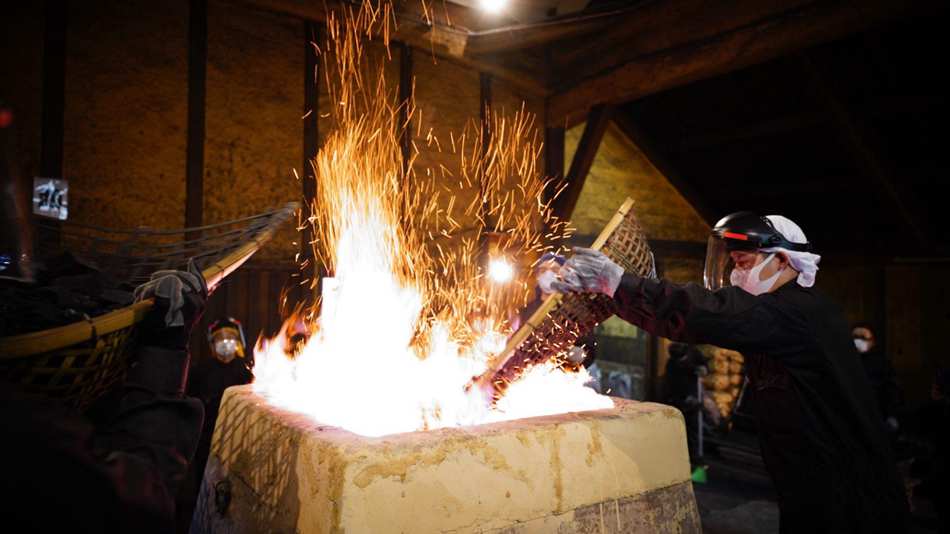
From Tamahagane Steel to a Traditional Katana Blade
Transforming Tamahagane steel into a Japanese Katana is a complex process that requires experience, patience, and precise control. The raw steel produced from the Tatara furnace cannot be used directly. It must go through multiple stages of sorting, forging, folding, shaping, and heat treatment.
Before forging begins, the swordsmith carefully examines the Tamahagane pieces and selects steel with suitable carbon content. Different parts of the blade may require different steel characteristics, so choosing the correct material is an important step in creating a high-quality Japanese sword.
Traditional Japanese sword construction often combines harder steel for the cutting edge with softer steel for the blade body. This method allows a Katana to maintain sharpness while improving flexibility and resistance to breaking.
Through careful forging techniques, Tamahagane becomes more than raw material. It is transformed into a blade that represents the skill and philosophy of Japanese sword craftsmanship.
The Folding Process of Tamahagane Steel
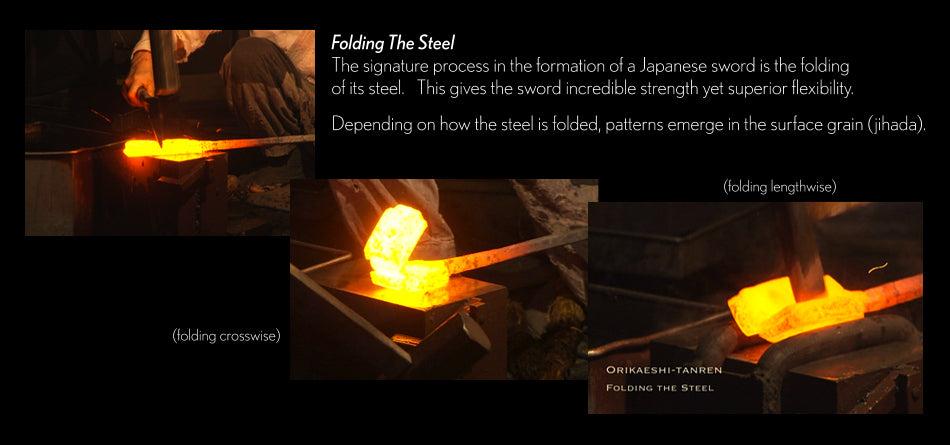
One of the most famous parts of traditional Japanese sword making is the folding process. During forging, the swordsmith repeatedly heats, folds, and hammers the steel to refine its internal structure.
The folding process helps distribute carbon more evenly throughout the steel and reduces impurities left from the traditional smelting process. It also creates the beautiful grain patterns known as hada that can be revealed during polishing.
Although many people believe folding creates unlimited strength, the main purpose of traditional folding is refining and improving the steel quality. The final performance of a Japanese sword depends on many factors, including steel selection, forging technique, heat treatment, and polishing.
For a Tamahagane Katana, the folding process is an important connection between ancient Japanese craftsmanship and the final beauty of the finished blade.
How Carbon Content Affects Tamahagane Katana Performance
One of the unique characteristics of Tamahagane steel is its natural variation in carbon content. Unlike modern industrial steel, which is produced with highly controlled chemical composition, Tamahagane contains different grades of steel within the same production batch.
High-carbon Tamahagane provides excellent hardness and can create a sharp cutting edge. However, excessive hardness may make steel more fragile, so swordsmiths must carefully balance hardness with toughness.
Lower-carbon Tamahagane is softer and more flexible, making it suitable for areas of the blade that require greater durability and shock absorption.
This ability to combine different carbon levels is one reason traditional Japanese sword construction developed into a highly sophisticated craft.
Tamahagane vs Modern Steel for Katana
Modern Katana can be made using various high-quality steels, including 1095 carbon steel, T10 steel, and other specialized materials. These modern steels provide consistent performance and easier production control.
Tamahagane, however, has a unique historical and cultural value because it is produced through the traditional Japanese Tatara method. Each batch of Tamahagane has natural variations, making every blade created from it unique.
| Feature | Tamahagane Steel | Modern Steel |
| Production Method | Traditional Tatara furnace | Modern industrial production |
| Composition | Naturally variable carbon content | Controlled chemical composition |
| Main Advantage | Historical authenticity and traditional value | Consistency and reliable performance |
| Collector Value | Highly valued for traditional craftsmanship | Popular for practical handmade Katana |
Why Tamahagane Is Important in Japanese Sword Making
The importance of Tamahagane is not only related to its physical properties. It represents the connection between Japanese sword making, traditional craftsmanship, and cultural history.
For centuries, swordsmiths developed techniques to overcome the challenges of this unique steel. Their methods created some of the most respected blades in Japanese history.
A Tamahagane Katana carries the story of every step involved in its creation, from collecting iron sand and operating the Tatara furnace to forging, polishing, and finishing the final sword.
Advantages of a Tamahagane Katana
A Tamahagane Katana represents one of the highest levels of traditional Japanese sword craftsmanship. Its value comes not only from the material itself but also from the knowledge and techniques required to transform raw steel into a finished blade.
One of the main advantages of Tamahagane steel is its historical authenticity. Unlike modern industrial steel, each piece of Tamahagane has its own characteristics created during the traditional Tatara smelting process.
Another advantage is the beautiful appearance created through traditional forging and polishing. A properly crafted Tamahagane Katana can display unique hada patterns, a clear hamon line, and a refined blade surface that reflects the skill of the swordsmith and polisher.
For collectors, owning a Tamahagane Japanese sword means owning a piece of traditional craftsmanship that connects modern enthusiasts with the history of the Samurai era.
Is Tamahagane Better Than Modern Steel?
Whether Tamahagane is better than modern steel depends on what the collector values most. Tamahagane offers historical significance and traditional authenticity, while modern steels provide consistent quality and predictable performance.
Traditional swordsmiths achieved excellent results with Tamahagane because they understood how to select, combine, and refine different steel pieces. Their techniques allowed them to overcome the natural variations found in traditional steel.
Modern steels such as 1095 carbon steel and T10 steel are also widely used for handmade Katana because they offer excellent hardness, durability, and easier quality control.
For collectors interested in Japanese sword history and traditional craftsmanship, Tamahagane remains an extremely meaningful material. For practical cutting performance, a well-made modern steel Katana can also provide excellent results.
How to Choose a Tamahagane Katana
Choosing a Tamahagane Katana requires attention to more than just the steel name. A high-quality Japanese sword depends on the complete combination of materials, craftsmanship, and finishing techniques.
Collectors should consider the following factors when selecting a Tamahagane sword:
- Blade Construction: A properly forged blade should have a strong structure, correct geometry, and excellent balance.
- Heat Treatment: Proper tempering is essential for achieving a sharp edge while maintaining durability.
- Hamon Quality: A clear and natural hamon pattern shows the effect of traditional clay tempering techniques.
- Polishing: Professional polishing reveals the beauty of the steel grain and blade structure.
- Fittings: High-quality tsuba, tsuka, saya, and other fittings complete the appearance and function of the sword.
A true Tamahagane Katana is the result of cooperation between multiple traditional crafts, including sword forging, polishing, and fittings production.
Frequently Asked Questions About Tamahagane Katana
1. What is Tamahagane steel?
Tamahagane is traditional Japanese steel produced from iron sand using a Tatara furnace. It has been used for centuries in Japanese sword making because of its unique characteristics and historical importance.
2. How is Tamahagane made?
Tamahagane is created by smelting iron sand with charcoal inside a Tatara furnace. After the process, swordsmiths select suitable steel pieces according to their carbon content and quality.
3. Why is Tamahagane used for Japanese swords?
Tamahagane allows swordsmiths to combine different steel properties through traditional forging methods. This helps create blades with sharp edges, flexibility, and historical authenticity.
4. Is Tamahagane stronger than 1095 steel?
Tamahagane and 1095 steel have different characteristics. Tamahagane has traditional and historical value, while 1095 steel provides consistent carbon content and reliable modern performance.
5. Can Tamahagane Katana be used for cutting?
A properly forged Tamahagane Katana can have excellent cutting ability. However, performance depends on many factors, including blade geometry, heat treatment, and craftsmanship.
6. Does Tamahagane create a unique hamon?
Yes. When combined with traditional clay tempering, Tamahagane blades can develop beautiful hamon patterns that highlight the craftsmanship of the sword.
7. Is every Japanese Katana made from Tamahagane?
No. Historically, Tamahagane was an important steel for Japanese swords, but many modern handmade Katana use other high-quality steels such as 1095 carbon steel and T10 steel.
Conclusion: The Legacy of Tamahagane Japanese Sword Steel
Tamahagane steel is one of the most important materials in the history of Japanese sword making. From the traditional Tatara furnace to the final polishing process, every step reflects centuries of craftsmanship and dedication.
Although modern steels provide excellent performance and consistency, Tamahagane remains a symbol of traditional Japanese sword culture. A Tamahagane Katana represents not only a blade but also the history, skill, and artistic spirit behind Samurai sword craftsmanship.
For collectors who appreciate traditional Japanese swords, understanding Tamahagane provides a deeper appreciation of how raw materials are transformed into one of the world's most respected blade traditions.