
Why Are Japanese Swords Folded? The Truth About Folded Steel Katana
Why Are Japanese Swords Folded During Production? The Truth About Folded Steel Katana
When people think about a traditional Japanese sword, one of the first things they often hear about is folded steel.
The famous folding process has become one of the most recognized features of Japanese sword making. Many people believe that Japanese swords are folded hundreds or thousands of times to create an extremely strong and sharp blade.
However, the real purpose of folding steel is more complicated.
Traditional Japanese swordsmiths used folding techniques to improve the quality of the steel available at the time, remove impurities, and create the beautiful grain patterns that make Japanese swords unique.
Understanding why Japanese swords are folded helps collectors and sword enthusiasts better appreciate the craftsmanship behind a handmade katana.
What Is Folded Steel in Japanese Sword Making?
Folded steel refers to the traditional process of repeatedly heating, folding, and forging steel during Japanese sword production.
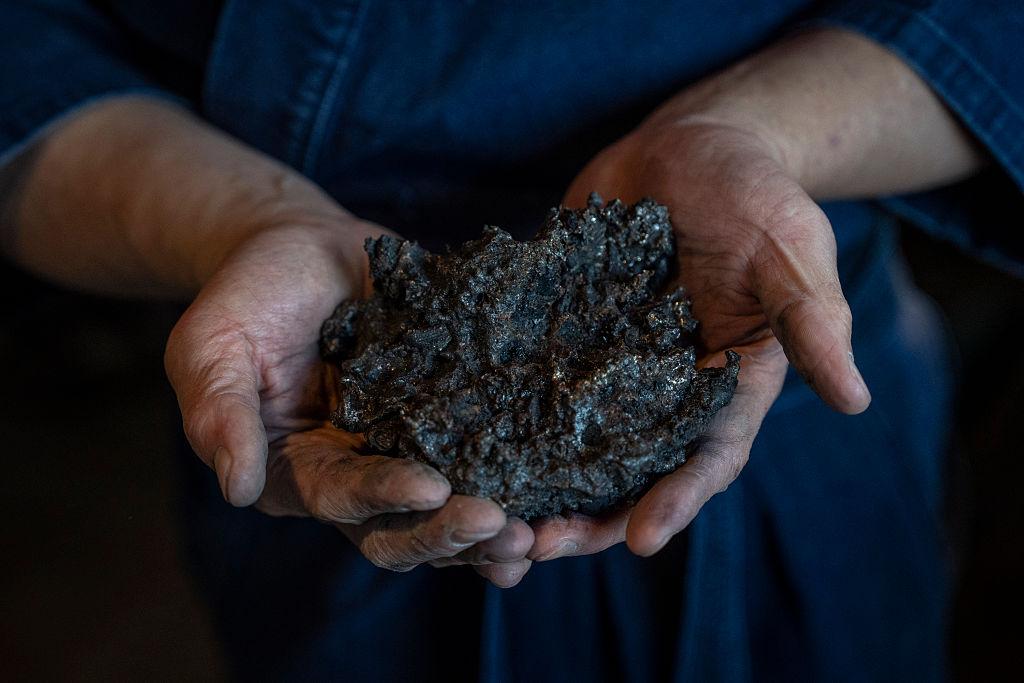
The material traditionally used for Japanese swords is called tamahagane (玉鋼), a type of steel produced from iron sand using a traditional smelting method.
Historically, tamahagane could contain uneven carbon distribution and impurities. Swordsmiths developed folding techniques to improve the consistency of the material.
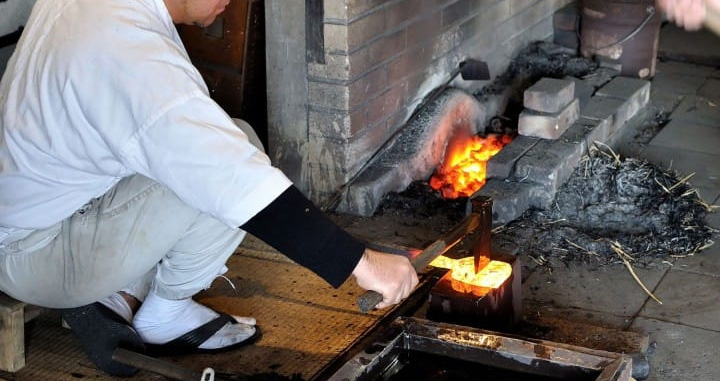
During forging, the swordsmith heats the steel, folds it, and welds the layers together through hammering.
This process creates a layered structure inside the blade and helps distribute carbon more evenly throughout the steel.
Why Are Japanese Swords Folded?
There are several important reasons why Japanese swords are traditionally folded.
1. To Improve Steel Quality
The main purpose of folding steel was to refine the material.
Ancient Japanese steel production methods created steel with varying carbon levels. Some areas could be too soft, while others could become too brittle.
By repeatedly folding and forging the steel, swordsmiths could:
Mix areas with different carbon content
Reduce unwanted impurities
Create a more consistent material
Improve the overall quality of the blade
Folding was therefore a practical solution developed from the limitations of historical steel production.
2. To Create a Stronger and More Balanced Blade
A Japanese sword needs to balance several different qualities.
A good katana must be:
Hard enough to maintain a sharp edge
Tough enough to resist breaking
Flexible enough to absorb impact
The folding process helps create a more uniform steel structure, which supports the balance between hardness and durability.
However, folding alone does not make a sword automatically stronger.
The final quality of a Japanese sword depends on many factors, including:
Steel selection
Heat treatment
Clay tempering
Blade geometry
Swordsmith skill
Final polishing
A well-made katana is the result of the entire forging process, not only the number of folds.
3. To Create Beautiful Steel Patterns
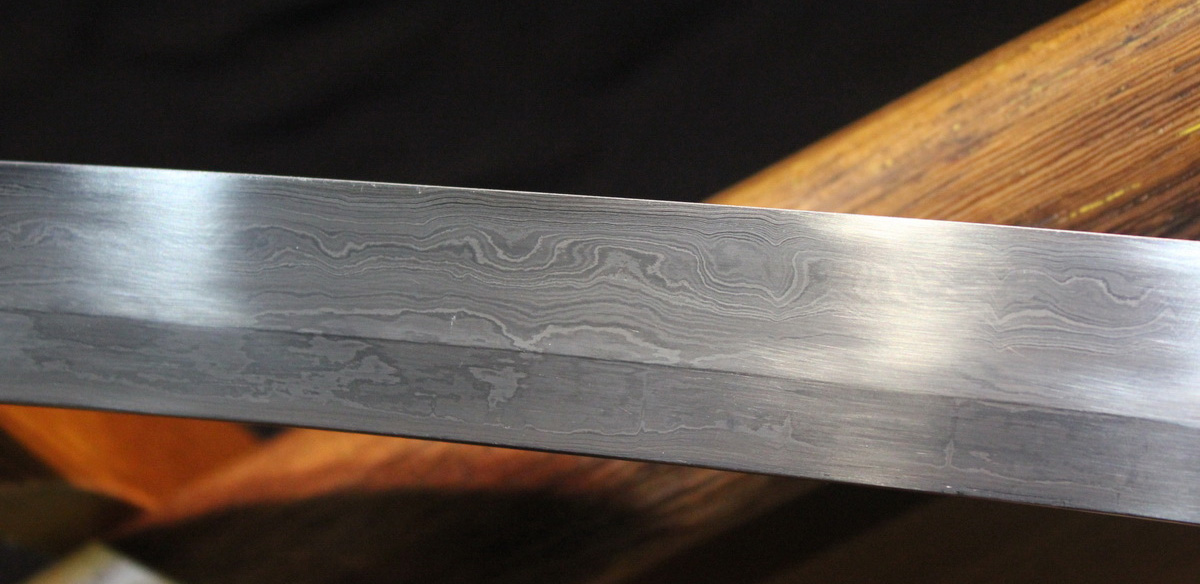
One of the most visually attractive results of folding steel is the formation of the hada (肌).
Hada is the visible grain pattern that appears on the surface of a traditionally forged Japanese sword after polishing.
Depending on the forging method, different patterns may appear, including:
Itame hada (wood grain pattern)
Masame hada (straight grain pattern)
Mokume hada (burl wood pattern)
Ayasugi hada (wave-like grain pattern)
These patterns are part of what makes each Japanese sword unique.
A professional polish allows these details to become visible and appreciated.
How Many Times Is a Japanese Sword Folded?
One of the most common questions about Japanese swords is:
"How many times are Japanese swords folded?"
The answer depends on the swordsmith and forging method.
A typical Japanese sword may be folded around 10 to 15 times.
Because each folding operation doubles the number of layers, even 10 folds can theoretically create hundreds or thousands of layers.
For example:
1 fold = 2 layers
5 folds = 32 layers
10 folds = 1,024 layers
15 folds = 32,768 layers
However, more folds do not automatically mean a better sword.
After enough folding cycles, additional folding provides little practical improvement and may even remove too much carbon from the steel.
The skill of the swordsmith is far more important than simply increasing the number of folds.
Does Folding Make a Katana Sharper?
Not directly.
A common misunderstanding is that folding steel is what makes a Japanese sword extremely sharp.
The sharpness of a katana depends mainly on:
Blade geometry
Edge angle
Heat treatment
Steel quality
Polishing quality
Folding improves the steel structure and helps create a high-quality blade material, but it is only one part of the entire sword-making process.
A properly forged and polished blade will perform well because all parts of the process work together.
Does Folded Steel Make a Japanese Sword Stronger?
Folded steel can improve the consistency of the material, but it does not guarantee superior strength.
Modern steels can already have extremely uniform structures because of advanced manufacturing technology.
The historical importance of folding comes from the challenges faced by ancient Japanese swordsmiths.
Without modern steel production methods, folding was an effective way to refine available materials and create reliable blades.
The quality of a Japanese sword depends on the complete combination of:
Forging technique
Steel quality
Heat treatment
Blade design
Craftsmanship
The Traditional Folding Process of a Japanese Sword
The traditional Japanese sword forging process involves several important steps.
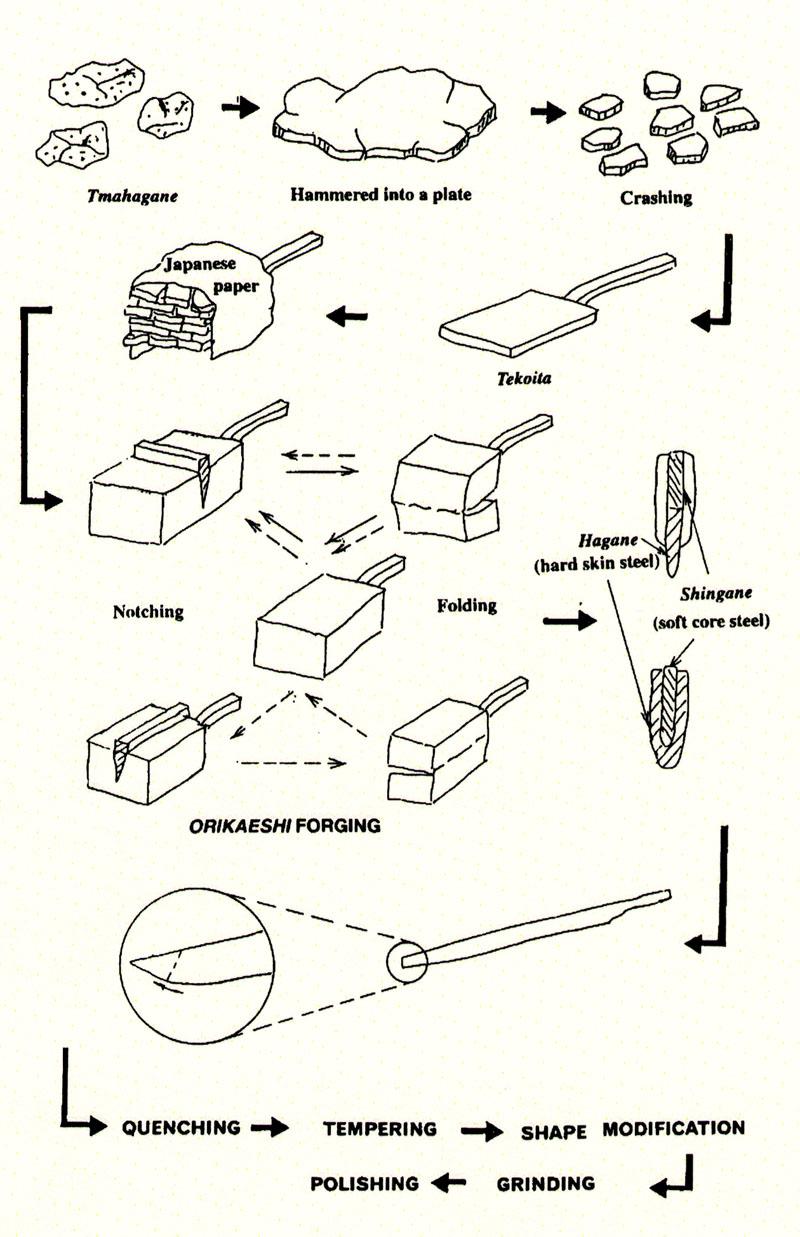
1. Selecting and Preparing Tamahagane
The swordsmith first selects suitable pieces of tamahagane with appropriate carbon content.
Different sections of steel may be combined depending on the desired characteristics.
2. Heating the Steel
The steel is heated in a forge until it reaches a workable temperature.
The swordsmith must carefully control the heat because excessive temperatures can damage the steel.
3. Folding and Forging
The heated steel is hammered flat, folded, and forged together.
This process may be repeated several times.
Each folding cycle changes the internal structure of the steel and creates additional layers.
4. Shaping the Blade
After the steel has been refined, the swordsmith shapes the blade into the desired katana form.
Important features such as:
Curvature
Shinogi ridge
Point shape
Thickness
are carefully created during this stage.
5. Heat Treatment and Clay Tempering
The blade is coated with clay before heating and quenching.
This creates different hardness levels between the cutting edge and the spine.
This process produces the famous hamon, the visible temper line found on Japanese swords.
6. Polishing and Finishing
After forging is complete, the blade is polished.
The polishing process reveals:
Hamon
Hada
Steel texture
Blade geometry
A skilled polisher helps reveal the craftsmanship hidden inside the forged steel.
Is Damascus Steel the Same as Traditional Japanese Folded Steel?
No.
Although both involve layered steel structures, they are different techniques.
Traditional Japanese folded steel was developed from the need to refine tamahagane and improve material consistency.
Damascus steel usually refers to modern pattern-welded steel that creates visible layered patterns.
The appearance may look similar, but the historical purpose and manufacturing methods are different.
Why Is Folded Steel Still Popular Today?
Modern sword makers continue to use folded steel because of its connection to traditional craftsmanship and its unique appearance.
Many collectors appreciate folded steel katana because every blade can display different grain patterns created during forging.
For enthusiasts, a handmade folded steel Japanese sword represents:
Traditional craftsmanship
Historical techniques
Individual character
The skill of the swordsmith
Common Misconceptions About Folded Japanese Swords
Myth 1: More folds always mean a better sword
False.
The quality of a sword depends on the entire manufacturing process, not only the number of folds.
Myth 2: Folding creates thousands of layers to make the sword stronger
Partially true but often misunderstood.
Layer formation is a result of folding, but the main purpose was refining steel quality rather than simply creating more layers.
Myth 3: Every Japanese sword must be folded
Not necessarily.
Different historical periods and sword-making methods used different approaches.
Some Japanese swords were made using different steel preparation techniques.
Frequently Asked Questions About Japanese Sword Folding
Why are Japanese swords folded?
Japanese swords are folded to refine steel quality, reduce impurities, improve carbon distribution, and create the unique grain patterns known as hada.
How many times is a katana folded?
A traditional katana is commonly folded around 10 to 15 times, although the exact number depends on the swordsmith and forging method.
Does folding steel make a katana stronger?
Folding helps create more consistent steel, but sword strength depends on many factors including heat treatment, blade design, and craftsmanship.
Does folded steel make a katana sharper?
No. Sharpness mainly comes from blade geometry, heat treatment, and professional polishing.
What is tamahagane steel?
Tamahagane is traditional Japanese steel made from iron sand. It was historically used for Japanese sword production.
What is hada on a Japanese sword?
Hada is the visible grain pattern created by the folding and forging process. It becomes visible after proper polishing.
Are modern folded steel katana made the same way as ancient swords?
Some modern swordsmiths use traditional methods, while others use modern materials and techniques. The exact process depends on the maker.
Is a folded steel katana better than a non-folded katana?
Not always.
A well-made non-folded katana using quality modern steel can perform very well. Folding mainly provides traditional craftsmanship, historical connection, and unique appearance.
Final Thoughts
The folding of Japanese swords is one of the most fascinating parts of traditional Japanese sword making.
While many people associate folding with strength and sharpness, its original purpose was to refine historical steel and create a more consistent blade material.
The beauty of a folded steel katana comes from the combination of many skills: forging, heat treatment, shaping, polishing, and the experience of the craftsman.
A Japanese sword is not defined by the number of folds alone.
It is the result of centuries of craftsmanship, careful technique, and respect for traditional methods.
Explore HanBon Forge handmade katana collections to discover different blade styles, steel options, and traditional Japanese sword craftsmanship.