How to Choose the Right Sword Size: Katana Size Guide
How to Choose the Right Sword Size: A Complete Katana Size Guide
Choosing the right sword size is one of the most important things to consider before buying a katana or another Japanese sword. A sword may look impressive in photos, but if the blade is too long, the handle feels uncomfortable, or the weight is difficult to manage, it may not be the right choice for you.
So, what size katana should you get?
The answer depends on several factors, including your height, arm length, hand size, experience, physical strength, and intended use. Whether you are buying a sword for martial arts training, collecting, display, or cutting practice, choosing the right dimensions can make a noticeable difference in comfort and handling.
This katana size guide explains the most important measurements to consider, including tsuka length, nagasa length, sword weight, and balance.
What Is the Standard Size of a Katana?
A typical modern katana has an overall length of approximately 38 to 42 inches, including the blade and handle. The blade itself commonly falls within the traditional katana range of about 27 to 29 inches.
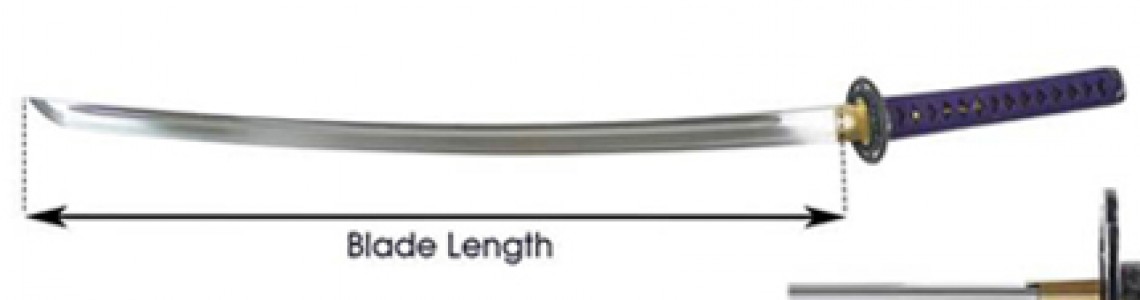
In Japanese sword terminology, the blade length is called the nagasa. However, overall sword length is only one part of the equation. Two swords with similar measurements can feel very different depending on their weight, blade geometry, handle length, and balance.
For this reason, the standard katana size should be used as a general reference rather than a strict rule.
When choosing the right sword size, focus on three main areas:
- Tsuka length – the length of the handle
- Nagasa length – the length of the blade
- Sword weight and balance
1. Choose the Right Tsuka Length
The tsuka is the handle of a Japanese sword. Its length plays an important role in grip, leverage, and overall control.
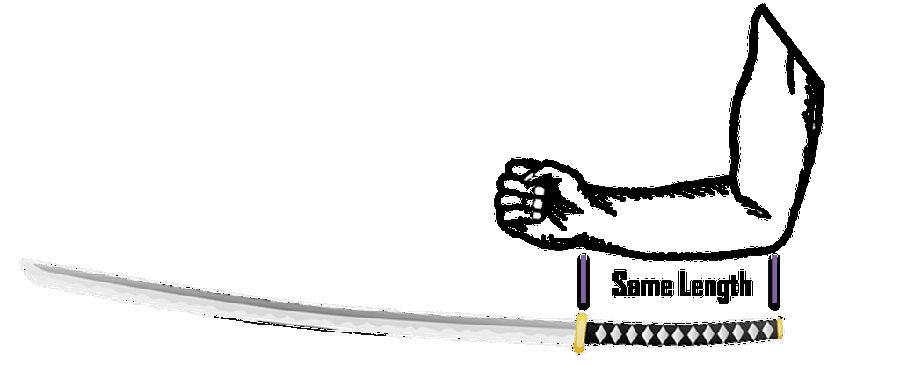
A tsuka that is too short may make a two-handed grip feel cramped. On the other hand, a handle that is excessively long may feel awkward and affect the way the sword balances in your hands.
One useful starting point is to compare the tsuka length with the length of your forearm. Measure the distance from your elbow to your wrist to get a general idea of a comfortable handle length.
However, this should not be treated as an exact formula. Different sword styles, martial arts schools, and personal preferences may call for different tsuka lengths.
When choosing a katana handle, consider:
- Your hand size
- Your forearm length
- Your preferred grip style
- Your intended use
- The overall balance of the sword
The most important thing is that the tsuka provides enough room for a comfortable and controlled two-handed grip.
2. Choose the Right Katana Blade Length
The blade length, known as the nagasa, is one of the most important measurements when selecting a Japanese sword.
A longer blade provides greater reach, while a shorter blade can be easier to maneuver. Neither option is automatically better. The right katana blade length depends on the user's body proportions, experience, and intended purpose.
For many adults, a blade length of approximately 27 to 29 inches is a common starting point. However, shorter users may prefer a more compact blade, while taller or more experienced users may feel comfortable with a longer sword.
When choosing a katana blade length, consider your:
- Height
- Arm length
- Experience level
- Physical strength
- Training requirements
- Intended use
If you train in a specific Japanese martial art, your instructor's recommendation should take priority over a general katana size guide.
Are Shorter or Longer Katana Blades Better?
The answer depends on what you need from the sword.
A shorter katana can offer better maneuverability and may feel easier to control, particularly for users with a smaller build or those who prefer a more compact sword.
A longer katana provides additional reach and can create a different handling experience. However, a longer blade may also require more control and may not feel comfortable for every user.
Choosing the longest possible blade is not necessarily the best option. A sword should feel proportional to your body and manageable for your intended use.
In general, the right sword size is about finding a balance between reach, maneuverability, and comfort.
Katana Size and Your Height
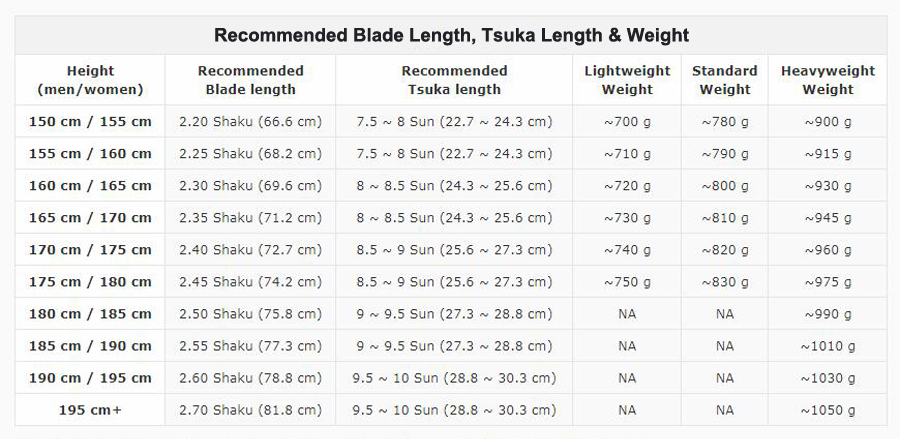
Many people search for a sword size based on height, and height can be a useful starting point when choosing a katana.
However, height alone does not determine the perfect sword length. Two people of the same height can have different arm lengths, hand sizes, physical strength, and preferences.
Instead of choosing a sword based only on height, consider your overall body proportions. Arm length and comfort during handling can be just as important as your height.
A practical approach is to use height as a general reference and then consider:
- Arm and forearm length
- Comfortable grip position
- Blade weight
- Balance point
- Experience level
If possible, comparing several sword dimensions before purchasing can help you make a better decision.
3. Consider Sword Weight and Balance
After blade length and handle length, sword weight is another important factor.
A heavier sword can require more strength to control, especially during extended training. For beginners, a manageable weight is often more important than choosing the largest or heaviest sword available.
However, weight alone does not tell you how a sword will feel in the hand.
Balance is equally important.
A well-balanced sword may feel easier to handle than a lighter sword with poor weight distribution. The position of the sword's balance point can significantly affect how quickly and comfortably the blade moves.
When comparing swords, consider both the listed weight and the overall construction of the blade.
For beginners or martial arts training, a lighter training sword such as an iaito may be easier to manage while learning proper movement and control.
What Size Sword Is Best for Beginners?
For beginners, the best sword size is usually one that feels manageable and comfortable rather than oversized.
A beginner does not necessarily benefit from choosing the longest blade or the heaviest sword. A sword that is difficult to control can make it harder to develop proper technique and may lead to unnecessary fatigue.
A good beginner sword should offer:
- A comfortable blade length
- A practical two-handed handle
- Manageable weight
- Good overall balance
- Dimensions appropriate for the user's body
For martial arts training, an appropriate iaito or other training sword may be preferable depending on the requirements of your dojo or instructor.
Choose Your Sword Size Based on Its Intended Use
The right sword size can also depend on how you plan to use the sword.
For martial arts training: Follow the recommendations of your instructor or dojo. Different Japanese sword arts may have specific preferences for blade length and overall dimensions.
For collecting: Personal preference and historical style may play a larger role. You may prefer a traditional katana, a compact wakizashi, or a longer nodachi depending on your collection.
For display: Available space and visual preference may be more important than handling characteristics.
For cutting practice: Choose a sword that you can handle comfortably and safely. Proper technique and control are more important than simply choosing a larger or heavier blade.
Katana, Wakizashi, or Tanto: Which Size Is Right for You?
Japanese swords are available in several different size categories, and choosing the right one depends on your purpose and personal preference.
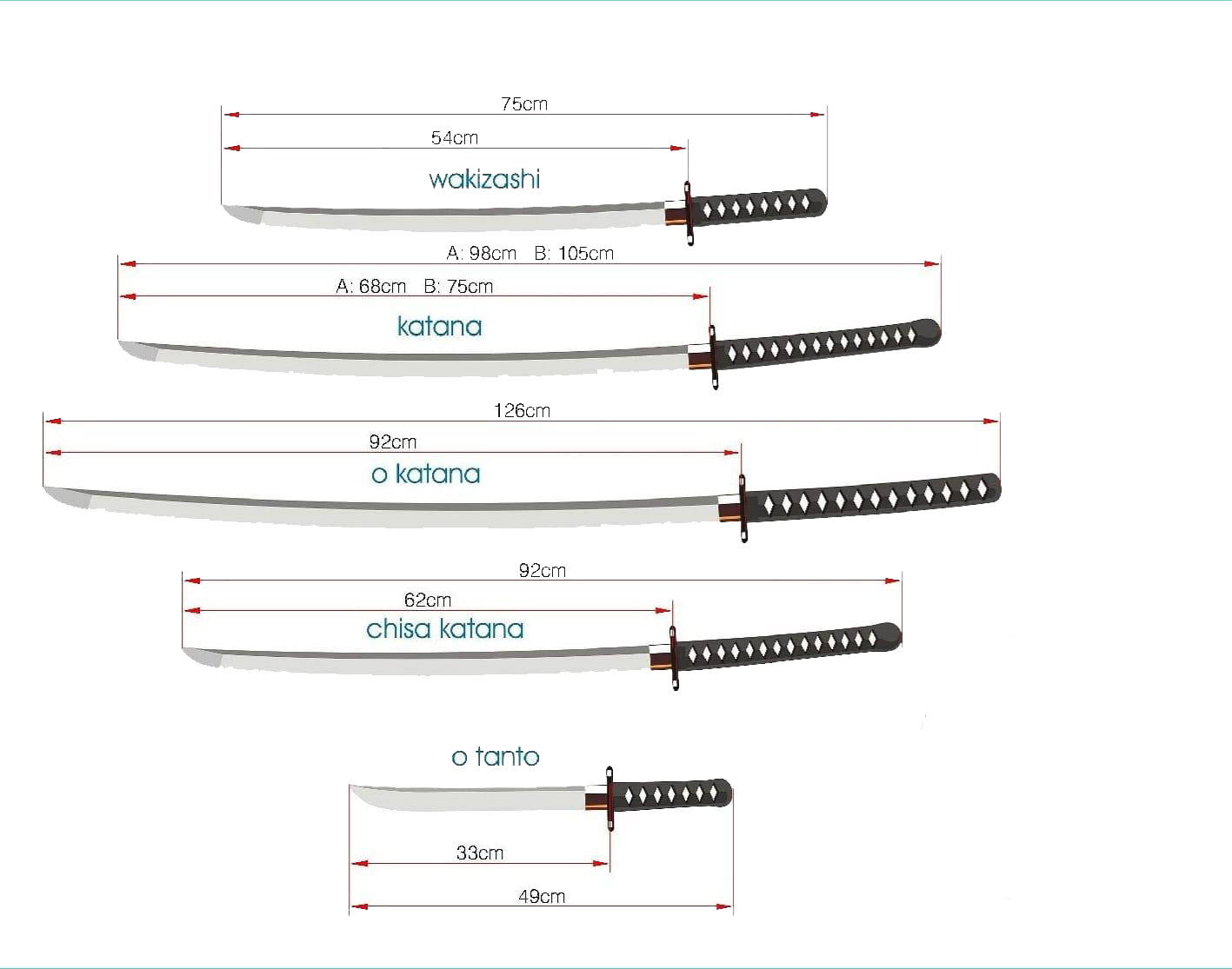
Katana: A full-sized Japanese sword typically designed for two-handed use. It is the most popular choice for many collectors and enthusiasts.
Wakizashi: A shorter Japanese sword that is more compact and easier to display or handle in limited spaces.
Tanto: A much shorter Japanese blade traditionally classified as a dagger.
If you are looking for the classic Japanese samurai sword experience, a full-sized katana is usually the first choice. If you prefer something more compact, a wakizashi may be a better option.
How to Measure a Katana Properly
Before comparing sword sizes, it is important to understand which measurements are being listed.
The most common measurements include:
- Nagasa: The length of the blade
- Tsuka: The length of the handle
- Overall length: The total length of the assembled sword
Do not assume that two swords with the same overall length will handle the same way. Differences in blade thickness, geometry, handle construction, and weight distribution can significantly change how a sword feels.
Understanding these measurements will make it easier to compare different katana and Japanese sword designs before purchasing.
A Simple Checklist for Choosing the Right Sword Size
Before buying a katana or another Japanese sword, ask yourself the following questions:
- What will I use the sword for?
- Does the blade length feel appropriate for my height and reach?
- Is the tsuka comfortable for a two-handed grip?
- Can I comfortably manage the sword's weight?
- Does the sword have good balance?
- Do I need to follow specific requirements for martial arts training?
- Would a katana, wakizashi, or tanto better suit my needs?
Answering these questions before purchasing can help you avoid choosing a sword based only on appearance.
Frequently Asked Questions About Sword Size
What Size Katana Should I Get?
The best katana size depends on your height, arm length, hand size, physical ability, experience, and intended use. For many adults, a blade length of approximately 27 to 29 inches is a common starting point, but the ideal size varies from person to person.
What Is the Standard Length of a Katana?
A typical modern katana has an overall length of approximately 38 to 42 inches. The blade itself is commonly around 27 to 29 inches long.
How Do I Choose the Right Katana Blade Length?
Consider your height, arm length, experience, intended use, and personal comfort. If you train in a Japanese sword art, follow your instructor's recommendation.
Should a Beginner Choose a Shorter Katana?
A shorter or lighter sword may be easier for some beginners to control, but there is no single size that is best for everyone. The right choice should feel manageable and appropriate for the user's body and training needs.
Does a Longer Sword Always Give You an Advantage?
No. A longer sword provides additional reach, but it may also be more difficult to control. A shorter blade can offer better maneuverability. The best choice depends on how you plan to use the sword.
How Long Should a Katana Handle Be?
The ideal tsuka length depends on hand size, forearm length, grip preference, and intended use. It should provide enough space for a comfortable two-handed grip without feeling excessively long.
Is Sword Weight More Important Than Sword Length?
Both are important. Blade length affects reach and maneuverability, while weight affects fatigue and control. Balance and weight distribution should also be considered when choosing a sword.
Should I Ask My Instructor Before Buying a Sword?
Yes. If you practice iaido, kenjutsu, or another Japanese sword art, your instructor can recommend dimensions that are appropriate for your training style and experience level.
Final Thoughts: The Right Sword Size Is About Balance
Choosing the right sword size is not simply about selecting the longest blade available.
A good katana should feel comfortable, balanced, and appropriate for your body and intended use. Blade length, tsuka length, weight, and overall balance all work together to determine how a sword handles.
For beginners, a manageable and well-balanced sword is often a better choice than an oversized blade. For experienced collectors and practitioners, personal preference and training requirements may play a larger role.
Take the time to compare sword measurements before purchasing. By understanding nagasa, tsuka length, weight, and balance, you can make a more informed decision and choose a Japanese sword that better fits your needs.
Related Products