
Hazuya Polishing Process: How Hazuya Is Used in Japanese Sword Polishing
Hazuya Polishing Process: How Hazuya Is Used in Japanese Sword Polishing
Japanese sword polishing is a detailed finishing process that requires patience, experience, specialized materials, and careful control. Among the materials used during traditional Japanese sword finishing, Hazuya is associated with fine polishing work that can help bring out important characteristics of the blade.
The Hazuya polishing process is particularly known for its use around the hamon, or temper line, of a Japanese sword. Because the material is extremely thin and delicate, it must be prepared and handled carefully during polishing.
This article explains the basic Hazuya polishing process based on the traditional working method described in the original guide. It covers the preparation of the Hazuya, the use of water, the polishing movement, the working direction, and several factors that can affect the final appearance of the blade.
It is important to understand that Japanese sword polishing is a specialized craft. Hazuya polishing requires experience and careful control, and incorrect polishing can affect the surface and geometry of a blade. For valuable or traditionally made Japanese swords, professional polishing is strongly recommended.
What Is Hazuya?
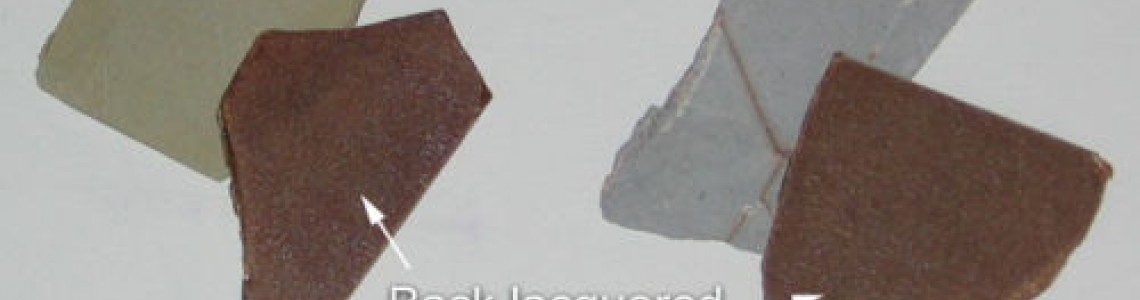
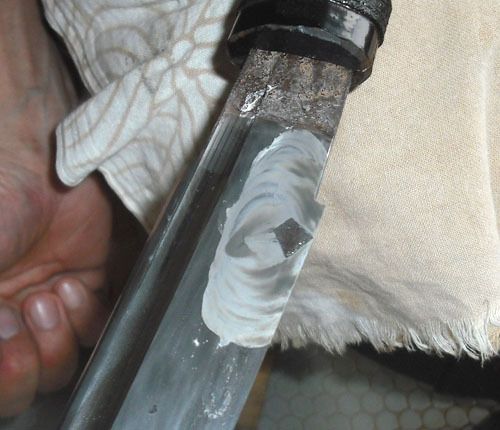
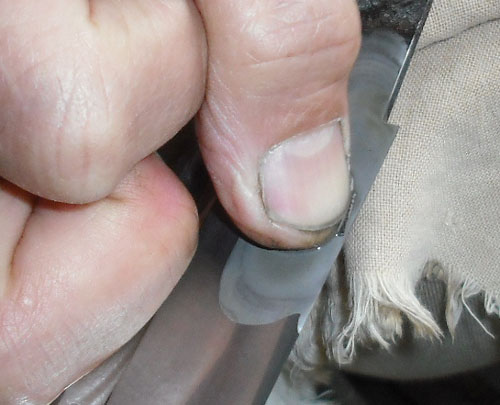
Hazuya is a very thin piece of polishing stone traditionally associated with Japanese sword finishing. According to the original process, Hazuya is made from a thin piece of Uchigumori stone and fixed to paper for use during polishing.
Because Hazuya is extremely thin, it must be handled carefully. The polishing material can break easily if it is not prepared or used correctly. Before polishing begins, the Hazuya is cut into a suitable size and adjusted for the specific work being performed.
In Japanese sword polishing, Hazuya is used as part of fine finishing work. The technique requires controlled movement and even pressure rather than aggressive rubbing. Small changes in pressure, movement, stone thickness, and working conditions can influence the appearance of the finished blade.

The Role of Hazuya in Japanese Sword Polishing
Japanese sword polishing is not simply a process of making a blade shiny. Traditional polishing techniques are used to refine the blade surface and reveal characteristics created during forging and heat treatment. These characteristics can include the hamon and other details of the steel.
Hazuya is used for fine work during the finishing stage of Japanese sword polishing. The original guide focuses particularly on working around the hamon area and gradually moving between the temper line and the cutting edge.
When used correctly, the process is controlled and gradual. The polisher works on a small area at a time instead of attempting to finish the entire blade in one movement. This makes it easier to maintain consistency and carefully observe the effect of the polishing.
The final appearance depends on several variables. The choice of Hazuya, its thickness, the amount of pressure applied, the polishing movement, and the condition of the water can all influence the result.
Preparing the Work Area for Hazuya Polishing
Before beginning the Hazuya polishing process, the working area should be clean and properly prepared. The original guide recommends preparing a full container of clean water before starting the work.
Clean water is an important part of the process because the polishing material and blade surface need to be rinsed during preparation and use. Keeping the working area clean also helps prevent unwanted particles from interfering with the polishing work.
Because Hazuya is thin and delicate, the work should be performed carefully. The polishing material, blade, and working surface should be handled with attention throughout the process.
Basic Preparation
Before polishing, prepare the following:
- A clean working area.
- A sufficient amount of clean water.
- A properly prepared piece of Hazuya.
- A stable and carefully positioned blade.
Good preparation helps create a more controlled working environment and allows the polisher to focus on the small and precise movements required during Hazuya polishing.
How to Prepare Hazuya for Polishing
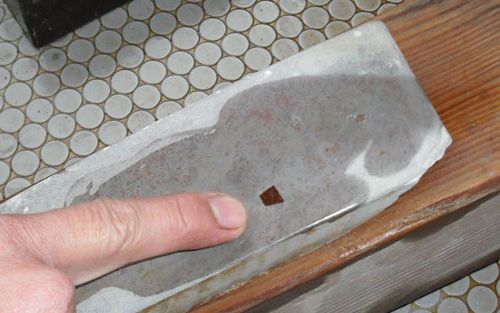
The original Hazuya polishing process begins by preparing the thin polishing stone for use. Since Hazuya is very thin, it should be cut carefully into a suitable working size.
The Hazuya is then carefully adjusted on a natural stone to achieve a suitable thickness. This preparation step requires patience because the polishing material is delicate and can be damaged if handled roughly.
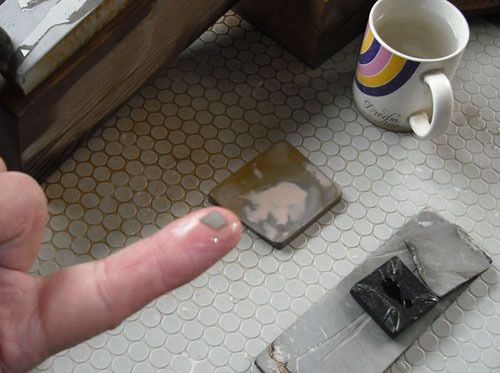
After the Hazuya has been prepared, it should be rinsed in clean water to remove rough particles and residue. This helps prepare the thin stone for fine polishing work.
Step 1: Cut Hazuya to a Suitable Size
Carefully cut the Hazuya into a size that is suitable for controlled polishing. Because the material is thin, unnecessary force should be avoided.
Step 2: Adjust the Thickness
The thin Hazuya can be carefully worked on a natural stone to achieve the thickness needed for polishing. The condition and thickness of the polishing material can affect how it performs on the blade.
Step 3: Rinse with Clean Water
After preparation, rinse the Hazuya in clean water to remove rough particles. Keeping the polishing material clean is an important part of preparing it for fine finishing work.
How the Hazuya Polishing Process Works
Once the Hazuya has been properly prepared, the polishing process can begin. Hazuya polishing is performed gradually and requires careful attention to the blade surface. Rather than working over a large area at once, the process focuses on small sections of the blade.
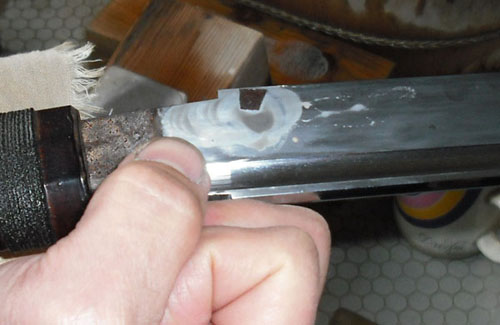
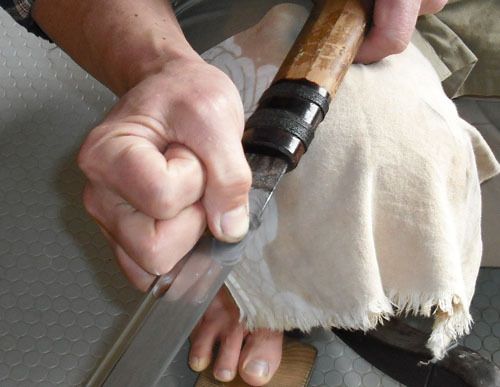
According to the original process, the Hazuya is used around the hamon area. The polisher begins with controlled movements and gradually works across the blade. This allows the surface to be observed closely during the polishing process.
The movement used during Hazuya polishing is an important part of the technique. The polishing should remain controlled and consistent, with attention given to the direction of movement and the pressure applied to the blade.
Step-by-Step Hazuya Polishing Process
Step 1: Position the Blade Carefully
Before beginning the polishing work, the blade should be positioned securely and carefully. A stable position makes it easier to maintain control during the fine movements required for Hazuya polishing.
Because Japanese sword polishing involves working directly on the blade surface, the blade should be handled with care throughout the process. A stable working position also makes it easier to concentrate on a small polishing area.
Step 2: Begin Working Around the Hamon
The original Hazuya polishing process focuses on the area around the hamon. The hamon is the visible temper line that may appear on a differentially hardened Japanese sword blade.
The Hazuya is applied carefully to a small area rather than being moved quickly across a large section of the blade. This controlled approach allows the polisher to observe the effect of the polishing as the work progresses.
Working around the hamon requires patience. The appearance of this area can be influenced by the original blade construction, heat treatment, previous polishing, and the technique used during the finishing process.
Step 3: Use Small and Controlled Movements
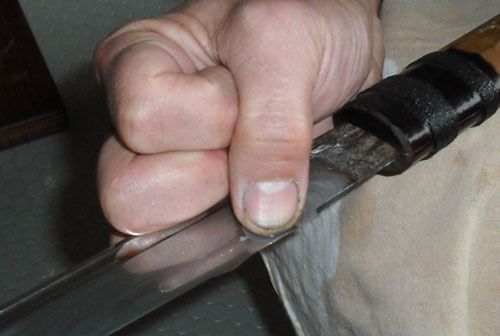
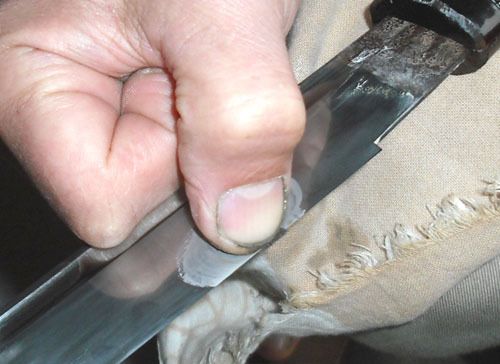
One of the important points described in the original process is the use of small, controlled polishing movements. The Hazuya is not used with aggressive or uncontrolled rubbing.
Instead, the movement should remain small and consistent. The original method describes a subtle vibrating movement while working on the blade surface. This allows the polishing to progress gradually across the selected area.
Maintaining control is important because Hazuya is used for fine finishing work. Excessive force or inconsistent movement may affect the surface and make it more difficult to achieve an even result.
Step 4: Work from the Hamon Toward the Cutting Edge
As described in the original guide, the polishing work gradually moves between the hamon and the cutting edge of the blade. The work is performed progressively rather than attempting to complete the entire area at once.
The polisher works on one small section and then gradually moves to the next. This makes it easier to maintain a consistent working method across the length of the blade.
The direction and range of movement should remain controlled. A consistent process helps avoid creating an uneven appearance between different sections of the polished area.
Step 5: Move Gradually Along the Blade
After completing one small area, the Hazuya polishing process continues along the blade. The polisher gradually moves from one section to another while maintaining similar movements and working conditions.
This gradual approach is important because Japanese sword blades are long and may have subtle differences across their surfaces. Working section by section makes it easier to maintain control and observe the progress of the polishing.
The process requires patience. Fine polishing cannot be rushed if the goal is to maintain a consistent and carefully finished surface.


The Importance of Water During Hazuya Polishing
Water plays an important role in the Hazuya polishing process described in the original guide. A container of clean water should be prepared before beginning the work.
The Hazuya is rinsed during preparation to remove rough particles and residue. Keeping the polishing material clean helps maintain suitable working conditions during fine finishing.
Clean water also helps keep the working process controlled. During traditional polishing, the condition of the polishing material and the cleanliness of the working surface can influence the quality of the result.
For this reason, water used during the polishing process should be kept clean. Contamination or unwanted particles can interfere with fine polishing work.
How Much Pressure Should Be Used?
Pressure is an important factor during Hazuya polishing. Because Hazuya is thin and delicate, the work requires careful control rather than excessive force.
The pressure should remain controlled and consistent while the polisher works across the blade. Sudden changes in pressure can affect the consistency of the polishing result.
A fine Japanese sword polishing process depends on many small adjustments. The condition of the Hazuya, the movement of the hand, the blade surface, and the amount of pressure applied can all influence the final appearance.
For this reason, traditional Japanese sword polishing requires experience. Learning how different materials respond to the blade surface is an important part of developing polishing skill.
Factors That Affect the Hazuya Polishing Result
The final result of Hazuya polishing can vary depending on several factors. Japanese sword blades are not identical, and differences in steel, heat treatment, blade condition, and previous polishing can affect the way a blade responds to fine finishing work.
The Condition of the Hazuya
The condition and thickness of the Hazuya can influence the polishing process. A properly prepared piece of Hazuya allows the polisher to perform controlled work on the blade surface.
The Blade Surface
The existing condition of the blade is another important factor. The surface may have been shaped and polished during earlier stages, and the results of Hazuya work depend partly on the condition of the blade before fine finishing begins.
The Polishing Movement
Small and controlled movements help maintain consistency. The direction, size, and rhythm of the movement can influence the appearance of the polished area.
The Amount of Pressure
Consistent pressure is important during fine polishing. The process should remain controlled rather than relying on excessive force.
Clean Working Conditions
Clean water, a clean work area, and properly prepared polishing materials all contribute to a more controlled polishing process.
Important Considerations During Hazuya Polishing
Hazuya polishing is a delicate part of Japanese sword finishing. Because the polishing material is thin and the blade surface requires careful treatment, the process should not be rushed.
The purpose of fine polishing is not simply to make a Japanese sword blade look brighter. Traditional sword polishing is closely connected to the blade's surface, geometry, forging characteristics, and heat treatment. For this reason, every stage of polishing requires careful judgment.
Do Not Rush the Process
Hazuya polishing should be performed gradually. Working carefully on small areas makes it easier to observe changes in the blade surface and maintain a consistent result.
Avoid Excessive Force
Fine polishing requires control rather than unnecessary force. Excessive pressure may affect the blade surface and can also damage the delicate Hazuya being used.
Keep the Polishing Material Clean
The Hazuya should be kept clean during the polishing process. As described in the original process, clean water is used to rinse the material and remove rough particles or residue.
Pay Attention to the Blade Surface
The blade surface should be observed continuously during polishing. Japanese swords can have subtle differences in their steel and surface characteristics, so a consistent method may still produce different results on different parts of the blade.
Hazuya and Other Japanese Sword Polishing Materials
Japanese sword polishing traditionally involves multiple stages and specialized polishing materials. Different materials may be used at different points in the polishing process, depending on the condition of the blade and the type of finish being created.
Hazuya is associated with fine finishing work and is prepared from Uchigumori stone. The extremely thin piece of stone is attached to paper and carefully used on selected areas of the blade.
The role of Hazuya should therefore be understood as part of a broader Japanese sword polishing process. It is not a complete polishing method by itself, but one of the specialized materials and techniques used during the finishing stages.
The appearance of a finished Japanese sword depends on the combined effect of forging, heat treatment, blade shaping, and multiple stages of polishing. Hazuya contributes to the fine finishing process but does not replace the earlier stages of traditional sword polishing.
Why Japanese Sword Polishing Requires Experience
Traditional Japanese sword polishing is a highly specialized craft. A polished blade is the result of careful work performed over multiple stages, and each stage can affect the final appearance of the sword.
A Japanese sword blade has a carefully shaped geometry. The surface, edge, shinogi, kissaki, and other parts of the blade must be considered during polishing. Incorrect polishing may change the surface or affect the original shape of the sword.
Fine polishing materials such as Hazuya require experience because the polisher must understand how the material interacts with the blade surface. Small differences in movement, pressure, and preparation can influence the final result.
For valuable Japanese swords, antique swords, or traditionally made blades, professional polishing is generally the safest choice. Improper polishing can permanently affect the condition and appearance of a blade.
Common Mistakes to Avoid During Fine Sword Polishing
Fine sword polishing requires patience and consistency. The following problems can affect the quality of polishing work.
Using Too Much Pressure
Excessive pressure can make fine polishing difficult to control. Hazuya polishing should be performed carefully, with controlled movement and consistent pressure.
Working Too Quickly
Rushing across the blade can make it difficult to maintain consistency. The Hazuya polishing process is performed gradually, working through small sections of the blade.
Using Dirty Water or Contaminated Materials
Fine polishing requires clean working conditions. Rough particles or contamination can interfere with the polishing process and affect the blade surface.
Ignoring the Condition of the Blade
Every blade has its own condition and history. The results of fine polishing depend partly on the surface created during earlier stages of sword making and polishing.
Attempting Advanced Polishing Without Experience
Japanese sword polishing requires specialized knowledge and practical experience. Beginners should understand the risks involved before attempting advanced polishing techniques on an important blade.
Frequently Asked Questions About Hazuya Polishing
1. What is Hazuya?
Hazuya is a thin polishing material traditionally used during Japanese sword finishing. It is prepared from Uchigumori stone and is used for fine polishing work on selected areas of a Japanese sword blade.
2. What is Hazuya used for in Japanese sword polishing?
Hazuya is used during the fine finishing stages of Japanese sword polishing. The process described in this guide focuses on carefully working around the hamon area and gradually moving across the selected part of the blade.
3. What stone is used to make Hazuya?
Hazuya is traditionally prepared from a thin piece of Uchigumori stone. The stone is carefully prepared and attached to paper before being used for fine polishing work.
4. Why is Hazuya so thin?
The thin structure of Hazuya allows it to be used for detailed polishing work. Because it is delicate, it must be prepared and handled carefully during the polishing process.
5. What is the role of water during Hazuya polishing?
Clean water is used during preparation and polishing to rinse the Hazuya and help remove rough particles or residue. Maintaining clean working conditions is important during fine Japanese sword polishing.
6. Is Hazuya used on the hamon?
The Hazuya polishing process described in this guide focuses on work around the hamon area. The polishing is performed carefully and gradually across small sections of the blade.
7. Can beginners perform Hazuya polishing?
Hazuya polishing is a specialized technique that requires practice and experience. Incorrect polishing may affect the surface of a blade, so beginners should be cautious when working on valuable or important Japanese swords.
8. Is Hazuya polishing the entire Japanese sword polishing process?
No. Hazuya is one part of the broader Japanese sword polishing process. Traditional sword polishing involves multiple stages and specialized materials used to refine different aspects of the blade.
9. Why is professional Japanese sword polishing recommended?
Professional polishing is recommended for valuable or traditionally made Japanese swords because the process requires specialized knowledge. Improper polishing can affect the blade surface, geometry, and overall appearance.
Conclusion
The Hazuya polishing process is an important part of fine Japanese sword finishing. Prepared from a thin piece of Uchigumori stone, Hazuya is carefully used during detailed polishing work on selected areas of the blade.
The basic process involves preparing a clean working area, preparing and rinsing the Hazuya, and then using small and controlled movements while working gradually across the blade. According to the traditional process described in the original guide, particular attention is given to the area around the hamon and the region toward the cutting edge.
The final result depends on many factors, including the condition of the Hazuya, the cleanliness of the working environment, the movement of the polisher, the pressure applied, and the condition of the blade itself.
More importantly, Hazuya polishing should be understood as one part of the larger Japanese sword polishing tradition. Fine sword polishing requires patience, experience, and a careful understanding of blade construction. For valuable Japanese swords, professional polishing remains the best way to protect the original condition and character of the blade.