Handachi-Style Katana vs Katana: Key Differences Explained
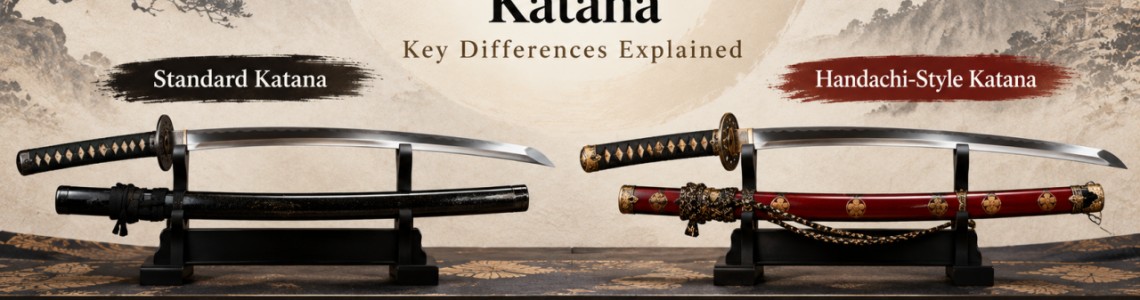
A Handachi-style Katana differs from a standard Katana mainly in its sword mountings, not its blade. Handachi (半太刀), meaning "half-tachi," combines Tachi-inspired fittings with Katana-style wearing conventions. Learn how to identify Handachi koshirae, compare Handachi with Katana and Tachi, and choose the Japanese sword style that suits your preferences.
Handachi-Style Katana vs Katana: Key Differences Explained
Japanese swords are admired for their craftsmanship, history, and distinctive mounting styles. However, the terminology can sometimes be confusing, particularly when comparing a Handachi-style Katana with a traditional Katana.
At first glance, both swords may have a similar curved blade, wrapped handle, tsuba, and lacquered saya. The most important difference is not necessarily the blade itself, but the koshirae (sword mountings and fittings).
The Japanese term Handachi (半太刀), commonly translated as "half-tachi," refers to a hybrid mounting tradition that combines elements associated with the Tachi and Katana.
A standard Katana generally uses traditional uchigatana-style fittings and is worn edge-up through the obi. A Handachi-style Katana is also generally worn edge-up but incorporates Tachi-inspired fittings, such as distinctive handle-end metalwork and decorative saya fittings.
The key distinction is the mounting style, not the steel, blade length, sharpness, or heat treatment.
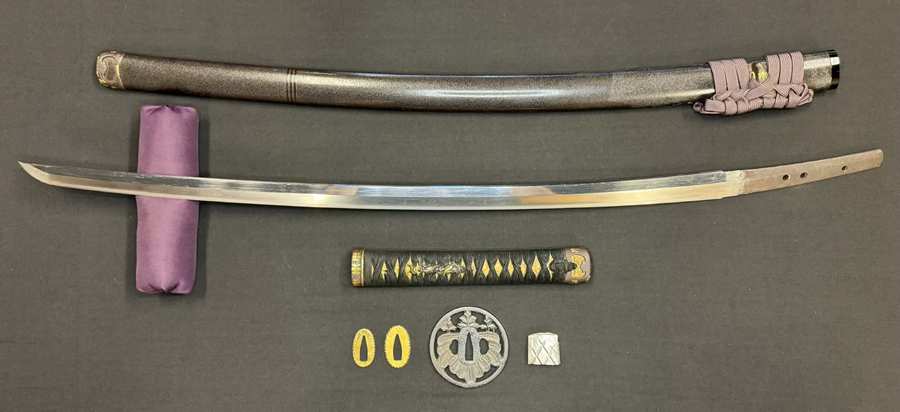
1. What Is a Traditional Katana?
A Katana (刀) is a Japanese single-edged sword traditionally associated with the uchigatana style of carrying. It is normally worn through the obi (waist sash) with its cutting edge facing upward.
This orientation allows the sword to be drawn directly from the waist and distinguishes traditional Katana carrying conventions from the edge-down suspension of many Tachi mountings.
The traditional mounting system, commonly called Katana koshirae or uchigatana koshirae, typically includes:
- Tsuka: The sword handle.
- Tsuba: The guard positioned between the blade and handle.
- Fuchi: The metal collar at the base of the handle.
- Kashira: The fitting at the end of the handle.
- Menuki: Decorative ornaments placed beneath the handle wrapping.
- Samegawa: Rayskin covering beneath the handle wrapping.
- Tsuka-ito: Silk, cotton, leather, or another suitable wrapping material.
- Saya: The protective scabbard.
- Sageo: The cord attached to the saya mounting.
- Kurikata: The scabbard fitting through which the sageo is secured.
The exact fittings vary according to the historical period, sword owner, intended use, and individual preference. Modern handmade Katana may reproduce historical designs or incorporate personalized combinations of traditional-style components.
2. What Is a Handachi-Style Katana?
Handachi is a Japanese sword mounting style combining visual elements traditionally associated with Tachi koshirae with characteristics of Katana or uchigatana mountings.
A traditional Tachi is commonly suspended from the belt with its cutting edge facing downward. In contrast, a Handachi-style Katana is generally intended to be worn edge-up in the manner associated with the Katana, while incorporating selected Tachi-inspired fittings.
This combination explains the term half-tachi.
It does not mean that the sword has half the blade length of a Tachi, nor does the designation specify a particular steel, blade geometry, or heat-treatment method.
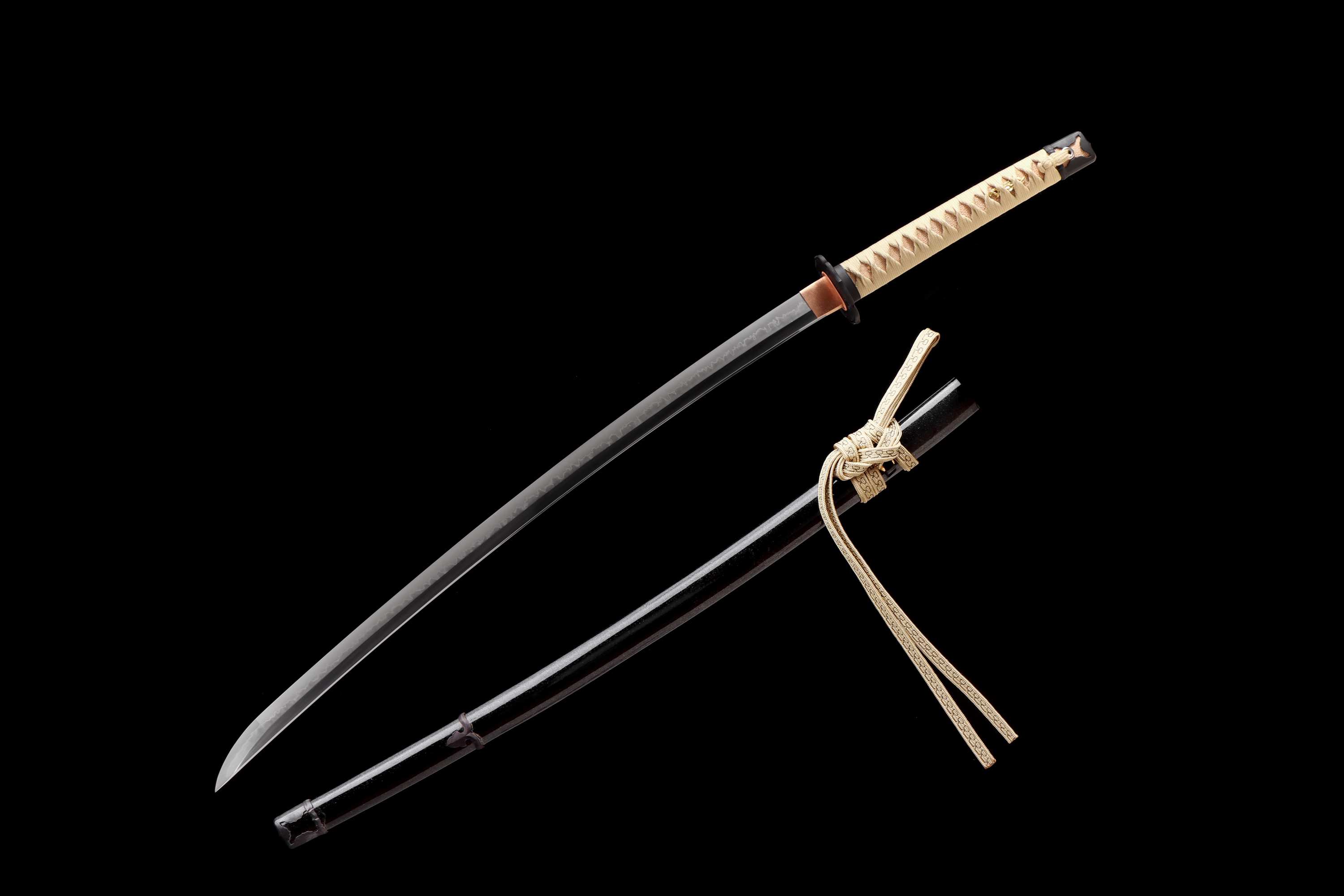
Today, the term Handachi-Style Katana is often used for a modern Katana fitted with historically inspired metalwork and decorative components associated with Handachi traditions.
For a modern example, explore the HanBon Forge Handachi-Style T10 Steel Katana with Genuine Choji Hamon.
3. Handachi vs Katana: Key Differences at a Glance
The following table compares the most recognizable differences between a conventional Katana mounting and a Handachi-style mounting.
| Feature | Standard Katana | Handachi-Style Katana |
|---|---|---|
| Blade Shape | Typically curved and single-edged | Often similar to a Katana blade |
| Wearing Orientation | Generally edge-up | Generally edge-up |
| Mounting Tradition | Uchigatana / Katana koshirae | Hybrid of Katana and Tachi elements |
| Handle-End Fitting | Typically a conventional kashira | May feature kabuto-gane-inspired fittings |
| Saya Fittings | Conventional Katana fittings | Often includes Tachi-inspired metalwork |
| Appearance | Classic Katana styling | More elaborate Tachi-inspired appearance |
| Blade Steel | Depends on the individual sword | Depends on the individual sword |
| Hamon | Depends on heat treatment | Depends on heat treatment |
| Cutting Performance | Depends on blade construction and quality | Depends on blade construction and quality |
4. Handachi vs Tachi vs Katana: Understanding the Three Styles
Because Handachi incorporates elements of both Tachi and Katana mountings, understanding the differences between all three styles is particularly useful.
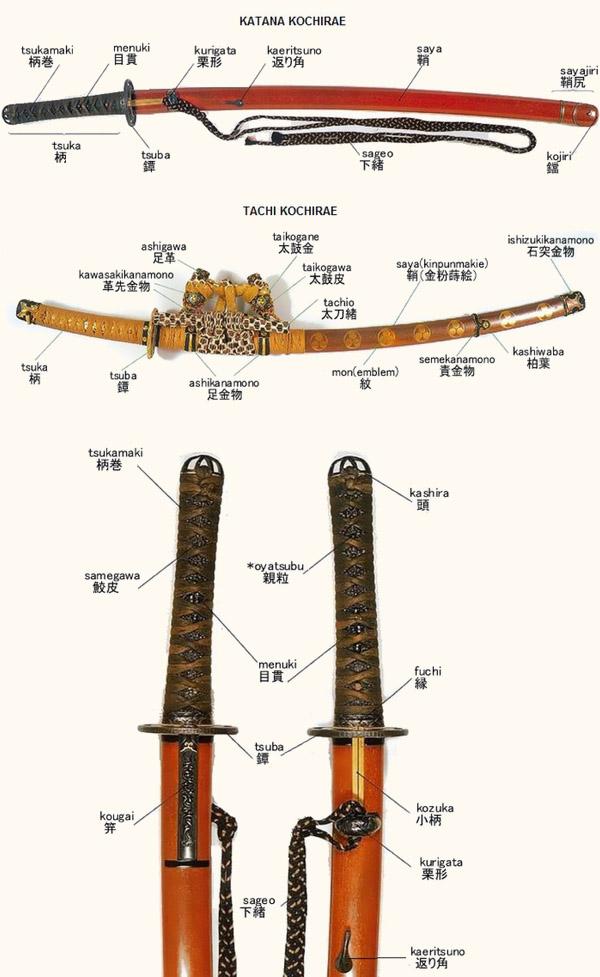
| Characteristic | Tachi | Handachi | Katana |
|---|---|---|---|
| Traditional Carry | Edge-down | Generally edge-up | Edge-up |
| Mounting Style | Tachi koshirae | Hybrid koshirae | Uchigatana koshirae |
| Scabbard Arrangement | Usually suspended by fittings | Tachi-inspired decoration with Katana-style carry | Normally worn through the obi |
| Visual Identity | Traditional Tachi style | Combination of Tachi and Katana features | Classic Katana style |
| Blade Construction | Varies with historical example | Not defined by mounting name | Varies with sword design |
Traditional Tachi Mountings
Tachi koshirae commonly includes fittings designed to suspend the sword with its cutting edge facing downward. This carrying method is a defining feature of traditional Tachi presentation.
Historical Tachi mountings may incorporate elaborate metalwork, suspension fittings, and decorative elements associated with the sword owner's status or the period in which the mountings were produced.
Traditional Katana Mountings
Uchigatana koshirae generally supports edge-up wearing through the obi. The scabbard is commonly fitted with a kurikata and sageo rather than the suspension fittings used on a conventional Tachi.
Handachi Mountings
Handachi koshirae combines selected Tachi-inspired fittings with characteristics of Katana mounting. The resulting sword can resemble a traditional Katana in carrying orientation while displaying more elaborate metalwork.
The historical distinction should be made by examining the overall koshirae rather than assuming that any sword with decorative fittings is automatically a Handachi.
Explore related examples in our Tachi Sword Collection.
5. How to Recognize Handachi-Style Fittings
The easiest way to identify a Handachi-style sword is to examine the complete mounting system, particularly the handle-end fitting and saya metalwork.
1. Kabuto-Gane and Handle-End Fittings
One recognizable feature associated with Handachi mountings is the use of kabuto-gane, a helmet-like metal fitting at the end of the handle, or a design inspired by it.
Compared with the relatively simple kashira on many conventional Katana, these fittings may feature a more pronounced cap-like structure and decorative metalwork.
However, historical examples vary, and not every modern Handachi-inspired sword uses a complete traditional kabuto-gane.
2. Tachi-Inspired Saya Fittings
Handachi-style saya may incorporate additional metal fittings inspired by Tachi koshirae.
These can include decorated scabbard ends, reinforcing bands, and other ornamental features associated with more elaborate historical mountings.
The style, placement, and construction of these fittings vary between different examples.
3. Coordinated Decorative Metalwork
Handachi mountings may feature matching metal components with floral, geometric, crest, or other traditional Japanese-inspired motifs.
The fittings can be coordinated across the handle, guard, and saya to create a unified visual design.
4. The Complete Koshirae
No single fitting should be treated as an absolute rule for identifying Handachi mountings.
The relationship between the tsuka, tsuba, saya, decorative fittings, and intended wearing orientation provides a more reliable indication of the mounting tradition.
For more information about traditional components, see our Japanese Sword Fittings Guide.
6. Does a Handachi-Style Katana Have a Different Blade?
Not necessarily. The word Handachi primarily describes the sword mounting and does not automatically indicate a different blade construction.
A modern Handachi-style Katana may use many of the same blade options available for conventional Japanese-style swords, including:
- T10 high-carbon steel.
- 1095 high-carbon steel.
- 1060 carbon steel.
- Folded steel with visible grain patterns.
- Clay-tempered blades with a genuine hamon.
- Through-hardened blades.
- Traditional Shinogi-zukuri geometry.
- Different blade lengths, kissaki shapes, and polishing options.
These characteristics should be evaluated independently of the sword's mounting classification.
Can a Handachi-Style Katana Have a Genuine Hamon?
Yes. A Handachi-style sword can feature a genuine hamon, including Choji, Notare, Gunome, and other traditional patterns.
A genuine hamon is associated with differential hardening, not with whether the sword uses Katana or Handachi fittings.
Learn more in our Clay Tempered vs Through Hardened Katana Guide.
Can Handachi-Style Swords Have Different Blade Shapes?
Yes. The blade geometry may vary independently of the mounting arrangement.
For example, a modern Handachi-style Katana can use traditional Shinogi-zukuri blade construction or a custom profile, subject to production requirements.
Read our Japanese Sword Blade Shapes Guide to explore how blade construction differs from sword mountings.
7. A Modern Example: HanBon Forge HBF1081 Handachi-Style Katana
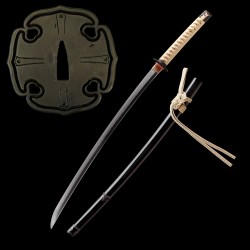
A practical example of a modern Handachi-inspired sword is the HanBon Forge HBF1081, which combines a hand-forged T10 blade with coordinated traditional Japanese-inspired fittings.
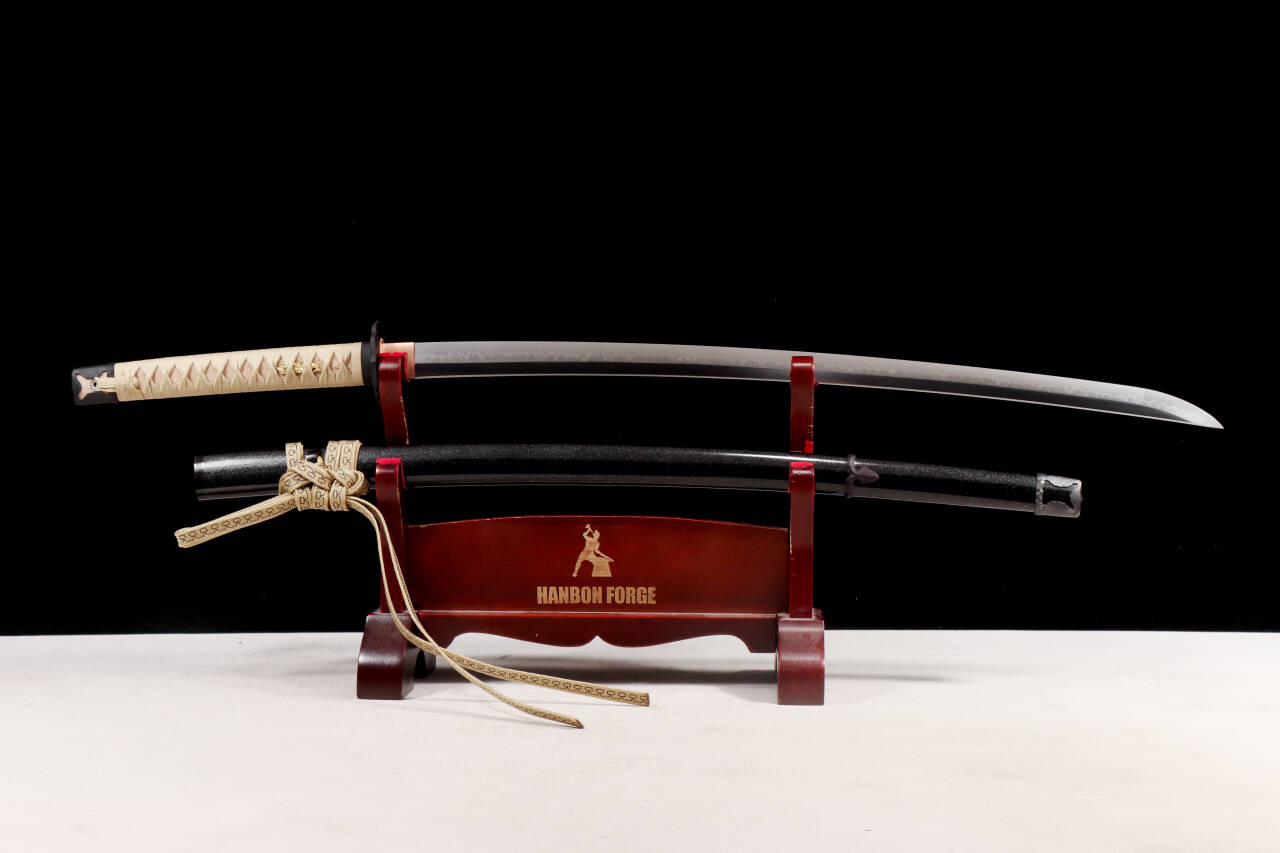
HBF1081 Sword Specifications
| Component | Specification |
|---|---|
| Model | HBF1081 |
| Blade Steel | Hand-forged T10 high-carbon steel |
| Heat Treatment | Clay tempered and oil quenched |
| Hamon | Genuine Choji hamon |
| Blade Geometry | Shinogi-zukuri with O-kissaki |
| Tsuba | Matte black iron Mokkō-style guard |
| Handle Wrapping | Beige Hineri-maki |
| Samegawa | Antiqued genuine rayskin |
| Saya | High-gloss black hardwood with coordinated metal fittings |
| Mounting Style | Handachi-inspired Japanese koshirae |
The Blade and Hamon
The sword features a T10 high-carbon steel blade with Shinogi-zukuri construction and an O-kissaki. Differential hardening produces the genuine Choji hamon, which is further highlighted through polishing.
These features are blade characteristics and are not exclusive to Handachi mountings.
The Handle and Mounting Details
The beige handle wrapping, antiqued genuine rayskin, dark metal fittings, and high-gloss black saya create the distinctive appearance of this Handachi-inspired design.
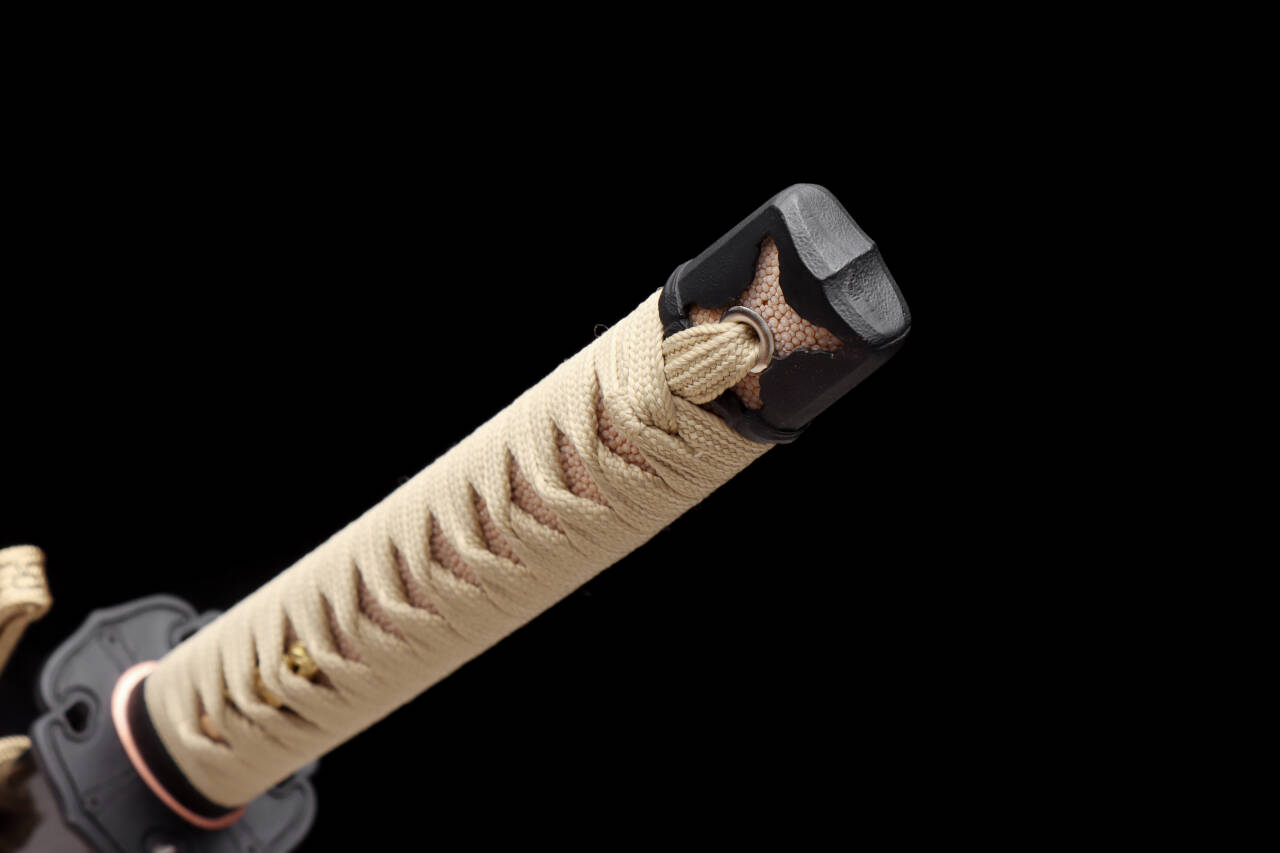
The combination of a genuine hamon, traditional-style blade geometry, and coordinated mountings demonstrates how modern Japanese-style swords can combine familiar blade craftsmanship with distinctive koshirae.
View the HanBon Forge HBF1081 Handachi-Style Katana.
8. Handachi-Style Katana vs Standard Katana: Which Should You Choose?
Choosing between a traditional Katana and a Handachi-style Katana is primarily a matter of mounting preferences, visual appearance, historical inspiration, and intended use.
| If You Prefer... | Consider |
|---|---|
| Classic Japanese samurai sword styling | Standard Katana |
| Tachi-inspired decorative fittings | Handachi-style Katana |
| Conventional uchigatana koshirae | Standard Katana |
| A distinctive hybrid mounting appearance | Handachi-style Katana |
| A particular steel, blade geometry, or hamon | Compare blade specifications separately |
| Personalized fittings and saya details | Custom Japanese sword |
For Collectors and Display
A Handachi-style Katana can be an appealing choice for collectors who appreciate elaborate sword mountings and the historical relationship between Tachi and Katana traditions.
For Traditional Katana Enthusiasts
A standard Katana is a natural choice for enthusiasts who prefer conventional uchigatana koshirae and its familiar mounting arrangement.
For Cutting and Martial Arts Practice
Neither mounting designation guarantees suitability for cutting or martial arts training.
Blade geometry, heat treatment, balance, assembly quality, handle security, sharpness, and the requirements of the particular practice are more important.
For martial arts training, always follow the guidance of a qualified instructor and use equipment appropriate to the activity.
9. Common Misunderstandings About Handachi-Style Katana
Is a Handachi a Shorter Version of a Tachi?
No. Although the name translates approximately as "half-tachi," it does not mean half the length of a Tachi. The term refers to the hybrid characteristics of its mounting.
Is a Handachi Always Longer Than a Katana?
No. There is no universal blade-length requirement defining Handachi-style mountings.
Does Handachi Mean a Higher-Quality Sword?
No. Handachi describes a mounting tradition, not a quality grade. Blade construction, fittings, assembly, and workmanship must be evaluated independently.
Can a Handachi-Style Sword Have the Same Blade as a Katana?
Yes. Two swords may use the same blade geometry, steel, and heat treatment while featuring different mounting styles.
Does Handachi Automatically Mean Historically Accurate?
No. Modern Handachi-style swords can range from historically informed reproductions to contemporary designs inspired by traditional Japanese mountings.
For a historically focused project, examine documented examples and consider details such as the handle-end fitting, saya metalwork, mounting arrangement, and intended wearing method.
10. Custom Handachi-Style Japanese Swords at HanBon Forge
HanBon Forge produces handmade Japanese-style swords and offers customization options for blade steel, heat treatment, geometry, handle wrapping, fittings, and saya design.
For customers interested in Handachi-style mountings, a clearly defined reference image is especially helpful when selecting the desired fitting arrangement.
During a custom sword project, it is useful to confirm:
- The preferred blade length and curvature.
- Steel grade and heat-treatment method.
- Blade shape and kissaki style.
- Tsuba, fuchi, and handle-end fitting design.
- Tsuka-ito color and wrapping style.
- Saya finish and metal fittings.
- Sageo color and decorative arrangement.
- Whether the intended result is a historical reproduction or a modern Handachi-inspired design.
Some historically specialized fittings may not be available in every configuration. For unusual requests, our team can review customer reference photographs and specifications before confirming production feasibility.
For custom orders, HanBon Forge provides finished-sword photographs for customer approval before shipment. This allows customers to review the appearance and requested details of their completed sword.
Our goal is to help customers create a coherent design with appropriate blade specifications and securely assembled fittings, rather than selecting components based solely on visual appeal.
11. Frequently Asked Questions About Handachi-Style Katana
Explore answers to common questions about Handachi koshirae, traditional Katana mountings, and Tachi-inspired sword fittings.
What is the main difference between a Handachi and a Katana?
The main difference is the mounting style. A standard Katana generally uses uchigatana-style fittings, while a Handachi-style Katana combines Katana-style wearing conventions with Tachi-inspired fittings.
Is a Handachi the same as a Tachi?
No. A traditional Tachi is normally suspended edge-down, whereas a Handachi-style Katana generally follows edge-up Katana carrying conventions while incorporating Tachi-inspired mounting details.
What does Handachi mean in Japanese?
Handachi (半太刀) is commonly translated as "half-tachi." The name describes a mounting style that combines elements associated with traditional Tachi and Katana koshirae.
Does a Handachi-style Katana use a special type of steel?
No. Handachi describes the mounting, not the blade material. A modern Handachi-style sword may use T10, 1095, folded steel, or other suitable sword steels.
Can a Handachi-style Katana have a real hamon?
Yes. A Handachi-style sword can feature a genuine hamon created through differential hardening. The mounting style does not determine the heat-treatment process.
Is a Handachi-style Katana longer or heavier than a standard Katana?
Not necessarily. Length and weight depend on the individual sword. The Handachi designation does not establish a particular blade length or weight.
How can I identify Handachi-style fittings?
Look for Tachi-inspired handle-end fittings, decorative saya metalwork, and the overall mounting arrangement. Kabuto-gane-style fittings are one possible indicator, but the complete koshirae should be considered.
Are Handachi-style Katana suitable for cutting practice?
Suitability depends on blade construction, heat treatment, balance, secure assembly, and the intended cutting activity rather than the Handachi mounting designation. Follow appropriate safety and training guidance.
Are Handachi mountings historically authentic?
Yes. Handachi koshirae is a documented historical Japanese mounting tradition. However, modern Handachi-inspired swords vary in how closely they reproduce surviving historical examples.
Can I customize a Handachi-style Katana?
Many aspects of a modern Handachi-inspired sword can be customized, including blade steel, hamon, handle wrapping, saya, and selected fittings. Availability of specialized components should be confirmed before ordering.
Final Thoughts: The Real Difference Between Handachi and Katana
The most important difference between a Handachi-style Katana and a standard Katana is the koshirae rather than the blade itself.
A traditional Katana generally uses uchigatana-style mounting, while a Handachi-style Katana incorporates selected Tachi-inspired fittings into a sword that is generally worn in the Katana manner.
Understanding this distinction helps sword enthusiasts identify Japanese mounting traditions, compare swords more accurately, and appreciate the development of Japanese sword craftsmanship.
Whether you prefer the understated appearance of a classic Katana or the distinctive decorative character of a Handachi-style sword, the quality of the complete blade and mounting assembly remains essential.
Explore Traditional Japanese Swords at HanBon Forge
Discover handmade Japanese-style swords featuring carefully selected blade materials, traditional-inspired fittings, and distinctive mounting designs.
Explore Handachi-Style KatanaBrowse All Katana SwordsReferences & Further Reading
The following museum collections and specialist resources provide historical context for Japanese sword mountings, Handachi koshirae, and traditional sword fittings.
-
The Metropolitan Museum of Art — Blade and Mounting for a Slung Sword (Tachi).
A museum collection record documenting a traditional Tachi and its edge-down wearing arrangement.
View Museum Collection Record. -
Western Australian Museum — Japanese Sword with Handachi Koshirae (W1970.917a-b).
A documented historical Japanese sword with Handachi mountings, including kabuto-gane, decorated saya, and coordinated metal fittings.
View Historical Handachi Sword. -
Tokugawa Art Museum — Historical Japanese Swords and Mountings.
An educational museum resource discussing Japanese swords and their historical context.
Read Museum Exhibition Handout. -
Nihonto.com — The Uchigatana Koshirae (打刀拵).
A specialist resource describing traditional uchigatana mountings and their fittings.
Read the Sword Mounting Reference.
Research Note: Historical sword mountings vary across periods and individual examples. The distinctions presented here describe common characteristics and should not be interpreted as absolute rules for every surviving sword.
About This Article
Prepared by: HanBon Forge Team
Topic: Handachi Koshirae, Katana, Tachi & Japanese Sword Fittings
Content Focus: Historical sword mounting terminology and practical considerations for modern handmade Japanese-style swords.
HanBon Forge specializes in handmade and custom Japanese-style swords, including Katana, Wakizashi, Tanto, Tachi, and traditional-inspired mounting designs.
This guide combines historical museum references with practical observations relevant to modern sword production and customization.
Related Products