
How to Wrap a Katana Handle: Traditional Tsuka Wrapping Method (Tsukamaki)
How to Wrap a Katana Handle: Traditional Tsuka Wrapping Method (Tsukamaki)
The handle of a Japanese sword is not only a decorative part of the weapon. A properly wrapped katana handle provides a secure grip, improves control, and represents centuries of Japanese sword craftsmanship.
The traditional Japanese method of wrapping a sword handle is called Tsukamaki (柄巻). It involves carefully wrapping tsuka-ito, a silk, cotton, or leather cord, around the tsuka core to create a strong and comfortable grip.
A high-quality tsuka wrapping requires patience, precision, and consistent tension. The diamond-shaped pattern is not only beautiful but also functional, preventing the hand from slipping during use.
What Is Tsuka Wrapping (Tsukamaki)?
Tsukamaki is the traditional Japanese art of wrapping the handle of a katana or other Japanese sword. The process covers the tsuka core with tightly arranged cord called tsuka-ito.
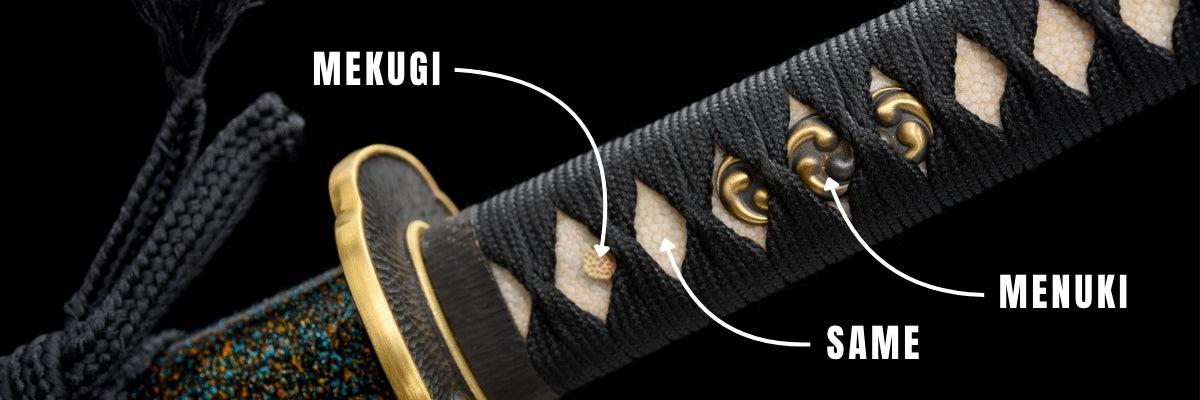
The finished wrapping creates a textured surface that improves grip while securing the handle components together.
A traditional katana tsuka usually consists of several important parts:
- Tsuka Core: The wooden handle structure that fits over the sword tang.
- Samegawa: Genuine ray skin covering that provides texture and strength.
- Tsuka-ito: The wrapping cord made from silk, cotton, or leather.
- Menuki: Decorative ornaments placed under the wrapping for appearance and grip.
- Hishigami: Small paper inserts that help create even diamond shapes.
Why Is Proper Katana Handle Wrapping Important?
A poorly wrapped tsuka can become loose over time, affecting both comfort and safety. Traditional tsukamaki focuses on maintaining strong tension so the handle remains stable during movement.
The purpose of tsuka wrapping is not simply decoration. A properly made handle provides:
- Better control of the sword during handling.
- A more secure grip during cutting practice.
- Protection for the samegawa and wooden core.
- A traditional appearance matching Japanese sword aesthetics.
For functional katana, the quality of the tsuka wrapping is just as important as the blade and fittings.
Materials Needed for Katana Handle Wrapping
Before starting the tsukamaki process, several traditional materials are required.
1. Tsuka-ito (Wrapping Cord)
Tsuka-ito is the main wrapping material. Traditional Japanese sword handles commonly use silk or cotton cord, while modern functional swords may also use leather or synthetic materials.
2. Samegawa (Ray Skin)
Samegawa is placed underneath the wrapping. Its rough texture helps prevent the ito from moving and adds strength to the handle structure.
3. Hishigami
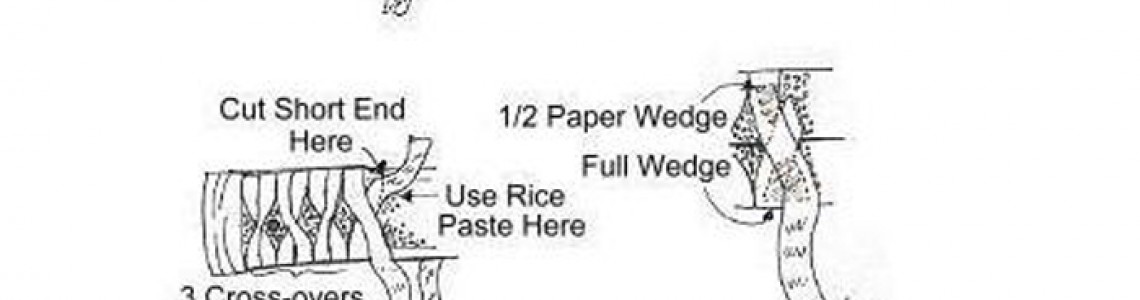
Hishigami are small folded paper pieces inserted under the ito. They help create consistent diamond-shaped patterns and maintain even spacing throughout the handle.
Preparing the Katana Handle Before Wrapping
Before wrapping begins, the tsuka must be properly prepared. The wooden core should fit tightly around the tang, and the samegawa should be securely attached.
An uneven surface can cause the wrapping pattern to become irregular and may reduce the durability of the finished handle.
Professional sword makers carefully prepare the tsuka shape before applying the final wrapping because the foundation determines the quality of the finished result.
Step-by-Step Guide: How to Wrap a Katana Handle (Tsukamaki Process)
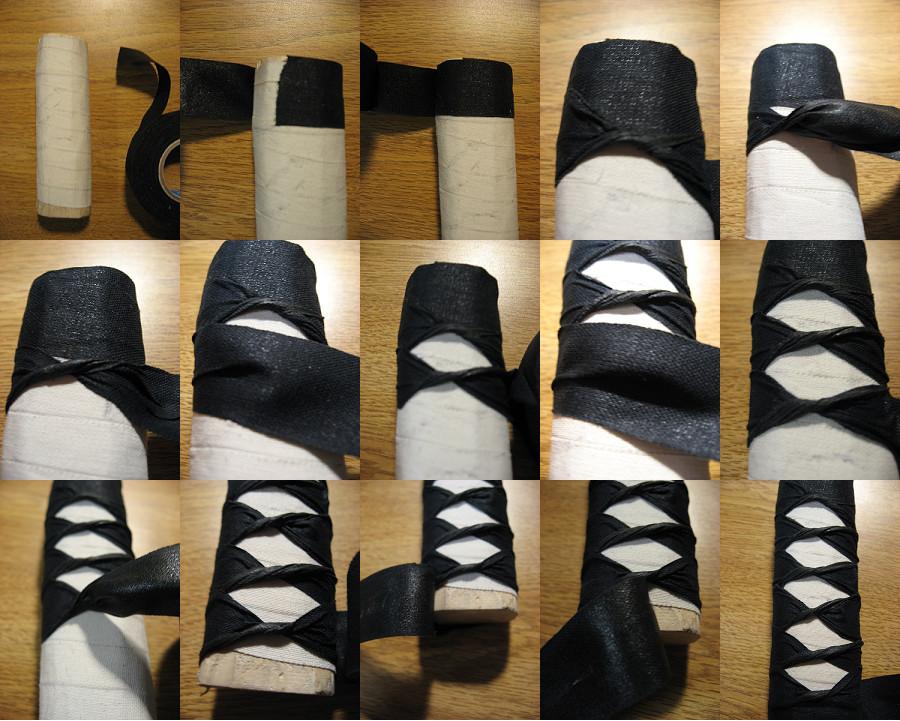
Traditional tsuka wrapping requires careful preparation and consistent tension. The goal is to create an even diamond pattern while keeping the ito secure around the handle.
Step 1: Prepare the Tsuka and Materials
Before beginning the wrapping process, make sure the tsuka core, samegawa, menuki, and tsuka-ito are properly prepared.
The handle surface should be clean and smooth. Any uneven areas can affect the final appearance and may cause the wrapping to loosen over time.
Step 2: Position the Tsuka-ito
The wrapping begins by positioning the tsuka-ito correctly near the fuchi (handle collar). The cord is folded and tightened carefully to establish the first section of the pattern.
The first few folds are extremely important because they determine the alignment of the entire handle wrapping.
Step 3: Create the Diamond Pattern with Hishigami
During traditional tsukamaki, hishigami pieces are placed underneath the ito at each crossing point. These small paper wedges help form consistent diamond shapes.
Hishigami also improves stability by preventing the cord from moving against the rough texture of the samegawa.
Step 4: Maintain Even Tension
The most important part of tsuka wrapping is maintaining consistent tension. Loose wrapping can move during use, while excessive tension may damage the handle materials.
Professional sword craftsmen carefully check the alignment of every fold to ensure the finished handle looks symmetrical and feels comfortable.
Step 5: Finish the Wrapping at the Kashira
After reaching the end of the tsuka, the ito is secured around the kashira (pommel cap). The final knot locks the wrapping in place and completes the traditional handle design.
Different Types of Katana Handle Wrapping Styles
Japanese sword handles can be wrapped using several traditional methods. Each style creates a different appearance and texture.
Tsumamimaki (Pinched Wrapping)
Tsumamimaki is one of the most common katana handle wrapping methods. The ito is pinched at the crossing points, creating a clear diamond-shaped pattern.
This style provides a traditional appearance and excellent grip, making it popular for many modern handmade katana.
Hinerimaki (Twisted Wrapping)
Hinerimaki uses a twisted folding method where the ito is turned at the crossing points. This creates a more textured appearance compared with standard Tsumamimaki.
Many collectors choose Hinerimaki because of its unique visual style and traditional craftsmanship.
Hiramaki (Flat Wrapping)
Hiramaki is a simpler wrapping style where the ito crosses without the additional twisting used in other methods.
This method was commonly seen on certain Japanese swords and historical styles.
Common Mistakes When Wrapping a Katana Handle
Although tsuka wrapping may appear simple, achieving a professional result requires experience. Several common mistakes can affect the quality of the finished handle.
- Loose Ito Tension: A loose wrap can shift and reduce grip security.
- Uneven Diamond Shapes: Incorrect spacing creates an inconsistent appearance.
- Skipping Hishigami: Without proper support, the wrapping may not maintain its shape.
- Poor Material Selection: Low-quality cord may stretch or wear quickly.
- Incorrect Tsuka Preparation: An uneven handle core affects the entire wrapping process.
For functional swords, professional tsukamaki is recommended because the handle directly affects the safety and handling experience of the katana.
How to Maintain a Katana Handle After Tsuka Wrapping
A properly wrapped tsuka can last for many years when maintained correctly. Since the handle contains natural materials such as wood, ray skin, and cotton or silk cord, proper care is important.
- Keep the katana stored in a dry environment.
- Avoid touching the wrapping with wet or oily hands.
- Check the tsuka regularly for loose areas.
- Do not pull or adjust the ito without proper knowledge.
- Clean dust from the handle using a soft cloth.
If the tsuka-ito becomes loose or damaged, professional rewrapping is recommended instead of attempting repairs without experience.
How to Choose a Katana with Quality Tsuka Wrapping
When purchasing a handmade katana, many buyers focus mainly on the blade. However, the quality of the tsuka is equally important because it directly affects comfort, control, and safety.
A well-made katana handle should have:
- Tight Tsuka Construction: The handle should fit securely on the sword tang.
- High Quality Samegawa: Genuine ray skin improves stability and durability.
- Strong Tsuka-ito: The wrapping material should maintain tension over time.
- Even Diamond Pattern: Professional wrapping should look symmetrical and consistent.
- Proper Menuki Placement: Decorative fittings should also improve handling comfort.
A beautiful blade deserves a properly constructed tsuka. High-quality handle wrapping completes the craftsmanship of a traditional Japanese sword.
Tsuka Wrapping vs Modern Sword Handle Designs
Traditional Japanese tsuka wrapping remains popular because it combines function and aesthetics. Unlike simple leather grips or modern synthetic handles, tsukamaki carries centuries of sword-making tradition.
The layered construction of samegawa and ito provides both durability and a comfortable texture, making it suitable for both collectors and practitioners.
For those interested in authentic Japanese sword craftsmanship, a properly wrapped tsuka is an important feature when selecting a katana.
Conclusion: The Importance of Traditional Katana Handle Wrapping
Tsuka wrapping is one of the most recognizable elements of Japanese sword craftsmanship. The traditional Tsukamaki method transforms a simple handle into a functional and artistic component of the katana.
From selecting quality materials to creating precise diamond patterns, every step requires skill and attention to detail.
Whether you are a collector, martial artist, or sword enthusiast, understanding the katana handle wrapping process helps you appreciate the craftsmanship behind a well-made Japanese sword.
Frequently Asked Questions About Katana Handle Wrapping
1. What is Tsukamaki?
Tsukamaki is the traditional Japanese method of wrapping a katana handle using cord called tsuka-ito around the wooden handle core.
2. What material is used for katana handle wrapping?
Traditional katana handles use silk, cotton, or leather tsuka-ito. The wrapping is usually placed over samegawa ray skin.
3. Why do katana handles have diamond patterns?
The diamond pattern improves grip, secures the wrapping, and creates the traditional appearance associated with Japanese swords.
4. What is hishigami in tsuka wrapping?
Hishigami are small folded paper inserts placed under the ito to create even diamond shapes and maintain wrapping structure.
5. What is the difference between Tsumamimaki and Hinerimaki?
Tsumamimaki creates a traditional pinched diamond pattern, while Hinerimaki uses twisted folds to create a different texture and appearance.
6. Can I wrap a katana handle myself?
Basic wrapping is possible to learn, but professional Tsukamaki requires experience to achieve proper tension, alignment, and durability.
7. How long does katana handle wrapping take?
The time depends on the wrapping style and craftsmanship required. Traditional professional wrapping can take several hours or more.
8. How do I know if a katana has good tsuka wrapping?
Quality tsuka wrapping should have even patterns, strong tension, secure fittings, and no loose areas.
9. Does tsuka wrapping affect sword performance?
Yes. A secure handle improves grip, control, and handling comfort, especially during practical sword use.
10. Why is traditional tsukamaki important for katana collectors?
Traditional tsukamaki represents Japanese sword craftsmanship and preserves the historical design and function of the katana handle.
A carefully wrapped tsuka is more than a handle. It is an essential part of the katana that combines tradition, craftsmanship, and practical function.