
Liuyedao: The Willow Leaf Saber of China – History, Design & Uses

Liuyedao: The Willow Leaf Saber of China
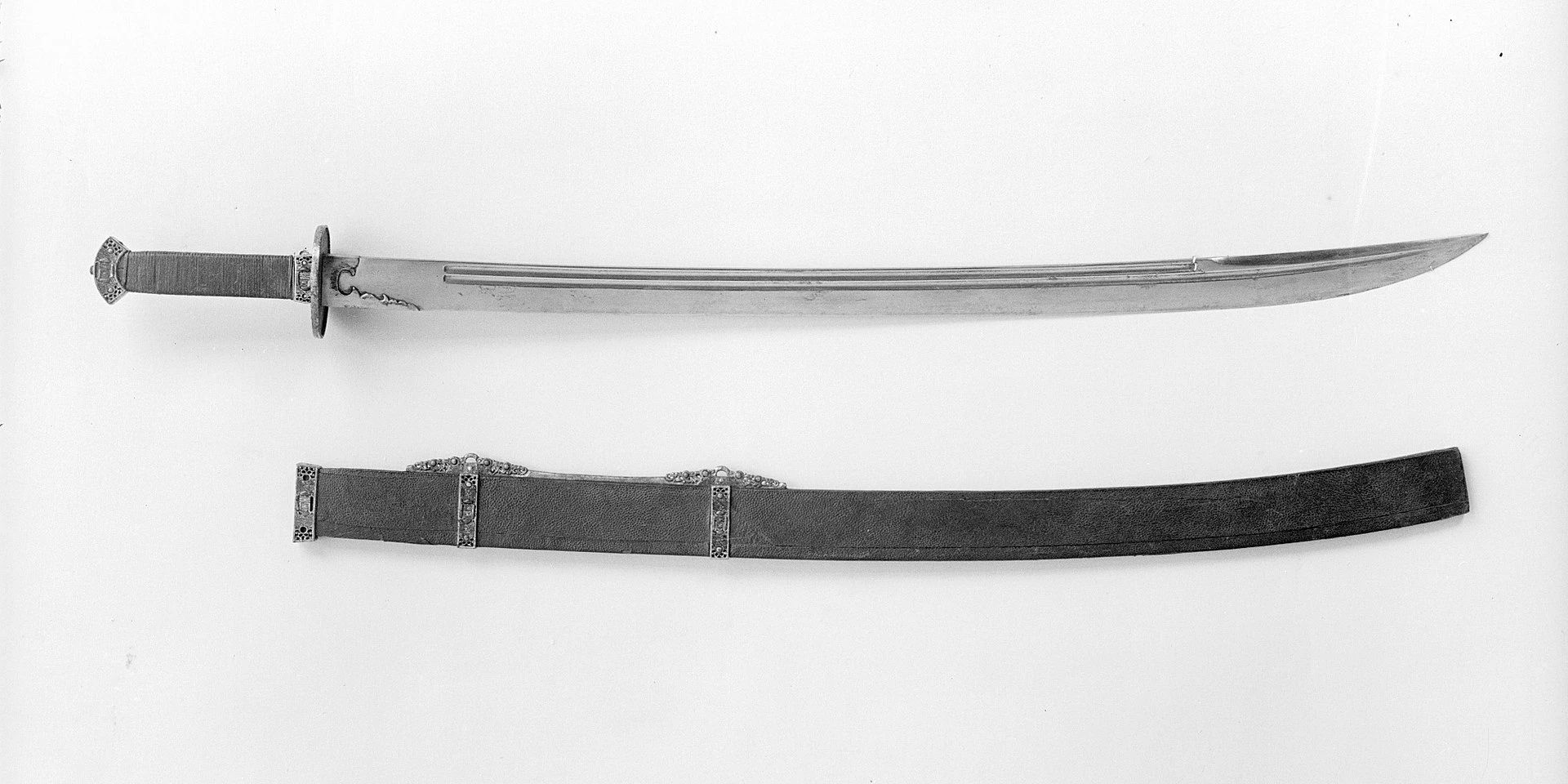
The Liuyedao (柳葉刀), commonly translated as the willow leaf saber, is one of the best-known forms of traditional Chinese dao. With its graceful curved blade and practical balance between cutting and thrusting, the Liuyedao became an important saber during the Ming and Qing dynasties.
Unlike the straight double-edged jian, the Liuyedao is a single-edged saber designed around a moderate curve. Its blade shape gives it a distinctive appearance while also influencing the way the saber handles and cuts.
Today, the Liuyedao remains an important part of Chinese martial arts, traditional weapons research, historical collections and Chinese sword culture.
What Is a Liuyedao?
Liuyedao literally means “willow leaf saber” in Chinese. The name refers to the characteristic shape and gentle curvature of the blade.
The Liuyedao belongs to the broader family of Chinese dao, which are generally single-edged cutting weapons. Although Chinese dao come in many different forms, the Liuyedao is particularly recognizable because its blade has a moderate curve that runs along much of its length.
Historical examples show that the exact shape of a Liuyedao was not completely standardized. Some blades have a relatively gentle curve, while others become more strongly curved toward the tip. The hilt and fittings also vary depending on the period and the intended use.
The Metropolitan Museum Journal notes that the Liuyedao appeared during the Ming period and remained popular through the Qing dynasty. It became one of the most widely used forms of Chinese saber during the Qing period.
The History of the Liuyedao
The Liuyedao emerged as part of the development of curved Chinese sabers during the Ming Dynasty.
During the Ming period, curved dao increasingly became important military sidearms. The Liuyedao was particularly successful because its moderate curvature offered a useful compromise between cutting performance and thrusting ability.
As the Qing Dynasty developed, the Liuyedao continued to be used by soldiers and became one of the most common forms of peidao, or worn sabers.
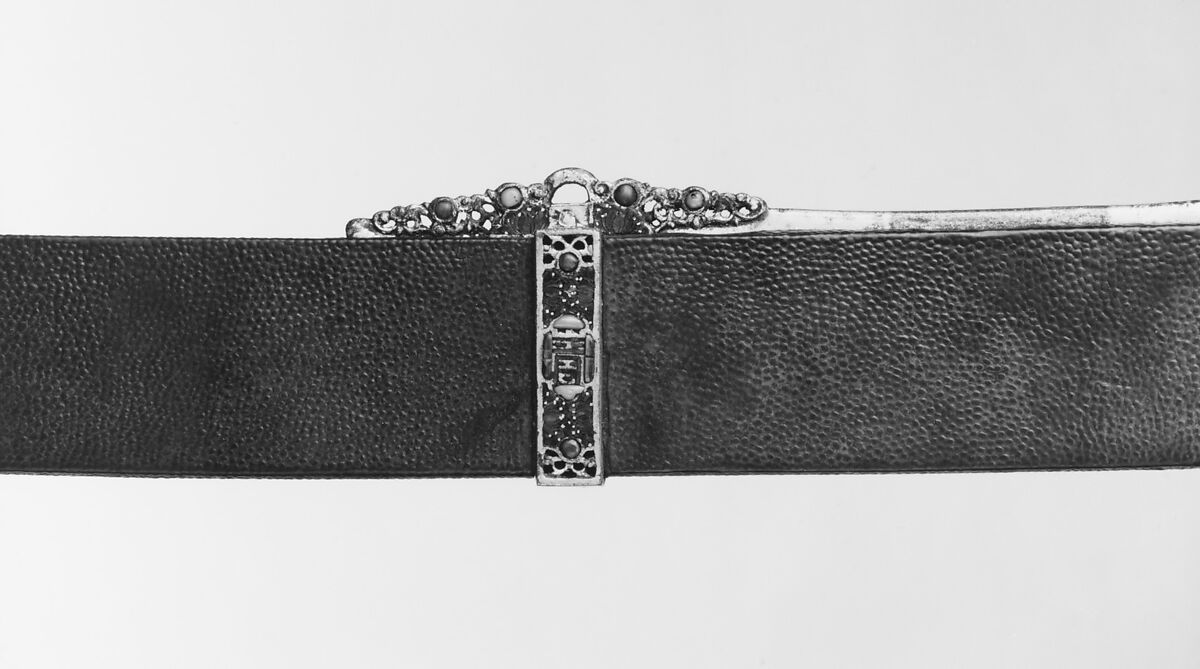
Surviving historical examples show considerable variation. Some were relatively plain military weapons, while others featured decorated guards, pommels, scabbards and metal fittings. This means that a Liuyedao can represent both a practical military weapon and a highly decorated ceremonial or officer's saber.
Museum examples from the late Qing period demonstrate how the basic Liuyedao form continued to evolve while retaining its characteristic curved, single-edged blade.
What Does a Liuyedao Look Like?
The easiest way to recognize a Liuyedao is by its moderately curved single-edged blade.
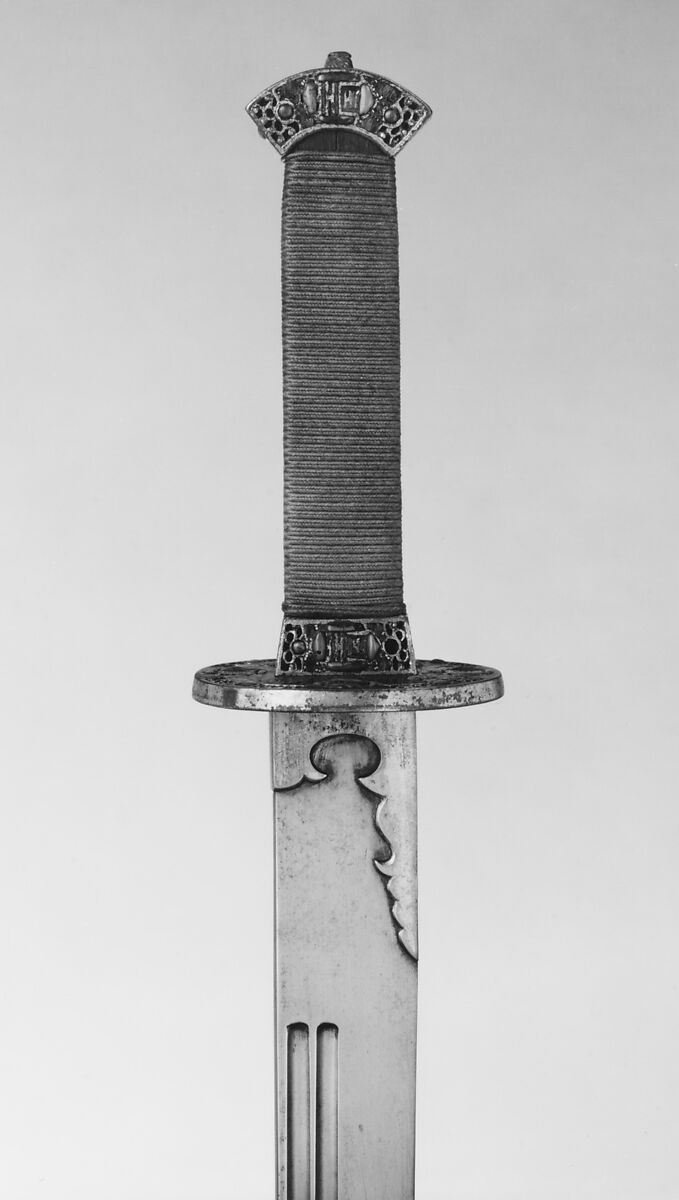
Compared with a straight Chinese jian, the Liuyedao has a more pronounced curve. Compared with heavily curved sabers such as the piandao, however, its curvature is usually more restrained.
Typical characteristics include:
A single-edged blade
A moderate overall curve
A pointed tip suitable for both cutting and thrusting
A relatively practical blade profile
A one-handed hilt on many historical examples
A scabbard designed for carrying the saber
Different styles of guards and fittings depending on the period
Some historical Liuyedao examples also have a sharpened section along the back of the blade near the tip. The exact blade geometry, however, varies between surviving examples.
This variation is important when identifying historical Chinese sabers. Not every Liuyedao has exactly the same proportions or fittings.
Why Is the Liuyedao Curved?
The curvature of the Liuyedao is closely related to how the saber performs during a cut.
A moderately curved blade can help produce an effective cutting action as the blade moves through a target. At the same time, the Liuyedao retains enough straight-line geometry to make thrusting possible.
This creates a useful balance.
A more strongly curved saber generally favors cutting and draw-cutting techniques, while a straighter blade is generally more suitable for thrusting. The Liuyedao sits somewhere between these extremes.
This balance was one reason the design proved so versatile in historical Chinese martial traditions.
Liuyedao vs. Chinese Jian
The Liuyedao and Chinese jian are very different types of traditional Chinese weapons.
The jian is normally a straight, double-edged sword, while the Liuyedao is a single-edged, curved saber.
Here are some of the main differences:
| Feature | Liuyedao | Chinese Jian |
|---|---|---|
| Blade | Single-edged | Double-edged |
| Shape | Moderately curved | Generally straight |
| Main association | Saber / dao | Straight sword |
| Cutting | Strong emphasis | Important, but combined with thrusting |
| Thrusting | Possible | Particularly well suited |
| Historical role | Military saber and martial weapon | Military, martial and cultural weapon |
The two weapons therefore represent different branches of traditional Chinese sword development.
Liuyedao vs. Other Chinese Dao
The Liuyedao is only one type of Chinese dao.
Other traditional Chinese saber forms include the yanmaodao, piandao and niuweidao. Their blade shapes differ, and these differences affect their handling and historical roles.
Liuyedao
The Liuyedao has a moderate curve along the blade and is often considered a balanced saber design.
Yanmaodao
The yanmaodao, or goose-quill saber, is generally straighter through much of the blade, with more curvature toward the tip.
Piandao
The piandao has a significantly deeper curve and is strongly associated with cutting and draw-cutting techniques.
Niuweidao
The niuweidao, commonly called the ox-tail saber, has a broad blade that becomes wider toward the forward portion and has a distinctive shape.
Understanding these differences can make it easier to identify different types of Chinese dao.
How Was the Liuyedao Used?
Historical Liuyedao were used as practical weapons by both infantry and cavalry.
For infantry, the moderate blade length and curved profile made the saber suitable for close-range cutting while still allowing thrusting techniques.
For cavalry, a curved saber could be particularly useful for cutting while moving on horseback. The Liuyedao therefore fit naturally into the military environment of late imperial China.
The saber was generally carried in a scabbard attached to the body rather than simply being carried as an unsheathed weapon.
Historical sources and surviving examples also show that Liuyedao were not limited to one social class or one exact military configuration. Their fittings and decoration could vary significantly according to the period and status of the owner.
Liuyedao in Chinese Martial Arts
The Liuyedao also became important in traditional Chinese martial arts.
Chinese martial arts commonly use the broader category of dao in training and forms. Different schools may use different saber shapes depending on their particular tradition.
The moderate curve of the Liuyedao makes it an interesting design for martial arts practice because it combines the visual and functional characteristics of a traditional Chinese saber without the extreme curvature of some other dao types.
Modern martial arts versions may differ considerably from historical military examples. A modern training saber should therefore not automatically be treated as an exact reproduction of a historical Liuyedao.
What Makes the Liuyedao Different?
The appeal of the Liuyedao comes from its balance of shape, history and practical design.
Its moderate curvature gives it a distinctive appearance without making it as dramatically curved as a piandao. At the same time, its single-edged blade clearly distinguishes it from the Chinese jian.
The Liuyedao also represents an important period in Chinese weapons history. It reflects the development of the Chinese saber from earlier blade forms toward increasingly specialized curved weapons used during the Ming and Qing dynasties.
For collectors and martial arts enthusiasts, this combination of historical importance and recognizable design makes the Liuyedao one of the most interesting traditional Chinese dao.
Liuyedao Blade Length and Weight
Historical Liuyedao were produced in different sizes, so there is no single universal measurement that applies to every example.
Surviving sabers show differences in:
Blade length
Overall length
Blade width
Blade thickness
Curvature
Hilt configuration
Scabbard and fittings
This variation is important when discussing traditional Chinese swords because historical weapons were not necessarily manufactured according to one modern standardized specification.
For modern reproductions, dimensions can vary according to whether the sword is intended for display, martial arts practice, historical reproduction or collection.
Why Is the Liuyedao Called a Willow Leaf Saber?
The Chinese name 柳葉刀 (Liuyedao) can be translated as “willow leaf saber.”
The name comes from the visual character of the blade, whose curved profile is reminiscent of a willow leaf.
This type of descriptive naming is common in Chinese weapon terminology. Blade shapes were often an important part of how different types of dao were identified.
The name Liuyedao therefore provides a simple way to distinguish this saber from other Chinese dao with different blade profiles.
Is a Liuyedao a Sword or a Saber?
Technically, the Liuyedao is better described as a Chinese saber rather than a straight Chinese sword.
In English, however, the word “sword” is sometimes used as a broad term for traditional bladed weapons. This is why you may see terms such as “Liuyedao sword” or “Chinese sword” used online.
For historical accuracy, Liuyedao or willow leaf saber is the more precise terminology.
The distinction is useful when comparing the Liuyedao with the Chinese jian. A jian is generally a straight, double-edged sword, while a Liuyedao is a curved, single-edged dao.
Frequently Asked Questions About Liuyedao
1. What is a Liuyedao?
Liuyedao (柳葉刀) is a traditional Chinese single-edged saber characterized by its moderate blade curvature. It appeared during the Ming period and remained popular through the Qing Dynasty.
2. What does Liuyedao mean?
Liuyedao means “willow leaf saber” in Chinese. The name refers to the characteristic shape of the curved blade.
3. Is Liuyedao a Chinese sword?
Liuyedao is more accurately described as a Chinese saber or dao. Unlike the double-edged Chinese jian, it normally has a single-edged curved blade.
4. When was the Liuyedao used?
The Liuyedao became prominent during the Ming Dynasty and remained widely used during the Qing Dynasty.
5. Was the Liuyedao used by cavalry?
Yes. Historical Liuyedao were associated with both cavalry and infantry use. Its curved blade made it well suited to cutting techniques, including from horseback.
6. Is a Liuyedao curved?
Yes. A moderate curve is one of the defining characteristics of the Liuyedao. The exact amount of curvature varies among historical examples.
7. What is the difference between Liuyedao and Jian?
The Liuyedao is a curved, single-edged saber, while the jian is generally a straight, double-edged sword. Their blade shapes and traditional applications are therefore quite different.
8. What is the difference between Liuyedao and Piandao?
The main difference is the degree of curvature. A Liuyedao normally has a moderate curve, while a piandao has a much deeper curve and is particularly associated with cutting and draw-cutting.
9. Is Liuyedao used in Chinese martial arts?
Yes. Dao weapons are used in many Chinese martial arts traditions, and Liuyedao-style sabers are represented in modern martial arts and weapons training.
10. Are all Liuyedao the same?
No. Historical Liuyedao vary in blade length, curvature, width, hilt design, fittings and decoration. Surviving examples from different periods can look noticeably different.
Final Thoughts
The Liuyedao is one of the defining saber designs in Chinese weapons history. Its moderate curvature, single-edged blade and practical balance between cutting and thrusting helped it remain important from the Ming Dynasty through the Qing Dynasty.
For anyone interested in Chinese swords, Chinese dao, traditional Chinese martial arts or historical weapons, learning about the Liuyedao is a good starting point for understanding the wider development of Chinese saber design.
Its simple name — the willow leaf saber — describes only its appearance. Its historical importance goes much further, reflecting centuries of Chinese military development, craftsmanship and martial traditions.
When comparing or purchasing a Liuyedao reproduction today, it is worth paying attention to the blade profile, overall proportions, fittings and intended purpose. A historically inspired display piece and a martial arts training weapon may have very different specifications.
Related Topics:
Chinese sword • Chinese dao • Chinese saber • Willow leaf saber • Liuyedao • Liu Ye Dao • Chinese sword history • Ming Dynasty sword • Qing Dynasty saber • Traditional Chinese weapons