
Japanese Sword Etiquette: How to Handle, Draw and Pass a Katana

Japanese Sword Etiquette: How to Handle, Draw and Pass a Katana Respectfully
Japanese swords are admired not only for their craftsmanship and history, but also for the traditions surrounding their handling. Whether you own a katana for collecting, display, martial arts, or historical appreciation, understanding basic Japanese sword etiquette is an important part of responsible ownership.
A katana should never be treated like an ordinary object. The blade, fittings, scabbard, and polished surface can all be damaged by improper handling. More importantly, careless behavior around a sword can create unnecessary safety risks.
This guide explains the basic rules of katana etiquette, including how to handle a Japanese sword, how to draw a katana from its scabbard, how to pass a sword to another person, and how to show respect for the blade.
What Is Japanese Sword Etiquette?
Japanese sword etiquette refers to the traditional and practical rules used when handling a Japanese sword. These customs developed through a combination of safety, respect, martial tradition, and the desire to protect valuable blades.
A traditional Japanese sword is made up of many carefully crafted parts. The polished blade, handle, guard, scabbard, and fittings can all be affected by improper handling.
For collectors, martial artists, and enthusiasts, following basic Japanese sword handling etiquette helps protect the sword while also showing respect for its craftsmanship and history.
Although different martial arts schools may have their own specific traditions, several basic principles apply to most situations.
The Basic Rules of Handling a Katana
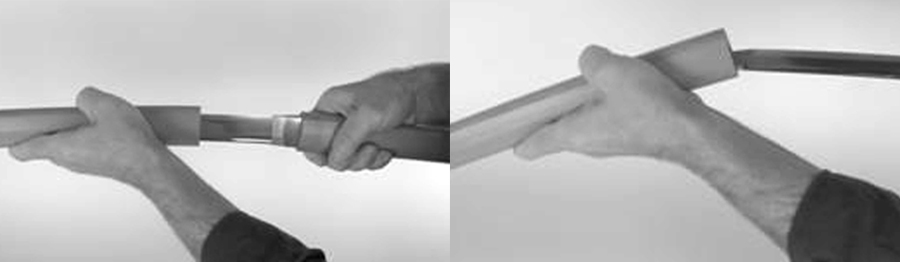
Before discussing how to draw or pass a katana, it is useful to understand several general rules.
- Always treat the sword with care and attention.
- Never touch the sharp edge of the blade.
- Avoid touching the polished blade surface with bare fingers.
- Keep the sword under control at all times.
- Make sure there is enough space around you before handling a sword.
- Never point the blade toward another person unnecessarily.
- Do not swing or demonstrate a sword casually.
- Return the sword to its scabbard carefully when finished.
These simple rules help protect both the person handling the sword and the sword itself.
One of the most important principles of katana etiquette is awareness. A sword should be handled deliberately rather than casually.
Why You Should Avoid Touching the Katana Blade
The polished surface of a Japanese sword should generally be kept clean and free from unnecessary contact.
Fingerprints can leave oils and moisture on the blade. Over time, contamination on a steel surface may contribute to staining or corrosion if the blade is not properly cleaned and maintained.
For this reason, collectors and sword enthusiasts usually avoid touching the blade with bare hands.
If it is necessary to handle the blade during inspection or maintenance, appropriate care should be taken to avoid touching the cutting edge and polished surface unnecessarily.
This is both a practical rule of Japanese sword care and a traditional sign of respect for the craftsmanship of the blade.
How to Draw a Katana from the Saya
Knowing how to draw a katana properly is an important part of Japanese sword etiquette.
Before drawing the sword, make sure the surrounding area is clear. You should have enough space to handle the sword without contacting nearby people, furniture, walls, or other objects.
Traditionally, the scabbard is called the saya, while the handle is called the tsuka.
When removing the blade from the saya, keep the movement controlled and deliberate. Avoid sudden pulling or unnecessary force.
The goal is not simply to remove the sword quickly. Proper handling helps prevent accidental contact with the blade and reduces unnecessary friction between the blade and the scabbard.
The blade should remain under control throughout the movement. Never draw a sword in the direction of another person.
If you are learning traditional Japanese sword techniques for martial arts, follow the instruction of a qualified teacher, as different schools may have their own methods for drawing and handling a sword.
How to Protect the Blade While Drawing a Katana
A polished Japanese sword blade can be damaged by unnecessary contact, scratches, moisture, and improper storage.
When drawing or returning a katana to the saya, avoid forcing the blade. The sword should move in a controlled manner.
Care should also be taken to prevent the edge from striking the inside of the scabbard.
The traditional design of a Japanese sword considers the relationship between the blade and the saya. Proper handling helps preserve the polished surface and reduces unnecessary wear.
For collectors, this is especially important because a high-quality polish can require specialized skill to restore.
Treating the blade carefully during normal handling is therefore one of the simplest ways to protect a Japanese sword.
How to Return a Katana to Its Scabbard
Returning a sword to its scabbard should always be done carefully.
Before replacing the blade, make sure the sword and your surroundings are under control. Do not rush the process.
The opening of the scabbard should be approached carefully so that the blade is not forced against the inside of the saya.
Avoid looking away or becoming distracted while handling the sword.
A controlled movement is safer and also helps prevent accidental damage to the blade, edge, or scabbard.
If you are unfamiliar with Japanese sword handling, do not attempt advanced martial arts movements. Basic, careful handling is more appropriate for collectors and beginners.
How to Pass a Katana to Another Person
Knowing how to pass a katana safely is one of the most important aspects of Japanese sword etiquette.
Before handing a sword to another person, make sure that both people understand that the sword is being transferred.
Do not release the sword until the other person has a secure hold on it.
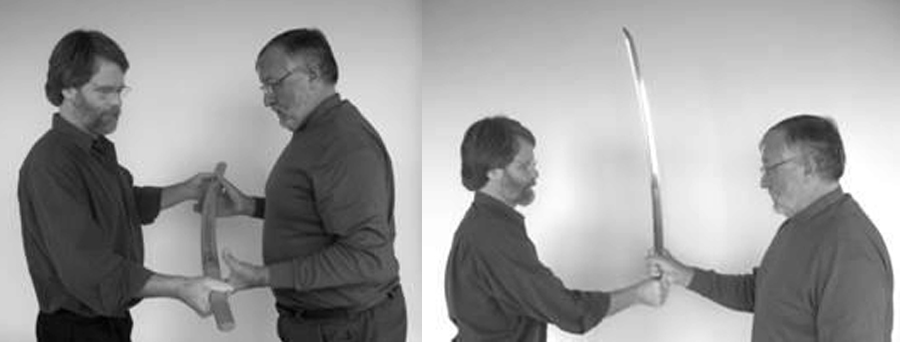
Communication is important. The person receiving the sword should clearly have control of it before the other person lets go.
The sword should always be passed carefully and deliberately, with attention to the position of the blade and the surrounding area.
Never toss, slide, or casually hand a sword to another person.
How to Hand Someone a Katana in Its Scabbard
When passing a katana that is inside its saya, the sword should remain securely sheathed.
Hold the sword carefully and make sure the other person is ready to receive it.
The receiver should take control of the sword before the original holder releases it.
The most important principle is to maintain control throughout the transfer.
A sheathed sword is generally easier to handle than an exposed blade, but it should still be treated with the same level of care.
Remember that a sword can still be damaged if it is dropped or struck against another object.
How to Pass an Unsheathed Katana
Passing an unsheathed sword requires additional care because the blade is exposed.
Avoid touching the cutting edge or polished surface of the blade.
Before transferring the sword, make sure the receiver understands where and how they should take control of it.
The sword should remain stable throughout the exchange, and the original holder should not release it until the receiver has a secure grip.
An exposed blade should never be passed casually or without clear communication.
For collectors, an unsheathed sword should generally only be handled when necessary for inspection, maintenance, photography, or display.
Never Point a Katana at Another Person
One of the most basic rules of sword safety is to avoid pointing a blade toward another person unnecessarily.
Even if the sword is intended only for display or demonstration, careless positioning can create an uncomfortable or dangerous situation.
This rule applies to collectors, martial arts practitioners, photographers, and anyone handling a Japanese sword.
Always be aware of where the blade is pointing and where other people are standing.
Respectful katana handling means considering the safety of everyone around you.
Do Not Swing a Katana Casually
A katana should never be treated like a toy or a decorative prop that can be casually swung around.
Even experienced martial artists train under controlled conditions and follow specific techniques.
Collectors who are unfamiliar with sword training should avoid attempting cutting techniques or martial arts movements without proper instruction.
Uncontrolled movements can damage the sword, surrounding property, or create serious safety risks.
For most collectors, careful inspection and proper display are more appropriate than attempting to use the sword.
Respect the Katana as a Work of Craftsmanship
A Japanese sword is the result of many stages of craftsmanship.
Depending on the type of sword, the finished piece may involve forging, heat treatment, grinding, polishing, handle construction, scabbard making, and the creation of decorative fittings.
For this reason, many collectors view a katana as more than simply a weapon.
It can also be appreciated as a historical object, a work of craftsmanship, and an example of traditional Japanese sword-making techniques.
Following basic Japanese sword etiquette demonstrates respect for the people and skills involved in creating the sword.
Katana Etiquette for Collectors
Collectors should develop simple habits that help protect their swords.
- Keep the blade clean and properly maintained.
- Avoid touching the polished blade with bare fingers.
- Do not leave a sword exposed unnecessarily.
- Store the sword in an appropriate environment.
- Inspect the sword carefully rather than handling it repeatedly.
- Use a suitable sword stand for display.
- Keep the sword away from children and unauthorized individuals.
- Check local laws and regulations regarding sword ownership and storage.
Proper sword etiquette and regular maintenance work together to help preserve the condition of a katana.
Katana Display Etiquette
Displaying a Japanese sword is another area where careful handling is important.
A katana should be placed on a stable and suitable sword stand. The display location should reduce the risk of the sword being accidentally knocked over or handled by unauthorized people.
Avoid placing a sword in areas with excessive moisture, direct environmental exposure, or frequent accidental contact.
If multiple swords are displayed together, make sure there is enough space between them to prevent the fittings or scabbards from rubbing against one another.
A well-organized display not only looks better but also helps protect the collection.
Common Japanese Sword Handling Mistakes
Beginners sometimes make simple mistakes when handling a katana. Avoiding these mistakes can help prevent damage and improve overall sword safety.
- Touching the blade with bare fingers.
- Holding the sword carelessly.
- Drawing the blade without checking the surrounding area.
- Pointing the sword toward another person.
- Swinging the sword without training.
- Forcing the blade into or out of the scabbard.
- Dropping the sword onto a hard surface.
- Leaving the blade exposed unnecessarily.
- Allowing inexperienced people to handle the sword without supervision.
Most of these problems can be avoided by following one simple principle: handle the sword slowly, carefully, and with full attention.
Japanese Sword Etiquette and Katana Care
Good sword etiquette is closely connected to proper maintenance.
A Japanese sword should be inspected regularly for fingerprints, dust, moisture, or other signs that maintenance may be required.
Proper cleaning and maintenance procedures depend on the type of blade and its finish. Collectors should avoid using inappropriate cleaning products that may damage the blade or fittings.
For valuable, antique, or traditionally made Japanese swords, professional advice may be necessary before performing significant cleaning or restoration work.
Proper maintenance helps preserve the sword, while proper etiquette helps prevent unnecessary damage during everyday handling.
Conclusion: Respect and Responsibility Are the Foundation of Japanese Sword Etiquette
Understanding Japanese sword etiquette is important for anyone who owns, collects, studies, or appreciates a katana.
Simple habits such as avoiding contact with the blade, handling the sword carefully, keeping control during transfers, and respecting the craftsmanship of the weapon can make a significant difference.
Whether you own a katana for display, collection, martial arts, or historical interest, responsible handling should always come first.
A Japanese sword represents a long tradition of craftsmanship. Treating it with care helps protect both the physical sword and the history behind it.
Frequently Asked Questions About Japanese Sword Etiquette
1. What is Japanese sword etiquette?
Japanese sword etiquette refers to the traditional and practical rules for handling a Japanese sword respectfully and responsibly. These rules include proper handling, avoiding unnecessary contact with the blade, careful storage, and safe transfer between individuals.
2. Should you touch a katana blade?
It is generally best to avoid touching a polished katana blade with bare fingers. Fingerprints can leave oils and moisture on the steel, which may affect the surface if the blade is not properly cleaned and maintained.
3. How should you handle a katana?
A katana should be handled carefully and with full attention. Keep the sword under control, avoid touching the cutting edge, make sure the surrounding area is clear, and never point the blade toward another person unnecessarily.
4. How do you pass a katana to another person?
When passing a katana, make sure the receiver is ready and has a secure hold on the sword before releasing it. The transfer should be controlled and deliberate, with clear attention to the position of the blade.
5. Should you swing a katana if you are not trained?
No. A sword should not be swung casually or used for martial arts movements without proper instruction. Uncontrolled handling can damage the sword and create serious safety risks.
6. How should a katana be displayed?
A katana should be displayed on a stable and appropriate sword stand in an area where it is protected from accidental contact, excessive moisture, and unauthorized handling.
7. Why is Japanese sword etiquette important?
Japanese sword etiquette helps protect the blade, reduce unnecessary damage, improve safety, and show respect for the craftsmanship and historical traditions associated with Japanese swords.