
Tang Dao Sword: History, Design and the Art of Traditional Chinese Swordsmanship

Tang Dao Sword: History, Design and the Art of Traditional Chinese Swordsmanship
The Tang Dao is one of the most fascinating weapons associated with ancient China. Developed during the Tang Dynasty, the Tang Dao represents an important stage in the history of the Chinese Dao sword and reflects the military strength, craftsmanship, and cultural confidence of one of China's most influential historical periods.
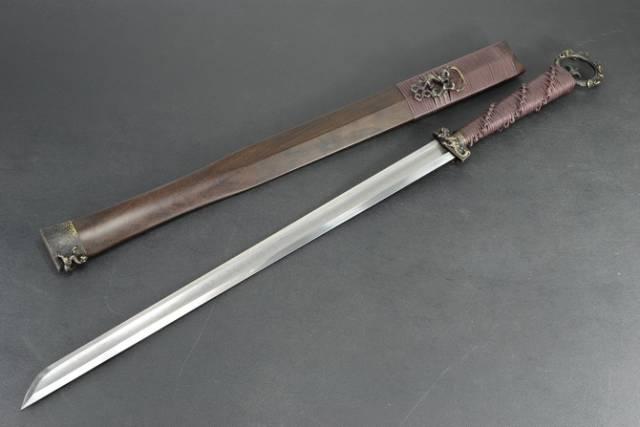
Today, the term Tang Dao sword is widely used to describe Chinese swords inspired by Tang Dynasty military weapons. With their elegant lines, practical blade designs, and strong historical associations, these swords have become popular among collectors and enthusiasts of traditional Chinese weapons.
The artistry of the Tang Dao is not simply found in the blade itself. It can also be appreciated through the relationship between balance, movement, sword design, and traditional Chinese martial culture. In its simplest form, the original HanBon Forge article describes Tang Dao use through four basic actions: chopping, cutting, stabbing, and blocking.
This article explores the history and design of the Tang Dao and explains why this famous Tang Dynasty sword continues to attract the attention of collectors and Chinese sword enthusiasts today.
What Is a Tang Dao?
The word Dao (刀) generally refers to a single-edged Chinese bladed weapon. Throughout Chinese history, many different forms of Dao developed, with designs changing according to military needs, manufacturing techniques, and regional traditions.
The Tang Dao is associated with the Tang Dynasty, which lasted from 618 to 907 AD. The Tang period was one of the most important eras in Chinese history and was known for its military power, international trade, artistic achievements, and technological development.
Modern discussions often use the term Tang Dao as a general description for swords inspired by Tang Dynasty weapons. These swords are commonly recognized by their relatively straight profiles and their connection to earlier Chinese military sword traditions.
The Tang Dao occupies an important place in the development of Chinese swords. HanBon Forge's guide to traditional Chinese Dao describes the Tang Dao as part of the military sword tradition of the Tang Dynasty and notes its connection with earlier Chinese ring-pommel sword designs. :contentReference[oaicite:1]{index=1}
The Historical Background of the Tang Dao
The Tang Dynasty was a period of remarkable cultural and military development. Its influence extended far beyond the borders of China, and the Tang capital of Chang'an became one of the most important cities in the world.
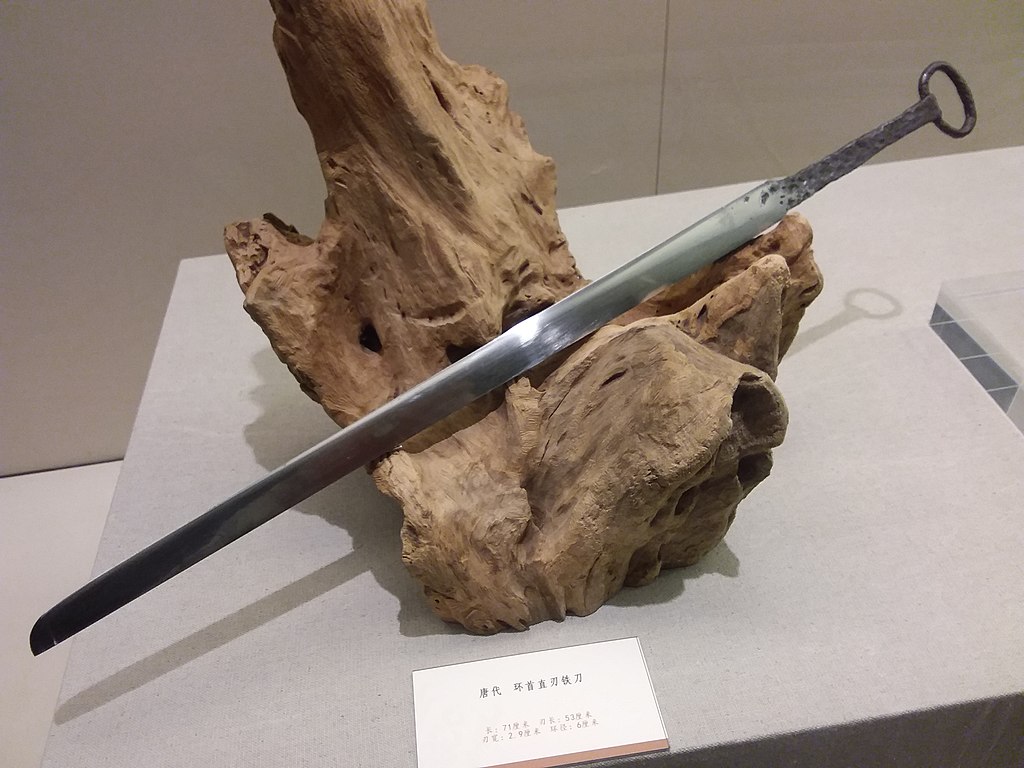
Weapons were an important part of Tang military culture. The Chinese military required reliable arms for different environments, including infantry and cavalry operations. As a result, sword design continued to develop alongside improvements in metalworking and military organization.
The history of the Tang Dao is closely connected to earlier Chinese single-edged swords. Straight single-edged Dao had existed in China long before the Tang Dynasty, and sword designs continued to evolve over many centuries.
According to HanBon Forge's historical overview, Tang Dao designs were influenced by earlier Chinese sword traditions, particularly the ring-pommel swords associated with the Han period. The Tang Dynasty later became an important stage in the development of sophisticated Chinese military swords. :contentReference[oaicite:2]{index=2}
Tang Dao and the Chinese Dao Tradition
To understand the Tang Dao, it is helpful to understand the larger tradition of the Chinese Dao.
Chinese swords are often divided into two major categories: Jian and Dao. A Jian is generally a straight, double-edged sword, while a Dao is generally associated with a single-edged blade.
Over thousands of years, the Dao developed into many different forms. Some were relatively straight, while others became increasingly curved. Blade length, width, curvature, and handle design changed according to historical period and intended use.
The Tang Dao represents one important chapter in this larger history. Its design is particularly interesting because it belongs to the period before the strongly curved sabers that became popular during later periods of Chinese history.
The distinction between Jian and Dao remains one of the most important ways to understand traditional Chinese sword classification. The Metropolitan Museum of Art also describes Chinese edged weapons broadly through these two major categories, with Jian representing double-edged swords and Dao representing single-edged blades. :contentReference[oaicite:3]{index=3}
What Does a Tang Dao Look Like?
The appearance of a Tang Dao can vary depending on the historical source or modern interpretation. However, Tang Dao-inspired swords are generally recognized by a combination of elegant proportions and a relatively straight single-edged blade.
Compared with many later Chinese sabers, the Tang Dao is often associated with a straighter overall blade profile. This gives the sword a distinctive appearance that separates it from strongly curved Dao designs such as some Qing Dynasty sabers.
Important visual characteristics commonly associated with Tang Dao-style swords include:
- A single-edged blade
- A relatively straight blade profile
- A practical military appearance
- A handle designed for secure control
- A guard separating the blade from the grip
- A scabbard for carrying and protecting the blade
Modern reproductions may vary significantly in materials, dimensions, and decorative details. For this reason, collectors should distinguish between historically inspired Tang Dao reproductions and surviving original historical artifacts.
The Art of Wielding a Tang Dao
The beauty of traditional swordsmanship is not defined by force alone. A sword is also connected to posture, balance, timing, coordination, and controlled movement.
The original HanBon Forge article summarizes the basic artistry of wielding the Tang Dao through four general actions:
- Chopping
- Cutting
- Stabbing
- Blocking
These categories describe broad types of sword movement rather than a complete martial arts system. Different historical schools and modern martial arts traditions may interpret and teach sword movement differently.
For collectors and history enthusiasts, these movements can help explain why the shape, balance, and construction of a sword matter. A sword is not simply an object with a sharp blade. Its proportions influence how it is carried, displayed, handled, and appreciated.
Chopping and Cutting Movements
Chopping and cutting are commonly associated with the single-edged nature of the Dao.
A chopping movement emphasizes a downward or diagonal motion, while cutting generally involves drawing the edge through a controlled path. In traditional swordsmanship, the effectiveness of a movement depends on many factors, including blade alignment, timing, body mechanics, and the design of the weapon.
From a historical perspective, the single-edged Dao developed as an important military weapon in China. Its blade design made it well suited to a wide range of combat applications throughout different historical periods.
For modern collectors, the important point is that the Tang Dao was part of a larger tradition of Chinese military swords. Its design reflects the relationship between weapon construction and the practical needs of the historical period in which it developed.
Stabbing and the Point of the Blade
Although the Dao is primarily recognized as a single-edged sword, the point of the blade also plays an important role in the overall design of many Chinese swords.
A stabbing action depends on the alignment of the sword and the ability to direct the point accurately. The balance between the blade, handle, and guard influences how a sword feels when held and moved.
Different Dao designs throughout Chinese history placed different levels of emphasis on cutting, thrusting, reach, and maneuverability. This is one reason why the history of Chinese swords is so diverse.
The Tang Dao should therefore be viewed as part of a continuing process of sword development rather than as an isolated design. Changes in warfare, armor, transportation, and military organization all influenced the evolution of Chinese bladed weapons.
Balance and Control in Traditional Swordsmanship
One of the most important qualities of a sword is balance.
A well-designed sword should have a relationship between blade length, weight, handle construction, and overall proportions that suits its intended purpose. This relationship affects how the sword feels when held.
For collectors, balance is also part of the experience of owning a sword. Two swords of similar length may feel very different because of differences in blade geometry, weight distribution, and handle design.
The appreciation of a Tang Dao therefore involves more than its appearance. The shape of the blade, the design of the handle, and the overall proportions all contribute to its identity.
When evaluating a modern Tang Dao reproduction, collectors often consider craftsmanship, blade material, heat treatment, fittings, scabbard construction, and overall balance.
Tang Dao Craftsmanship and Sword Design
The Tang Dynasty is often remembered as an important period in the development of Chinese craftsmanship. Sword production required knowledge of metalworking, forging, heat treatment, grinding, polishing, and assembly.
Historical swords could vary greatly depending on their purpose and the resources available to their makers. Military weapons, ceremonial swords, and high-status objects were not necessarily produced to the same standards or decorated in the same way.
HanBon Forge's discussion of Tang Dao history emphasizes the importance of advanced forging traditions and the continuing development of Chinese sword-making techniques during this period. Modern reproductions may draw inspiration from these historical traditions while using contemporary manufacturing methods and materials. :contentReference[oaicite:4]{index=4}
For collectors, it is important to avoid assuming that every modern sword described as a Tang Dao is an exact historical reproduction. Many modern pieces are historically inspired interpretations designed for collecting, display, training, or other purposes.
Tang Dao vs. Later Chinese Sabers
The Tang Dao is often compared with later Chinese Dao designs. Over time, Chinese sabers developed different blade shapes, including increasingly curved forms.
Later examples of Chinese Dao could feature different degrees of curvature, wider blades, or different handle and scabbard designs. These changes reflected the continuing evolution of military technology and regional sword traditions.
One of the easiest ways to appreciate the Tang Dao is to compare its relatively straight appearance with the more curved silhouettes of many later Chinese sabers.
This comparison also demonstrates an important point about Chinese sword history: there was never just one type of Dao. The term represents a large family of single-edged weapons that changed over many centuries.
Tang Dao and the Influence of Chinese Sword Culture
The Tang Dynasty had a significant influence on East Asian culture. Trade, diplomacy, religion, technology, and artistic traditions moved between China and neighboring regions.
Sword technology and weapon design were also part of these broader historical connections. Historical research on Chinese and Japanese arms recognizes the importance of early Chinese straight-backed sabers and the movement of sword technology and styles across East Asia. :contentReference[oaicite:5]{index=5}
For this reason, the Tang Dao is often discussed in connection with the broader history of East Asian swords. However, individual sword types should be studied within their own historical and cultural contexts rather than treated as identical.
The similarities and differences between Chinese and Japanese swords remain a fascinating subject for historians, collectors, and martial arts enthusiasts.
Why Is the Tang Dao Popular Today?
The Tang Dao remains popular because it combines history, craftsmanship, and a distinctive visual style.
For many collectors, a Tang Dao represents the power and cultural influence of the Tang Dynasty. Its relatively straight blade and elegant proportions give it a different appearance from both the Japanese katana and later Chinese curved sabers.
Modern interest in Chinese history has also increased awareness of traditional Chinese weapons. Collectors often seek Tang Dao reproductions because they want to explore a part of Chinese sword history that is less familiar internationally than the Japanese katana.
A Tang Dao can therefore appeal to several types of enthusiasts:
- Chinese sword collectors
- History enthusiasts
- Traditional martial arts practitioners
- Fans of Tang Dynasty culture
- Collectors of historical weapon reproductions
- People interested in East Asian sword craftsmanship
What to Look for When Choosing a Tang Dao
When choosing a modern Tang Dao, it is helpful to first consider the intended purpose of the sword.
Some collectors are primarily interested in historical appearance, while others focus on craftsmanship and construction. Display, collection, and martial arts training may require different considerations.
Important factors to consider include:
- Blade design: Look at the overall shape and proportions.
- Blade material: Different steels offer different characteristics.
- Construction: Examine how the blade and handle are assembled.
- Balance: Consider the overall weight and handling characteristics.
- Historical style: Decide whether you prefer a historically inspired design.
- Fittings: Pay attention to the guard, handle, and decorative details.
- Scabbard: Consider the materials and overall quality of the sheath.
A well-designed sword should be evaluated as a complete object. Blade construction, fittings, proportions, and finish all contribute to the overall quality of a Tang Dao.
Conclusion: Appreciating the Artistry of the Tang Dao
The Tang Dao sword represents an important part of the history of Chinese bladed weapons. Associated with the powerful Tang Dynasty, it reflects a period of military development, cultural exchange, and advanced craftsmanship.
Its artistry can be appreciated through its elegant design, historical background, and relationship with traditional Chinese sword culture.
The original concept of Tang Dao use can be summarized through four broad actions: chopping, cutting, stabbing, and blocking. However, the Tang Dao is more than a collection of movements. It is part of a long tradition of Chinese sword development that continued to evolve for centuries.
Today, the Tang Dao remains an interesting choice for collectors who want to explore traditional Chinese swords. Whether appreciated as a historical reproduction, a work of craftsmanship, or a symbol of Tang Dynasty culture, the Tang Dao continues to hold a unique place in the world of traditional weapons.
Frequently Asked Questions About the Tang Dao
What is a Tang Dao?
A Tang Dao is a Chinese single-edged sword associated with the Tang Dynasty. Today, the term is commonly used for historical or modern swords inspired by Tang Dynasty military weapons.
Is a Tang Dao a Chinese sword?
Yes. The Tang Dao belongs to the tradition of Chinese Dao, which generally refers to single-edged bladed weapons. It is associated with Chinese sword culture during the Tang Dynasty.
What is the difference between a Tang Dao and a katana?
A Tang Dao and a Japanese katana belong to different historical and cultural sword traditions. Their blade shapes, construction methods, fittings, and historical development are different, although East Asian sword technology and design traditions have influenced one another over time.
Was the Tang Dao used during the Tang Dynasty?
The Tang Dao is associated with the military sword traditions of the Tang Dynasty. Modern swords described as Tang Dao are generally reproductions or historically inspired interpretations rather than surviving Tang Dynasty weapons.
What are the basic movements associated with the Tang Dao?
The original HanBon Forge article summarizes Tang Dao use through four broad actions: chopping, cutting, stabbing, and blocking. These terms describe general categories of movement rather than a complete martial arts training system.
Is the Tang Dao curved?
Tang Dao-inspired swords are often associated with relatively straight single-edged blades. This gives them a different appearance from many later Chinese sabers with more pronounced curvature.
What does Dao mean in Chinese?
In the context of traditional Chinese weapons, Dao generally refers to a single-edged bladed weapon. It is commonly contrasted with the Jian, which is traditionally a straight, double-edged sword.
Why is the Tang Dao popular with collectors?
The Tang Dao is popular because of its connection to Tang Dynasty history, its elegant blade design, and its importance in the larger history of Chinese swords. It also offers collectors an alternative to more familiar Japanese and later Chinese sword styles.