
Types of Samurai Swords: Complete Guide to Japanese Sword Types
Types of Samurai Swords: A Complete Guide to Japanese Sword Types
When people think of a Samurai sword, the first image that usually comes to mind is the famous Japanese Katana. However, the katana is only one type of traditional Japanese sword. Throughout Japanese history, samurai warriors used many different blades, each designed for specific combat situations, social roles, and historical periods.
From the ancient straight-bladed Chokuto to the legendary Katana, the powerful Tachi, the compact Wakizashi, and the practical Tanto, Japanese sword types developed alongside changes in warfare and samurai culture. Understanding these differences helps collectors and enthusiasts better appreciate the craftsmanship and history behind every blade.
In this guide, we will explore the major types of Samurai swords, including their history, design features, traditional uses, and the differences between each Japanese sword style.
What Are Samurai Swords?
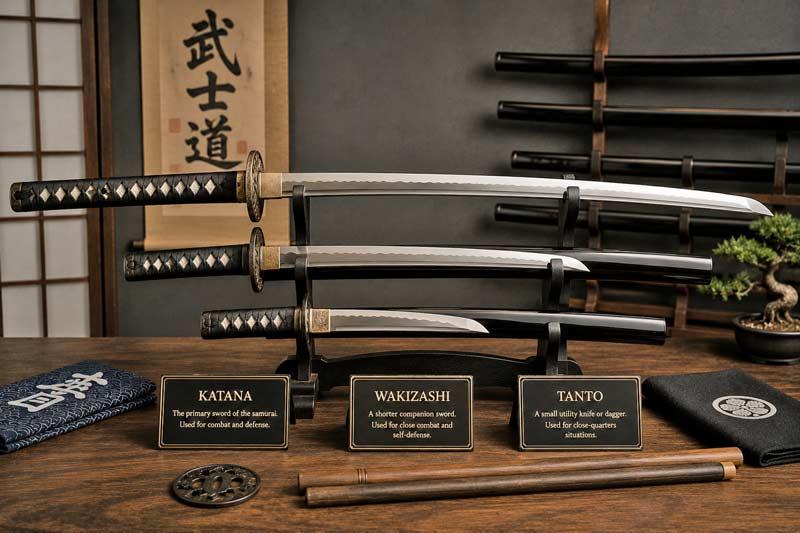
Samurai swords refer to the traditional Japanese blades associated with the samurai warrior class. These swords were not created as a single design but evolved over many centuries as Japanese warfare, technology, and social structures changed.
A Japanese sword is usually identified by several important characteristics, including blade length, curvature, mounting style, and intended purpose. The way a sword was worn also helps distinguish different types. For example, a Tachi was traditionally worn with the cutting edge facing downward, while a Katana was worn edge-up through the belt.
Although the Katana became the most famous symbol of the samurai, other swords such as the Wakizashi, Tanto, and Tachi played equally important roles throughout Japanese history.
Chokuto: The Ancient Straight Japanese Sword
Before the curved Samurai swords that are famous today existed, early Japanese warriors used straight swords known as Chokuto. These blades were heavily influenced by Chinese and Korean sword designs and were mainly produced during Japan’s ancient periods.
Unlike later Japanese swords, Chokuto usually had a straight blade and were designed primarily for thrusting attacks. They were important early examples of Japanese sword development and eventually influenced the creation of curved blades.
As mounted warfare became more important, Japanese swordsmiths began creating curved blades that were more effective for cutting attacks from horseback. This evolution eventually led to the development of the Tachi and later the Katana.
Tachi: The Original Samurai Battlefield Sword
The Tachi is one of the earliest forms of the traditional Samurai sword. It became popular during the Heian period (794–1185) when mounted samurai warriors dominated Japanese warfare.
A Tachi is usually longer and more deeply curved than a Katana. It was worn suspended from the waist with the cutting edge facing downward, making it suitable for warriors fighting on horseback.
The design of the Tachi allowed mounted warriors to deliver powerful cutting attacks while riding. Many famous Japanese sword schools developed during this period, creating blades that are now considered valuable historical treasures.
As battlefield tactics changed from mounted combat to infantry warfare, the need for a faster drawing sword increased. This change eventually led to the rise of the Katana.
Katana: The Most Famous Samurai Sword
The Katana is the most recognizable Japanese sword in the world. It became the primary sword of the Samurai during the Muromachi period and remained an important symbol of warrior identity throughout Japanese history.
Unlike the Tachi, the Katana was worn with the cutting edge facing upward, inserted through the samurai’s belt. This position allowed warriors to quickly draw the sword and strike in one continuous movement.
A traditional Katana usually features a curved single-edged blade, a long handle designed for two-handed use, and a carefully balanced structure that combines cutting ability with durability.
Today, the Katana remains the most popular type of Japanese sword among collectors, martial artists, and history enthusiasts because of its unique combination of craftsmanship, beauty, and cultural significance.
Wakizashi: The Companion Sword of the Samurai
The Wakizashi is a shorter Japanese sword that was traditionally carried together with the Katana. This combination was known as the Daisho, meaning "large and small," and represented the social status of the samurai class during the Edo period.
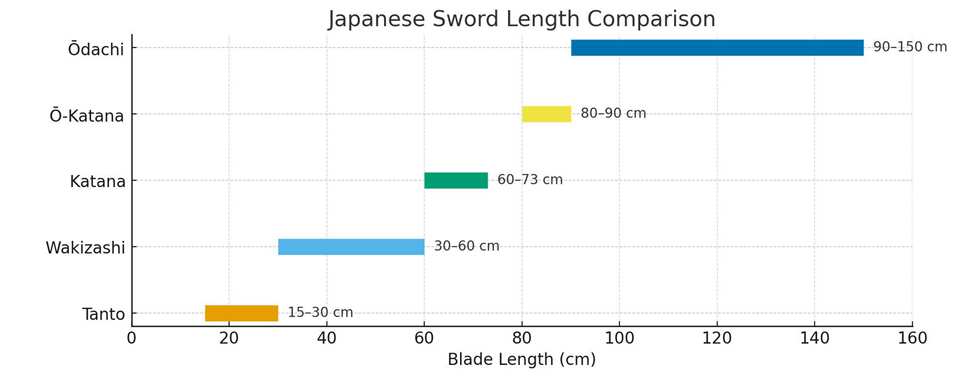
Compared with the Katana, the Wakizashi has a shorter blade, usually between 30 and 60 centimeters. Its compact size made it useful for indoor combat, close-range fighting, and situations where a longer sword was difficult to use.
The Wakizashi was not simply a backup weapon. Samurai often used it as an independent sword for self-defense, ceremonial purposes, and traditional practices. Because of its smaller size, it was also easier to carry inside buildings and narrow spaces.
Today, Wakizashi swords are highly valued by collectors because they often feature the same level of craftsmanship found in full-sized Katana blades, including beautiful hamon patterns and detailed sword fittings.
Tanto: The Traditional Japanese Short Blade
The Tanto is a traditional Japanese dagger with a blade length usually shorter than 30 centimeters. Unlike longer Samurai swords designed mainly for battlefield combat, the Tanto was created for close-range defense and practical use.
Tanto swords appeared during the Heian period and continued to be used throughout Japanese history. Samurai warriors often carried Tanto as part of their equipment, while some were created as ceremonial blades with highly decorative fittings.
Japanese Tanto blades demonstrate the same traditional craftsmanship as larger swords. Skilled swordsmiths created strong, sharp blades with carefully shaped geometry and beautiful polishing techniques.
Modern Tanto-style Japanese knives and swords remain popular among collectors because of their unique appearance and connection to traditional Samurai culture.
Odachi and Nodachi: The Giant Japanese Samurai Swords
The Odachi, also known as Nodachi, is a large Japanese sword famous for its impressive size. These massive blades were much longer than standard Katana and were mainly used on open battlefields.
Because of their length and weight, Odachi swords required considerable strength and skill to use effectively. They were especially useful against cavalry and groups of enemies because their long blades provided a wider attack range.
Many Odachi swords were too large to be worn normally at the waist. Some were carried on the back or transported separately until needed. Over time, changes in military tactics reduced the practical use of these oversized swords.
Today, Odachi swords are admired as impressive examples of Japanese sword craftsmanship and remain popular among collectors who appreciate historical weapons.
Uchigatana: The Sword That Led to the Katana
The Uchigatana was an important transitional sword that influenced the development of the modern Katana. It became popular during the Muromachi period when warfare changed from mounted combat to fighting on foot.
Unlike the Tachi, which was worn edge-down, the Uchigatana was worn edge-up through the belt. This allowed samurai warriors to quickly draw the sword and perform a cutting attack immediately.
The practical design of the Uchigatana made it ideal for fast-paced battlefield situations. Over time, improvements in sword making transformed the Uchigatana into the Katana that became the iconic symbol of the Samurai.
Kodachi: The Short Japanese Sword
The Kodachi is a shorter version of the traditional Tachi. Its name means "small Tachi," and it was commonly used during periods when warriors needed a shorter but functional sword.
Kodachi swords were often used by warriors who needed greater mobility. Their shorter length allowed easier handling while still maintaining many characteristics of larger Japanese swords.
Although less famous than the Katana, Kodachi represents an important stage in the development of Japanese sword design.
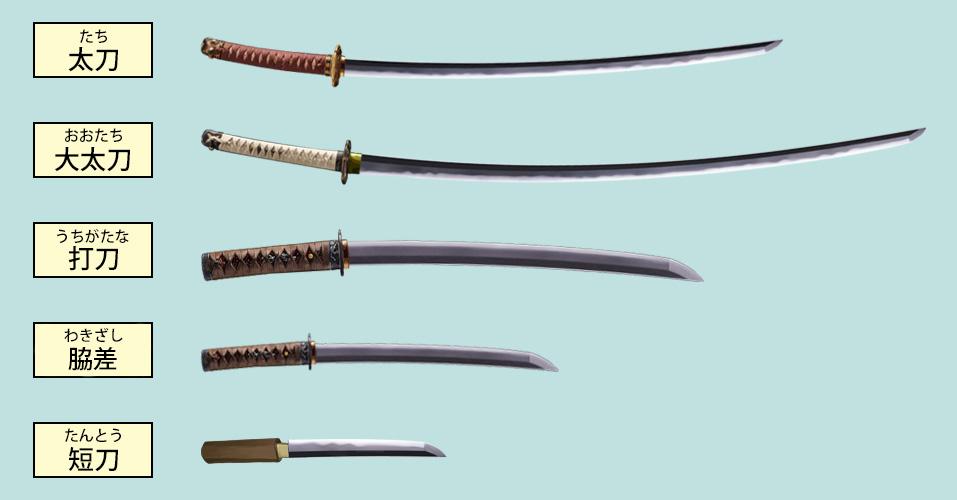
Comparison of Different Types of Samurai Swords
| Sword Type | Blade Length | Main Use | Historical Period |
| Chokuto | Straight blade | Early combat sword | Ancient Japan |
| Tachi | Long curved blade | Mounted warfare | Heian Period |
| Katana | Approx. 60cm+ | Samurai primary sword | Muromachi and later |
| Wakizashi | 30–60cm | Companion sword | Edo Period |
| Tanto | Under 30cm | Short blade / dagger | Heian and later |
| Odachi | Very long blade | Large battlefield weapon | Medieval Japan |
How to Choose the Right Samurai Sword
Choosing the right Samurai sword depends on your purpose, experience level, and personal interests. Different Japanese sword types were created for different situations, so understanding their features can help you select the most suitable blade.
For beginners and collectors, the Katana is usually the most popular choice because it represents the classic image of the Samurai sword. A well-made Katana offers a balance between historical design, practical handling, and artistic beauty.
Those interested in traditional Japanese sword sets may prefer a Daisho combination, which includes a Katana and Wakizashi. This pairing reflects the traditional equipment carried by Samurai warriors during the Edo period.
When selecting a real Japanese sword, important factors include blade steel, forging method, tang construction, hamon pattern, fittings quality, and overall balance. A properly crafted sword should combine durability, beauty, and traditional design.
Modern Japanese Sword Types and Collecting
Today, Japanese sword types continue to attract collectors, martial artists, and history enthusiasts around the world. While Samurai warriors no longer use these swords in battle, their craftsmanship and cultural importance remain highly respected.
Modern handmade Katana, Wakizashi, and Tanto swords are created using both traditional methods and modern techniques. Many collectors appreciate these swords not only as weapons but also as examples of metalworking skill and Japanese artistic tradition.
Whether displayed as a historical piece, used for martial arts practice, or collected as a handcrafted work of art, each Japanese sword type has its own unique story.
Frequently Asked Questions About Types of Samurai Swords
1. What are the main types of Samurai swords?
The main types of Samurai swords include Katana, Tachi, Wakizashi, Tanto, Odachi, Nodachi, Uchigatana, Kodachi, and Chokuto. Each sword type developed during different historical periods and served different purposes.
2. What is the most famous Samurai sword?
The Katana is the most famous Samurai sword. It became the iconic weapon of the Samurai because of its curved blade, fast drawing technique, and connection with Japanese warrior culture.
3. What is the difference between Katana and Tachi?
The main difference between Katana and Tachi is how they were worn and used. Tachi swords were worn edge-down and mainly used by mounted warriors, while Katana swords were worn edge-up for faster drawing and close combat.
4. What sword did Samurai carry besides the Katana?
Samurai often carried a Wakizashi together with their Katana. This combination was called Daisho and represented the status and identity of the Samurai class.
5. What is the purpose of a Tanto sword?
A Tanto is a short Japanese blade mainly designed for close-range use, self-defense, and ceremonial purposes. It is valued for its compact size and traditional craftsmanship.
6. Are Odachi swords practical for modern collectors?
Odachi swords are mainly appreciated for their historical significance and impressive size. Because of their length and weight, they are usually collected as display pieces rather than practical swords.
7. Which Samurai sword is best for beginners?
For most beginners, a Katana is the best choice because it represents traditional Samurai sword design and provides a good balance between handling, history, and craftsmanship.
Conclusion: Understanding the Different Types of Samurai Swords
The history of Samurai swords is a story of continuous development and innovation. From the ancient Chokuto to the legendary Katana, every Japanese sword type reflects the needs, technology, and culture of its time.
Understanding the differences between Katana, Tachi, Wakizashi, Tanto, Odachi, and other Japanese sword types allows collectors and enthusiasts to better appreciate the craftsmanship behind these legendary blades.
Whether you are interested in Samurai history, traditional sword making, or owning a handcrafted Japanese sword, learning about these different sword types is the first step toward appreciating the world of Japanese blades.