
How to Hold a Katana Correctly: Proper Samurai Sword Grip Guide
How to Hold a Katana Correctly: Proper Samurai Sword Grip Guide
Learning how to hold a katana correctly is one of the first steps for anyone interested in Japanese swords. Whether you are studying traditional Japanese martial arts, practicing with a bokken, or simply learning more about samurai swords, proper hand placement can make a significant difference in control, balance and comfort.
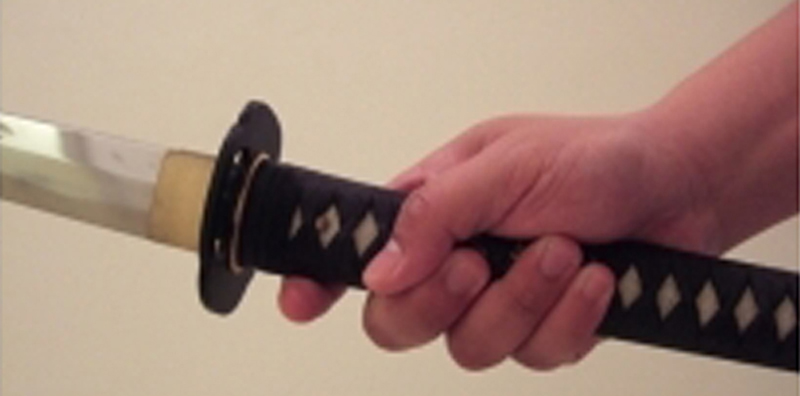
A katana is not meant to be held with a rigid, crushing grip. The goal of a proper katana grip is to maintain control while allowing the wrists, hands and arms to move naturally. Holding the sword too tightly can create unnecessary tension, reduce mobility and make it more difficult to maintain proper alignment.
In a standard two-handed grip, one hand is positioned closer to the tsuba, while the other is positioned toward the end of the tsuka. The hands work together to guide the sword, while proper wrist alignment helps keep the blade moving naturally with the arms.
This guide explains the basic principles of how to hold a samurai sword, including hand placement, grip pressure, finger position, spacing and common mistakes beginners should avoid.
Important: This article provides general information about Japanese sword handling and traditional terminology. If you are training with a sharp katana or practicing a Japanese martial art, hands-on instruction from a qualified instructor is strongly recommended.
The Basic Parts of a Katana Grip
Before learning how to hold a katana, it helps to understand a few basic Japanese sword terms.
The tsuka is the handle of the katana. It provides the surface that both hands grip.
The tsuba is the sword guard located between the blade and the handle.
The fuchi is the collar at the upper end of the tsuka near the tsuba.
The kashira is the fitting located at the end of the handle.
In a typical two-handed katana grip, the upper hand is positioned closer to the tsuba, while the lower hand is positioned closer to the kashira.
Understanding these parts makes it easier to describe proper katana hand placement.
How to Hold a Katana Correctly
The traditional Japanese sword is generally controlled with both hands. A proper two-handed grip provides greater stability and helps the user guide the blade more effectively than simply gripping the handle with maximum force.
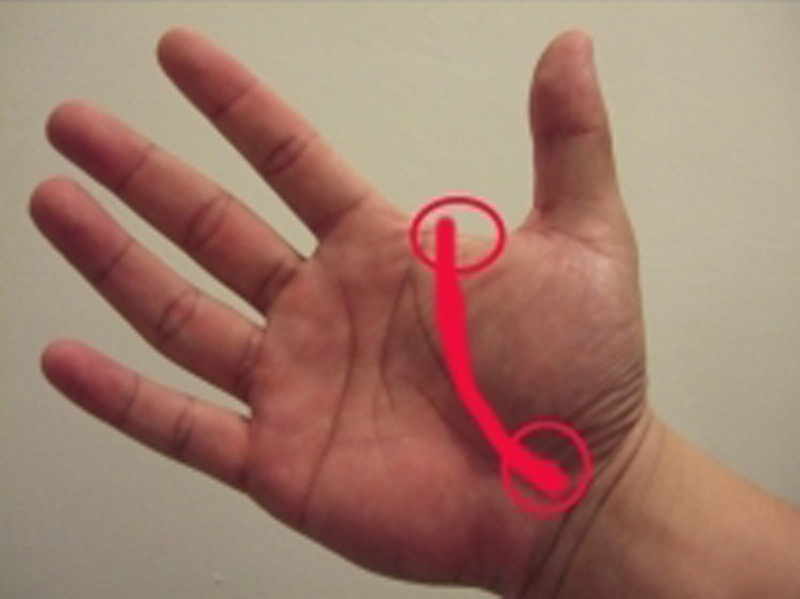
When holding the katana, the hands should feel connected to the handle without becoming excessively tense.
The following basic principles provide a useful introduction to a proper Japanese sword grip.
Basic Katana Grip Principles
- Use both hands to control the tsuka.
- Keep one hand closer to the tsuba and the other closer to the kashira.
- Do not grip the handle with unnecessary force.
- Allow the handle to sit naturally in the hands.
- Keep the wrists aligned naturally with the forearms.
- Avoid excessive tension in the fingers, hands and shoulders.
- Maintain control without locking the wrists.
The exact details of grip and body mechanics can vary depending on the martial art or training school. For this reason, practitioners should follow the instruction of their qualified teacher or dojo when studying a specific Japanese sword discipline.
1. Position Your Hands Correctly on the Tsuka
The first step in learning how to grip a katana is correct hand placement.
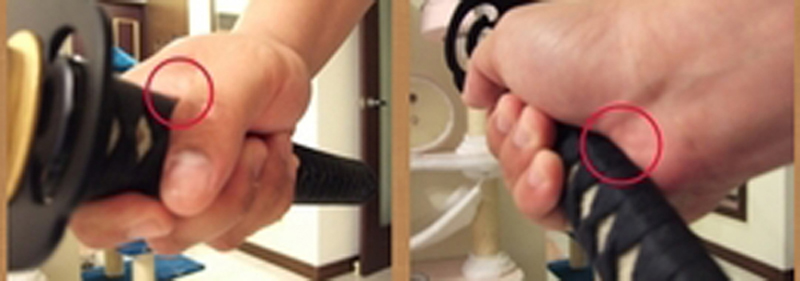
For the standard two-handed arrangement commonly used with a katana, the upper hand is positioned toward the front of the tsuka, closer to the tsuba. The lower hand is positioned toward the end of the handle, closer to the kashira.
The hands should not normally be crowded against the metal fittings.
The upper hand does not need to press tightly against the fuchi, while the lower hand does not need to force itself directly against the kashira.
Instead, allow the hands to rest naturally on the handle.
A small amount of space between the hands can help maintain a comfortable grip, although the exact spacing depends on the length of the tsuka and the size of the user's hands.
The original HanBon Forge guide recommends maintaining approximately one to two finger widths of space between the hands rather than forcing them together.
Basic Hand Placement
Upper hand: Positioned toward the tsuba and upper portion of the tsuka.
Lower hand: Positioned toward the kashira and lower portion of the tsuka.
Hand spacing: Keep the hands comfortably positioned rather than forcing them tightly together.
The purpose of this arrangement is to provide balanced control over the handle.
2. Do Not Hold the Katana Too Tightly
One of the most common mistakes beginners make is gripping the katana as tightly as possible.
A very tight grip may feel secure at first, but excessive tension can interfere with natural movement.
When the hands, wrists and forearms become rigid, it becomes more difficult to maintain smooth control of the sword.
A proper katana grip should be firm enough to maintain control while avoiding unnecessary muscular tension.
Think of the grip as controlled rather than crushing.
The tsuka should remain secure in the hands, but the wrists should not become locked.
Why an Overly Tight Grip Can Be a Problem
- It can create unnecessary tension in the hands and forearms.
- It may reduce natural wrist movement.
- It can make the sword feel less balanced.
- It may cause fatigue during extended practice.
- It can make smooth movement more difficult.
The goal is not to hold the katana loosely enough to lose control. Instead, the goal is to use only the amount of grip pressure necessary for secure and controlled handling.
3. Let the Tsuka Sit Naturally in Your Hands
The handle should not be treated like a simple straight bar that is squeezed entirely with the fingers.
The shape of the tsuka and the natural structure of the hands should work together.
Allow the handle to rest naturally through the palms while maintaining a secure grip.
The contact between the hands and the tsuka should feel stable without forcing the wrists into an uncomfortable position.
If the grip causes the wrists to bend excessively, the hand position may need adjustment.
Comfortable alignment is especially important when learning the fundamentals of Japanese sword handling.
Different tsuka lengths and shapes can also affect how a katana feels in the hands. A longer handle may provide more room for spacing, while a shorter handle may require a more compact grip.
4. Keep the Wrists Naturally Aligned
Proper wrist alignment is another important part of learning how to hold a samurai sword.
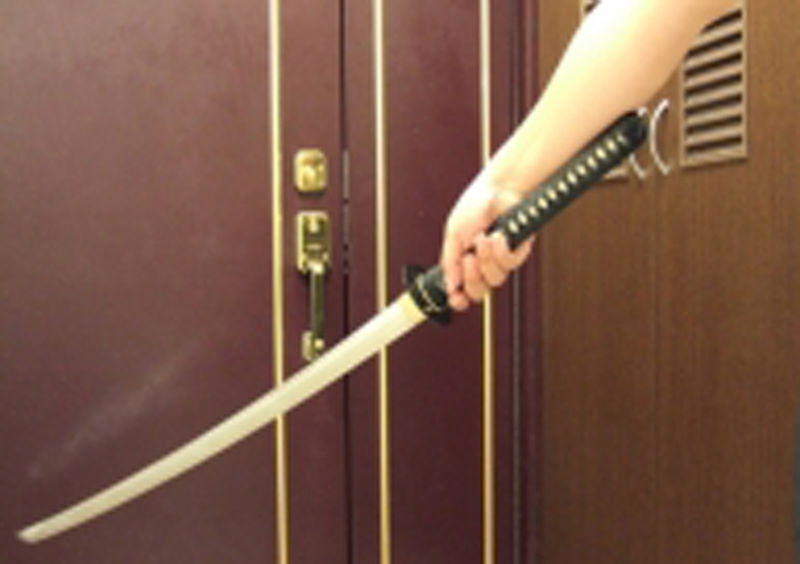
The blade should feel naturally connected to the movement of the arms rather than forcing the wrists into an unnatural angle.
Excessive tension in the fingers can sometimes pull the wrists out of a comfortable position.
When this happens, the sword may no longer feel naturally aligned with the arms.
The original HanBon Forge guide emphasizes checking whether the blade remains naturally in line with the arm and avoiding excessive force from the fingers that may cause the wrist to bend unnecessarily.
Check Your Wrist Alignment
- Are your wrists relaxed rather than rigid?
- Do your forearms and wrists feel naturally aligned?
- Are you squeezing excessively with your fingers?
- Does the handle feel balanced in your hands?
- Are your shoulders unnecessarily tense?
If your hands and arms feel strained while simply holding the sword, reduce unnecessary tension and reassess your position.
5. Keep Your Hands Comfortable and Balanced
A katana is traditionally designed to be controlled with two hands, so both hands should work together.
Avoid allowing one hand to dominate the grip while the other becomes passive.
The two hands have different positions on the tsuka, but they function together to guide the sword.
A balanced grip can help the sword feel more stable and easier to control.
The exact amount of pressure used by each hand may vary depending on movement, technique and martial tradition. For this reason, there is no single universal rule that applies to every Japanese sword school.
If you are studying iaido, kenjutsu or another sword discipline, follow the specific method taught by your instructor.
How Much Space Should Be Between Your Hands?
The amount of space between the hands depends on several factors, including the length of the tsuka and the size of the user's hands.
In general, the hands should not be forced tightly together.
A small amount of space allows each hand to maintain a natural position on the handle.
The original HanBon Forge article recommends approximately one to two finger widths of space between the hands as a general guideline.
However, this should not be treated as a universal measurement for every katana or every practitioner.
A properly sized tsuka and comfortable hand placement are more important than following a fixed measurement without considering the sword and the user.
Should Your Hands Touch the Fuchi and Kashira?
When holding the katana, beginners sometimes push their hands directly against the fittings at both ends of the tsuka.
However, a natural grip does not require the upper hand to press against the fuchi or the lower hand to forcefully contact the kashira.
Allowing a comfortable position on the handle can help avoid unnecessary tension.
The original HanBon Forge guide specifically recommends that the front hand should not press against the fuchi and the back hand should not press directly against the kashira.
The goal is to create a secure grip on the tsuka itself rather than relying on the fittings as stopping points for the hands.
Common Mistakes When Holding a Katana
Beginners often make similar mistakes when first learning how to hold a katana.
Mistake 1: Gripping the Handle Too Tightly
Holding the katana with maximum force can create tension in the hands, wrists and arms.
Instead, maintain a controlled grip without unnecessary squeezing.
Mistake 2: Locking the Wrists
Rigid wrists can reduce natural movement and make the sword feel difficult to control.
Keep the wrists naturally aligned and avoid excessive tension.
Mistake 3: Forcing the Hands Against the Fittings
Do not assume that the hands must be pressed tightly against the fuchi or kashira.
Allow the hands to rest naturally on the tsuka.
Mistake 4: Placing the Hands Too Close Together
Crowding both hands into a small area can make the grip feel uncomfortable.
Use the length of the tsuka and the size of your hands to establish a comfortable position.
Mistake 5: Ignoring Blade Alignment
The sword should feel naturally connected to the movement of the hands and arms.
If excessive finger pressure causes the wrists to bend awkwardly, adjust the grip and reduce unnecessary tension.
How to Hold a Katana Safely
Safety should always come before technique.
If you are new to Japanese sword training, it is safer to learn basic hand positioning with a suitable training tool rather than immediately practicing movements with a sharp blade.
A live katana can cause serious injury if handled improperly.
Before handling any sword, make sure the surrounding area is clear and that other people are kept at a safe distance.
Never swing or practice cutting techniques in an uncontrolled environment.
If you are interested in Japanese sword martial arts, seek instruction from a qualified teacher or recognized training organization.
Basic Katana Safety Tips
- Keep the blade pointed away from yourself and others.
- Maintain a clear practice area.
- Do not handle a sharp sword carelessly.
- Do not practice advanced techniques without proper instruction.
- Use appropriate training equipment when learning.
- Inspect the sword and fittings before use.
- Follow the safety rules of your dojo or instructor.
Does the Katana Grip Change Between Martial Arts?
Yes. Japanese sword arts include different traditions, schools and training methods.
The basic concept of using two hands and maintaining proper control is widely recognized, but specific hand positions, body mechanics and movement principles may differ.
For example, the requirements of a particular iaido school may differ from those of another kenjutsu tradition.
Modern training systems may also teach grip mechanics differently depending on their purpose.
Therefore, this guide should be understood as a general introduction to proper katana grip, not as a replacement for instruction in a specific martial arts tradition.
Students should always follow the technical guidance provided by their instructor.
How to Practice a Proper Katana Grip
The best way to become comfortable with a proper Japanese sword grip is through careful and consistent practice.
Beginners should first focus on hand placement and posture before attempting complex movements.
Start by becoming familiar with the parts of the sword and learning where the hands naturally rest on the tsuka.
Check whether your shoulders, hands and wrists are relaxed.
Practice maintaining a consistent and comfortable grip.
If you are training in a martial arts school, follow your instructor's guidance regarding posture, movement and sword handling.
For beginners, correct fundamentals are more important than attempting to perform fast or advanced techniques.
How to Hold a Katana Correctly: Quick Checklist
Before handling a katana, review the following checklist:
- Use both hands for standard katana handling.
- Place the upper hand toward the tsuba.
- Place the lower hand toward the kashira.
- Allow the hands to rest naturally on the tsuka.
- Do not grip the handle too tightly.
- Keep the wrists naturally aligned with the forearms.
- Avoid excessive finger pressure.
- Do not force the hands against the fuchi or kashira.
- Maintain comfortable spacing between the hands.
- Keep the blade under control at all times.
These basic principles provide a useful starting point for understanding how a traditional two-handed katana grip works.
Conclusion: The Correct Way to Hold a Katana
Learning how to hold a katana correctly begins with a simple principle: maintain control without unnecessary tension.
The hands should be positioned naturally on the tsuka, with one hand closer to the tsuba and the other closer to the kashira.
Avoid gripping the handle too tightly, forcing the hands against the fittings or bending the wrists into an unnatural position.
A proper katana hand position should feel stable, balanced and comfortable.
The sword should remain naturally aligned with the movement of the hands and arms while the grip allows controlled movement rather than excessive rigidity.
For collectors and Japanese sword enthusiasts, understanding the basic grip also provides a better appreciation of katana design, including the length and shape of the tsuka and the placement of the fittings.
For martial arts practitioners, however, proper sword handling should always be developed under qualified instruction and with appropriate safety practices.
By understanding correct hand placement, grip pressure and wrist alignment, beginners can build a stronger foundation for studying the traditional Japanese sword.
Frequently Asked Questions About Holding a Katana
How do you hold a katana correctly?
A katana is generally held with both hands on the tsuka. The upper hand is positioned closer to the tsuba, while the lower hand is positioned closer to the kashira. The grip should be secure without excessive tension.
Which hand goes closer to the tsuba?
In the standard two-handed arrangement, the upper hand is positioned toward the tsuba, while the lower hand is positioned toward the end of the tsuka near the kashira.
How tightly should you grip a katana?
The katana should be held securely but not with unnecessary force. An excessively tight grip can create tension in the hands, wrists and forearms and may interfere with natural movement.
How much space should be between your hands on a katana?
The amount of space depends on the length of the tsuka and the size of the user's hands. As a general guideline, the original HanBon Forge article recommends approximately one to two finger widths of space between the hands.
Should you grip a katana with both hands?
The standard way to control a katana is with both hands. A two-handed grip generally provides greater stability and control than holding the sword with only one hand.
Should your hands touch the katana fittings?
The hands do not need to be pressed tightly against the fittings. Allowing the hands to rest naturally on the tsuka can help maintain a comfortable and controlled grip.
Why do my wrists hurt when holding a katana?
Discomfort can result from excessive grip tension, awkward wrist positioning or improper technique. Beginners should avoid forcing the wrists into uncomfortable angles and should seek guidance from a qualified instructor if pain continues.
Can beginners practice with a real katana?
A sharp katana can cause serious injury. Beginners should prioritize safety and learn under qualified instruction. Appropriate training equipment may be a safer option for learning basic handling and movement.
Does every Japanese martial art use the same katana grip?
No. Different Japanese sword traditions and martial arts schools may teach different technical details. This guide provides general principles, while students should follow the method taught by their own instructor or dojo.