
Knife Handle Wrapping Styles: Cord-Wrapped Handles for Better Grip and Style
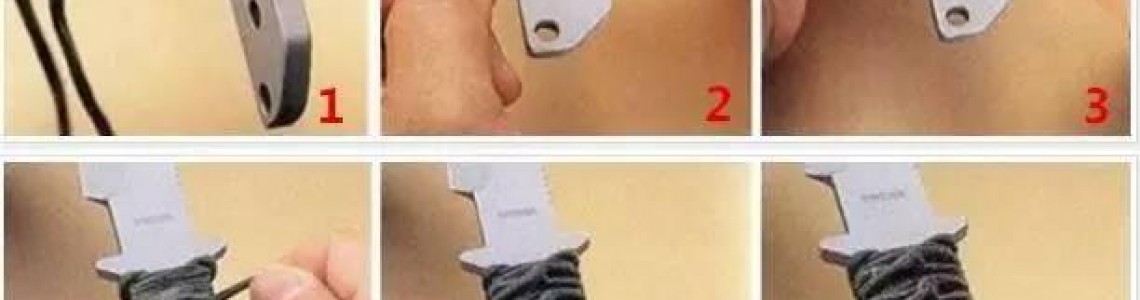
Knife Handle Wrapping Styles: Cord-Wrapped Handles for Better Grip and Style
A wrapped handle is a popular choice for many knives and swords. Cord wrapping can give a handle a simple and distinctive appearance while also improving the way it feels in the hand. Compared with a smooth handle surface, a properly wrapped handle provides additional texture and can help create a more secure and comfortable grip.
Many knife and sword enthusiasts prefer a handle wrapped with cord because of its practical feel and handmade appearance. The wrapping adds texture to the surface, making the handle easier to hold. At the same time, different wrapping methods can create very different visual styles.
Knife handle wrapping is not limited to one design. Different materials, wrapping directions, crossing patterns, and finishing methods can all change the final appearance and feel of the handle. A simple cord wrap may look clean and practical, while a more detailed pattern can give the knife or sword a unique handmade character.
In this guide, we will look at the benefits of cord-wrapped handles, several popular knife handle wrapping styles, suitable wrapping materials, and the factors to consider when choosing a handle wrap.
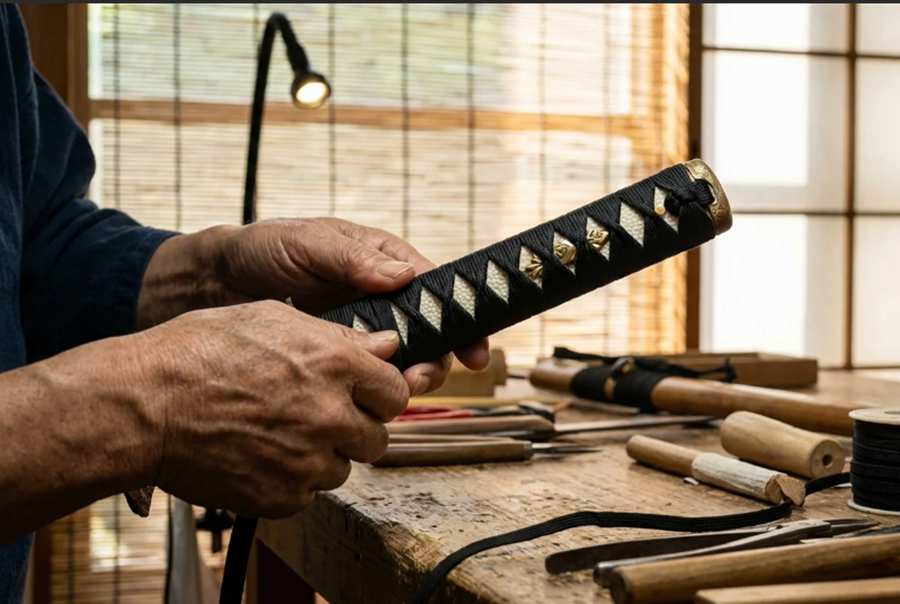
Why Choose a Cord-Wrapped Knife Handle?
One of the main reasons people choose a cord-wrapped knife handle is the improved grip. A smooth handle can become more difficult to hold when the hand is wet or sweaty. Cord wrapping creates a textured surface that can make the handle feel more secure in the hand.
Another reason is comfort. The thickness and texture of the wrapping can change the way a handle feels. Depending on the material and wrapping style, a wrapped handle can provide a softer or more textured surface than bare wood, metal, or another smooth handle material.
Cord wrapping is also popular because of its appearance. A hand-wrapped handle has a simple handmade character that can complement many knife and sword designs. Different colors and wrapping patterns can be used to create a traditional, tactical, minimalist, or decorative look.
For many enthusiasts, however, the most important advantage is simply the feeling of the handle during normal handling. A well-executed wrap can create a comfortable grip that feels natural in the hand.
Benefits of Knife Handle Wrapping
A properly wrapped knife handle can offer both practical and visual benefits. The exact result depends on the wrapping material and the method used, but several advantages are commonly associated with cord-wrapped handles.
Improved Grip
The texture created by the cord gives the hand additional contact points. This can make the handle feel more secure than a completely smooth surface.
Comfortable Feel
The thickness and arrangement of the cord can change the shape and feel of the handle. Different materials can provide different textures, allowing the owner to choose a wrapping style that feels comfortable.
Simple and Attractive Appearance
Cord wrapping gives a knife or sword handle a distinctive appearance. Even a simple wrapping pattern can add visual interest without requiring complicated fittings or decorations.
Customizable Design
Different cord colors, materials, and wrapping patterns can be selected to match the overall design of the knife or sword. This makes handle wrapping a popular option for customized weapons and handmade projects.
Common Materials Used for Knife Handle Wrapping
The material used for a knife handle wrap has a major effect on its appearance and texture. Different types of cord can create very different results, so the material should be selected according to the desired style and feel.
Cotton Cord
Cotton cord has a traditional appearance and a relatively soft texture. It can be used to create a simple and comfortable wrapped handle.
Leather Cord
Leather wrapping gives a handle a classic appearance and a distinctive texture. It is often chosen for knives and swords with a traditional or handcrafted style.
Synthetic Cord
Modern synthetic cords are available in many colors and thicknesses. They are commonly used for contemporary knife handle wrapping because they allow a wide range of design options.
Silk or Traditional Sword Cord
For Japanese swords, traditional handle wrapping may use materials such as silk or cotton ito. These materials are wrapped around the tsuka using specific Japanese sword wrapping methods.
The material should be selected according to the type of handle and the intended appearance. A traditional Japanese sword handle and a modern cord-wrapped knife handle may use very different materials and construction methods.
Popular Knife Handle Wrapping Styles
There are many ways to wrap a knife handle. The final appearance depends on how the cord is positioned, how tightly it is wrapped, and how the ends are secured. Some wrapping styles are simple and practical, while others are designed to create a more decorative pattern.
The three basic styles below represent common approaches to knife handle wrapping. Each method creates a different surface texture and visual effect.
1. Simple Spiral Wrap
A simple spiral wrap is one of the most straightforward knife handle wrapping styles. The cord is wrapped continuously around the handle from one end to the other, creating a series of closely spaced coils.
This style creates a clean and practical appearance. The individual layers of cord add texture to the handle and can make the grip feel more secure.
The appearance of a spiral wrap can change depending on the spacing between the coils. A tightly wrapped handle usually has a more uniform appearance, while wider spacing can create a more pronounced texture.
2. Cross-Wrapped Handle
A cross-wrapped handle uses overlapping sections of cord to create a more detailed pattern. Instead of simply wrapping the cord in one continuous direction, the material crosses over itself to form a textured surface.
This type of knife handle wrap can provide a more distinctive appearance than a simple spiral wrap. The crossing pattern creates visible sections and can add additional texture to the handle.
Cross-wrapped designs can vary considerably. The spacing, angle, and number of crossings all affect the finished pattern. For this reason, even handles wrapped with the same material can have very different appearances.
3. Decorative Cord Wrap
A decorative cord wrap places greater emphasis on appearance and pattern. The wrapping may include alternating directions, knots, layered sections, or other details that create a more complex design.
This style is often chosen for custom knives and display pieces. Different cord colors can also be combined to create contrast and make the wrapping pattern more visible.
A decorative wrap can give a handmade knife a unique identity. However, the design should still be properly fitted to the handle so that the finished wrapping remains neat and comfortable.
Japanese Sword Handle Wrapping and Knife Handle Wrapping
Knife handle wrapping and Japanese sword handle wrapping share some basic similarities because both use wrapping materials to cover a handle. However, the construction and purpose can be very different.
A traditional Japanese sword handle, known as a tsuka, has a specific construction. The wooden core may be covered with samegawa, or rayskin, before ito is wrapped around the handle. The wrapping pattern is an important part of the overall construction and appearance of the sword.
Japanese sword handle wrapping is commonly known as tsukamaki. Different tsukamaki styles can create different visual patterns and handle characteristics. The wrapping is closely associated with the traditional construction of Katana, Wakizashi, and other Japanese swords.
In comparison, a cord-wrapped knife handle may use a simpler method. The cord can be wrapped directly around the handle to create texture and improve the overall grip.
Despite these differences, both knife handle wrapping and sword handle wrapping demonstrate how materials and craftsmanship can influence the appearance and feel of a handle.
How to Choose the Right Handle Wrapping Style
The best knife handle wrapping style depends on several factors. Before choosing a material or pattern, it is useful to consider the intended appearance, the size and shape of the handle, and the type of texture you prefer.
Consider the Handle Shape
The shape of the handle can affect how a wrapping pattern looks and feels. A narrow handle and a wider handle may require different amounts of cord and may produce different results with the same wrapping style.
A wrapping pattern should follow the overall shape of the handle. When the material is arranged evenly, the finished handle generally has a cleaner and more balanced appearance.
Choose the Right Material
Different materials have different textures and appearances. Cotton, leather, synthetic cord, silk, and other materials can all create different results.
The material should match the overall style of the knife or sword. A traditional-looking handle may benefit from natural materials, while a modern design may use synthetic cord in a wider range of colors.
Think About Texture and Comfort
The wrapping pattern determines much of the handle's surface texture. A tightly spaced spiral wrap may feel different from a cross-wrapped or heavily layered design.
Personal preference plays an important role. Some people prefer a smoother wrapped surface, while others prefer a more pronounced texture.
Match the Wrapping to the Overall Design
A handle wrap should complement the overall appearance of the knife or sword. The color, thickness, and pattern of the cord can all affect the final design.
For a simple and minimalist knife, a single-color spiral wrap may be suitable. For a custom or decorative design, a more detailed pattern can help create a distinctive appearance.
Important Factors in a Good Handle Wrap
A good knife handle wrap is not defined only by its appearance. The way the material is arranged and secured also affects the overall quality of the finished handle.
Even Tension
The wrapping should maintain a consistent appearance across the length of the handle. Uneven sections can affect both the appearance and the overall feel of the wrap.
Clean Pattern
Whether the handle uses a simple spiral wrap or a more detailed design, the pattern should be neat and consistent. Clean wrapping gives the handle a more professional and attractive appearance.
Suitable Thickness
The thickness of the cord can significantly change the appearance of the handle. A thicker material creates a more pronounced surface, while thinner cord can produce a more detailed pattern.
The size of the handle should be considered when selecting the cord. The goal is to create a balanced appearance without making the wrapped handle unnecessarily bulky.
How to Maintain a Wrapped Knife Handle
A wrapped knife handle should be kept clean and checked regularly. The wrapping material can collect dust, dirt, and moisture over time, especially when the knife is frequently handled or stored in an unsuitable environment.
The best maintenance method depends on the material used. Cotton, leather, synthetic cord, and traditional sword wrapping materials all have different characteristics. Care should therefore be appropriate for the specific type of handle wrap.
Keep the Handle Clean
Regularly removing dust and surface dirt can help preserve the appearance of a wrapped handle. Excessive moisture should also be avoided, particularly when natural materials are used.
A clean handle not only looks better but also helps maintain the original texture and appearance of the wrapping material.
Check the Wrapping Regularly
Over time, a wrapped handle may show signs of wear. The cord may become loose, damaged, or worn in areas that receive frequent contact.
Regular inspection makes it easier to identify changes in the condition of the wrapping. If the material becomes noticeably loose or damaged, the handle may require professional attention or replacement of the wrapping.
Store the Knife Properly
Proper storage can help preserve both the knife and its handle wrapping. Excessive humidity, moisture, and unsuitable storage conditions may affect the condition of natural wrapping materials.
Keeping the knife in a clean and stable environment can help maintain the appearance of the wrapped handle over time.
Common Problems with Knife Handle Wrapping
Although a wrapped handle can be simple in appearance, the quality of the wrapping has a major effect on the finished result. Poorly arranged or damaged wrapping can affect both appearance and comfort.
Loose Wrapping
Loose sections can make a handle look untidy and may affect the consistency of the surface texture. A good wrap should maintain a neat and even appearance across the length of the handle.
Uneven Spacing
Uneven spacing between sections of cord can make the finished pattern look inconsistent. Careful arrangement is important, particularly when creating decorative or cross-wrapped designs.
Incorrect Material Choice
Not every wrapping material is suitable for every knife or sword design. The material should match the intended appearance and the general construction of the handle.
For example, traditional Japanese sword handle wrapping uses specific materials and construction methods that are different from a simple modern cord-wrapped knife handle.
Overly Thick Wrapping
Using an excessively thick material or too many layers can significantly change the size of the handle. The final wrapping should remain balanced with the original dimensions and overall design.
Knife Handle Wrapping for Custom Designs
Handle wrapping is a popular option for custom knives because it allows the appearance of the handle to be changed without completely redesigning the knife. The choice of cord, color, texture, and pattern can all influence the final look.
A single-color cord wrap can create a clean and minimalist appearance. Combining different colors can create contrast and highlight the wrapping pattern. Decorative knots and layered wrapping methods can also make a custom knife stand out.
For collectors, the handle can become an important visual part of the overall knife design. A carefully selected wrapping style can complement the blade, sheath, fittings, and other materials used in the finished piece.
The same principle can also apply to Japanese-style swords. Different handle wrapping colors and patterns can significantly change the appearance of a Katana or other Japanese sword.
Frequently Asked Questions About Knife Handle Wrapping
1. What is knife handle wrapping?
Knife handle wrapping is the process of covering a knife handle with cord, leather, fabric, or another suitable material. The wrapping can change the appearance, texture, and overall feel of the handle.
2. Why do people wrap knife handles?
People wrap knife handles to create additional texture, improve the overall feel of the handle, and give the knife a distinctive appearance. Different wrapping materials and patterns can also be used for customization.
3. What materials can be used for a knife handle wrap?
Common materials include cotton cord, leather cord, synthetic cord, and other suitable wrapping materials. Japanese sword handles may also use traditional materials such as silk or cotton ito.
4. What is the most common knife handle wrapping style?
A simple spiral wrap is one of the most common styles because it creates a clean and straightforward pattern. Cross-wrapped and decorative styles are also popular for custom knife designs.
5. Is knife handle wrapping the same as Japanese sword handle wrapping?
No. While both involve covering a handle with wrapping material, traditional Japanese sword handle wrapping has its own construction methods and patterns. A Japanese sword tsuka may include a wooden core, samegawa, ito, and other traditional components.
6. Can I customize the color of a wrapped handle?
Yes. Different colors of cord and wrapping materials can be selected to create a customized appearance. The choice of color can be matched with the blade, sheath, or other design elements.
7. How do I maintain a wrapped knife handle?
Keep the handle clean, avoid excessive moisture, and inspect the wrapping regularly. The exact care method should be appropriate for the specific material used on the handle.
8. Can handle wrapping be used on a custom sword?
Yes. Handle wrapping can be an important part of a custom sword design. For Japanese swords, different tsukamaki styles, ito colors, and wrapping patterns can create a wide variety of traditional and customized appearances.
Conclusion
Knife handle wrapping is a simple but effective way to change the appearance and feel of a knife. A cord-wrapped handle can add texture, create a distinctive handmade appearance, and provide a wide range of customization options.
From a simple spiral wrap to a detailed cross-wrapped or decorative design, different knife handle wrapping styles can produce very different results. The material, cord thickness, wrapping pattern, and overall handle shape all contribute to the final appearance.
When choosing a knife handle wrap, it is important to consider both appearance and comfort. A well-designed wrap should complement the overall style of the knife while maintaining a clean and balanced finish.
Whether used on a custom knife, a handmade project, or a Japanese-style sword, handle wrapping remains a popular way to add character and individuality. With the right material and wrapping style, a simple handle can become an important part of the overall design.