
What Katana Is Really Suitable For You? Complete Buying Guide
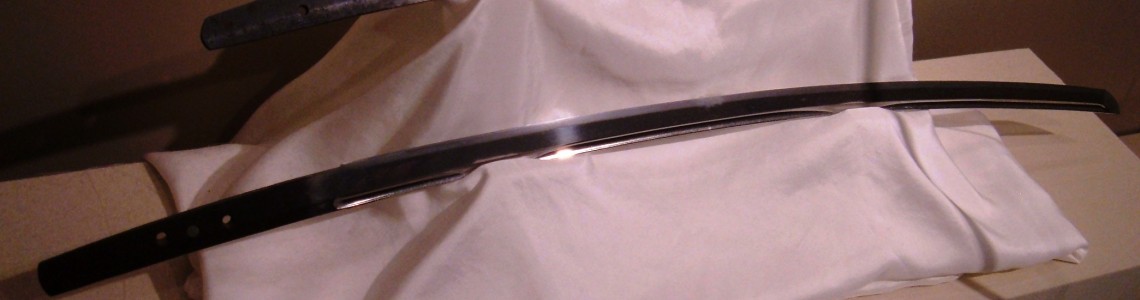
What Katana Is Really Suitable For You? A Complete Guide to Choosing the Right Japanese Sword
Choosing a Katana can be exciting, but with so many options available, finding the right sword can also become confusing. Different blade steels, shapes, fittings, and customization options can make it difficult for beginners to know which Japanese Katana is the best choice.
The truth is that there is no single “best Katana” for everyone. The right sword depends on your purpose, experience level, budget, and personal preference. A collector looking for a display piece may choose a different Katana compared with someone practicing martial arts or performing cutting exercises.
At HanBon Forge, customers choose different Katana styles depending on their needs, from traditional display swords to fully functional handmade blades. Understanding the important factors before purchasing will help you find a sword that matches your expectations.
In this guide, we will explain how to choose the right Katana by looking at purpose, steel type, blade construction, heat treatment, customization, and budget.
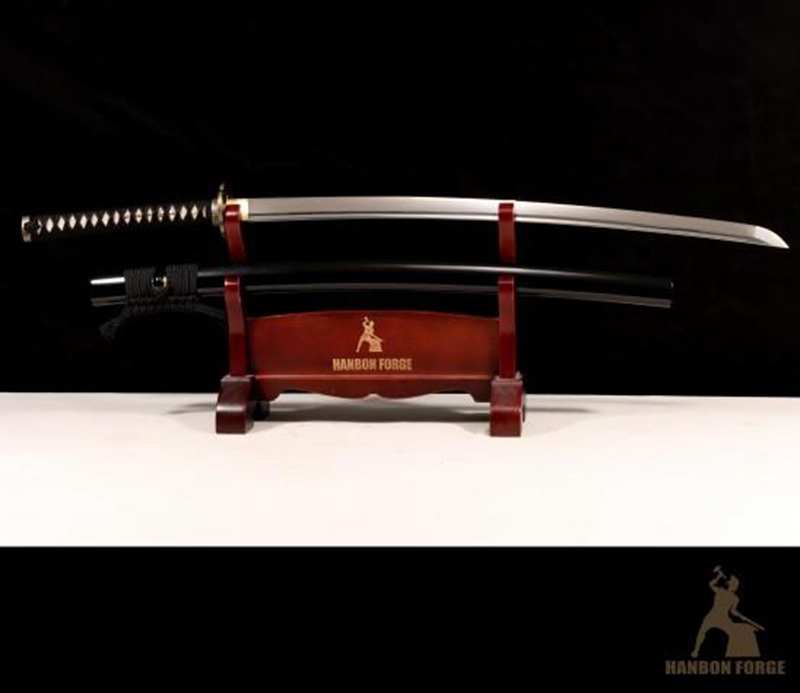
How to Decide Which Katana Is Right for You
Before choosing a Japanese Katana, the first question you should ask is: “What will I use this sword for?” Your purpose determines the type of blade, steel, and construction that will be most suitable.
A Katana designed mainly for display focuses on appearance, historical style, and decoration. A sword intended for cutting practice requires stronger construction, suitable steel, and proper heat treatment.
Understanding your goal before purchasing can prevent choosing a sword that does not match your expectations.
Katana for Display and Collection
For many collectors, a Katana is valued as a piece of Japanese art and craftsmanship. If your main purpose is display, you can focus more on the appearance and details of the sword rather than maximum cutting performance.
Display Katana buyers often pay attention to:
- Saya Design: The scabbard can greatly influence the overall appearance of the sword, from traditional black lacquer styles to unique custom designs.
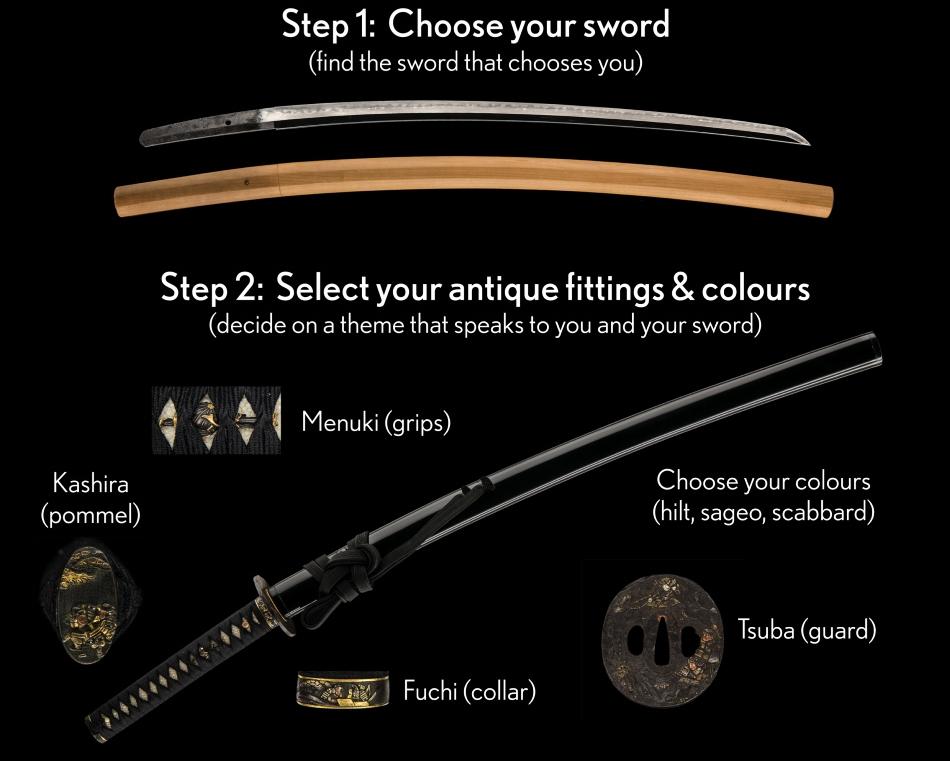
- Tsuba and Fittings: Decorative fittings such as the tsuba, fuchi, kashira, and menuki allow collectors to create a sword with a unique theme.
- Blade Appearance: Features such as Damascus patterns, hamon lines, and polished finishes can increase the artistic value of a Katana.
- Personalization: Custom engraving and customized fittings can make the sword more meaningful.
For collectors who appreciate Japanese sword culture, a beautifully designed handmade Katana can become a unique display piece that reflects personal taste.
Katana for Martial Arts Training
Practitioners of Japanese martial arts such as Iaido, Kenjutsu, or Battojutsu need a Katana that provides proper balance, handling, and durability.
For training purposes, the weight distribution and blade geometry are extremely important. A sword that feels natural in the hand allows the practitioner to perform movements more comfortably.
Important features for a training Katana include:
- Full Tang Construction: The tang extends through the handle, providing better strength and stability.
- Proper Balance: The sword should feel controlled rather than excessively heavy.
- Strong Handle Assembly: A secure tsuka, quality mekugi, and proper wrapping improve safety.
- Suitable Blade Length: The blade should match the user's body size and training style.
A training Katana should be selected based on comfort and reliability rather than only appearance.
Katana for Cutting Practice (Tameshigiri)
If you plan to use your Katana for cutting practice, the blade construction becomes one of the most important factors. Cutting requires a sword that can handle impact while maintaining proper edge performance.
A functional cutting Katana usually requires a strong full tang structure, appropriate steel, and correct heat treatment.
Popular choices for cutting Katana include:
- 1060 Carbon Steel: A tough and forgiving steel suitable for beginners.
- 1095 Carbon Steel: A harder steel that can provide excellent edge retention when properly treated.
- T10 Tool Steel: A premium choice known for hardness and durability.
- Clay Tempered Blades: Traditional heat treatment creates a hard edge and visible hamon pattern.
Choosing the correct cutting Katana depends on your experience level and the type of cutting practice you plan to perform.
How to Choose the Right Katana Steel
The type of steel is one of the most important factors when choosing a Japanese Katana. Different steels provide different levels of hardness, flexibility, durability, and appearance.
Modern handmade Katana are commonly made from carbon steels such as 1060, 1095, and T10 steel. Traditional Japanese swords may also use Tamahagane, a historically important steel created through the Tatara furnace process.
The best steel depends on how you plan to use the sword. Beginners may prefer a tougher and more forgiving steel, while experienced collectors may choose premium steels with specific characteristics.
1060 Steel vs 1095 Steel vs T10 Steel Katana
Different Katana steels have different advantages. Understanding these differences helps buyers choose a sword that matches their needs.
| Steel Type | Main Characteristics | Suitable For |
| 1060 Carbon Steel | Tough, flexible, and resistant to impact | Beginners, training, and cutting practice |
| 1095 Carbon Steel | Higher carbon content with excellent edge retention | Experienced users and cutting performance |
| T10 Tool Steel | Hard, durable, and suitable for premium Katana | Collectors and advanced users |
| Damascus Steel | Unique layered patterns and decorative appearance | Collectors and display swords |
There is no single “best” Katana steel. The correct choice depends on whether you value durability, cutting ability, traditional appearance, or artistic design.
Why Full Tang Construction Matters
The tang, known as nakago in Japanese sword terminology, is the part of the blade that extends inside the handle. A full tang Katana has a stronger connection between the blade and handle, making it more suitable for functional use.
A properly constructed full tang sword improves strength, stability, and overall durability. This is especially important for users who plan to practice cutting or martial arts training.
When choosing a functional Katana, buyers should pay attention to:
- Full Tang Blade: The steel extends through the handle for improved strength.
- Mekugi Pins: Bamboo pins secure the handle assembly to the tang.
- Handle Construction: Quality wood core and proper wrapping improve control.
- Blade Fitting: A secure connection between blade and fittings reduces movement.
Clay Tempered Katana vs Non-Clay Tempered Katana
Heat treatment has a major influence on the performance and appearance of a Katana. One traditional method is clay tempering, which creates different hardness levels between the cutting edge and the spine.
During clay tempering, the swordsmith applies clay to specific areas of the blade before heating and quenching. The edge cools faster and becomes harder, while the covered areas remain softer and more flexible.
| Feature | Clay Tempered Katana | Non-Clay Tempered Katana |
| Hamon | Visible natural temper line | Usually no traditional hamon |
| Hardness | Hard edge with flexible spine | More uniform hardness |
| Appearance | Traditional Japanese sword appearance | Simple and practical design |
For buyers who appreciate traditional craftsmanship, a clay tempered Katana offers both functional performance and visual beauty.
Choosing the Right Katana Blade Shape and Length
Blade shape and length also influence how a Katana feels and performs. A sword should match the user's body size, experience level, and intended purpose.
Common blade considerations include:
- Blade Length: Longer blades provide greater reach, while shorter blades are easier to control.
- Bo-Hi: A groove carved into the blade that reduces weight and produces a distinctive sound when moving.
- Blade Geometry: Different shapes affect cutting ability, strength, and appearance.
- Kissaki Size: The tip design influences both aesthetics and blade characteristics.
Selecting the correct blade specifications will help ensure your Katana feels comfortable and matches your expectations.
Katana Customization Options: Creating a Sword That Matches Your Style
One of the biggest advantages of choosing a handmade Katana is the ability to customize different parts of the sword. Unlike factory-produced swords, a custom Japanese Katana allows buyers to create a blade that reflects their personal taste and purpose.
Customization options can include blade style, steel type, hamon pattern, saya design, handle wrapping, tsuba design, and engraving.
Popular Katana customization choices include:
- Blade Material: Choose from different steels such as T10, 1095 carbon steel, Damascus steel, or other options depending on your needs.
- Hamon Style: Different temper line patterns create unique visual characteristics.
- Tsuka Design: Handle wrapping colors, materials, and styles can be customized.
- Tsuba Selection: Sword guards are available in many traditional and artistic designs.
- Engraving: Personalized names, symbols, or patterns can make the sword unique.
- Saya Design: The scabbard can be customized with different colors, finishes, and decorations.
Customization allows each Katana to become more than a sword. It becomes a personal piece of craftsmanship with its own style and meaning.
How Much Should You Spend on a Katana?
The price of a Katana can vary greatly depending on materials, craftsmanship, steel type, and customization level. Understanding what affects the price will help you make a better decision.
| Price Range | Suitable For | Typical Features |
| Entry Level | Beginners and display buyers | Basic steel, simple fittings, standard designs |
| Mid Range | Collectors and training users | Better steel, improved construction, more customization |
| Premium Handmade | Advanced collectors and enthusiasts | Premium steel, clay tempering, detailed fittings, custom work |
A higher price does not always mean a better sword for everyone. The most important thing is choosing a Katana that matches your intended use and quality expectations.
Which Katana Is Best for Different Buyers?
Different buyers have different needs. The ideal Katana depends on your experience, purpose, and personal preferences.
| Buyer Type | Recommended Katana |
| First-Time Buyer | Balanced Katana with durable steel and traditional design |
| Collector | Custom Katana with beautiful fittings and detailed blade features |
| Martial Arts Practitioner | Full tang Katana with proper balance and reliable construction |
| Cutting Practice User | Strong carbon steel or T10 blade with suitable heat treatment |
Frequently Asked Questions About Choosing a Katana
1. What Katana is best for beginners?
For beginners, a Katana with good balance, durable steel, and reliable construction is usually the best choice. 1060 carbon steel and well-made T10 Katana are popular options depending on the intended use.
2. Should I buy a Katana for display or cutting?
The choice depends on your purpose. Display swords focus on appearance and decoration, while cutting Katana require stronger construction, suitable steel, and proper heat treatment.
3. Is T10 steel good for a Katana?
Yes. T10 steel is a popular choice for premium Katana because it provides good hardness, durability, and excellent edge performance when properly heat treated.
4. Is a Damascus Katana better than a normal steel Katana?
Damascus Katana are popular because of their unique patterns and appearance. However, performance depends more on steel quality, heat treatment, and craftsmanship rather than appearance alone.
5. What length Katana should I choose?
The ideal Katana length depends on the user's height, arm length, experience, and intended purpose. A properly sized sword will feel more comfortable and easier to control.
6. Can I customize my Katana?
Yes. Many handmade Katana can be customized with different blade materials, fittings, colors, engravings, and designs.
Conclusion: Finding the Katana That Is Right for You
Choosing the right Katana is about understanding your own needs. The best Japanese sword is not necessarily the most expensive one, but the one that matches your purpose, experience, and personal preference.
Whether you want a beautiful display sword, a reliable training blade, or a fully functional handmade Katana, factors such as steel type, construction, balance, and craftsmanship should always be considered.
A well-chosen Katana is more than a sword. It is a combination of Japanese history, traditional craftsmanship, and personal connection that can be appreciated for many years.