
Understanding Katana Nakago: Tang Types, Mekugi-Ana and Mei
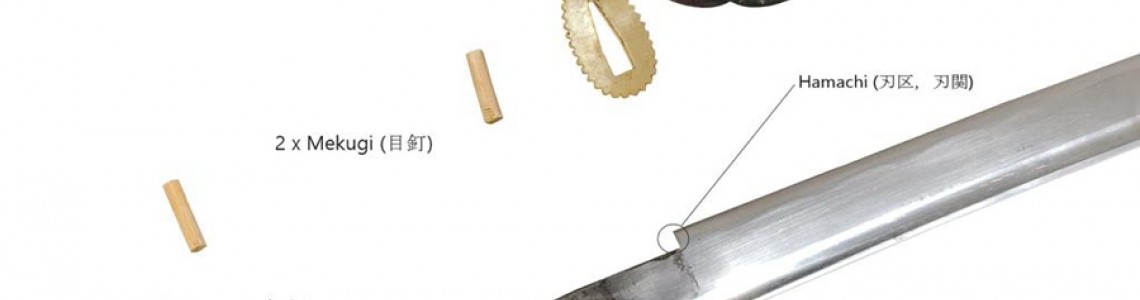
Understanding Katana Nakago: Tang Types, Mekugi-Ana and Mei
When examining a traditional Japanese katana, most people naturally focus on the blade, hamon, and fittings. However, one of the most important parts of the sword is hidden inside the handle. This component is called the nakago, or tang.
The nakago is the extended portion of the blade that fits inside the handle, known as the tsuka. It plays an essential role in the sword's construction and assembly. Its shape, surface markings, peg holes, and inscriptions can also provide valuable information about the sword's craftsmanship and history.
In this guide, we will explore the main features of a katana nakago, including common tang shapes, mekugi-ana, and mei inscriptions. Understanding these details can help collectors and sword enthusiasts appreciate Japanese sword construction more deeply.
1. What Is a Katana Nakago?
The nakago (茎) is the part of a Japanese sword that extends from the blade into the handle. Unlike the exposed blade, it is normally concealed by the tsuka and secured with one or more bamboo pegs called mekugi.
Although the nakago is not usually visible when a sword is fully assembled, it is essential to the overall construction. It provides the structural connection between the blade and the handle.
A traditional nakago generally has several recognizable features:
- Nakago-jiri: The shape of the tang's end.
- Mekugi-ana: Holes through which the retaining pegs pass.
- Yasurime: File marks left on the tang's surface.
- Mei: An inscription, when present, usually carved into one side of the tang.
One important difference between the nakago and the visible blade is its surface finish. The tang is generally left with its natural, aged surface rather than being polished to a bright finish. This surface can preserve details of traditional workmanship and, on older swords, natural patina.
2. Common Katana Nakago Shapes
Japanese sword tangs can have different shapes, particularly around the end of the nakago. These shapes are known as nakago-jiri. They are part of the sword's overall construction and may vary according to the period, tradition, and individual smith.
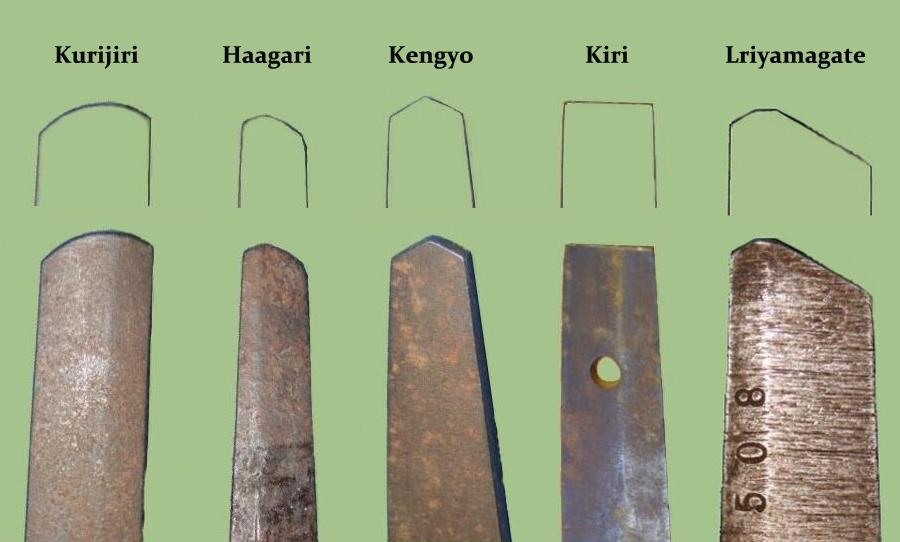
Kuri-jiri (栗尻)
Kuri-jiri is a rounded tang-end shape. Its outline curves smoothly toward the end, creating an appearance somewhat similar to the rounded end of a chestnut. It is one of the recognizable nakago-jiri forms found on Japanese swords.
Kiri-jiri (切尻)
Kiri-jiri has a relatively straight, squared-off end. The shape appears more angular than rounded forms and is easy to recognize from the outline of the tang.
Ha-agari Kuri-jiri (刃上がり栗尻)
Ha-agari Kuri-jiri is a rounded tang-end style in which the shape rises toward the blade-edge side. It combines a curved outline with an asymmetrical appearance.
Other Variations
Not every Japanese sword fits neatly into one simple category. Some nakago have variations in their outline, length, taper, and proportions. These details may reflect the sword's intended mounting, construction tradition, or later modifications.
Important: A tang shape alone cannot reliably establish a sword's age, authenticity, or maker. It should always be considered alongside other characteristics, such as the blade, file marks, patina, inscription, and documented history.
3. What Is a Mekugi-Ana?
A mekugi-ana (目釘穴) is a hole in the nakago designed to accommodate a retaining peg called a mekugi. The peg passes through the handle and the tang to help secure the blade inside the tsuka.
Traditionally, mekugi are commonly made from bamboo. Their purpose is to help keep the handle and tang properly assembled while allowing the sword to be disassembled for inspection and maintenance when necessary.
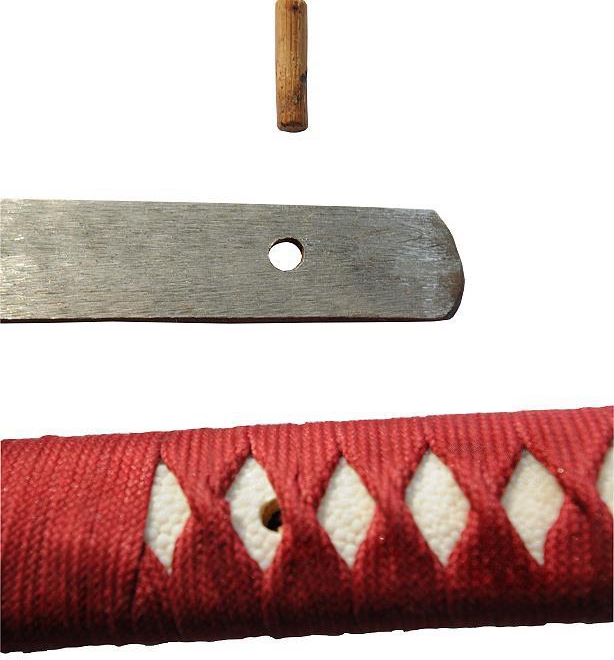
One Mekugi-Ana or Multiple Holes?
Many katana have one mekugi-ana, while some Japanese swords have two or more. The number and position of these holes can vary depending on the sword's construction and history.
For example, an older tang may contain an additional hole because the sword was remounted or modified during its lifetime. Therefore, multiple holes do not automatically indicate poor craftsmanship or a manufacturing defect.
Why Is the Mekugi Important?
The mekugi is a small component, but it has an important role in the sword's assembly. A properly fitted retaining peg helps prevent unwanted movement between the tang and handle.
For modern functional swords, the fit of the tang, handle, and retaining system should be checked carefully. A loose handle or damaged peg should never be ignored. Do not use a sword if its handle or retaining system appears unstable.
4. What Is Mei on a Japanese Sword?
The term mei (銘) refers to an inscription carved into the nakago of a Japanese sword. It may contain the swordsmith's name, and sometimes additional information such as a date, location, or other identifying details.
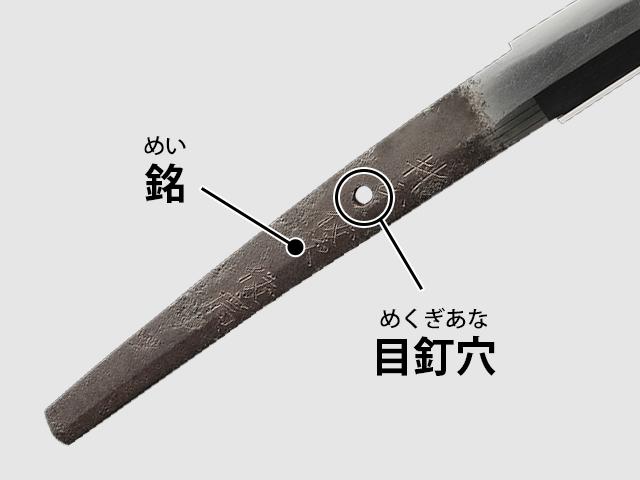
Mei can be especially interesting to collectors because it provides a connection between the sword and the person or workshop associated with its production.
Common Information Found in Mei
Depending on the sword and its inscription, mei may include:
- Smith's name: The name of the swordsmith who made the blade.
- Location: A place associated with the smith or the sword's production.
- Date: Some inscriptions include the year or era in which the sword was made.
- Additional notes: Certain inscriptions may contain other details about the sword or its production.
Omote and Ura: Which Side Has the Mei?
Japanese sword terminology uses the terms omote and ura to distinguish the two sides of the tang. The position of an inscription can depend on the sword's tradition and how it was intended to be worn.
Some swords have inscriptions on one side, while others may contain additional information on the opposite side. The placement and reading direction should be considered carefully when examining a mei.
What Does Mumei Mean?
A Japanese sword without a visible signature is commonly described as mumei (無銘), meaning unsigned. This does not automatically mean that the sword is modern, low quality, or without historical value.
Some traditionally made swords are unsigned. In certain cases, an inscription may also have been removed or lost through later alteration. The absence of a mei should therefore be evaluated in the context of the entire sword.
5. Yasurime: Understanding the File Marks on a Nakago
Another important feature of the nakago is yasurime (鑢目), the file marks left on the tang during its finishing process.
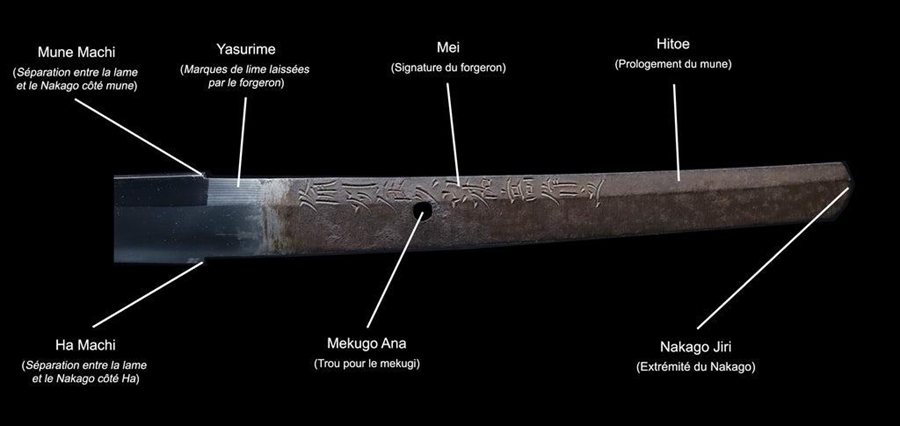
These marks are not simply decorative. They are part of the traditional finishing work and may help researchers and collectors study the sword's craftsmanship and manufacturing tradition.
Common yasurime patterns include:
- Kiri: Relatively horizontal file marks.
- Katte-sagari: File marks slanting downward in a particular direction.
- Suji-kai: Diagonal file marks.
- Kesho-yasuri: Decorative or specially arranged file marks associated with certain finishing traditions.
The exact appearance of yasurime can vary. Like tang shape and mei, file marks should not be used alone to determine a sword's age or authenticity.
6. How to Examine a Katana Nakago
When studying a Japanese sword, it is important to look at the nakago as a complete feature rather than focusing on only one detail.
Collectors and researchers may consider several characteristics together:
- Overall shape: Observe the length, taper, proportions, and nakago-jiri.
- Surface condition: Look at the natural patina and signs of corrosion or alteration.
- File marks: Examine the direction and arrangement of yasurime.
- Mekugi-ana: Note the number, position, and condition of the peg holes.
- Mei: If an inscription is present, consider its characters, placement, and carving style.
These characteristics can provide useful clues, but reliable identification requires broader knowledge and, in many cases, examination by an experienced Japanese sword specialist.
It is also important to remember that swords may have been repaired, shortened, remounted, or modified during their history. Such changes can affect the appearance of the nakago.
7. How to Care for a Katana Nakago
The nakago requires a different approach to care from the polished blade. Its natural surface and patina are important features, particularly on traditionally made antique swords.
Avoid Polishing the Tang
Unlike the blade, the nakago should generally not be polished or aggressively cleaned. Removing its natural patina can destroy important surface details and may reduce its historical and collectible value.
Keep the Tang Dry
Moisture can contribute to corrosion. When inspecting or handling a sword, avoid leaving fingerprints or moisture on exposed metal surfaces. Handle antique swords carefully and follow specialist conservation advice.
Do Not Alter the Mekugi-Ana
Avoid drilling, enlarging, or modifying the mekugi-ana without professional guidance. Changes to the tang can affect the sword's structure and historical integrity.
If a handle becomes loose or the retaining peg is damaged, have the sword inspected by a qualified professional before using it.
8. Frequently Asked Questions About Katana Nakago
What is the purpose of a katana nakago?
The nakago is the tang of the sword. It extends into the handle and provides the structural connection between the blade and the tsuka.
Why is the katana tang not polished?
The nakago is traditionally left with its natural surface and patina. On antique swords, this surface may preserve important evidence of age and craftsmanship, so polishing it is generally avoided.
What is a mekugi-ana?
A mekugi-ana is a hole in the tang through which a retaining peg passes. The peg helps secure the tang inside the handle.
Why do some katana have two mekugi-ana?
Some swords have multiple peg holes because of their original construction or later changes, such as remounting. The number of holes varies and does not independently determine the sword's quality.
What does mei mean on a Japanese sword?
Mei refers to an inscription carved into the tang. It may identify the swordsmith and sometimes include information about the date or place of production.
Does a katana without mei have no value?
No. An unsigned sword is called mumei. Some traditionally made swords are unsigned, and their value depends on many factors, including craftsmanship, condition, provenance, and expert evaluation.
Can the nakago tell me whether a katana is authentic?
The nakago can provide useful clues, but no single feature proves authenticity. A proper evaluation should consider the entire sword, including its blade, construction, fittings, surface details, and history.
Conclusion
The nakago is much more than the hidden part of a katana. Its shape, mekugi-ana, yasurime, and mei all contribute to our understanding of Japanese sword construction and craftsmanship.
Whether you are a beginner learning about katana anatomy or an experienced collector studying traditional Japanese swords, understanding the nakago offers a deeper appreciation of the details that make each sword unique.
At HanBon Forge, we appreciate the craftsmanship and traditional details behind Japanese-style swords. Exploring each component, from the blade to the tang and fittings, helps sword enthusiasts better understand how a katana is constructed.