
What Is a Japanese Sword Mei? Understanding Signatures
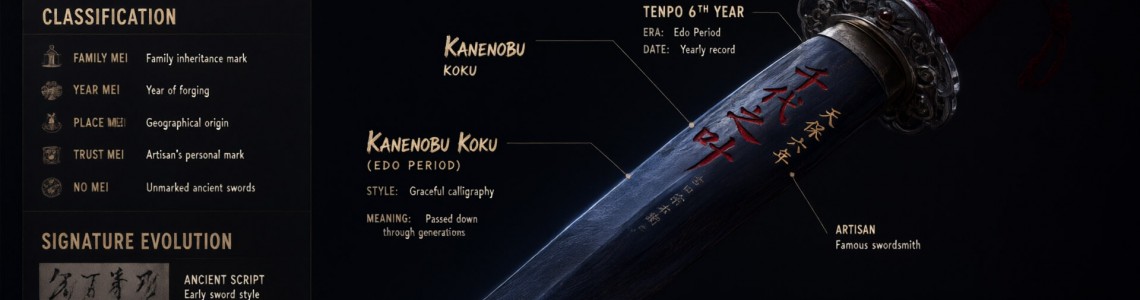
What Is a Japanese Sword Mei? Understanding Sword Signatures
A Japanese sword carries many details that can help collectors understand its construction, craftsmanship, and history. One of these details is the mei (銘), a signature or inscription traditionally carved into the tang of a Japanese sword.
For collectors and enthusiasts, a sword signature can provide clues about the swordsmith, the period in which a blade was made, and the traditions associated with its production. However, interpreting a mei requires more than simply reading a name. Historical naming conventions, unsigned blades, and false or misattributed signatures can all complicate identification.
In this guide, we will explain what a Japanese sword mei is, where it is found, what information it may contain, and how collectors can approach sword signatures with a better understanding of their historical significance.
1. What Does Mei Mean in Japanese Sword Terminology?
The Japanese word mei (銘) means an inscription or signature. In Japanese sword terminology, it commonly refers to characters carved into the nakago, the tang that extends from the blade into the handle.
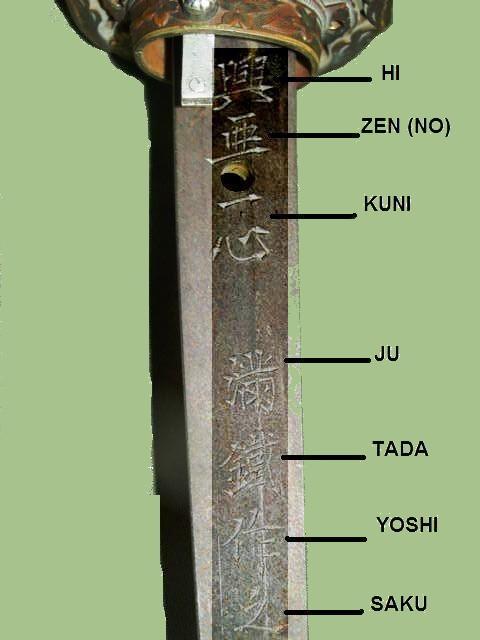
A traditional swordsmith may sign a blade with a name written in kanji. Depending on the individual sword and its historical context, the inscription may also include a location, date, title, or other information.
Not every Japanese sword carries a signature. Some traditional blades are unsigned, and the absence of a mei does not automatically mean a sword is inauthentic or inferior.
Likewise, a signed blade is not automatically authentic. A signature must be considered alongside the sword's physical characteristics, historical context, and available documentation.
For this reason, the mei is best understood as one piece of evidence in the broader study of Japanese swords rather than a complete record of a blade's identity.
2. Where Is the Mei Located on a Japanese Sword?
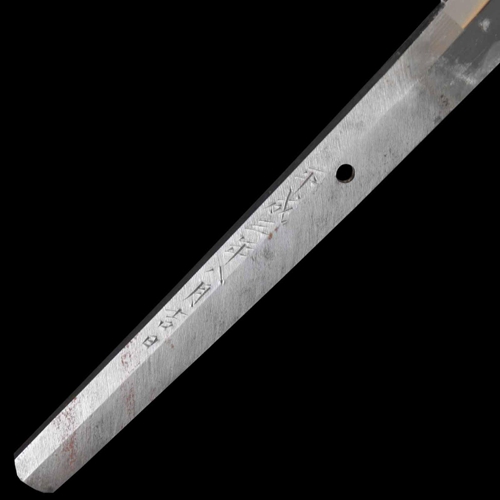
On many traditionally signed Japanese swords, the mei is carved into the nakago. This portion of the blade fits inside the tsuka, or handle, and is normally concealed when the sword is fully assembled.
The nakago is an important part of the sword's construction. It secures the blade within the handle and may preserve identifying features such as signatures, filing marks, and peg holes.
Unlike the polished blade surface, the tang of a traditional Japanese sword is generally left unpolished. Its surface may develop a natural patina over time, and its filing marks may remain visible.
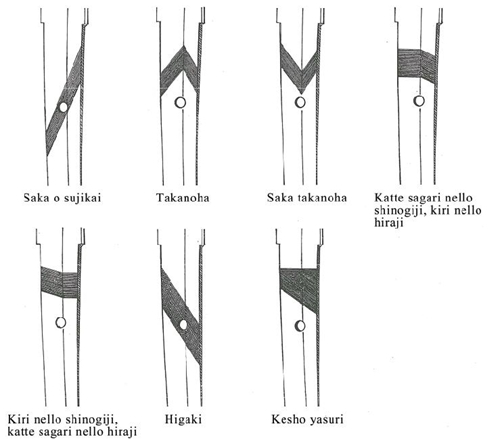
When examining a sword, collectors and specialists consider the signature together with the shape of the tang, the filing marks known as yasurime, the surface condition, and other relevant features.
To learn more about these characteristics, read our existing guide, Nakago and Yasurime: Japanese Sword Tang Filing Marks Explained.
3. What Information Can a Japanese Sword Mei Reveal?
The information contained in a mei varies from one sword to another. Some inscriptions are relatively short, while others contain additional details that require historical and linguistic knowledge to interpret.
The Swordsmith's Name
A signature may identify the swordsmith associated with a blade. Japanese swordsmiths traditionally used names written in kanji, and some used different names or name forms during their careers.
Reading the characters is only the first step. Similar names, alternate readings, and historical naming practices can make identification difficult.
Even when a mei matches the name of a documented swordsmith, the signature must still be evaluated to determine whether it genuinely belongs to the blade.
A Date or Historical Period
Some inscriptions include a date associated with the blade's production. Traditional Japanese dating conventions may differ from modern Western date formats, so interpreting a date can require additional historical knowledge.
A date inscription can help guide research, but it cannot independently prove a sword's age. Specialists also examine the blade's construction, workmanship, tang, and supporting historical evidence.
A Province, Location, or Additional Inscription
Certain signatures include a place name, title, or other information associated with the swordsmith.
These details may help researchers connect a sword to a particular tradition or historical context. However, the significance of an inscription depends on its exact wording and the evidence available for the individual blade.
Not every mei contains all these elements, and some inscriptions require specialist interpretation.
4. Mei, Mumei, and Gimei: Understanding the Differences
Three terms are particularly useful when learning about Japanese sword signatures: mei, mumei, and gimei.
| Term | Meaning | Significance |
|---|---|---|
| Mei (銘) | Signature or inscription. | May provide information about the swordsmith or other details. |
| Mumei (無銘) | Unsigned. | The blade has no signature; this alone does not establish its quality or authenticity. |
| Gimei (偽銘) | False or inauthentic signature. | The inscription falsely attributes, or does not genuinely identify, the maker of the blade. |
These distinctions matter because the presence of a signature and the authenticity of that signature are two different questions.
An unsigned blade may still be historically significant. Conversely, a sword bearing a famous name may require careful examination before the attribution can be accepted.
Collectors should avoid judging a sword solely by whether it has a signature or whether the inscription appears visually convincing.
5. How Do Experts Evaluate a Japanese Sword Signature?
Evaluating a mei involves comparing the inscription with other evidence associated with the blade.
Specialists may consider the following factors:
- The inscription itself: The kanji, name form, wording, and style of carving.
- The nakago: Its shape, surface condition, and other physical characteristics.
- Yasurime: The filing marks on the tang, which may provide useful comparative information.
- The blade: Its geometry, construction, workmanship, and other relevant features.
- Historical references: Documented signatures, swordsmith records, and established reference materials.
- Provenance and documentation: Reliable records that help establish the sword's history.
No single factor is necessarily decisive. An inscription that appears consistent with a known signature does not by itself prove that the blade was made by that swordsmith.
For valuable antique swords, a qualified Japanese sword specialist or recognized appraisal organization can provide a more reliable assessment than a visual comparison alone.
6. Does Every Japanese Sword Need a Signature?
No. Japanese swords exist with and without signatures, and an unsigned blade should not automatically be considered less valuable or less authentic.
Some traditional swords are unsigned. In certain cases, historical circumstances, blade alterations, or other factors may explain why a sword does not retain an inscription. The reason cannot be assumed without examining the individual blade.
Modern production swords may also carry contemporary signatures, maker's marks, or custom inscriptions. These should be understood in the context of how the sword was produced and represented by its maker.
When comparing swords, buyers should consider the complete product description, construction, materials, craftsmanship, and intended purpose rather than treating the presence of a mei as a universal measure of quality.
7. How Should Collectors Handle a Signed Japanese Sword?
The nakago of a traditional Japanese sword can preserve historical information that may be difficult or impossible to recover once damaged.
If you are examining a signed sword, avoid aggressive cleaning, sanding, or polishing of the tang. These actions can alter the inscription and remove natural surface characteristics that specialists may use during an evaluation.
If the handle conceals the mei, do not disassemble the sword without the appropriate knowledge and experience. Improper handling can damage the sword or its fittings and may create a safety risk.
For an antique or potentially valuable sword, consult a qualified specialist before attempting cleaning, restoration, or further examination.
When purchasing a sword, ask for clear information about its origin, construction, and any available documentation. If a seller attributes a blade to a notable historical swordsmith, seek appropriate evidence supporting that claim.
8. Frequently Asked Questions About Japanese Sword Mei
What does mei mean on a Japanese sword?
Mei means a signature or inscription. On a Japanese sword, it commonly refers to characters carved into the nakago that may identify a swordsmith or provide other information.
Where is a Japanese sword signature found?
A traditional Japanese sword signature is commonly found on the nakago, or tang, which extends into the handle. The inscription is usually concealed when the sword is fully assembled.
Can a mei identify the original swordsmith?
A mei may provide a clue to the swordsmith's identity, but the inscription alone cannot conclusively establish who made the blade. Authentication requires consideration of the sword's other characteristics and supporting evidence.
What does mumei mean?
Mumei means unsigned. It describes a sword without a signature and does not, by itself, establish whether the blade is authentic, historically significant, or of a particular quality.
What is a gimei signature?
Gimei refers to a false or inauthentic signature. Determining whether an inscription is gimei requires careful evaluation and should not be based solely on its appearance in a photograph.
Can a modern katana have a mei?
Yes. Modern swords may carry a maker's signature or a contemporary custom inscription. A modern signature should not be confused with proof that a sword is an antique or was made by a historical swordsmith.
Should I clean the tang to make a signature easier to read?
No. Avoid abrasive cleaning or polishing, especially on antique swords. These methods can permanently alter the tang's surface and inscription. Seek advice from a qualified specialist if the signature is difficult to read.
Conclusion
A Japanese sword mei can offer valuable clues about a blade's maker and historical context, but interpreting a signature requires care. Understanding the differences between mei, mumei, and gimei helps collectors recognize that the presence of an inscription is not the same as proof of authenticity.
By considering the inscription alongside the nakago, yasurime, blade characteristics, historical references, and available documentation, collectors can approach Japanese sword research with a more informed perspective.
Whether you are learning Japanese sword terminology or researching a particular blade, understanding the role of the mei is an important step toward appreciating the craftsmanship and history associated with Japanese swords.
At HanBon Forge, learning about traditional Japanese sword terminology and construction can help you better understand the features described in sword product listings and appreciate the details that distinguish different sword designs.