
Japanese Sword Mountings Guide | Katana Koshirae and Fittings
Japanese Sword Mountings: A Complete Guide to Katana Koshirae and Fittings
When people admire a Japanese sword, they often focus on the blade, hamon, and polishing. However, a complete sword is more than just the steel blade. The traditional mounting system, known as koshirae, is an essential part of Japanese sword culture and craftsmanship.
Japanese sword mountings include all of the components used to hold, protect, and decorate the blade, such as the saya, tsuka, tsuba, habaki, and various metal fittings. Each part has both a practical purpose and artistic value.
Throughout Japanese history, sword mountings developed from simple functional equipment into highly refined works of art. Skilled craftsmen specialized in different areas, including lacquer work, metal engraving, leather wrapping, and decorative fitting production.
What Are Japanese Sword Mountings?
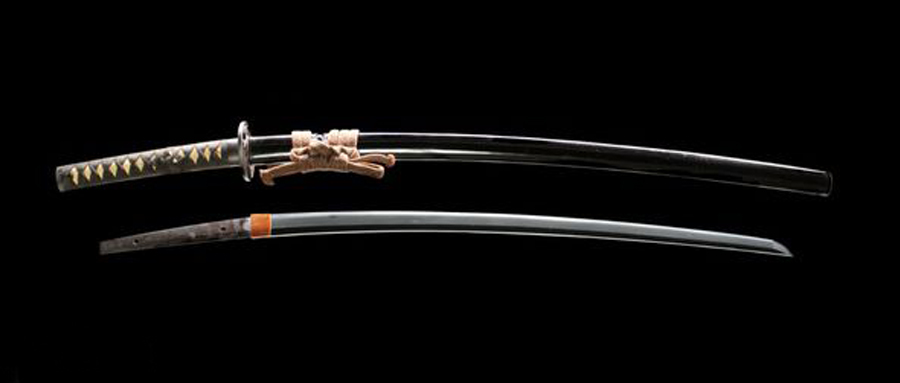
Japanese sword mountings refer to the complete set of external fittings attached to a Japanese sword. In Japanese terminology, this complete mounting system is called koshirae (拵).
Koshirae does not describe the blade itself. Instead, it refers to the parts that allow the sword to be carried, protected, and used. A finished katana mounting usually includes the handle, guard, scabbard, and decorative fittings.
A well-designed koshirae creates harmony between function and appearance. The materials, colors, and patterns are carefully selected to match the character of the sword and the preferences of its owner.
Koshirae vs Shirasaya: What Is the Difference?
Many beginners confuse koshirae with shirasaya, but they serve different purposes.
| Koshirae | Shirasaya |
| Decorative and functional sword mounting for carrying and display. | Plain wooden storage mounting designed for blade preservation. |
| Includes tsuba, tsuka wrapping, metal fittings, and decorated saya. | Usually consists only of a wooden handle and scabbard without decorative fittings. |
| Designed for use, presentation, and traditional sword appearance. | Designed mainly for long-term storage of the blade. |
Collectors often keep valuable blades in shirasaya for storage while preserving original or custom koshirae separately for display.
Main Components of Japanese Sword Mountings
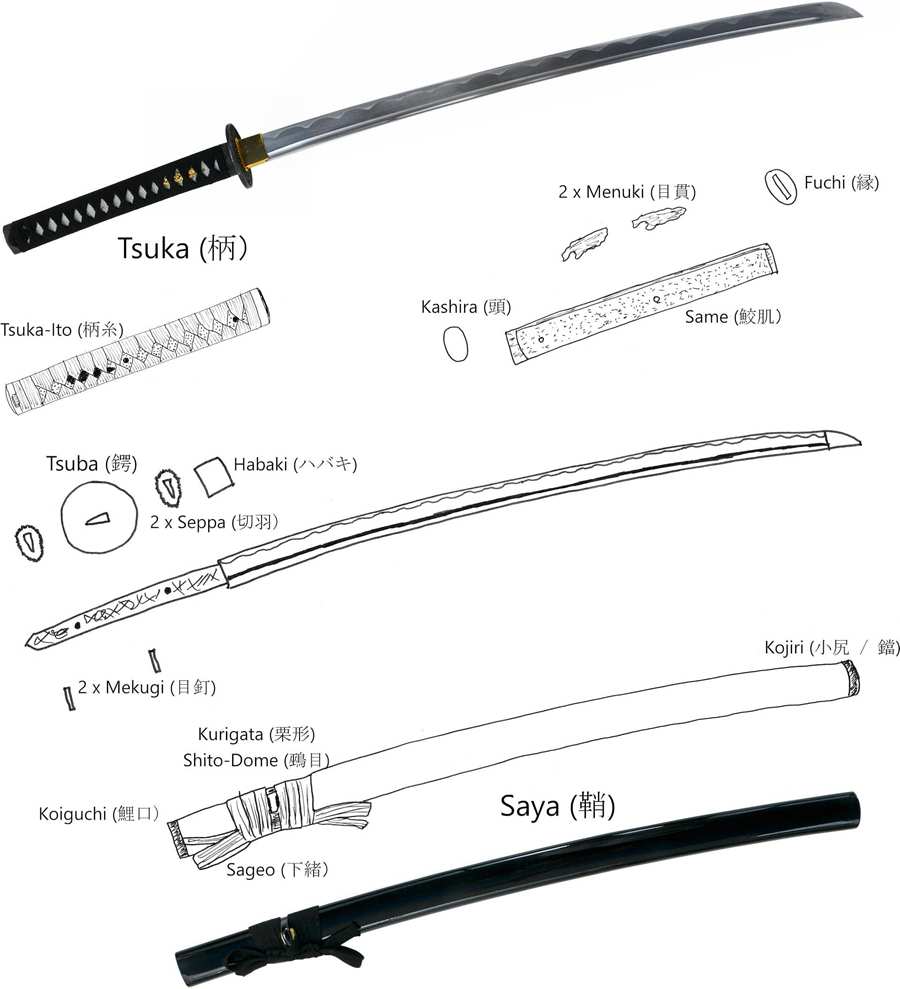
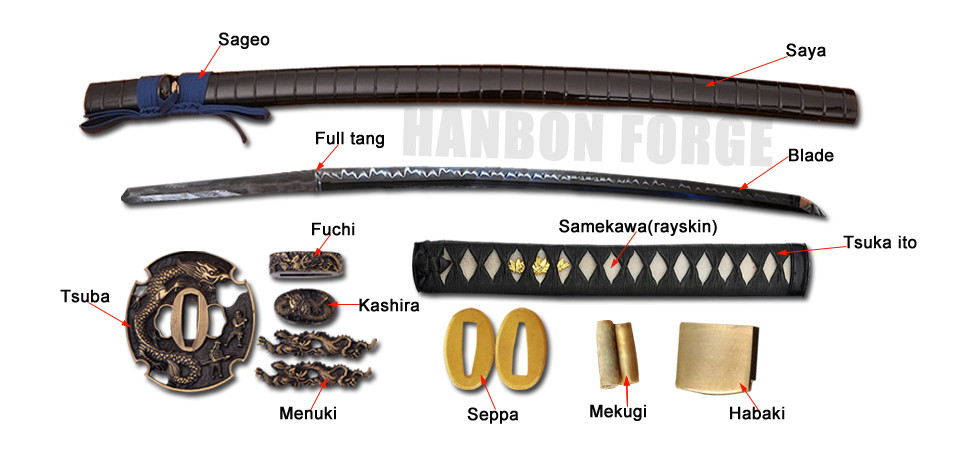
A traditional katana koshirae is made from many individual components. Each fitting has a specific role in protecting the blade, improving handling, or adding artistic decoration.
| Component | Function |
| Saya (鞘) | The scabbard that protects the blade when not in use. |
| Tsuka (柄) | The handle that provides grip and control. |
| Tsuba (鍔) | The hand guard between the blade and handle. |
| Habaki (鎺) | The blade collar that secures the sword inside the saya. |
| Fuchi & Kashira | Metal fittings placed at both ends of the tsuka. |
Tsuka: The Traditional Katana Handle
The tsuka is the handle section of a Japanese sword. It provides the grip needed to control the blade and contains several important components.
A traditional tsuka usually consists of a wooden core covered with samegawa (ray skin) and wrapped with cord called tsuka-ito. The wrapping style affects both appearance and grip security.
Inside the handle, the nakago (tang) is secured with a bamboo peg called mekugi. This simple but effective system allows the sword to be assembled and disassembled for maintenance.
Tsuba: The Japanese Sword Guard
The tsuba is one of the most recognizable parts of Japanese sword mountings. Located between the blade and handle, it protects the user's hand and contributes to the balance of the sword.
Traditional tsuba were created from materials such as iron, brass, copper alloys, and other metals. Many examples feature detailed engraving, openwork designs, and symbolic artwork.
Because of their artistic value, some historical tsuba are collected independently as examples of Japanese metal craftsmanship.
Fuchi and Kashira: Important Katana Handle Fittings
The fuchi and kashira are two important metal fittings located at both ends of the katana handle. Although they are small components, they play an important role in both the structure and appearance of Japanese sword mountings.
The fuchi is the metal collar placed near the tsuba side of the tsuka, while the kashira is the end cap located at the bottom of the handle. Together, they reinforce the wooden handle core and complete the overall design of the tsuka.
Traditional fuchi and kashira sets are often decorated with matching themes, including dragons, flowers, family crests, animals, and historical symbols.
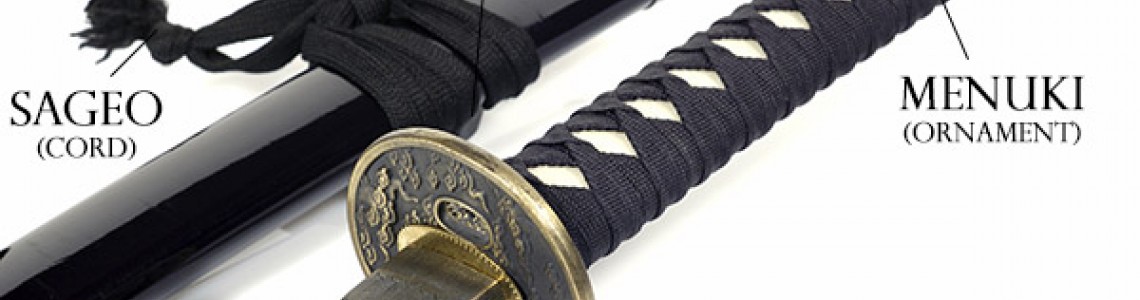
Menuki: Decorative Elements on the Katana Handle
Menuki are small decorative ornaments placed underneath the tsuka wrapping. Originally, menuki helped improve the grip of the sword, but over time they became an important artistic feature of Japanese sword mountings.
Common menuki designs include dragons, tigers, lions, insects, plants, and mythical creatures. Many designs carry symbolic meanings related to strength, protection, courage, or good fortune.
The position of the menuki can also improve the comfort and stability of the grip, making it both decorative and functional.
Saya: The Traditional Katana Scabbard
The saya is the wooden scabbard used to protect and store the katana blade. It is an essential part of Japanese sword mountings because it protects the polished steel surface from damage and corrosion.
Traditional saya are usually made from lightweight wood and covered with various finishes, including lacquer, horn fittings, or decorative designs. The craftsmanship of the saya often reflects the overall style of the sword.
Different types of saya may include simple black lacquer finishes, colorful designs, or customized artwork created specifically for the owner.
Sageo: The Cord on Japanese Sword Mountings
The sageo is a cord attached to the kurikata of the saya. Traditionally, it was used to secure the sword to the wearer's belt and clothing.
Today, sageo is also appreciated as a decorative element of katana mountings. Different colors and tying styles allow owners to customize the appearance of their Japanese sword.
A properly selected sageo can complement the colors and materials of the entire koshirae.
Habaki and Seppa: Securing the Sword Mounting
The habaki is the metal collar fitted around the base of the blade. It plays an important role in securing the sword inside the saya and maintaining a stable fit between the blade and fittings.
The seppa are thin metal spacers placed around the tsuba. They help tighten the sword assembly and ensure that all components fit together correctly.
| Part | Purpose |
| Habaki | Secures the blade and helps lock the sword into the saya. |
| Seppa | Adjusts fitting alignment and improves stability. |
| Mekugi | Locks the tang inside the tsuka. |
Different Types of Japanese Sword Mountings
Throughout Japanese history, different styles of Japanese sword mountings were developed depending on the purpose of the sword, social status, and historical period.
Buke-zukuri Mountings
Buke-zukuri is the classic mounting style associated with samurai swords. It usually includes a tsuba, wrapped tsuka, decorated fittings, and a practical saya designed for carrying.
Shirasaya Mountings
Shirasaya is a plain wooden storage mounting without decorative fittings. It is mainly used to protect blades during long-term storage.
Aikuchi Mountings
Aikuchi is a style where the sword handle and scabbard meet without a traditional tsuba. This style was commonly used for tanto and some shorter blades.
Tachi Mountings
Tachi mountings were designed for carrying the sword edge downward. They often feature elegant fittings and decorative elements reflecting the status of the owner.
How to Choose Japanese Sword Mountings
Choosing the right Japanese sword mountings depends on the purpose of the sword, personal preference, and desired style. Whether you are a collector, martial arts practitioner, or sword enthusiast, the fittings should match both the blade and the intended use.
- Consider the Sword Style: Traditional samurai designs often use classic koshirae styles, while custom katana may feature personalized fittings.
- Select Quality Materials: High-quality materials such as genuine ray skin, silk wrapping, and durable metal fittings improve both appearance and longevity.
- Match Colors and Designs: The tsuba, menuki, fuchi, kashira, and saya should create a balanced overall appearance.
- Check Craftsmanship: Proper fitting and careful finishing are important for both safety and visual quality.
The Importance of Quality Katana Fittings
The quality of katana fittings directly affects the overall experience of owning a Japanese sword. Good fittings provide stability, comfort, and a more authentic traditional appearance.
Poorly made fittings may cause loose components, uncomfortable handling, or an unbalanced sword. For this reason, professional craftsmanship is an important factor when choosing a katana.
A well-made koshirae is not only functional but also represents the artistic tradition behind Japanese sword making.
How to Maintain Japanese Sword Mountings
Proper maintenance helps preserve the beauty and function of traditional sword mountings. Different materials require different care methods.
- Keep the saya away from excessive moisture to prevent wood damage.
- Avoid touching metal fittings with wet or dirty hands.
- Clean dust from the tsuka and fittings regularly with a soft cloth.
- Check the tightness of the fittings before handling the sword.
- Store the katana in a dry and stable environment.
With proper care, quality Japanese sword koshirae can maintain its beauty and function for many years.
Frequently Asked Questions About Japanese Sword Mountings
What are Japanese sword mountings called?
Traditional Japanese sword mountings are called koshirae (拵). The term refers to the complete set of external fittings used on a Japanese sword.
What parts are included in Japanese sword mountings?
Japanese sword mountings include components such as the saya, tsuka, tsuba, habaki, seppa, menuki, fuchi, kashira, and sageo.
What is the difference between koshirae and shirasaya?
Koshirae is a complete decorative and functional sword mounting, while shirasaya is a plain wooden storage mounting mainly used to protect the blade.
What is the purpose of a katana tsuba?
The tsuba protects the user's hand and helps balance the sword. It is also one of the most decorative parts of Japanese sword mountings.
Why are katana fittings decorated?
Decorative katana fittings reflect Japanese artistic traditions and often represent nature, mythology, family identity, or personal beliefs.
Can Japanese sword mountings be customized?
Yes. Modern custom katana can use different tsuba, saya designs, handle wrapping colors, and metal fittings to create a unique appearance.
What is the most important part of katana mountings?
Every component has an important role. The tsuka provides control, the tsuba protects the hand, the saya protects the blade, and the fittings hold the sword assembly together.
Final Thoughts
Japanese sword mountings are an essential part of Japanese sword culture. They combine practical engineering with centuries of artistic tradition.
From the tsuka and tsuba to the saya and decorative fittings, every component contributes to the appearance, handling, and historical value of a katana.
Understanding koshirae allows collectors and enthusiasts to appreciate Japanese swords beyond the blade itself and recognize the craftsmanship behind every detail.