
History of the Japanese Samurai Sword: The Evolution of Katana

History of the Japanese Samurai Sword: The Evolution of the Legendary Katana
The Japanese Samurai Sword is one of the most recognizable weapons in world history. More than a battlefield tool, the katana represents centuries of craftsmanship, warrior tradition, and Japanese culture. From the early straight blades used in ancient Japan to the refined curved swords carried by samurai warriors, the history of the Japanese sword reflects the development of technology, warfare, and artistic expression.
Many people today know the katana as the iconic weapon of the samurai, but the Japanese sword has gone through a long process of evolution. The famous curved blade was not created overnight; it developed through hundreds of years of experimentation by Japanese swordsmiths who adapted their designs to meet the needs of warriors.
In this guide, we will explore the complete history of the Japanese Samurai Sword, including its origins, historical development, traditional forging methods, and why the katana remains one of the most respected swords in the world.
The Origins of the Japanese Sword
The history of Japanese swords began long before the appearance of the samurai. The earliest Japanese blades were influenced by weapons from mainland Asia and were mainly straight-edged swords known as Chokuto. These early swords were designed primarily for thrusting and close combat rather than the powerful cutting techniques associated with later katana.
During Japan’s ancient periods, swords were not only weapons but also symbols of authority and status. Many early blades were placed in burial sites of powerful figures, showing their importance in Japanese society.
As warfare changed and mounted warriors became increasingly important, Japanese swordsmiths began developing blades that were better suited for horseback combat. This led to the creation of curved single-edged swords, which later became the foundation of the famous Japanese sword design.
The Birth of the Samurai Sword During the Heian Period
The true beginning of the Samurai Sword can be traced to the late Heian period (794–1185). During this era, the samurai warrior class began to rise, and warriors required weapons that matched their fighting style, especially mounted combat.
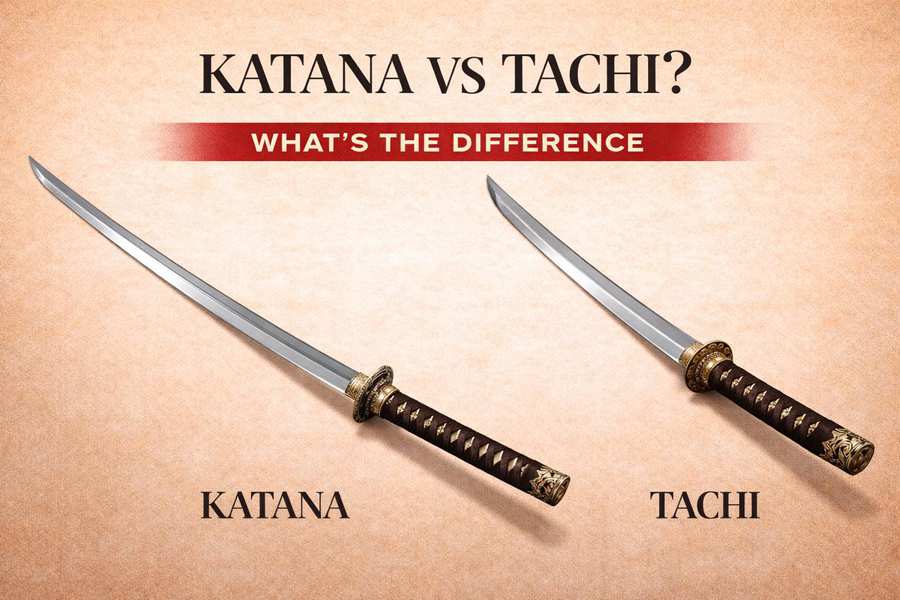
The curved blade design became popular because it allowed warriors to perform faster and more effective cutting attacks from horseback. The development of the tachi, a long curved sword worn with the cutting edge facing downward, marked an important milestone in Japanese sword history.
Unlike earlier straight swords, the tachi combined sharpness, strength, and flexibility. Japanese swordsmiths improved forging techniques by carefully controlling steel quality, blade structure, and heat treatment, creating swords that could withstand battle while maintaining exceptional cutting ability.
The rise of famous sword-making traditions, such as the Yamashiro school in Kyoto, helped establish Japanese swords as highly respected works of craftsmanship. Master swordsmiths began developing unique styles that would influence Japanese sword production for centuries.
The Evolution from Tachi to Katana
Although the tachi was the main sword of early samurai warriors, changes in battlefield conditions eventually led to the development of the katana. During the Kamakura and Muromachi periods, combat gradually shifted from mounted warfare to closer infantry fighting.
Warriors needed a sword that could be drawn quickly while fighting on foot. This demand contributed to the popularity of the uchigatana, a sword worn with the cutting edge facing upward through the belt. This design allowed samurai to draw and strike in a single movement.
By the Muromachi period, the katana had become the signature weapon of the samurai. Its combination of practical battlefield performance and artistic beauty made it one of the most famous swords in history.
Japanese Samurai Swords During the Kamakura Period
The Kamakura period (1185–1333) is often considered one of the greatest periods in the history of Japanese sword making. During this time, the samurai class became the dominant military force in Japan, and the demand for reliable battlefield weapons increased significantly.
Japanese swordsmiths improved both their materials and forging techniques. Blades produced during this period were generally strong, elegant, and well balanced. Many collectors and historians consider Kamakura-era swords among the finest examples of traditional Japanese craftsmanship.
Several important sword-making traditions developed during this period. The famous Gokaden, or Five Traditions, became associated with different regions and forging styles in Japan. These traditions included Yamashiro, Yamato, Bizen, Soshu, and Mino.
Among them, the Soshu tradition became particularly famous for producing powerful blades designed for serious combat. Swordsmiths such as Masamune became legendary figures in Japanese sword history, and their work continues to influence modern sword makers.
The Mongol Invasions and the Development of Japanese Swords
The Mongol invasions of Japan in 1274 and 1281 had an important influence on the development of Japanese weapons. Japanese warriors encountered new forms of armor, weapons, and battlefield tactics during these conflicts.
These experiences encouraged swordsmiths to focus on creating stronger and more durable blades. A sword designed only for cutting lightly armored opponents might not perform the same way against heavier armor or in intense battlefield conditions.
As a result, some swordsmiths experimented with blade geometry, steel construction, and heat treatment. The goal was to create swords that combined a hard cutting edge with a tougher and more flexible body.
This balance between hardness and flexibility became one of the defining characteristics associated with traditional Japanese sword making.
The Muromachi Period and the Rise of the Katana
During the Muromachi period (1336–1573), warfare in Japan changed significantly. Large-scale conflicts became more common, and many battles involved infantry rather than only mounted warriors.
These changes affected the design and use of Japanese swords. The long tachi remained important, but the uchigatana became increasingly popular because it was more convenient for warriors fighting on foot.
Unlike the tachi, which was traditionally suspended from the belt with the cutting edge facing downward, the uchigatana was worn through the sash with the cutting edge facing upward. This made it possible to draw the sword quickly and immediately perform a cutting attack.
Over time, this style developed into the katana. The katana eventually became the most recognizable Japanese Samurai Sword and remains the sword most closely associated with samurai culture today.
During the later Muromachi period, large numbers of swords were required because of frequent military conflicts. Some sword-making centers increased production to supply armies, while highly skilled craftsmen continued producing carefully forged blades for important warriors and wealthy clients.
The Katana and the Samurai During the Sengoku Period
The Sengoku period, often called the Warring States period, was one of the most violent eras in Japanese history. From the fifteenth century into the late sixteenth century, powerful regional warlords competed for control of Japan.
During this time, the samurai sword was an important personal weapon, but it was only one part of the equipment used by a warrior. Spears, bows, and later firearms also played major roles on the battlefield.
However, the katana became increasingly important as a close-combat weapon. Samurai often carried a long sword together with a shorter companion sword. This combination later became known as the daisho, meaning “large and small.”
The katana was practical, durable, and relatively convenient to carry. Its curved blade allowed effective cutting, while the long handle provided control when using two hands.
The Edo Period: When the Samurai Sword Became a Symbol of Status
The beginning of the Edo period (1603–1868) brought a long period of relative peace to Japan. After centuries of warfare, the role of the samurai gradually changed.
Samurai continued to carry swords, but many were no longer constantly involved in military campaigns. The Japanese Samurai Sword gradually became an important symbol of social status, personal identity, discipline, and family heritage.
During this period, sword fittings and decorative elements became increasingly sophisticated. The tsuba, fuchi, kashira, menuki, saya, and other parts of the sword could be carefully decorated by skilled craftsmen.
As a result, a Japanese katana was not simply a blade. It became a complete work of art involving the skills of swordsmiths, polishers, scabbard makers, handle makers, and metalworkers.
The Edo period also saw the development of many sword schools and martial traditions. Japanese swordsmanship became increasingly formalized, and different techniques were developed for drawing, cutting, and controlling the sword.
Koto, Shinto, and Shinshinto: The Major Periods of Japanese Swords
Collectors and historians often classify Japanese swords according to the period in which they were made. Although there are different ways to describe Japanese sword history, three important categories are Koto, Shinto, and Shinshinto.
Koto: Ancient Japanese Swords
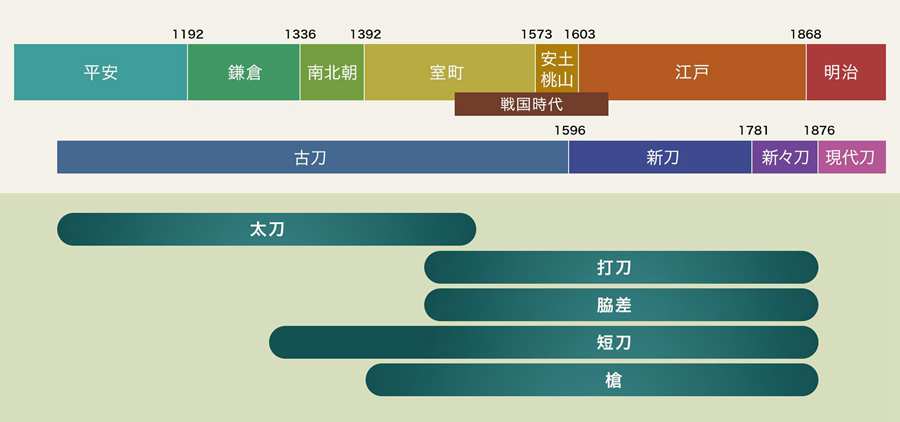
Koto means “old sword” and generally refers to Japanese swords made before the early seventeenth century. This includes swords produced during many important historical periods, including the Heian, Kamakura, Nanbokucho, Muromachi, and Sengoku eras.
Koto swords are highly valued because they represent the early development of Japanese sword making. Different sword schools developed distinctive blade shapes, steel patterns, hamon styles, and forging characteristics.
Shinto: The New Sword Period
The Shinto period began around the early seventeenth century. The word Shinto means “new sword,” referring to swords made after the beginning of the Edo period.
Japan was relatively peaceful during this period, and sword production changed accordingly. Many blades were created with great attention to appearance, polish, hamon, and decorative fittings.
Shinshinto: The Revival of Traditional Sword Making
The Shinshinto period began in the late eighteenth century. The term means “new new sword,” and it describes a period when swordsmiths attempted to revive the techniques and appearance of earlier Japanese sword traditions.
Many swordsmiths studied famous blades from earlier periods and experimented with traditional styles. This renewed interest helped preserve historical Japanese sword-making knowledge for future generations.
How Traditional Japanese Samurai Swords Were Made
One of the reasons the Japanese katana became famous is its traditional forging process. Creating a high-quality Japanese sword required a combination of specialized knowledge, physical skill, and experience.
Traditional Japanese swordsmiths worked with steel and repeatedly heated, folded, forged, and shaped the material. The purpose was not simply to create a large number of visible layers, but to improve the consistency of the steel and create a suitable structure for a sword blade.
The blade was then carefully shaped to create its overall geometry. Important features included the curvature of the blade, the shinogi ridge, the kissaki, and the tang, known as the nakago.
One of the most important stages was differential hardening. The swordsmith applied a special clay mixture to the blade before heating and quenching it. Different areas of the blade cooled at different rates, helping create a hard cutting edge while allowing other parts of the blade to retain greater toughness.
This process also produced the hamon, the visible temper line that is one of the most recognizable features of a traditionally made Japanese sword.
Why the Japanese Samurai Sword Became a Cultural Symbol
The Japanese Samurai Sword represents much more than a traditional weapon. For the samurai, the katana was considered a reflection of their honor, discipline, and personal identity. The famous phrase "the sword is the soul of the samurai" expresses the deep connection between warriors and their blades.
Samurai trained for many years to master swordsmanship, learning not only combat techniques but also values such as patience, loyalty, and self-control. The katana became closely connected with the philosophy of Bushido, the warrior code followed by many samurai.
Beyond the battlefield, Japanese swords were also appreciated as works of art. Sword fittings such as tsuba, fuchi, kashira, and menuki were often decorated with detailed designs representing nature, mythology, and family traditions.
The Japanese Katana in Modern Times
Although samurai no longer exist as a warrior class, the Japanese katana remains an important symbol of Japanese history and craftsmanship. Today, traditional swordsmiths continue producing handmade Japanese swords using techniques passed down through generations.
Modern collectors, martial artists, and history enthusiasts around the world appreciate real katana swords for their beauty, construction, and historical value. A carefully crafted katana represents centuries of knowledge from Japanese swordsmiths.
Today, katana swords are collected for different purposes, including martial arts practice, historical appreciation, display, and traditional craftsmanship research. Understanding the history of the Japanese Samurai Sword helps collectors recognize the importance behind every blade.
How to Choose a Real Japanese Samurai Sword
When purchasing a Japanese Samurai Sword, understanding the basic features of a katana is important. A quality sword should have a properly forged blade, strong construction, and carefully crafted fittings.
Important factors to consider include the steel type, forging method, blade shape, hamon pattern, tang construction, and overall balance. Traditional features such as full tang construction, clay tempering, and hand polishing can greatly influence the quality of a katana.
For collectors searching for a real katana, learning about Japanese sword history is the first step. Understanding how swords developed through different periods helps buyers choose blades that match their interests and expectations.
Frequently Asked Questions About Japanese Samurai Sword History
1. When was the Japanese Samurai Sword created?
The development of the Japanese Samurai Sword began during the late Heian period (794–1185). The curved tachi sword appeared as samurai warriors needed a more effective weapon for mounted combat. The katana later developed from these earlier sword designs.
2. What is the difference between a tachi and a katana?
The main difference is how they were worn and used. A tachi was worn edge-down and was mainly used by mounted warriors, while a katana was worn edge-up and designed for faster drawing techniques during close combat.
3. Why are Japanese swords famous around the world?
Japanese swords are famous because of their unique forging methods.