
Ancient Sword Tsuba Appreciation | Japanese Katana Guards
Ancient Sword Tsuba Appreciation: Exploring Traditional Japanese Sword Guards and Their Artistic Beauty
The tsuba is one of the most recognizable parts of a Japanese sword. Although its main purpose is to protect the swordsman's hand and improve balance, traditional sword guards also represent the craftsmanship, culture, and artistic values of different historical periods.
In this ancient sword tsuba appreciation guide, we will explore the beauty of antique tsuba designs, their historical meaning, and why collectors and sword enthusiasts continue to admire these unique Japanese sword fittings.
What Is a Tsuba on a Japanese Sword?
A tsuba (鍔) is the hand guard located between the blade and the handle of a Japanese sword. It helps prevent the hand from sliding forward onto the blade and also contributes to the overall balance of the sword.
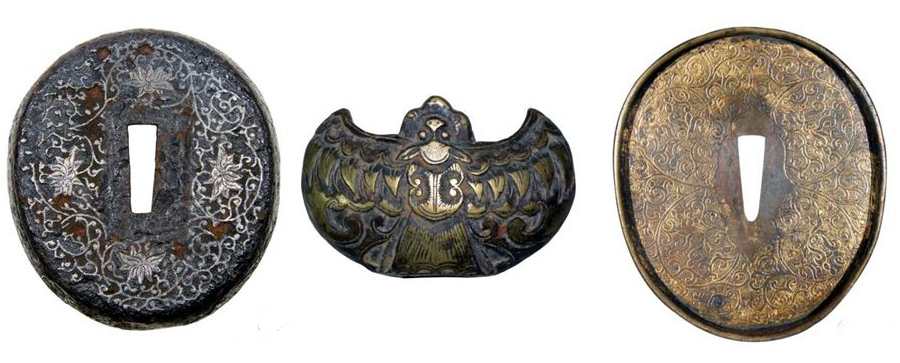
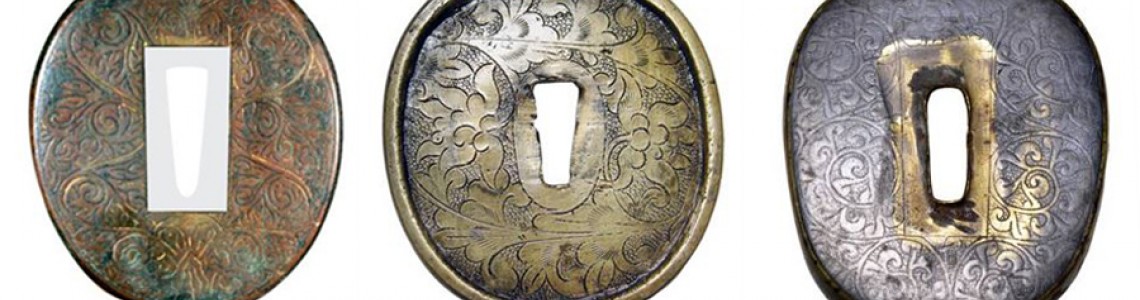
Beyond its practical function, the tsuba became an important form of metal artwork. Skilled craftsmen created thousands of different designs using materials such as iron, copper, brass, and other alloys. Many antique tsuba feature detailed carvings, natural themes, animals, mythical creatures, and traditional Japanese symbols.
The Artistic Value of Ancient Sword Tsuba
Ancient sword tsuba were not simply protective components. They reflected the owner's personality, social status, taste, and connection to Japanese culture.
Common themes found in traditional tsuba designs include:
- Dragon motifs: representing strength, wisdom, and protection.
- Cherry blossoms: symbolizing beauty and the temporary nature of life.
- Plants and flowers: showing harmony with nature.
- Animals and mythical creatures: expressing courage and spiritual meaning.
- Geometric patterns: demonstrating the precision and skill of metal artisans.
Different Styles of Traditional Japanese Sword Guards
Throughout Japanese history, tsuba developed into many different styles. Each period created unique designs influenced by changes in sword culture and artistic trends.
Iron Tsuba
Iron tsuba are among the most classic styles. They often have a simple appearance but show excellent craftsmanship through texture, carving, and surface finishing.
Sukashi Tsuba (Openwork Sword Guards)
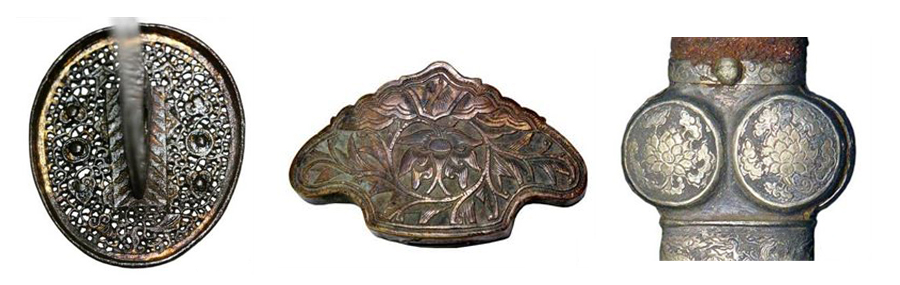
Sukashi tsuba feature carefully cut openings that create elegant patterns. These designs reduce weight while adding visual beauty.
Decorative Metal Tsuba
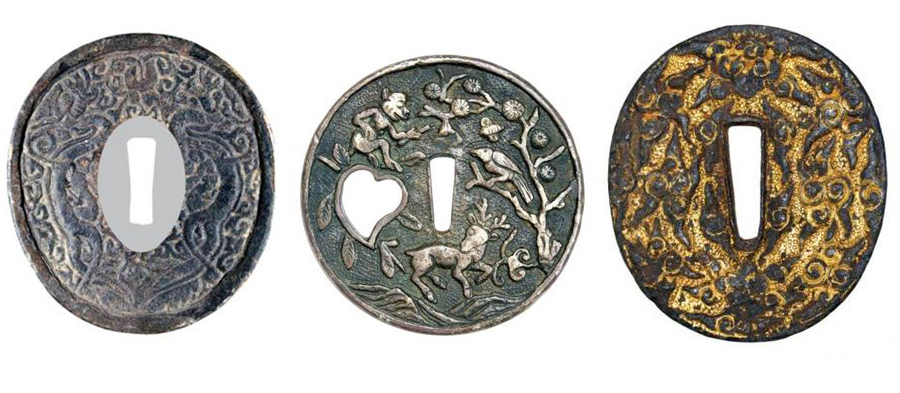
Some sword guards use copper, brass, gold, or silver decoration to create highly detailed artistic pieces. These examples are especially popular among collectors.
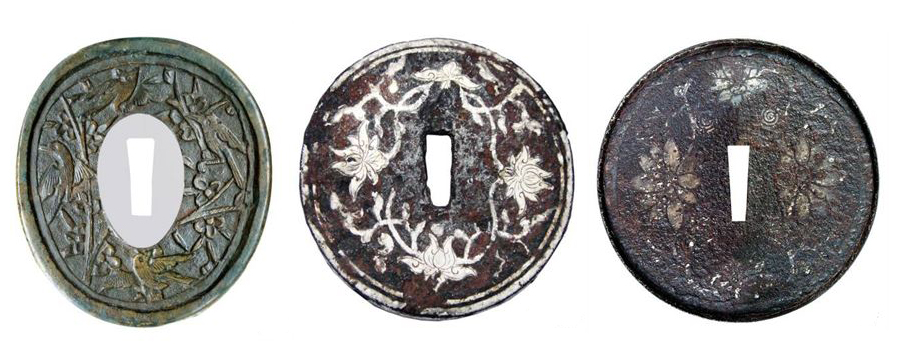
Ancient Tsuba Picture Appreciation
The following collection shows examples of traditional sword guard designs. Each tsuba demonstrates different approaches to shape, engraving, texture, and historical style.
When appreciating an antique tsuba, collectors usually pay attention to:
- The overall shape and proportion
- The quality of metal craftsmanship
- The depth and detail of carving
- The balance between decoration and practicality
- The historical style and artistic background
A beautiful tsuba is not only an accessory for a sword. It is a small piece of history that preserves the skills and imagination of traditional Japanese craftsmen.
Why Tsuba Are Important for Katana Collectors
For many sword collectors, the tsuba is one of the most attractive parts of a Japanese sword. A well-designed sword guard can completely change the appearance and character of a katana.
Modern custom katana makers often recreate traditional tsuba designs, allowing sword enthusiasts to enjoy historical styles while owning a functional handmade sword.
Whether you prefer simple iron guards or detailed artistic fittings, the tsuba remains an essential element of Japanese sword culture.
Frequently Asked Questions About Sword Tsuba
1. What is the purpose of a tsuba on a Japanese sword?
The main purpose of a tsuba is to protect the swordsman's hand and improve sword balance. It also serves as an important decorative element.
2. Are antique tsuba valuable?
Yes. The value of an antique tsuba depends on factors such as age, craftsmanship, maker, materials, rarity, and historical importance.
3. What materials are used to make traditional tsuba?
Traditional tsuba were commonly made from iron, copper, brass, and other metals. Some high-quality examples also included gold or silver decoration.
4. Can modern katana use traditional tsuba designs?
Yes. Many modern katana makers reproduce historical tsuba styles, allowing collectors to enjoy classic Japanese sword aesthetics.
5. What is the difference between a tsuba and a sword guard?
Tsuba is the Japanese term specifically used for the hand guard of Japanese swords, while sword guard is a general term used for similar parts on swords from different cultures.
Explore More Japanese Sword Craftsmanship
The tsuba represents the combination of function and art in Japanese sword making. From ancient warriors to modern collectors, these traditional sword guards continue to inspire appreciation for craftsmanship and history.
If you are interested in creating a custom katana with traditional Japanese fittings, explore different tsuba styles and choose the design that best matches your sword.