
Bronze Swords Explained: 4 Common Myths and Facts About Ancient Bronze Swords

Bronze Swords Explained: 4 Common Myths and Facts About Ancient Bronze Swords
Bronze swords are among the most fascinating weapons from the ancient world. Long before steel became the dominant material for blades, civilizations across Asia and Europe developed sophisticated weapons using bronze, an alloy primarily made from copper and tin.
Today, many people imagine an ancient bronze sword as a simple, short blade with a bare metal handle and no scabbard. However, archaeological discoveries and surviving artifacts suggest that the reality was often far more complex.
Bronze swords came in many shapes, were often fitted with scabbards and wrapped handles, and could be carefully designed to balance hardness with durability.
In this article, we will examine four common misunderstandings about the bronze sword and explore some interesting facts about Chinese bronze swords, Bronze Age craftsmanship, and ancient sword construction.
What Is a Bronze Sword?
A bronze sword is a bladed weapon made primarily from bronze, a metal alloy created by combining copper with other elements, most commonly tin. Bronze represented a major technological development in ancient metallurgy because it was generally harder and more durable than pure copper.
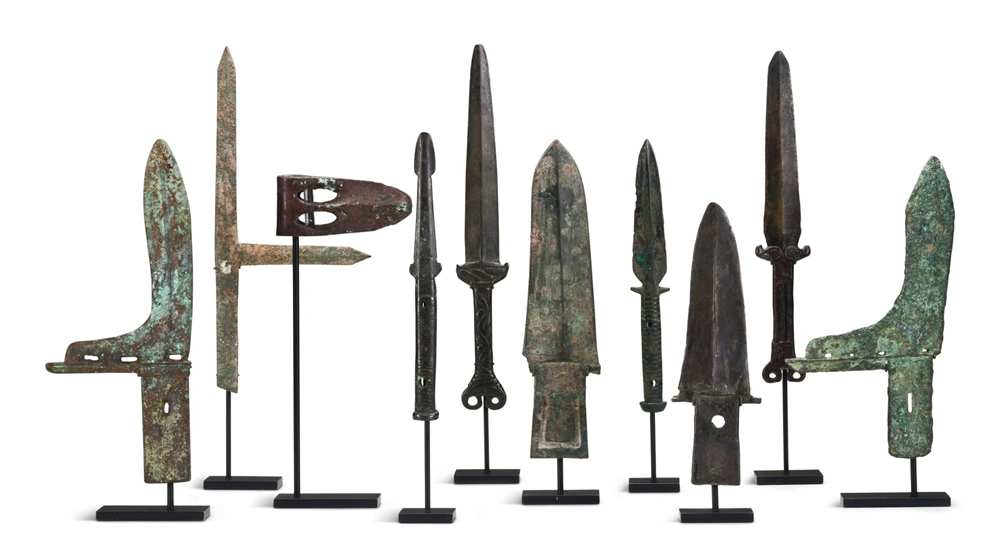
During the Bronze Age, sword makers developed different blade designs depending on local fighting styles, available materials, and manufacturing techniques. Bronze swords appeared in many parts of the ancient world and eventually became important military and ceremonial objects.
The history of the bronze sword also shows how ancient craftsmen gradually learned to control metal composition and blade design. The amount of tin used in bronze could significantly influence the properties of the finished weapon.
In China, the development of the Chinese bronze sword produced some of the most recognizable bronze weapons in ancient history. These swords were often carefully cast and featured distinctive blade shapes, guards, hilts, and decorative elements.
Myth #1: Bronze Swords Did Not Have Scabbards
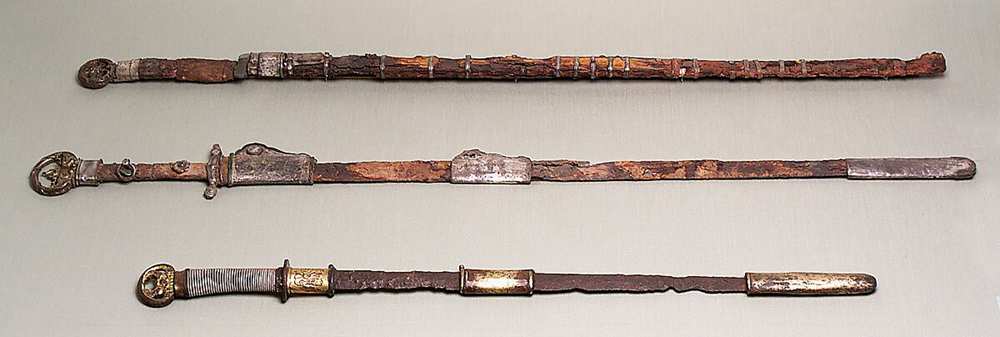
One common misunderstanding is that ancient bronze swords were carried without a sheath or scabbard. This assumption often comes from the appearance of surviving museum pieces, where the sword blade has survived but the original scabbard has disappeared.
In reality, many ancient swords likely had some form of bronze sword scabbard or protective covering.
The problem is that many scabbards were made from organic materials such as wood, leather, textile fibers, or other materials that decay much faster than metal. After hundreds or thousands of years underground, the bronze blade may remain while the original scabbard disappears completely.
This can create the impression that the sword was originally carried without protection.
However, archaeological evidence from different ancient cultures shows that swords could be paired with scabbards made from a variety of materials. Some surviving examples include metal fittings or metal scabbards, while other swords may have originally been housed in wooden or leather coverings.
Therefore, the absence of a surviving scabbard does not necessarily mean that the original ancient bronze sword never had one.
When studying ancient weapons, it is important to remember that different materials survive differently. Bronze can remain recognizable for thousands of years, while wood, leather, cloth, and other organic materials may completely deteriorate.
Myth #2: Bronze Sword Handles Were Always Bare Metal
Another common misconception concerns the hilt of the bronze sword.
When people look at an excavated Chinese bronze sword, they may see a metal grip with one or more rings or decorative sections and assume that this was the complete original handle.
However, the original sword may have included additional materials around the grip.
Ancient weapon makers could use materials such as leather, textile fibers, hemp, silk, wood, or other organic materials to improve comfort and grip. These materials would have made the weapon easier to hold and could also provide a more secure surface during use.
Unfortunately, organic handle materials rarely survive as well as bronze.
After centuries of burial, the metal components may remain while the original wrapping disappears. As a result, an excavated sword can look very different from the weapon when it was originally used.
This is an important point when studying bronze sword construction. The surviving metal object is not always a complete representation of the original weapon.
The same problem applies to many ancient artifacts. Archaeologists often have to reconstruct the appearance of an object by studying surviving fragments, impressions, fittings, and similar artifacts.
Myth #3: All Bronze Swords Had the Same Shape
It is easy to think that every bronze sword looked roughly the same. In reality, bronze sword designs varied considerably.
Different civilizations developed different blade shapes, lengths, points, hilts, and cross-sections. Some bronze swords were relatively short and broad, while others were longer and more slender.
Some examples featured rounded or distinctive pommels, while others had completely different hilt structures. Blade profiles also varied according to regional traditions and the intended use of the weapon.
The development of the Chinese bronze sword is a good example of this diversity. Ancient Chinese weapons evolved over long periods, producing different forms of bronze blades and increasingly sophisticated manufacturing techniques.
Not every bronze sword was designed for exactly the same purpose. Some weapons were primarily practical military tools, while others may have had ceremonial, symbolic, or status-related importance.
Because of this, it is misleading to describe all ancient bronze swords using a single standard shape.
When exploring bronze sword history, it is better to think of the bronze sword as a broad category of weapons rather than one fixed design.
The appearance of a sword could depend on several factors:
- Geographic region
- Historical period
- Local military traditions
- Available materials
- Manufacturing technology
- Intended purpose
This diversity is one reason why ancient swords remain so interesting to collectors and historians today.
Myth #4: Bronze Swords Were Extremely Hard and Strong
Another misunderstanding is that bronze swords were simply extremely hard weapons.
The reality is more complicated.
Bronze is not a single material with one fixed level of hardness. Its physical properties depend heavily on its composition. Ancient bronze was commonly produced by combining copper with tin, and changing the proportion of these metals could change the characteristics of the finished weapon.
Generally speaking, adding tin can increase the hardness of copper. However, increasing hardness does not automatically make a weapon better.
A blade that is too soft may lose its shape more easily, while a blade that becomes too brittle may be more vulnerable to cracking or breaking under stress.
Ancient sword makers therefore faced an important challenge: finding a balance between hardness and toughness.
This balance was especially important when making a functional blade. A sword needed a sufficiently durable cutting edge, but the entire weapon also needed enough structural strength to withstand use.
Some ancient bronze weapons demonstrate surprisingly advanced metallurgical knowledge. Craftsmen understood that the composition and treatment of metal could influence the performance of the finished object.
For this reason, the quality of an ancient bronze sword depended on much more than simply making the blade as hard as possible.
Good weapon design required a balance between:
- Hardness
- Toughness
- Blade geometry
- Metal composition
- Manufacturing quality
How Were Ancient Bronze Swords Made?
Unlike many later iron and steel swords, bronze swords were primarily produced through casting.
The basic process involved heating the bronze alloy until it became molten and then pouring the liquid metal into a prepared mold. Once the metal cooled and hardened, the sword could be removed from the mold and further refined.
After casting, the blade could be shaped, finished, sharpened, polished, or decorated.
The process required careful control of both the metal and the mold. A poorly made casting could contain defects, while an incorrect metal composition could affect the strength and durability of the weapon.
The development of casting technology allowed ancient craftsmen to create complex bronze objects with detailed shapes and decorations.
This manufacturing method is one of the most important differences between many Bronze Age weapons and later forged iron or steel blades.
Why Are Ancient Chinese Bronze Swords So Famous?
Ancient Chinese bronze weapons hold an important place in the history of metallurgy and weapon development.
Over many centuries, Chinese craftsmen developed sophisticated bronze casting techniques that were used to produce weapons, tools, ritual objects, and ceremonial artifacts.
The Chinese bronze sword became one of the most recognizable examples of ancient Chinese weapon craftsmanship.
These swords can vary significantly in shape and construction depending on their historical period. Some examples feature elegant straight blades, while others display distinctive decorative elements or carefully designed hilts.
Ancient Chinese metallurgy also demonstrates an impressive understanding of how different materials could be used in weapon production.
For collectors and history enthusiasts, bronze swords offer a fascinating connection to the technological development that eventually led from stone weapons to bronze, iron, and finally steel swords.
Bronze Sword vs. Iron Sword vs. Steel Sword
The evolution from bronze to iron and eventually steel represents one of the most important developments in the history of bladed weapons.
Bronze was an important material because it allowed ancient civilizations to produce stronger and more sophisticated tools and weapons than many earlier materials.
However, iron gradually became more widely used as metallurgical technology improved. Over time, the development of steel provided additional advantages for sword production.
Steel eventually became the dominant material for many swords because it could provide an excellent combination of hardness, toughness, and flexibility when properly produced and heat treated.
Nevertheless, the importance of the bronze sword should not be underestimated.
Bronze swords represent a critical stage in the technological history of weapons. Without Bronze Age metallurgy, the development of later iron and steel weapons would have followed a very different path.
What Can We Learn from Surviving Bronze Swords?
Surviving bronze swords provide valuable information about ancient craftsmanship, warfare, trade, and technology.
However, it is important to remember that archaeological artifacts are often incomplete.
A bronze blade may survive while its original wooden scabbard has disappeared. A metal hilt may remain while leather or textile wrapping has completely deteriorated.
Because of this, historians and archaeologists must carefully study every surviving detail before attempting to reconstruct the original appearance of an ancient weapon.
The next time you see an ancient bronze sword in a museum or historical collection, remember that the object you see today may only represent part of the original weapon.
Its missing scabbard, handle wrapping, decorations, and other components may have disappeared long ago.
Conclusion: Bronze Swords Were More Sophisticated Than They Appear
Bronze swords are often misunderstood because modern viewers usually see them only as excavated metal artifacts.
Without their original scabbards, handle coverings, and other organic components, these ancient weapons can appear much simpler than they originally were.
In reality, the history of the bronze sword reveals a remarkable level of craftsmanship.
Ancient sword makers understood the importance of metal composition, blade shape, casting technology, and practical design. Bronze swords also came in a wide range of forms, proving that there was no single standard design for every ancient weapon.
Whether you are interested in ancient bronze swords, Chinese bronze swords, or the development of Bronze Age weapons, these artifacts provide an important window into the technological achievements of early civilizations.
The bronze sword was more than just a weapon. It was also a product of metallurgy, craftsmanship, military development, and human innovation.
Frequently Asked Questions About Bronze Swords
Did bronze swords have scabbards?
Yes, many ancient bronze swords may have originally been carried with scabbards or protective coverings. However, scabbards made from wood, leather, cloth, or other organic materials often did not survive thousands of years.
What were bronze swords made of?
Bronze swords were primarily made from bronze, an alloy based mainly on copper and tin. The exact composition could vary depending on the historical period, region, and manufacturing tradition.
Were bronze swords strong?
The strength of a bronze sword depended on its composition, blade design, and manufacturing quality. Bronze could provide a useful balance of hardness and durability, but a blade that was too hard could also become brittle.
Why are many bronze sword handles incomplete?
Many ancient sword handles originally included organic materials such as wood, leather, textile fibers, or other coverings. These materials deteriorate much faster than bronze, leaving only the surviving metal components.
Did all bronze swords look the same?
No. Bronze swords varied greatly in length, blade shape, hilt design, and construction. Different regions and historical periods produced distinctive styles of ancient bronze swords.
How were bronze swords made?
Many bronze swords were produced by casting molten bronze into molds. After the metal cooled, the blade could be refined, sharpened, polished, and decorated.
Why are Chinese bronze swords important?
Chinese bronze swords represent an important part of ancient Chinese metallurgy and weapon development. They demonstrate sophisticated casting techniques and reflect the long history of bronze craftsmanship in ancient China.