
Making a Hand-Carved Saya: The Traditional Japanese Sword Scabbard Process
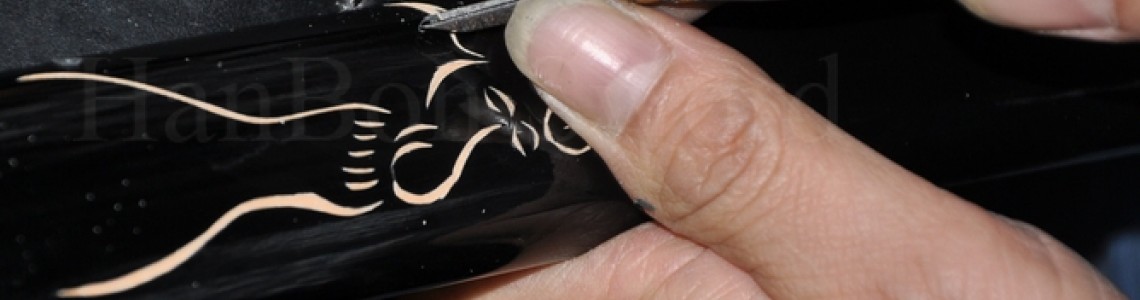
Making a Hand-Carved Saya: The Japanese Sword Scabbard Craftsmanship Process
The saya is an important part of a Japanese sword. Often referred to as the scabbard or sheath, it protects the blade and also plays a major role in the overall appearance of a completed sword. A well-made saya must complement the shape of the blade while contributing to the balance and visual character of the koshirae.
At HanBon Forge, we offer hand-carved saya options for customers who want additional detail and customization for their Japanese swords. Creating a carved saya requires careful craftsmanship, patience, and attention to the design of the finished sword.
This article introduces the hand-carved saya making process and provides a closer look at the craftsmanship behind a custom Japanese sword saya. From the initial shaping work to decorative carving and finishing, each stage contributes to the final appearance of the saya.
The completed hand-carved saya can then be combined with the other parts of the sword to create a finished custom koshirae.
What Is a Saya?
A saya is the scabbard used to cover and protect the blade of a Japanese sword. Katana, Wakizashi, Tanto, and other Japanese-style swords may use a saya designed to match the length, shape, and overall style of the blade.
Although a saya may appear simple at first glance, it is an important component of a complete Japanese sword. The shape of the scabbard must visually match the blade and handle, while decorative details can transform the saya into one of the most distinctive parts of the finished sword.
Depending on the sword design, a saya may have a plain and traditional appearance or include customized features such as carved patterns, engraved designs, lacquer finishes, horn fittings, or other decorative elements.
Why Choose a Hand-Carved Saya?
A hand-carved saya gives a Japanese sword a more personalized appearance. Instead of using only a standard smooth surface, carved details can add depth, texture, and decorative character to the scabbard.
For customers ordering a custom Katana or other Japanese sword, the saya is often an important part of the overall design. A carved pattern can be selected to complement the blade, tsuba, tsuka-ito, and other sword fittings.
Hand carving also creates visual differences that are difficult to achieve with a completely plain saya. The finished design may feature detailed lines, raised or recessed areas, and decorative patterns that give the scabbard a more distinctive appearance.
Customization and Individual Style
One of the main reasons customers choose a custom carved saya is the opportunity to create a sword with its own individual style. The design of the saya can be coordinated with other parts of the sword to create a more complete and unified appearance.
Decorative Details
Carved details can make the surface of a saya more visually interesting. Depending on the design, the carving may emphasize traditional-inspired patterns, natural themes, or other decorative elements selected for a custom sword.
The Hand-Carved Saya Making Process
Making a hand-carved saya involves a series of careful steps. The exact process may vary depending on the shape of the sword, the selected design, and the level of decorative detail required.
The process begins with the basic saya structure. Once the scabbard has been prepared for the sword, the outer surface can be shaped and refined. Decorative carving is then carried out according to the selected design.
Because hand carving is performed directly on the surface, the craftsman must work carefully throughout the process. The depth, position, and overall balance of the design all affect the final appearance of the carved saya.
Step 1: Preparing the Saya
Before decorative carving begins, the basic saya must be prepared. The overall shape of the scabbard should be suitable for the sword and consistent with the intended design of the finished koshirae.
The surface is then prepared for the decorative work. A clean and properly shaped surface provides a better foundation for the carving process and helps the craftsman maintain control over the final design.
Careful preparation is particularly important when the saya includes detailed patterns. The decorative elements should work naturally with the shape and proportions of the scabbard rather than appearing disconnected from the overall design.
Step 2: Planning the Carved Design
Before the carving work begins, the decorative design needs to be considered carefully. The pattern should match the overall shape of the saya and work naturally with the style of the Japanese sword.
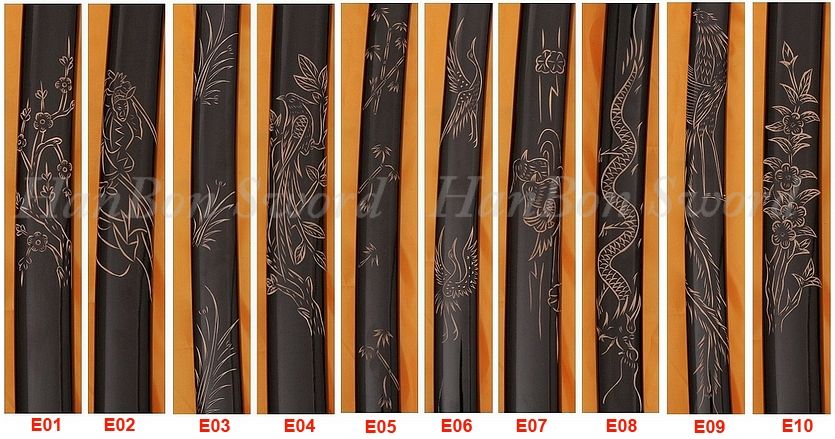
A hand-carved saya may feature different types of decorative patterns depending on the selected design. Some customers prefer a simple and elegant appearance, while others choose more detailed artwork to create a stronger visual effect.
The position and size of the design are also important. A well-planned carving should follow the proportions of the saya and complement other parts of the sword, including the tsuka, tsuba, and blade.
For a custom Japanese sword, the carved saya can become one of the main visual features of the completed koshirae. Careful planning helps create a design that looks balanced rather than overly crowded.
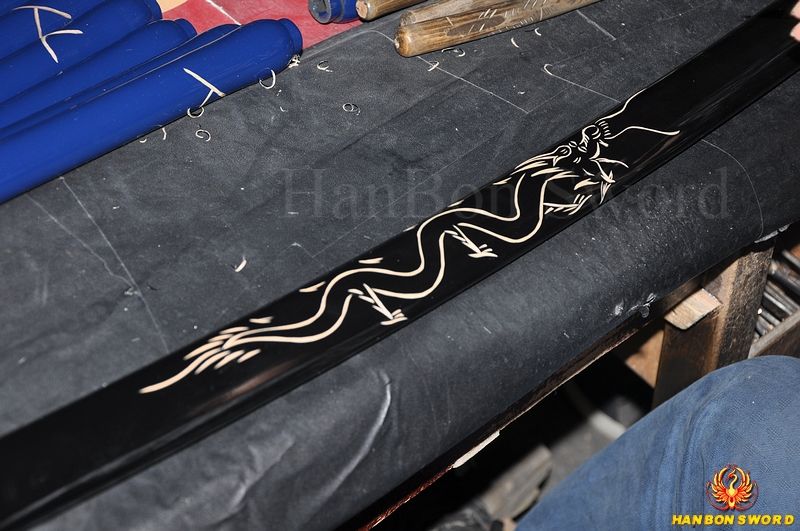
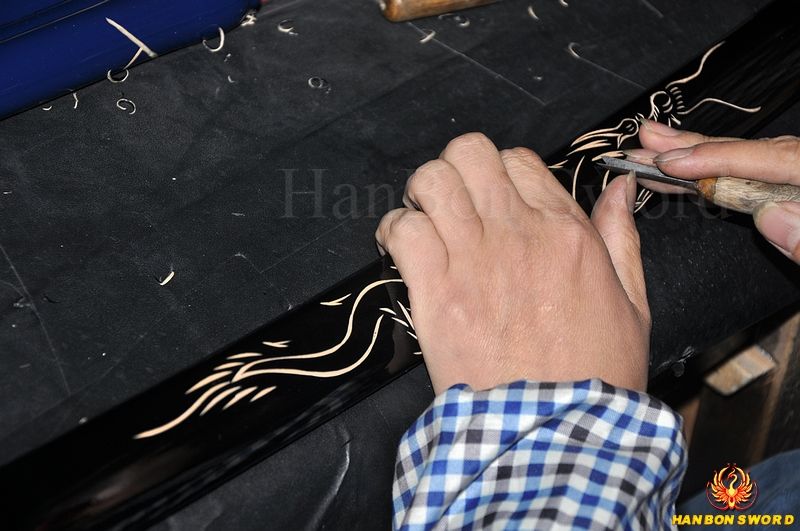
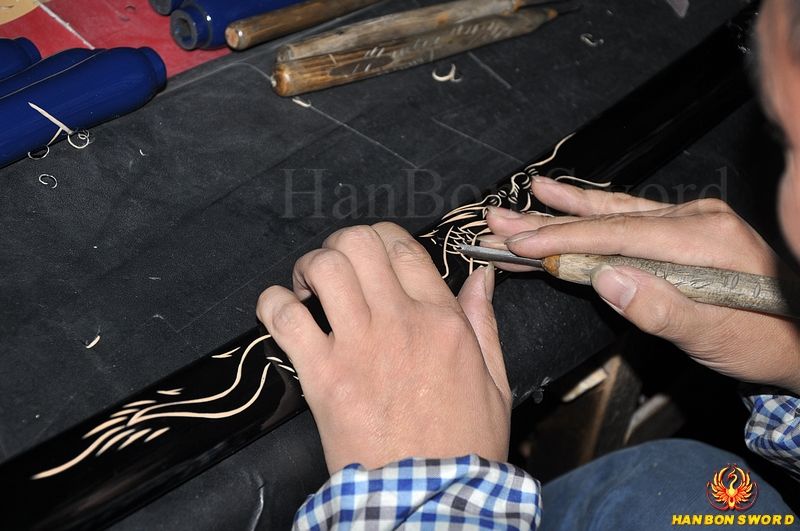
Step 3: Hand-Carving the Saya
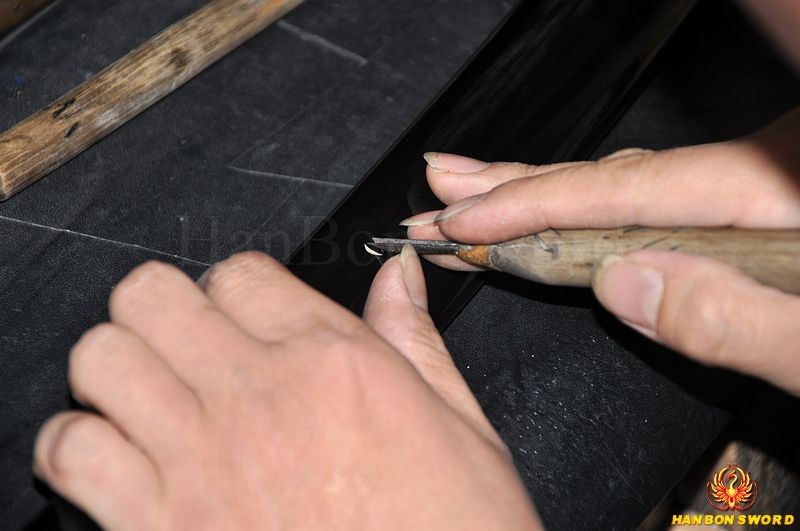
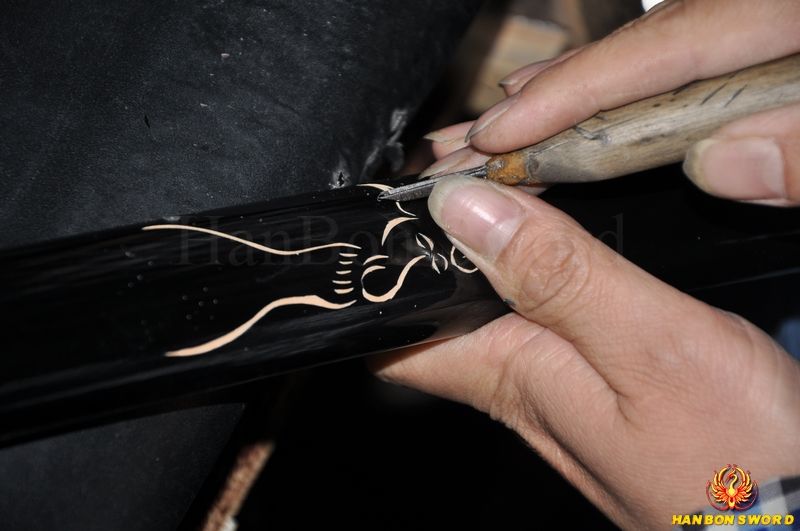
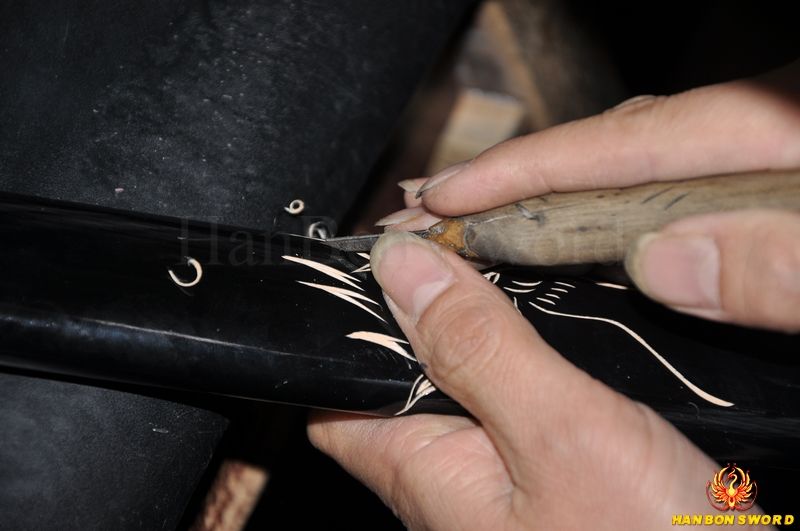
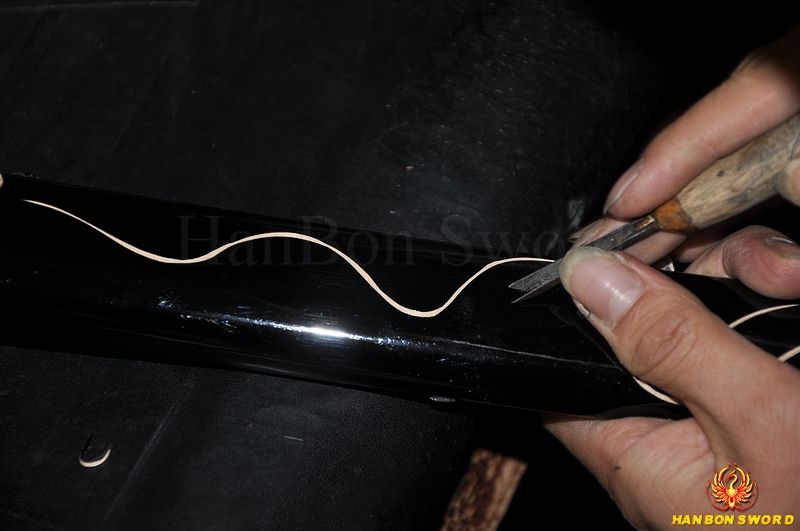
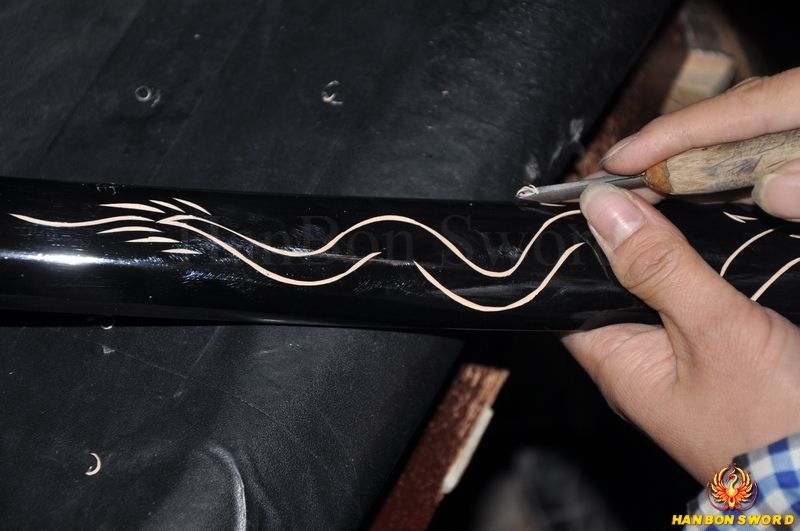
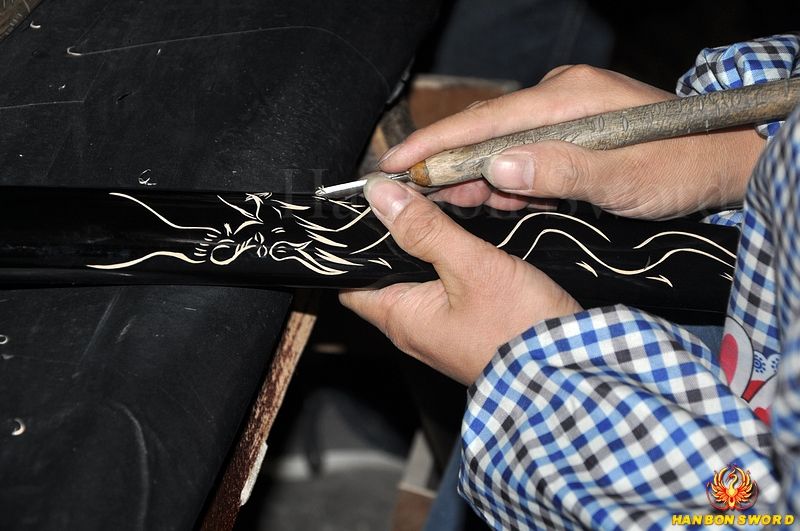
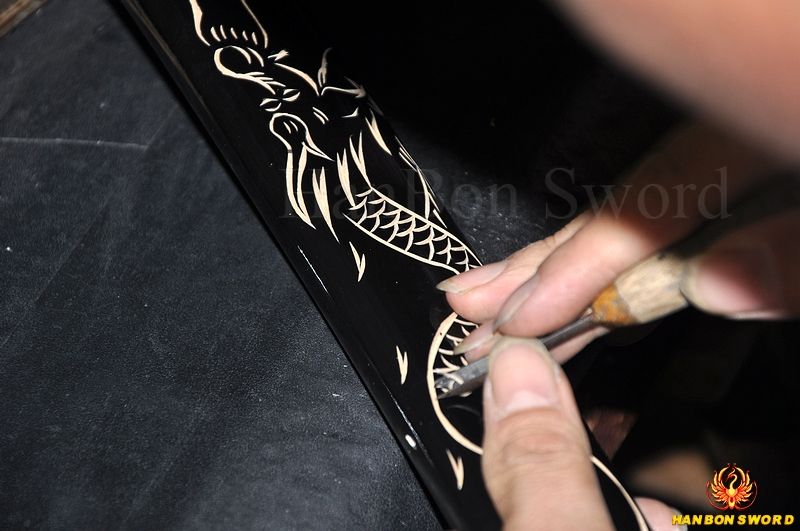
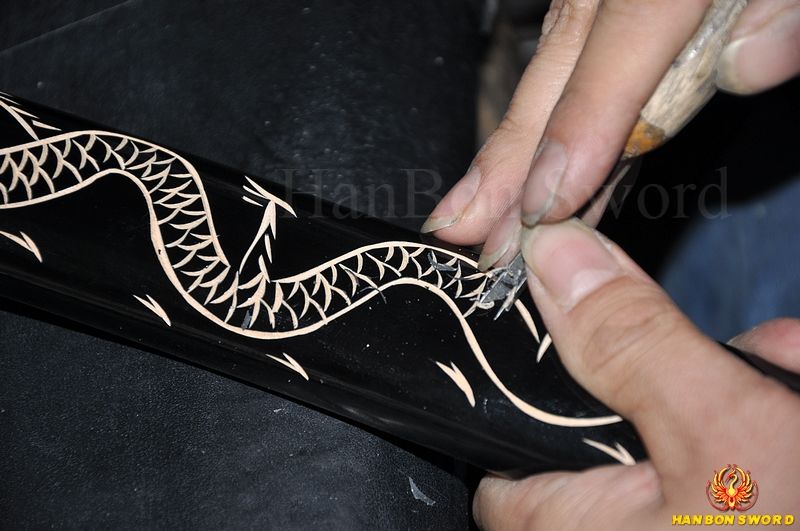
Once the saya has been prepared and the decorative design has been planned, the hand-carving process can begin. This stage requires patience and careful control because the design is created directly on the surface of the scabbard.
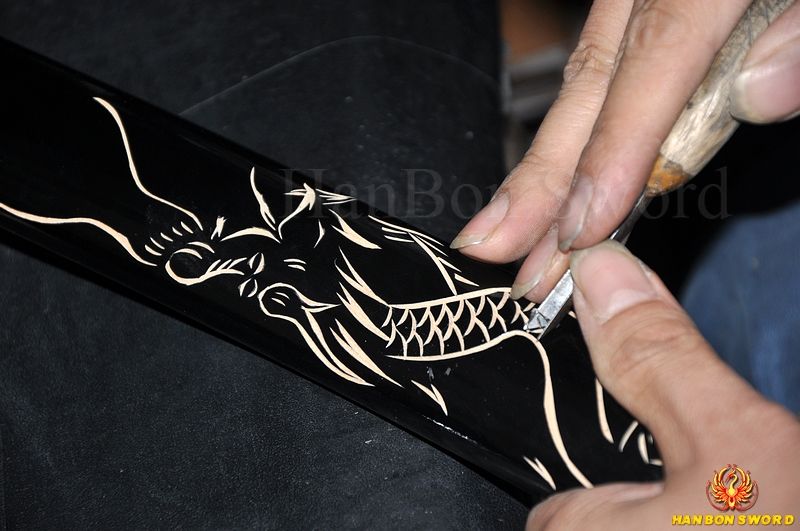
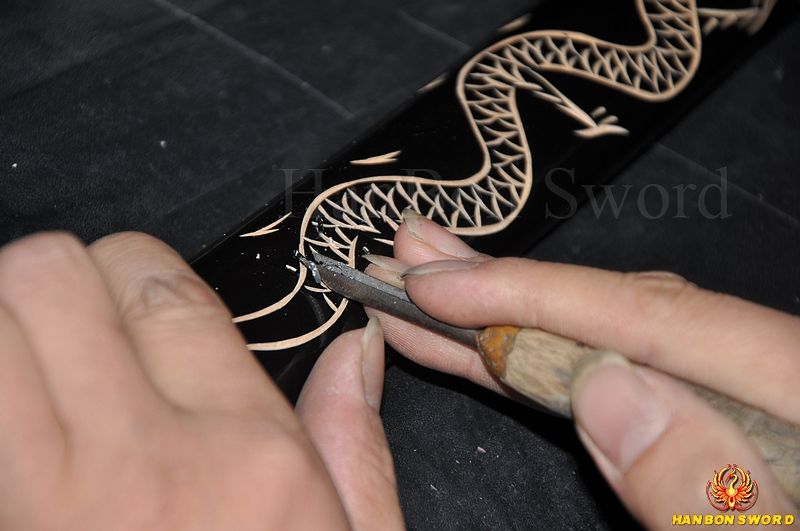
The craftsman gradually creates the decorative pattern by working through the selected areas of the saya. Depending on the design, the carving may involve lines, shapes, recessed areas, or other details that create texture and depth.
Hand carving is a detailed process. The craftsman must pay attention to the direction of the design, the spacing between different elements, and the overall balance of the pattern.
A carefully carved pattern can give the saya a completely different appearance from a standard smooth scabbard. The surface becomes more visually detailed, and the design can add a stronger sense of individuality to the finished sword.
Creating Depth and Texture
One of the main characteristics of a hand-carved saya is the texture created on the surface. Carving can add depth and visible detail that cannot be achieved by a plain surface alone.
The depth of the carving should remain suitable for the overall design. Different parts of the pattern may require different levels of detail, depending on the visual effect that the craftsman is trying to create.
Maintaining a Balanced Design
Balance is an important part of custom saya craftsmanship. Decorative elements should work together with the shape of the scabbard rather than drawing attention away from the overall form of the sword.
A balanced carved saya can complement the other fittings of a Japanese sword and help create a unified appearance from the blade and handle to the scabbard.
Step 4: Refining the Carved Details
After the main pattern has been carved, the details of the design need to be refined. This stage focuses on improving the appearance of the individual carved elements and ensuring that the overall pattern remains consistent.
Fine details can have a significant effect on the final appearance of a carved saya. Small adjustments may improve the clarity of the pattern and make the decorative elements more visually distinct.
The craftsman may also check different parts of the saya to ensure that the design remains balanced across the length of the scabbard. This is particularly important for longer Katana saya, where the decorative pattern may extend across a large surface area.
Careful refinement helps create a cleaner and more complete appearance before the final finishing stage begins.
Step 5: Finishing the Hand-Carved Saya
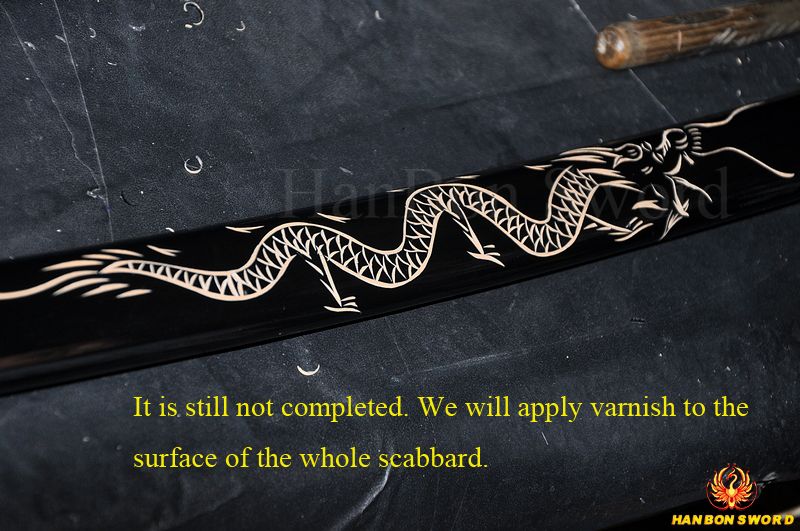
After the carving work has been completed, the saya moves into the finishing stage. The purpose of this stage is to complete the appearance of the scabbard and ensure that the carved design works well with the overall sword.
The final appearance may depend on the selected saya style and finish. A custom Japanese sword can use different colors, surface treatments, and decorative combinations to achieve the desired result.
During finishing, attention is given to both the carved pattern and the surrounding areas of the saya. The finished surface should allow the decorative design to remain visible while maintaining a balanced overall appearance.
How a Carved Saya Changes the Appearance of a Japanese Sword
A carved saya can significantly change the overall appearance of a Japanese sword. While the blade is usually the main focus of a sword, the saya occupies a large part of the completed koshirae and can have a strong influence on its visual style.
A plain saya often creates a clean and traditional appearance. A carved saya, on the other hand, adds texture and decorative detail. This makes it a popular option for customers who want a more personalized custom Katana.
The design can also be coordinated with the sword fittings. For example, the pattern or overall style of the saya may be selected to complement the theme of the tsuba or other decorative components.
When all of these elements work together, the finished sword can have a more unified and distinctive appearance.
Hand-Carved Saya vs. Standard Saya
Both standard saya and hand-carved saya can be suitable for a Japanese sword. The main difference is the level of decorative detail and customization.
| Feature | Standard Saya | Hand-Carved Saya |
|---|---|---|
| Surface Appearance | Usually smooth and simple | Includes decorative carved details |
| Customization | Depends on the available options | Offers a more personalized appearance |
| Visual Detail | Minimal or simple | More detailed and decorative |
| Craftsmanship | Standard construction and finishing | Additional hand-carving work |
| Best For | Traditional or simple sword designs | Custom and decorative Japanese swords |
Custom Carved Saya for Katana and Japanese Swords
A custom carved saya is a popular choice for collectors and customers who want to create a more distinctive Japanese sword. The saya can be designed to match the overall style of a Katana, Wakizashi, Tanto, or other Japanese-style sword.
When ordering a custom sword, many different components can be selected, including the blade, tsuba, tsuka wrapping, rayskin, fittings, and saya. Choosing a hand-carved saya provides another opportunity to personalize the finished sword.
A carefully selected carved design can complement the rest of the koshirae and help create a consistent visual theme. For example, the style of the carving may be coordinated with the fittings or other decorative elements chosen for the sword.
For this reason, the saya should be considered as part of the complete sword design rather than as a separate accessory. A well-designed scabbard can make the overall appearance of a custom Japanese sword more complete.
Choosing a Carved Saya Design
Choosing the right carved saya design depends on the style of the sword and the appearance the customer wants to create. Some designs are simple and understated, while others include more detailed decorative elements.
Consider the Overall Sword Theme
The design of the saya should work well with the overall theme of the Japanese sword. Before selecting a carved pattern, it can be helpful to consider the blade style, sword fittings, handle wrapping, and other visible details.
A sword with a traditional appearance may benefit from a simple and elegant carved design, while a more decorative custom sword may use a detailed pattern to create a stronger visual impression.
Consider the Amount of Detail
The amount of carving can significantly influence the appearance of the saya. A simple design may add subtle texture, while a more detailed pattern can make the scabbard one of the main visual features of the sword.
The best choice depends on personal preference. Some customers prefer a clean and balanced design, while others want a highly decorative custom saya.
Coordinate the Saya with the Sword Fittings
The carved saya can be coordinated with other parts of the koshirae. The style of the tsuba, fuchi, kashira, menuki, and tsuka ito can all influence the final appearance of the sword.
When the saya and fittings share a similar style or theme, the finished Japanese sword can have a more unified and carefully designed appearance.
The Importance of Craftsmanship in a Hand-Carved Saya
A hand-carved saya requires careful craftsmanship because the decorative work is created directly on the surface of the scabbard. The craftsman must consider the shape of the saya, the position of the design, and the overall balance of the decorative pattern.
Attention to detail is especially important when working with a long Katana saya. Decorative elements should remain visually balanced across the length of the scabbard and should complement its natural shape.
Hand-carved details can also give a custom Japanese sword a more individual appearance. Because decorative work involves careful manual craftsmanship, the final result reflects both the selected design and the work performed during the carving and finishing process.
For collectors and enthusiasts, these details can make a custom sword feel more personal and visually distinctive.
Hand-Carved Saya as Part of a Complete Koshirae
The term koshirae refers to the exterior mounting and fittings of a Japanese sword. The saya is one of the major components of this overall mounting.
When designing a custom Japanese sword, it is useful to consider how each component works with the others. The blade, tsuka, tsuba, fittings, and saya all contribute to the appearance of the finished sword.
A hand-carved saya can become an important part of this overall design. The decorative pattern may help connect different visual elements and give the completed koshirae a more consistent style.
Whether the customer chooses a simple pattern or a more detailed design, the goal is to create a saya that complements the Japanese sword as a whole.
Frequently Asked Questions About Hand-Carved Saya
1. What is a carved saya?
A carved saya is a Japanese sword scabbard with decorative patterns created on its surface. The carving adds texture, depth, and visual detail compared with a standard smooth saya.
2. What is a saya used for?
A saya is the scabbard used to cover and protect a Japanese sword blade. It is also an important part of the overall appearance of the sword and its koshirae.
3. Can a Katana have a hand-carved saya?
Yes. A Katana can be fitted with a hand-carved saya as part of a custom sword design. The decorative pattern can be selected to complement the blade and other sword fittings.
4. What is the difference between a standard saya and a carved saya?
A standard saya generally has a smooth surface, while a hand-carved saya includes decorative patterns or details created directly on the surface of the scabbard.
5. Why choose a custom carved saya?
A custom carved saya allows customers to add more personal style and decorative detail to a Japanese sword. It can also be coordinated with other components of the sword to create a more unified appearance.
6. Can the carved saya match the sword fittings?
Yes. The design of a carved saya can be selected to complement the tsuba, tsuka wrapping, rayskin, and other fittings of a custom Japanese sword.
7. Is a carved saya suitable for collectors?
A hand-carved saya can be a good choice for collectors who want a Japanese sword with additional decorative craftsmanship and a more personalized appearance.
8. Does a carved saya change the overall appearance of a sword?
Yes. Because the saya is a large and highly visible part of a completed Japanese sword, carved patterns can significantly influence the overall visual style of the koshirae.
Conclusion
Making a hand-carved saya is a detailed craftsmanship process that adds decorative character to a Japanese sword scabbard. From preparing the basic saya and planning the design to carving the pattern and completing the finishing work, each stage contributes to the final appearance.
A carved saya can transform the appearance of a Katana or other Japanese-style sword by adding texture, depth, and personalized decorative details. It can also be coordinated with the blade, tsuka, tsuba, and other fittings to create a more complete koshirae.
At HanBon Forge, custom sword options allow customers to select different components and decorative details according to their preferences. A hand-carved saya is one way to create a more distinctive and personalized Japanese sword.
Whether you prefer a simple carved pattern or a more detailed decorative design, the saya remains an important part of the finished sword. Careful craftsmanship and attention to detail help turn the scabbard into more than just a protective cover—it becomes an important part of the sword's overall character and design.