
How to Distinguish Real and Fake Clay Tempered Blades | Katana Guide
How to Distinguish Real and Fake Clay Tempered Blades: A Complete Katana Buyer Guide
When buying a Japanese katana, many sword enthusiasts are attracted by the beautiful wavy pattern along the blade known as the hamon. A clear and natural hamon is often considered a sign of traditional sword craftsmanship, especially on a real clay tempered blade.
However, not every sword with a visible hamon line has been traditionally clay tempered. Some blades use artificial methods to create a similar appearance without the actual differential hardening process.
Understanding the difference between a real clay tempered blade and a fake clay tempered blade can help collectors and buyers choose a genuine katana with better craftsmanship, performance, and long-term value.
In this guide, we will explain what clay tempering is, how a real hamon is created, the common methods used to imitate hamon, and the practical ways to identify an authentic clay tempered katana.
What Is a Real Clay Tempered Blade?
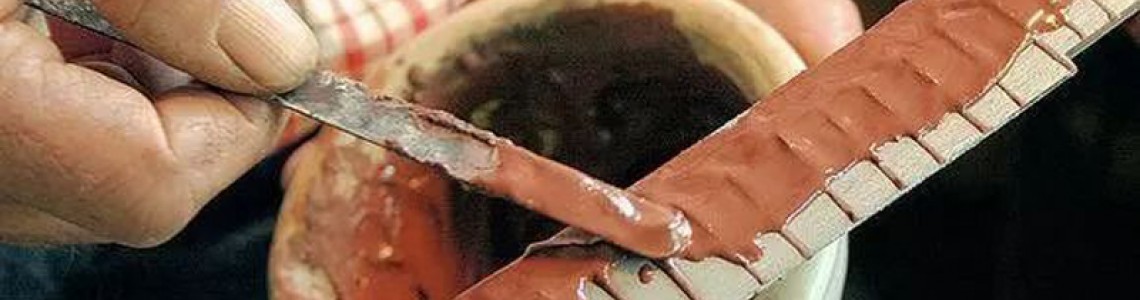
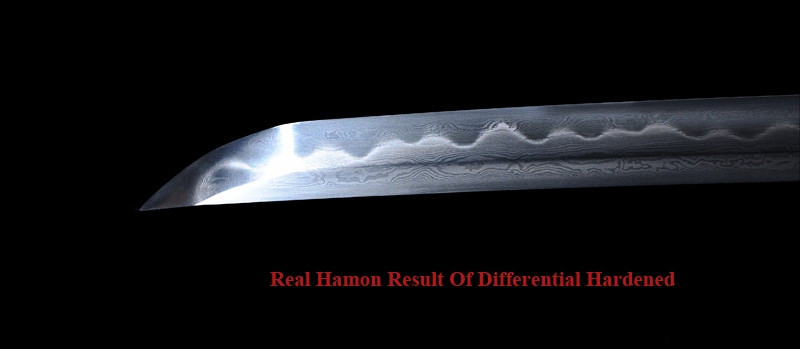
A real clay tempered blade is created through a traditional Japanese heat treatment method called differential hardening. During this process, clay is applied to specific areas of the blade before the sword is heated and quenched.
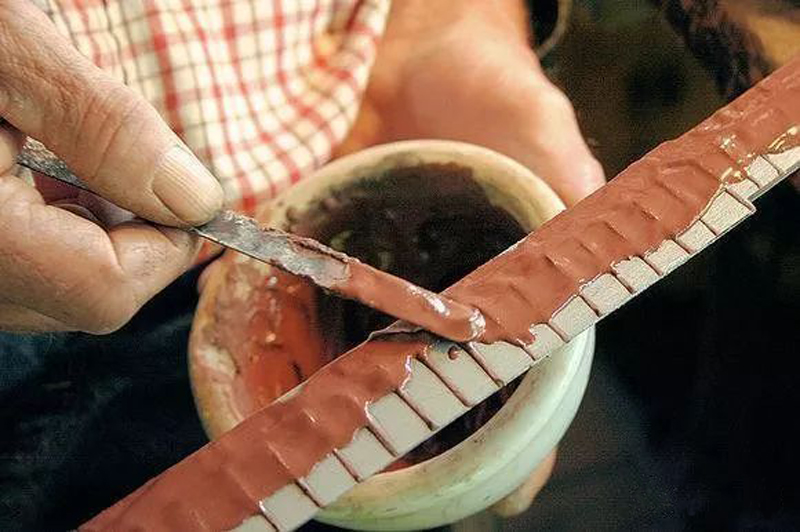
The edge of the blade is left with little or no clay coverage, allowing it to cool quickly during quenching. This creates a harder cutting edge. The spine of the blade is covered with clay, which slows the cooling process and keeps the steel softer and more flexible.
The transition area between these two different hardness zones creates the visible hamon. A genuine hamon is not simply a decorative pattern on the surface — it is the result of an actual change in the steel structure caused by heat treatment.
How Is a Genuine Hamon Created?
Creating a real hamon requires experience, precise temperature control, and careful polishing. A traditional clay tempered katana generally goes through several important steps:
1. Blade Forging and Shaping
The swordsmith first forges and shapes the blade according to the desired katana geometry. The steel must be properly prepared before the clay tempering process begins.
2. Applying Clay to the Blade
A special clay mixture is applied along the spine and selected areas of the blade. The thickness and pattern of the clay influence the final hamon shape.
3. Heating and Quenching
The blade is heated to a critical temperature and then rapidly cooled. Because different areas cool at different speeds, the steel develops different structures between the edge and the spine.
4. Polishing Reveals the Hamon
After heat treatment, careful polishing reveals the hamon pattern. A real hamon usually has natural variation, depth, and activity that changes depending on the lighting angle.
Because the process depends on many factors, no two genuine hamon patterns are exactly identical. Natural irregularities are one of the characteristics that separate authentic clay tempered blades from artificial patterns.
Why Do Buyers Need to Know the Difference?
The appearance of a hamon can strongly influence the value and appeal of a katana. Unfortunately, some low-quality swords use cosmetic methods to imitate the look of traditional clay tempering.
A fake hamon may look attractive in product photos, but it does not represent true differential hardening and does not provide the same craftsmanship value as a genuine clay tempered blade.
For collectors, martial artists, and buyers looking for a functional katana, learning how to identify a real clay tempered blade is an important step before making a purchase.
Real Clay Tempered Blade vs Fake Clay Tempered Blade: Key Differences
The biggest difference between a real clay tempered blade and a fake clay tempered blade is that a genuine hamon is created inside the steel through heat treatment, while a fake hamon only changes the appearance of the blade surface.
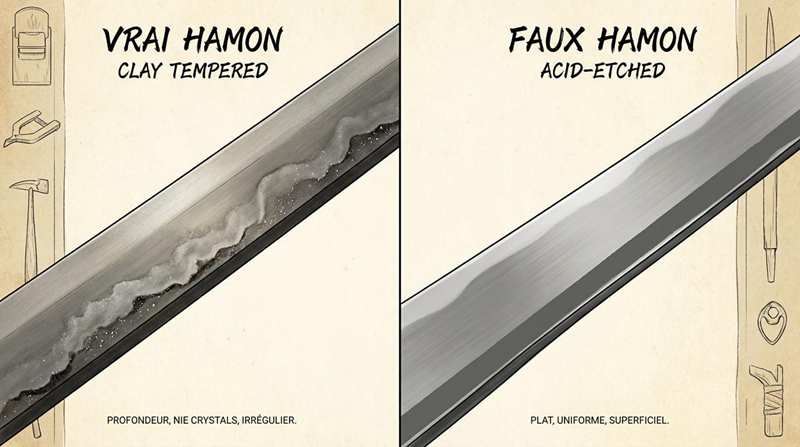
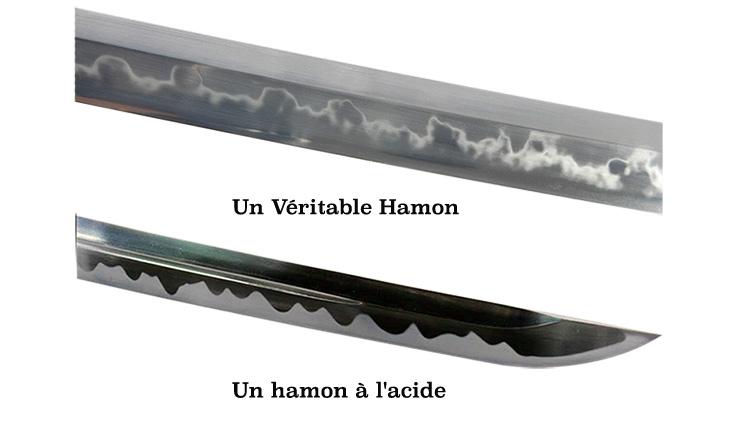
A real clay tempered katana has different hardness levels between the cutting edge and the spine. A fake hamon may look similar from a distance, but the blade itself does not have the same differential hardening structure.
| Feature | Real Clay Tempered Blade | Fake Clay Tempered Blade |
| Hamon Appearance | Natural patterns with depth, activity, and irregular details | Usually uniform, painted-looking, or overly perfect |
| Steel Structure | Different hardness zones created through differential hardening | Same hardness throughout the blade |
| Performance | Combines a hard cutting edge with a flexible spine | Performance depends only on the steel type and overall heat treatment |
| Value | Higher craftsmanship and collector value | Mostly decorative appearance |
How to Identify a Real Clay Tempered Katana
Although identifying a genuine hamon requires professional knowledge, buyers can use several practical methods to recognize the differences between a real and fake clay tempered blade.
1. Check the Natural Variation of the Hamon
A genuine hamon usually has natural movement along the blade. You may notice small changes in the pattern, different activities inside the hamon, and uneven details created during the clay tempering process.
Fake hamon patterns often look too consistent. They may appear like a printed line, spray-painted pattern, or a repeated design that does not change across the blade.
2. Observe the Hamon Under Different Lighting
A real hamon has three-dimensional characteristics. When you move the blade under natural light, the pattern may become stronger or weaker depending on the viewing angle.
A fake hamon created by chemical etching or surface decoration usually remains flat and unchanged because there is no actual difference in the steel structure.
3. Look for Hamon Activity and Details
Professional sword collectors often examine details inside the hamon, including:
- Small crystal activities known as nie
- Cloud-like patterns called nioi
- Natural waves and variations
- Transitions between hardened and softer areas
These features are created during heat treatment and polishing. They are difficult to reproduce with simple surface decoration.
4. Check the Sword Specifications and Seller Information
A trustworthy sword seller should clearly explain the blade material, heat treatment method, and manufacturing process.
For example, high-quality functional katana often use steels such as T10 steel or 1095 carbon steel combined with proper heat treatment. However, steel type alone does not prove a real clay tempered blade — the actual tempering process is the key factor.
5. Be Careful With Perfectly Identical Hamon Patterns
One common sign of a fake clay tempered blade is an extremely perfect and repeated hamon pattern. Traditional clay tempering naturally creates unique results because temperature, clay thickness, and cooling speed all influence the final appearance.
A sword with a completely identical wave pattern on every blade should be examined carefully.
Common Methods Used to Create Fake Hamon Patterns
Some manufacturers create decorative hamon patterns without performing true clay tempering. These methods can make a blade look traditional while avoiding the actual heat treatment process.
Acid Etching
Acid etching can create a visible line on the blade surface. Although the sword may appear to have a hamon, the pattern is only a surface effect and does not represent different hardness zones.
Painted or Laser-Created Hamon
Some decorative swords use paint, coatings, or machine-made patterns to imitate the appearance of a traditional hamon. These are usually intended for display rather than serious sword use.
How to Choose a Genuine Clay Tempered Katana
Choosing a real clay tempered katana requires more than simply looking at the hamon. A high-quality sword should have a combination of proper materials, reliable heat treatment, good craftsmanship, and transparent manufacturing information.
Before purchasing a clay tempered blade, consider the following points:
- Confirm the heat treatment method: A seller should clearly state whether the blade is clay tempered or only decorated with a fake hamon.
- Check the steel type: Popular functional katana steels include T10 steel and 1095 carbon steel. However, the heat treatment quality is just as important as the steel itself.
- Look for detailed product information: Reliable sellers provide information about blade construction, hardness, polishing, fittings, and customization options.
- Consider the purpose of the sword: Display swords, martial arts practice swords, and cutting swords may require different specifications.
Why Choose a Clay Tempered Katana From HanBon Forge?
At HanBon Forge, we focus on producing functional handmade katana with attention to traditional sword-making methods. Our clay tempered blades are carefully heat treated to create a genuine hamon and balanced performance.
Each blade is inspected throughout the production process, from forging and heat treatment to polishing and final assembly. We offer various steel options, including T10 steel and 1095 carbon steel, allowing customers to choose a sword that matches their needs.
Whether you are a katana collector, martial arts practitioner, or first-time buyer, understanding the difference between a real clay tempered blade and a fake hamon sword helps you make a more informed decision.
Final Thoughts: Real Clay Tempering Is More Than Appearance
A beautiful hamon is one of the most attractive features of a Japanese katana, but a genuine clay tempered blade represents much more than visual beauty. It reflects careful heat treatment, craftsmanship, and centuries of sword-making knowledge.
When comparing a real clay tempered blade and a fake clay tempered blade, remember that the most important difference is not only what you see on the surface, but what happened inside the steel.
Learning how to identify a genuine hamon allows buyers to appreciate the craftsmanship behind each katana and choose a sword with true value.
Frequently Asked Questions About Real and Fake Clay Tempered Blades
1. What is a real clay tempered blade?
A real clay tempered blade is a sword that has undergone differential hardening using clay during the heat treatment process. The edge becomes harder while the spine remains softer and more flexible, creating a genuine hamon.
2. How can I tell if a katana has a real hamon?
A real hamon usually shows natural variation, depth, and activity when viewed under different lighting. Fake hamon patterns often look flat, painted, or overly identical.
3. Does every katana with a hamon have clay tempering?
No. Some swords have decorative hamon created through acid etching, polishing effects, or other surface treatments. A visible hamon does not always mean the blade was clay tempered.
4. Is T10 steel always clay tempered?
No. T10 steel is a popular choice for high-quality katana, but the steel type alone does not guarantee clay tempering. The heat treatment process determines whether a genuine hamon is created.
5. Is a fake hamon sword useless?
Not necessarily. Some non-clay tempered swords can still be functional depending on the steel and heat treatment. However, they do not have the same traditional differential hardening process as a real clay tempered blade.
6. Why is a genuine hamon important to collectors?
Collectors value genuine hamon because it represents traditional craftsmanship, skilled heat treatment, and the unique characteristics of each individual blade.
7. Can beginners identify a real clay tempered katana?
Beginners can identify many common differences by checking hamon appearance, seller information, steel specifications, and production details. Professional evaluation may still be needed for historical or expensive swords.
8. What should I check before buying a clay tempered katana online?
Before buying, check the seller's reputation, blade material, heat treatment method, product details, customer reviews, and whether the hamon is naturally created or artificially applied.
Artificial Polishing Effects
Certain polishing techniques can make a blade appear to have more activity than it actually does. Buyers should consider the entire sword specification instead of judging only by appearance.