
Four Famous Chinese Swords: History, Legends and Real Surviving Blades

Four Famous Chinese Swords in History: Real Blades, Historical Records and Legendary Weapons
Chinese sword history is filled with remarkable weapons, famous swordsmiths, royal treasures, archaeological discoveries and enduring legends. For thousands of years, the Chinese sword has represented far more than a weapon. It has been associated with craftsmanship, military power, social status, philosophy and cultural identity.
However, when discussing famous Chinese swords, it is important to distinguish between swords that still physically exist, swords mentioned in historical records, and weapons whose stories have become increasingly legendary over time.
Some ancient Chinese swords can be examined in museums today. Others are known primarily through historical texts, folklore and later cultural traditions. Together, they reveal the extraordinary influence of the sword on Chinese history.
In this article, we explore four of the most famous names associated with Chinese sword history: the Sword of Goujian, the Tai'e Sword, the Nine Dragon Sword and the Zhanlu Sword.
What Makes a Chinese Sword Famous?
Not every famous sword is famous for the same reason. Some swords became important because they survived for thousands of years and provide direct evidence of ancient metallurgy. Others became famous because they were connected with emperors, kings, military leaders or celebrated swordsmiths.
In ancient China, exceptional swords were often given individual names. Their names could be connected to their appearance, blade patterns, sharpness, craftsmanship or symbolic qualities. Over time, these weapons became part of historical literature and Chinese cultural tradition.
For this reason, a list of the most famous Chinese swords should not treat archaeology and legend as exactly the same thing. A better approach is to understand the historical status of each sword individually.
1. The Sword of Goujian: One of the Most Remarkable Ancient Chinese Swords
Among all surviving ancient Chinese swords, few are as famous as the Sword of Goujian. Unlike many legendary weapons whose physical existence cannot be confirmed today, this extraordinary bronze sword was actually discovered by archaeologists.
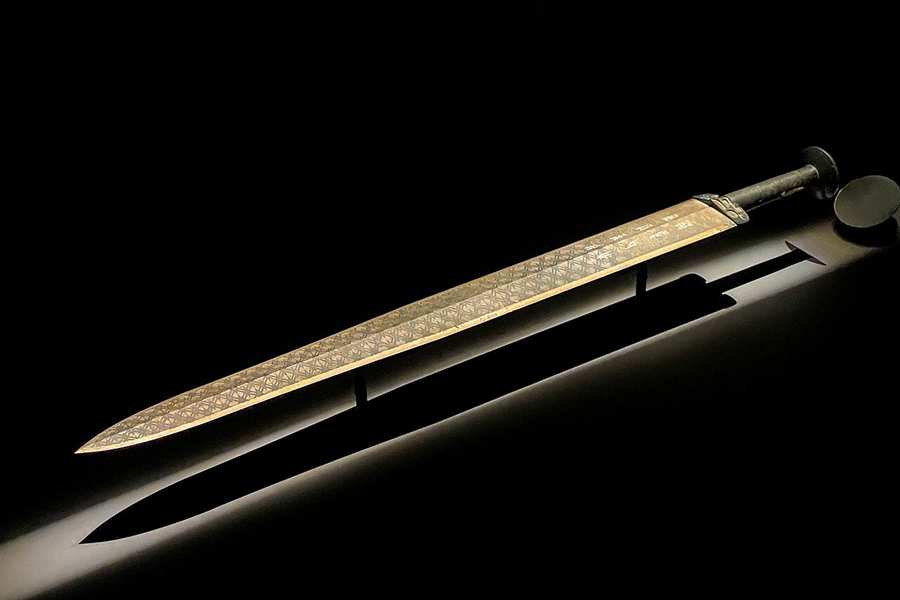
The sword is associated with King Goujian of Yue, one of the best-known rulers of the Spring and Autumn period. Goujian ruled the State of Yue during a turbulent period in ancient Chinese history and later became famous for his conflict with the State of Wu.
The Sword of Goujian was discovered in Hubei Province in 1965. When it was excavated, researchers were astonished by its condition. Despite having been buried for more than two thousand years, the blade remained exceptionally well preserved.
Its elegant design, detailed decoration and sophisticated bronze craftsmanship have made it one of the most celebrated archaeological discoveries related to Chinese swords.
Why Is the Sword of Goujian So Famous?
The importance of the Sword of Goujian comes from several factors. First, it is a genuine surviving artifact rather than a sword known only through legend. Second, its craftsmanship demonstrates the advanced metalworking skills of the ancient Yue region.
The sword is also beautifully decorated. Its surface contains intricate patterns, while inscriptions on the weapon helped researchers connect it with the royal house of Yue.
Today, the Sword of Goujian is widely regarded as one of the finest surviving examples of ancient Chinese sword craftsmanship.
For historians and sword enthusiasts, it provides something extremely valuable: physical evidence of the high level of metallurgy and weapon production achieved in China during the Spring and Autumn period.
2. The Tai'e Sword: A Famous Sword from Ancient Chinese Tradition
The Tai'e Sword, also written as Taie, is one of the best-known named swords in Chinese history and legend. It is traditionally associated with the famous sword-making culture of the Spring and Autumn period.
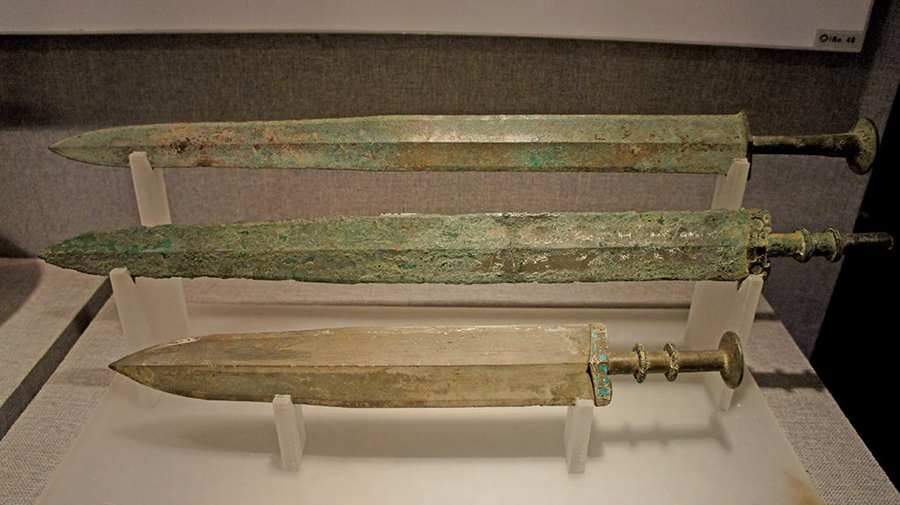
Ancient texts describe several celebrated swords connected with legendary master swordsmiths, including Longyuan, Tai'e and Gongbu. These named weapons became an important part of China's early sword tradition.
Tai'e is often described as a powerful and prestigious sword. Over the centuries, stories connected the weapon with rulers and military authority, making it one of the most recognizable names among legendary Chinese swords.
However, an important historical distinction should be made: the original Tai'e Sword described in ancient traditions has not been conclusively identified as a surviving museum artifact.
Was the Tai'e Sword the Sword of the King of Qin?
The Tai'e Sword is frequently associated with the ancient State of Qin and, in later storytelling, sometimes with the First Emperor of Qin. However, historical traditions and archaeological evidence should not automatically be treated as the same thing.
A number of bronze swords have been discovered in archaeological sites associated with the Qin period, including the famous weapons found near the Terracotta Army. These discoveries demonstrate the advanced weapon-making technology of ancient China.
Nevertheless, identifying a particular excavated sword as the original Tai'e Sword requires stronger evidence than simply connecting it with Qin history.
For this reason, Tai'e remains one of the most important famous Chinese swords in historical tradition, even though the original weapon itself has not been conclusively identified.
3. The Nine Dragon Sword: An Imperial Sword Surrounded by Mystery
The Nine Dragon Sword, or Jiulong Baojian, is one of the most mysterious swords associated with Chinese imperial history.
According to popular accounts, the sword was connected with the Qing imperial court and Emperor Qianlong. It is traditionally described as an elaborate and luxurious weapon decorated with dragon imagery and precious materials.
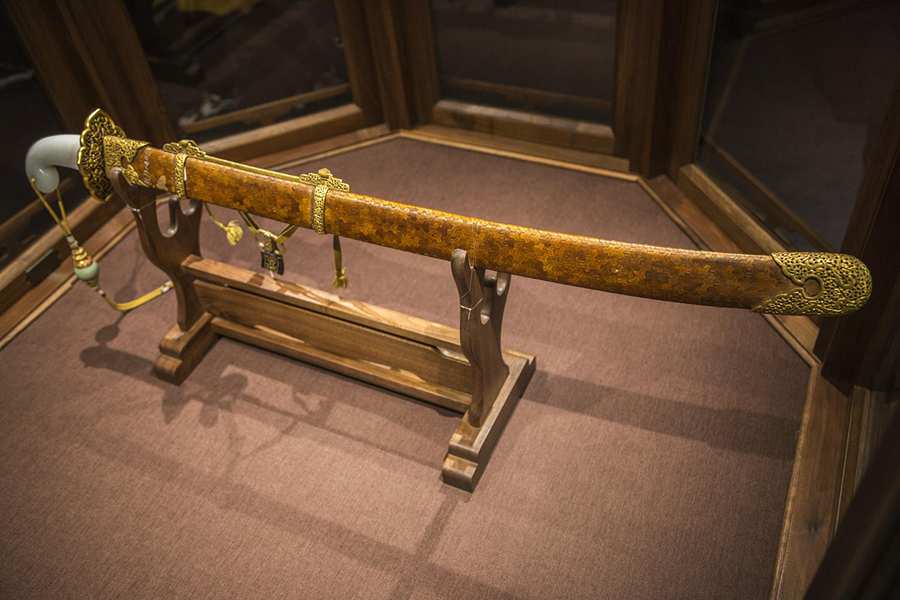
The Nine Dragon Sword became especially famous because of the dramatic stories surrounding its later history. According to widely repeated accounts, the sword was removed from an imperial tomb during the twentieth century and was eventually lost in an aircraft crash.
These stories have helped transform the Nine Dragon Sword into one of the most famous and mysterious names in Chinese sword history.
Did the Nine Dragon Sword Really Exist?
The historical story of the Nine Dragon Sword is complicated because many popular descriptions combine documented events, later accounts and dramatic folklore.
For this reason, the sword should be discussed with caution. Unlike the Sword of Goujian, which can be directly studied as an archaeological artifact, the Nine Dragon Sword is surrounded by uncertainty regarding its precise appearance, construction and ultimate fate.
Its importance today comes not only from the possibility of an actual imperial weapon but also from its place in the stories and cultural imagination surrounding China's late imperial period.
4. The Zhanlu Sword: The Legendary Sword of Ou Yezi
The Zhanlu Sword is another legendary weapon that occupies an important place in ancient Chinese sword culture.
Tradition attributes the sword to Ou Yezi, one of the most famous master swordsmiths in Chinese history and legend. Ou Yezi is associated with several celebrated swords and represents the ideal image of the ancient Chinese sword maker.
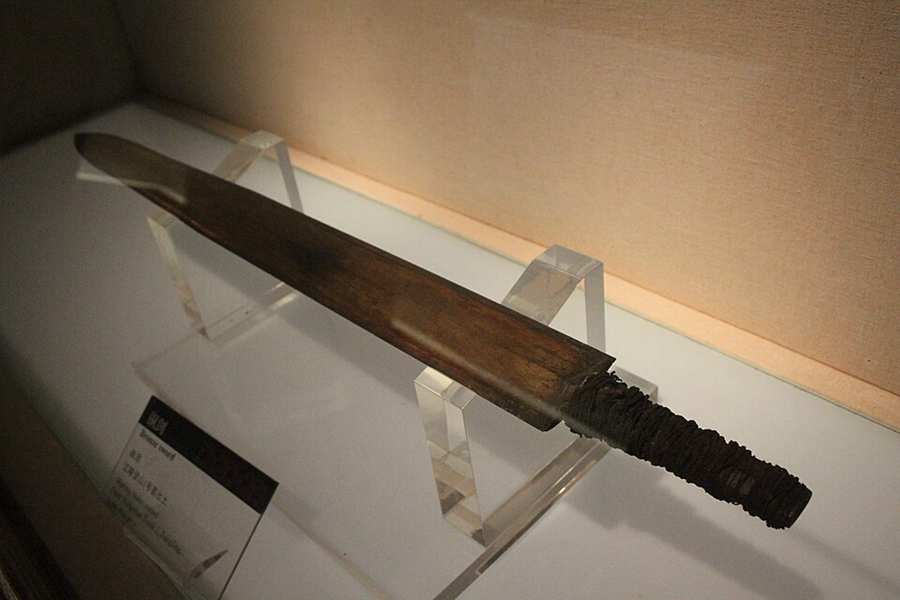
Unlike swords that are famous primarily for military victories, Zhanlu became known for its symbolic meaning. In traditional stories, it is often associated with virtue, moral authority and the responsibility of rulers.
This symbolic character helped distinguish Zhanlu from other famous Chinese swords. It was not simply described as a weapon of exceptional power. Instead, the sword became associated with the idea that political legitimacy and moral character were connected.
Does the Original Zhanlu Sword Still Exist?
There is currently no universally accepted archaeological identification of the original Zhanlu Sword.
The sword is primarily known through ancient texts and later traditions. As with several other famous weapons from early Chinese history, separating historical reality from centuries of storytelling can be difficult.
However, this uncertainty does not reduce the importance of Zhanlu in Chinese sword culture. The story of the sword has survived for centuries and continues to influence how people understand ancient Chinese craftsmanship, sword symbolism and legendary weapons.
Archaeological Chinese Swords vs. Legendary Chinese Swords
When researching famous Chinese swords, it is helpful to divide them into two broad categories.
The first category includes surviving archaeological swords. These weapons can be physically examined, measured and studied. The Sword of Goujian is one of the most famous examples.
The second category includes historically recorded and legendary swords. These weapons may appear in ancient texts and cultural traditions, but their original physical forms may no longer exist or may not have been conclusively identified.
Tai'e and Zhanlu are particularly important examples of this second category.
The Nine Dragon Sword occupies a more complicated position because its story is connected with relatively recent historical events while also being surrounded by popular accounts and unresolved questions.
Understanding these differences makes Chinese sword history more interesting, not less. It shows how physical artifacts, historical documents and cultural memory have worked together to preserve the stories of famous weapons.
Why Ancient Chinese Swords Were So Important
The sword occupied a special position in Chinese civilization for thousands of years. It was used as a weapon, but it was also associated with military skill, scholarship, status and personal character.
The straight double-edged jian became especially important in Chinese culture. Over time, the jian developed into a weapon with both practical and symbolic significance.
Different historical periods produced different sword styles, materials and manufacturing techniques. Bronze swords dominated earlier periods, while iron and steel weapons became increasingly important as metallurgical technology developed.
The famous swords of ancient China therefore represent more than individual weapons. They also reflect the evolution of metallurgy, craftsmanship and military technology.
A well-made sword could demonstrate the skill of a master craftsman. A royal sword could symbolize political authority. A legendary sword could eventually become part of literature and folklore.
The Legacy of Famous Chinese Swords
The stories of famous Chinese swords continue to attract historians, collectors, martial arts practitioners and enthusiasts around the world.
Some people are fascinated by the extraordinary preservation of the Sword of Goujian. Others are interested in legendary swordsmiths such as Ou Yezi or the historical traditions surrounding famous weapons like Tai'e and Zhanlu.
These swords also continue to influence modern Chinese sword reproduction and design. Contemporary sword makers often study historical blade shapes, traditional fittings, decorative patterns and ancient cultural symbolism.
For collectors and enthusiasts, learning about ancient Chinese swords provides useful context when exploring modern reproductions of the jian and other traditional Chinese weapons.
The goal is not simply to recreate a famous name. It is to understand the historical traditions, craftsmanship and cultural ideas that made these swords important in the first place.
Conclusion: Four Famous Names in Chinese Sword History
The history of famous Chinese swords is a fascinating combination of archaeology, historical records and legend.
The Sword of Goujian stands out as a remarkable surviving artifact and a powerful example of ancient Chinese metallurgy. The Tai'e Sword remains an important name in early Chinese sword traditions. The Nine Dragon Sword continues to capture attention because of its connection with imperial history and mystery. Meanwhile, the Zhanlu Sword represents the deep relationship between sword craftsmanship and cultural symbolism.
Not every famous sword from Chinese history can be placed in a museum today. Some survive as physical artifacts, while others survive through ancient literature and cultural memory.
Together, they demonstrate why the sword remains one of the most enduring symbols in Chinese history.
For anyone interested in Chinese jian, ancient weapons, traditional sword craftsmanship or the history of Chinese metallurgy, these famous swords provide an excellent starting point for exploring one of the world's richest weapon-making traditions.
Frequently Asked Questions About Famous Chinese Swords
What are the most famous Chinese swords?
Some of the most famous Chinese swords include the Sword of Goujian, Tai'e, Zhanlu, Ganjiang and Moye. The Sword of Goujian is especially important because it survives as a genuine archaeological artifact.
Does the Sword of Goujian really exist?
Yes. The Sword of Goujian is a genuine ancient Chinese bronze sword discovered by archaeologists in Hubei Province. It is one of the most famous surviving weapons from ancient China.
How old is the Sword of Goujian?
The Sword of Goujian dates to the Spring and Autumn period and is more than two thousand years old. It is associated with King Goujian of the ancient State of Yue.
Did the Tai'e Sword really exist?
Tai'e is a famous named sword recorded in ancient Chinese traditions. However, the original Tai'e Sword has not been conclusively identified as a surviving archaeological artifact.
Who made the Zhanlu Sword?
According to traditional accounts, the Zhanlu Sword was made by Ou Yezi, one of the most famous master swordsmiths associated with ancient Chinese sword-making traditions.
What is the difference between a Chinese jian and a dao?
A traditional Chinese jian is generally a straight, double-edged sword, while a dao is usually a single-edged blade. Both have played important roles in Chinese military history and martial arts.
Are legendary Chinese swords historically accurate?
Some legendary Chinese swords are based on historical traditions and ancient texts, while others have accumulated additional stories over centuries. It is important to distinguish between archaeological evidence, historical records and later folklore.