
Damascus Folded Steel Blade: 13 Folds and 8192 Layers Explained
Damascus Folded Steel Blade: 13 Folds and 8192 Layers Explained
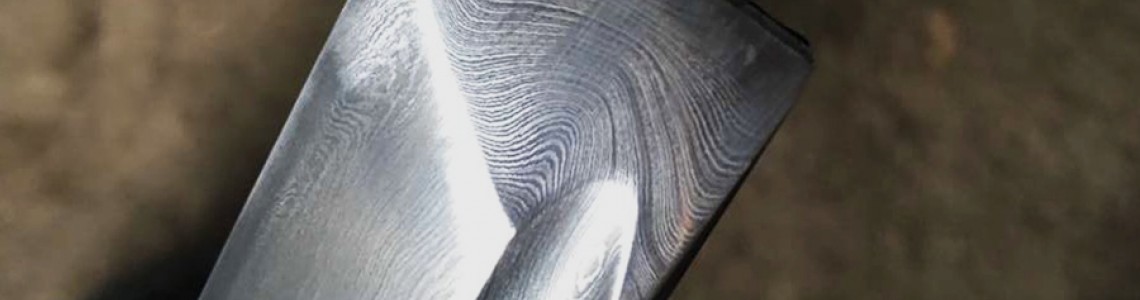
A Damascus folded steel blade is admired by sword collectors for its unique patterns, traditional craftsmanship, and complex forging process. Unlike ordinary machine-made blades, folded steel swords are created through repeated heating, hammering, and folding of steel to develop a distinctive layered structure.
For many sword enthusiasts, a Damascus steel katana represents the combination of beauty and craftsmanship. The visible flowing patterns on the blade are created by carefully controlling the folding process during forging.
HanBon Forge folded steel blades are hand folded 13 times, creating a theoretical 8192-layer structure. This traditional forging method produces a refined grain pattern and a visually impressive blade surface.
What Is a Damascus Folded Steel Blade?
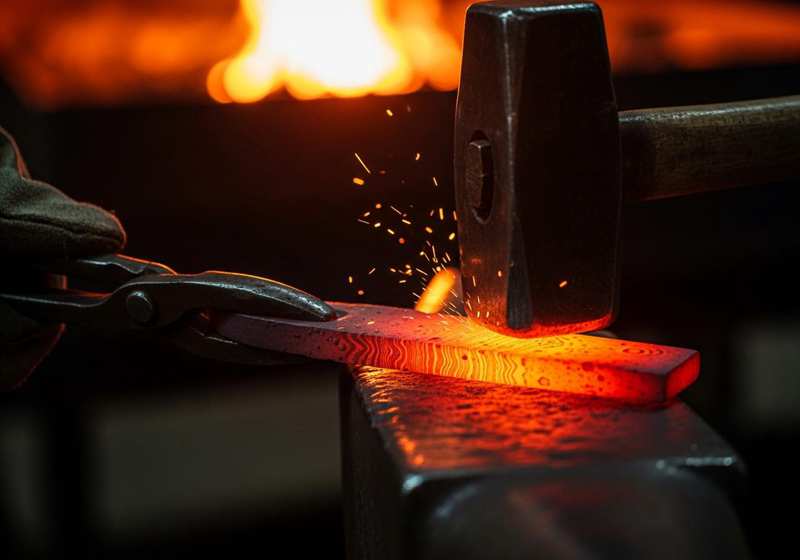
A Damascus folded steel blade is produced by repeatedly folding and forging steel during the manufacturing process. The steel is heated to a high temperature, hammered to remove impurities, folded, and welded together again.
Each folding cycle increases the number of visible layers in the steel. These layers create the beautiful grain patterns commonly associated with Damascus swords and folded steel katana.
Modern folded steel is often valued for its appearance and craftsmanship. While modern steels already provide excellent consistency, the folding process remains an important traditional technique that demonstrates the skill and dedication of the sword maker.
How Does Folding Steel Create 8192 Layers?
The number of layers in folded steel increases through repeated folding. Each fold doubles the number of layers in the steel billet.
| Folding Times | Approximate Layers |
| 1 Fold | 4 Layers |
| 5 Folds | 64 Layers |
| 10 Folds | 1024 Layers |
| 13 Folds | 8192 Layers |
The 8192 layers created after 13 folds represent the mathematical result of repeated folding. The process creates a fine layered pattern throughout the blade and gives Damascus steel its recognizable appearance.
Why Do Sword Makers Fold Steel?
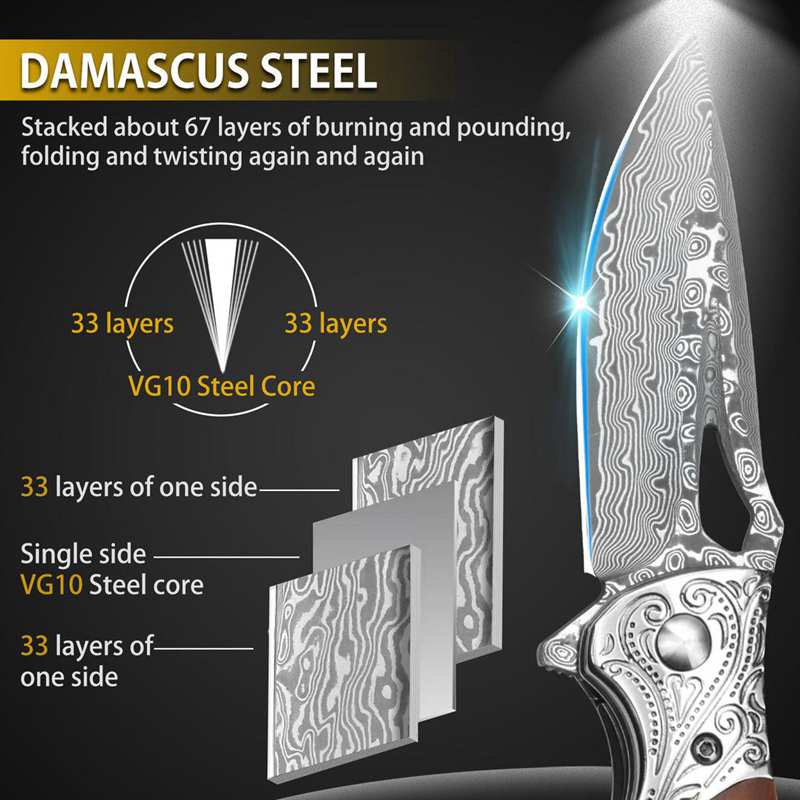
Historically, folding steel was developed to improve the consistency of early steel materials. Repeated folding helped distribute carbon content more evenly and remove unwanted impurities from the metal.
Today, folded steel swords are appreciated mainly for their craftsmanship, traditional appearance, and unique blade patterns. The process requires additional time and skill compared with standard forged blades.
- Creates distinctive Damascus grain patterns.
- Shows the craftsmanship of the sword maker.
- Produces a unique appearance on every blade.
- Maintains the traditional spirit of hand forging.
The 13 Folding Process of a Damascus Steel Blade
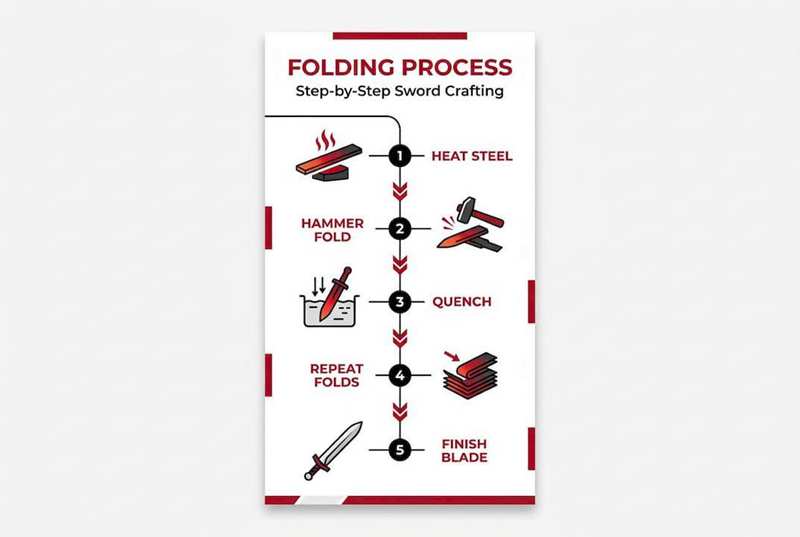
Creating a Damascus folded steel blade requires multiple steps of heating, folding, and forging. Each folding cycle requires careful control of temperature and hammering pressure to ensure the steel layers bond correctly.
For a 13-fold Damascus blade, the steel billet is folded and forged repeatedly until the final structure contains approximately 8192 layers. The process requires experience because excessive folding or improper forging can affect the quality of the steel.
Step 1: Preparing the Steel Billet
The forging process begins with selecting suitable steel materials. The steel must have the correct carbon content and characteristics required for a functional sword blade.
Step 2: Heating and Hammer Forging
The steel is heated until it becomes workable. The swordsmith then uses hammer forging to shape the billet and prepare it for folding.
Step 3: Folding and Welding the Layers
The heated steel billet is folded over itself and forged together. Each fold doubles the number of layers inside the steel.
Step 4: Shaping the Final Blade
After completing the folding process, the forged steel is shaped into the final sword blade. Additional steps include grinding, polishing, heat treatment, and finishing the blade surface.
Does More Layers Mean a Better Sword?
Many buyers believe that a sword with more layers is automatically stronger or sharper. However, the number of layers alone does not determine the overall quality of a blade.
The quality of a Damascus steel sword depends on many factors, including steel selection, forging technique, heat treatment, blade geometry, and craftsmanship.
- Steel quality and carbon content.
- Proper heat treatment process.
- Accurate blade shaping and grinding.
- Correct balance and weight distribution.
- Quality of polishing and finishing.
The 8192-layer structure of a 13-fold Damascus blade represents craftsmanship and visual complexity, but a well-made sword requires every part of the manufacturing process to work together.
Damascus Steel vs Regular Carbon Steel Sword
When choosing a sword, many buyers compare Damascus steel blades with traditional carbon steel blades. Both can create high-quality swords, but they have different characteristics.
| Feature | Damascus Folded Steel | Carbon Steel Blade |
| Appearance | Unique layered patterns and flowing grain lines | Clean and traditional blade appearance |
| Craftsmanship | Requires additional forging steps | Can also provide excellent performance with proper treatment |
| Price | Usually higher due to extra labor | Often more affordable |
| Collector Value | Highly valued for unique patterns | Popular for practical performance |
Both Damascus steel and carbon steel swords can be excellent choices. The best option depends on whether your priority is appearance, craftsmanship, historical style, or practical performance.
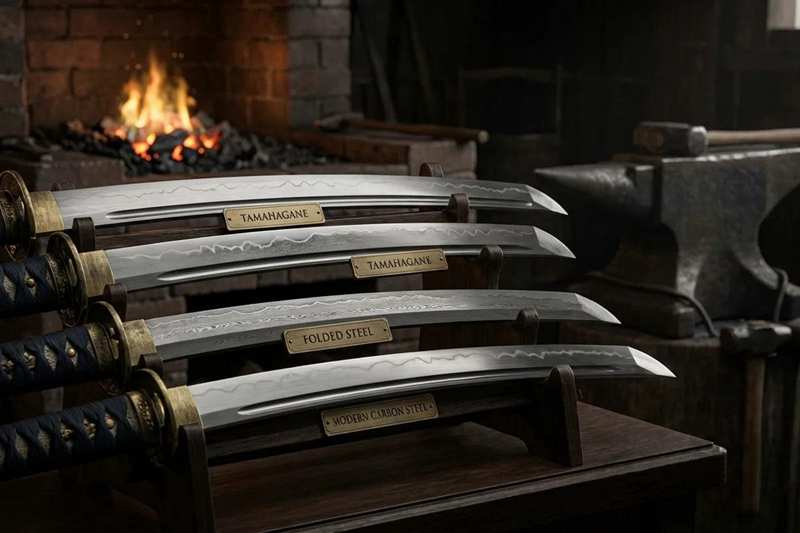
How to Identify a Quality Damascus Folded Steel Blade
With the popularity of Damascus swords increasing, buyers should understand how to identify a properly made folded steel blade.
1. Check the Blade Pattern
A genuine folded steel blade usually has natural layered patterns created during forging. The pattern should flow naturally across the blade rather than appearing only as a surface decoration.
2. Confirm the Steel and Forging Method
A reliable sword maker should clearly explain the steel type, folding process, heat treatment, and construction method used for the blade.
3. Examine Blade Construction
A beautiful Damascus pattern is only one part of a quality sword. Buyers should also check tang construction, fittings, balance, and overall craftsmanship.
- Clear information about steel type.
- Proper heat treatment.
- Reliable tang construction.
- Professional polishing.
- Secure sword fittings.
Why Collectors Choose Damascus Steel Katana
A Damascus steel katana attracts collectors because every blade has a unique pattern created during forging. No two folded steel blades are exactly identical.
Beyond appearance, Damascus swords represent the combination of traditional techniques, skilled craftsmanship, and artistic expression.
For collectors who appreciate handmade swords, a folded steel katana offers both visual beauty and the story behind the forging process.
HanBon Forge 13 Fold Damascus Steel Katana
A high-quality Damascus folded steel blade requires experience, precision, and attention to detail throughout the entire forging process. At HanBon Forge, Damascus steel katana are created with traditional forging techniques combined with modern quality control.
The 13-fold Damascus blade process creates approximately 8192 layers, producing unique patterns across the blade surface. Each sword has its own natural grain pattern, making every handmade Damascus katana different.
Collectors can customize Damascus swords with different fittings, blade styles, hamon designs, saya colors, engravings, and handle options to create a personalized sword.
How to Choose a Damascus Katana
When buying a Damascus steel katana, buyers should look beyond the blade pattern. A beautiful appearance should be supported by proper construction and reliable craftsmanship.
Important Factors to Consider
- Steel Quality: Confirm the steel type and forging method.
- Layer Count: Understand that layer numbers represent the folding process, not the only measure of quality.
- Heat Treatment: Proper tempering is essential for blade performance.
- Tang Construction: A strong tang improves sword durability.
- Blade Geometry: Proper shaping affects balance and handling.
- Craftsmanship: Quality polishing and fittings complete the sword.
A Damascus sword should be viewed as a complete piece of craftsmanship. The blade pattern is important, but the overall construction determines the real quality of the sword.
Damascus Sword Maintenance Guide
Like all high carbon steel swords, Damascus folded steel blades require regular maintenance. Proper care helps protect the blade surface and preserve the beautiful layered pattern.
- Clean fingerprints and moisture from the blade after handling.
- Apply a thin layer of sword oil to prevent rust.
- Store the sword in a dry environment.
- Avoid touching the blade with bare hands.
- Inspect the fittings regularly.
With proper maintenance, a Damascus steel katana can maintain its appearance and craftsmanship for many years.
Conclusion: Understanding Damascus Folded Steel Blades
A Damascus folded steel blade is more than a sword with a beautiful pattern. It represents a traditional forging process that requires skill, patience, and careful craftsmanship.
The 13-fold, 8192-layer Damascus blade process creates a unique appearance that makes each sword special. However, buyers should also consider steel quality, heat treatment, tang construction, and overall craftsmanship when choosing a sword.
Whether you are a collector, martial arts enthusiast, or someone looking for a custom katana, understanding Damascus steel construction will help you choose a sword with genuine value.
Frequently Asked Questions About Damascus Folded Steel Blades
1. What is a Damascus folded steel blade?
A Damascus folded steel blade is created by repeatedly folding and forging steel to produce layered structures and unique patterns on the blade surface.
2. What does 13 folds and 8192 layers mean?
Thirteen folds means the steel has been folded thirteen times during forging. Each fold doubles the layers, resulting in approximately 8192 layers.
3. Is a Damascus steel sword stronger than regular steel?
Not necessarily. Sword strength depends on steel quality, heat treatment, blade design, and craftsmanship. Layer count alone does not determine performance.
4. Why are Damascus swords more expensive?
Damascus swords usually cost more because the forging process requires additional time, skill, and craftsmanship compared with standard blades.
5. Are Damascus katana good for cutting?
A properly made Damascus katana can be functional for cutting when it has suitable steel, correct heat treatment, and reliable construction.
6. How can I tell if a Damascus blade is real?
A genuine folded steel blade usually has natural layered patterns created through forging rather than printed or decorative surface patterns.
7. Does more Damascus layers mean better quality?
More layers create a more complex pattern, but overall sword quality depends on many factors including steel, forging, heat treatment, and craftsmanship.
8. What steel is used for Damascus katana?
Different Damascus swords may use different steel combinations. Buyers should check the specific steel type and manufacturing process before purchasing.
9. How do I maintain a Damascus steel blade?
Regular cleaning, oiling, and proper storage are necessary to protect Damascus steel blades from rust and surface damage.
10. Is a Damascus katana worth buying?
A Damascus katana is worth considering for collectors who appreciate traditional craftsmanship, unique blade patterns, and handmade sword construction.