
Traditional Japanese Sword Cutting Targets: Tatami, Bamboo and Tameshigiri

Traditional Japanese Sword Cutting Targets: Tatami, Bamboo and Tameshigiri
Japanese swords have long been admired for their craftsmanship, balance, and cutting ability. But a sword's performance cannot be understood by looking at the blade alone. Throughout Japanese history, different materials have been used for test cutting and sword practice.
Today, the practice most closely associated with Japanese sword cutting is known as tameshigiri (試し斬り), often translated as "test cutting." Modern practitioners commonly use prepared targets to evaluate cutting technique, edge alignment, control, and consistency.
Among the best-known Japanese sword cutting targets are rolled tatami omote, goza, and certain types of bamboo. Other materials, including straw mats, paper, and water-filled bottles, have also been used as accessible practice targets.
This guide explores the most common traditional and modern cutting targets associated with Japanese swords, explains why different materials behave differently, and examines the role of tameshigiri in Japanese sword arts.
What Is Tameshigiri?
Tameshigiri is the Japanese practice of test cutting. The word combines tameshi, meaning "test" or "trial," with giri, meaning "cutting."
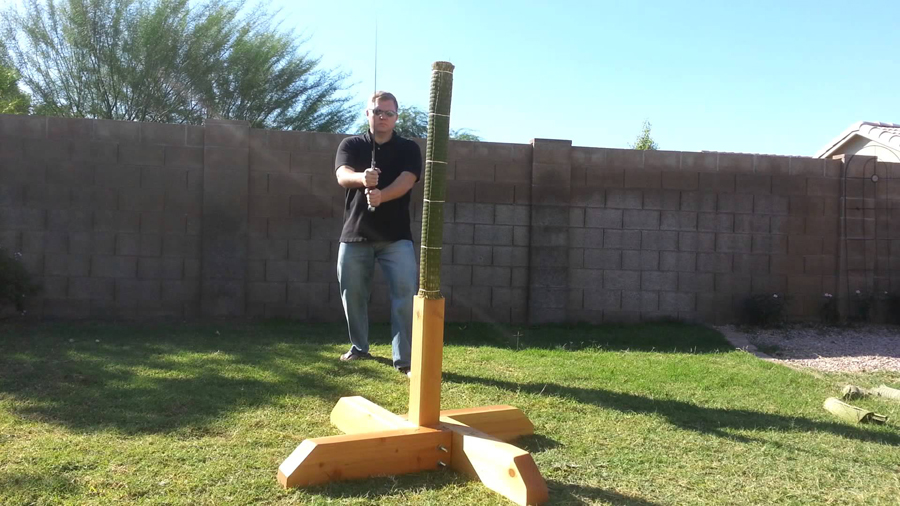
Historically, test cutting became particularly associated with the Edo period, when the cutting performance of swords could be evaluated through controlled tests. Over time, the purpose and methods of test cutting changed.
In modern Japanese sword arts, tameshigiri is generally practiced as a way to develop and evaluate the swordsman's technique. A clean cut depends on more than a sharp blade. Body movement, timing, control, cutting angle, and proper edge alignment all affect the result.
For this reason, modern tameshigiri is often viewed as a technical discipline rather than simply a demonstration of sword sharpness.
Why Are Different Cutting Targets Used?
Different materials offer different levels of density, resistance, and flexibility. A target that is easy to cut may help beginners understand the basic movement of a proper cut, while a denser target can require more precise technique.
The purpose of a cutting target is therefore not simply to provide something for a sword to strike. The material can reveal how efficiently the blade moves through the target.
Common factors that influence how a target behaves include:
- Density of the material
- Moisture content
- Thickness
- How tightly the target is rolled or prepared
- The angle of the cut
- Edge alignment during the cutting motion
Because target preparation can significantly change the difficulty of a cut, two targets made from the same material may not behave exactly the same way.
1. Tatami Omote – The Most Recognized Tameshigiri Target
When people think about katana cutting practice, the first image that often comes to mind is a rolled tatami target. Tatami-based targets are among the most recognizable materials used in modern tameshigiri.
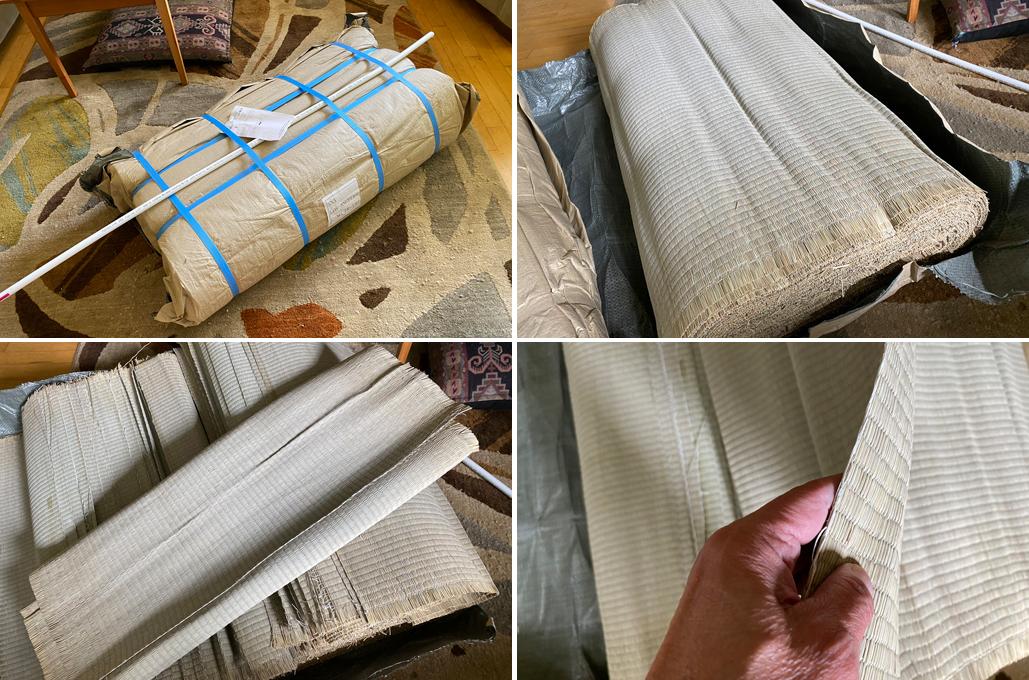
Tatami omote refers to the woven surface material traditionally associated with Japanese tatami mats. When prepared for cutting practice, the material is typically rolled tightly into a cylindrical target.
Depending on the method being used, the target may also be soaked before cutting. Moisture can change the density and behavior of the material, creating a more substantial cutting target.
Tatami is popular because it provides noticeable resistance while still being suitable for controlled cutting practice when properly prepared.
Why Is Tatami Used for Tameshigiri?
- It can be rolled into consistent cutting targets.
- Its density provides meaningful resistance.
- Target thickness can be adjusted.
- It is widely recognized in modern tameshigiri practice.
- A clean cut can reveal important aspects of technique.
For many practitioners, tatami cutting has become one of the defining elements of modern Japanese sword test cutting.
2. Goza – A Traditional Straw-Based Cutting Material
Goza is another material closely associated with traditional Japanese floor coverings. It is commonly mentioned alongside tatami when discussing Japanese sword cutting targets.
For cutting practice, goza can be rolled into a cylindrical form and prepared according to the requirements of the practitioner or dojo.
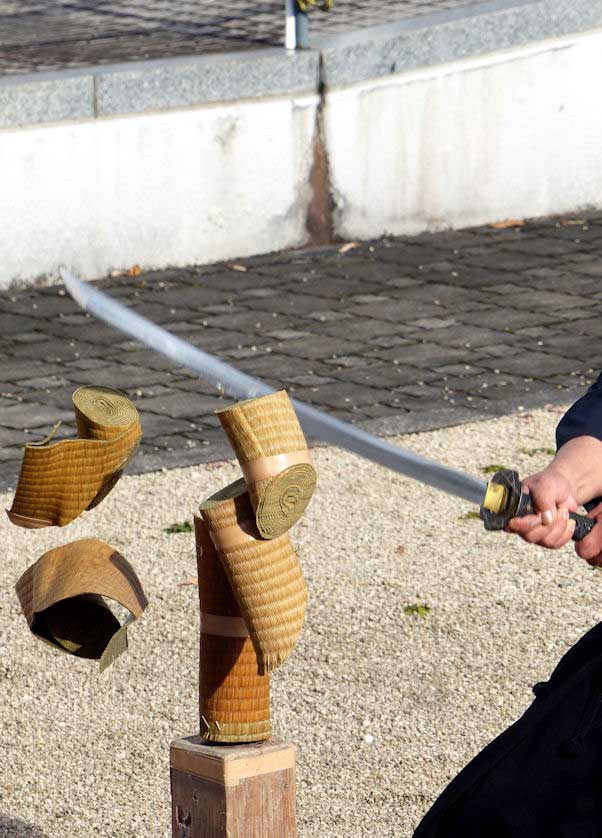
The way the material is rolled is important. A loosely prepared target may behave very differently from a tightly rolled one. Moisture can also affect the resistance and overall cutting experience.
Because of these variables, proper target preparation is an important part of tameshigiri practice.
Tatami Omote vs. Goza
The terms tatami omote and goza are sometimes used broadly in discussions about cutting targets. In practical use, the material, thickness, preparation method, and moisture level can all influence how a target performs.
Rather than focusing only on the name of the material, experienced practitioners often pay close attention to how the target has been prepared.
3. Fresh Green Bamboo
Fresh green bamboo is another material historically associated with Japanese sword testing and cutting practice. Bamboo is structurally different from rolled straw or tatami-based targets and offers a different type of resistance.
The condition of the bamboo matters greatly. Fresh bamboo and dried bamboo can behave differently because moisture content affects the material's flexibility and toughness.
For this reason, bamboo cutting requires careful target selection and preparation. It should not be treated as a simple substitute for tatami.
Bamboo is often discussed in connection with historical sword testing, but modern cutting practice should always follow the rules and safety standards of qualified instructors and established martial arts organizations.
Why Does Bamboo Feel Different from Tatami?
Tatami-based targets consist of tightly rolled plant material, while bamboo has a naturally structured outer surface and internal composition. The resistance encountered by the blade is therefore very different.
This makes bamboo a distinct type of cutting target rather than simply a more difficult version of a rolled tatami target.
4. Straw Mats and Other Straw-Based Targets
Before purpose-made tameshigiri targets became widely available, practitioners and enthusiasts sometimes used other straw-based materials for cutting practice.
Straw mats can be inexpensive and relatively easy to obtain, but they do not necessarily provide the same density or consistency as properly prepared tatami omote.
Several layers or tightly rolled sections may be needed to create a target with substantial resistance.
For this reason, straw mats are often better understood as an alternative practice material rather than a direct replacement for professionally prepared tatami targets.
Advantages of Straw-Based Targets
- Often easier to find.
- Potentially less expensive.
- Made from natural plant materials.
- Can be adapted into different target sizes.
However, consistency can vary considerably depending on the type of straw, the thickness of the material, and how tightly the target is prepared.
5. Paper Targets
Paper has also been used for demonstrations and light cutting practice. Compared with tatami or bamboo, paper offers very little resistance, but cutting it cleanly can still demonstrate precision and control.
A single sheet of paper reacts differently from a rolled or layered paper target. Thin paper can reveal whether a blade passes through the material smoothly or simply pushes and tears it.
Because paper is lightweight, it is particularly sensitive to movement and timing. A clean result depends heavily on controlled technique.
Paper is therefore often associated with demonstrations of precision rather than the type of resistance found in traditional tatami cutting.
6. Water-Filled Plastic Bottles
Water-filled plastic bottles are sometimes used as accessible modern practice targets. They are inexpensive and easy to obtain, which has made them popular among some sword enthusiasts.
However, plastic bottles are not traditional Japanese sword cutting targets and should not be confused with tatami omote or goza used in formal tameshigiri practice.
The movement of water inside the bottle creates a different cutting experience from plant-based targets. The result can be strongly affected by the speed and direction of the cutting motion.
For those studying Japanese sword arts, a proper training environment and qualified instruction are more important than simply selecting an easily available target.
Traditional vs. Modern Tameshigiri Targets
The history of Japanese sword testing is complex, and the materials used for testing have changed over time. Historical test cutting and modern martial arts practice do not always have the same purpose.
In historical contexts, sword testing could be used to evaluate the cutting performance of a blade. In modern Japanese sword arts, tameshigiri is more commonly associated with evaluating the skill and consistency of the practitioner.
Modern practice has also become more standardized in many schools and organizations. Rolled tatami omote is now widely recognized as one of the most common materials used for formal cutting demonstrations and practice.
This distinction is important because modern tameshigiri is not simply a test of whether a katana is sharp. It is a technical practice involving movement, control, and understanding of the sword.
What Makes a Clean Cut?
A clean cut is influenced by several factors working together. The blade itself is important, but a sharp edge alone does not guarantee good results.
Experienced practitioners pay attention to:
- Edge alignment: The cutting edge must move through the target in the intended orientation.
- Cutting angle: The angle affects how efficiently the blade moves through the material.
- Body movement: Controlled movement helps maintain consistency.
- Timing: A smooth and coordinated motion is important.
- Target preparation: The density and condition of the target affect the result.
- Blade condition: The sword must be appropriate for its intended purpose.
For this reason, tameshigiri is often considered a test of the relationship between the practitioner, the sword, and the target.
Why Target Preparation Matters
A cutting target is not always ready to use immediately. The way a target is rolled, tied, positioned, and prepared can significantly affect its behavior.
For example, a loosely rolled tatami target may not provide the same resistance as a tightly prepared one. Moisture content can also change the density and flexibility of plant-based materials.
This means that cutting results should not be judged by the sword alone. Two targets that look similar may behave differently because of variations in their preparation.
Consistency is especially important in organized tameshigiri practice, where practitioners may want to compare results over time.
Choosing a Katana for Tameshigiri
A sword intended for cutting practice should be selected with its intended use in mind. Blade geometry, construction, balance, and overall condition can all influence how a sword performs.
However, the most important factor is not simply finding the sharpest blade. A practitioner should use equipment appropriate for their experience level and training environment.
Those interested in traditional Japanese sword arts should seek guidance from qualified instructors before attempting live-blade cutting practice.
A properly organized training environment should include suitable supervision, safe target placement, and sufficient space around the cutting area.
Safety Considerations for Japanese Sword Cutting
Tameshigiri involves sharp blades and should be approached with serious attention to safety. Cutting practice is not suitable for casual experimentation.
Important considerations include:
- Training under qualified supervision.
- Using an appropriate practice area.
- Keeping spectators at a safe distance.
- Using properly prepared equipment.
- Inspecting the sword and fittings before training.
- Following the rules of the dojo or martial arts organization.
The goal of responsible practice is not simply to cut through a target. Good Japanese sword training emphasizes control, discipline, and respect for the weapon.
Which Japanese Sword Cutting Target Is Best?
There is no single cutting target that is best for every situation. The right choice depends on the purpose of the practice.
For traditional-style modern tameshigiri, properly prepared tatami omote remains one of the most widely recognized choices.
Goza and other straw-based materials may also be used depending on availability and training methods. Bamboo represents a different type of material and should be approached according to the standards of qualified instruction.
Paper and water-filled bottles are more commonly viewed as accessible or demonstration-style targets rather than direct substitutes for formal tatami cutting practice.
Ultimately, the value of a cutting target depends on whether it is appropriate for the practitioner's training goals and level of experience.
Conclusion
The history of Japanese sword cutting targets reflects the long relationship between sword craftsmanship and swordsmanship.
From tatami omote and goza to bamboo and other plant-based materials, different targets provide different levels of resistance and require different approaches.
Today, tameshigiri is widely recognized as an important part of Japanese sword arts. Rather than focusing only on the sharpness of a katana, modern test cutting emphasizes control, precision, edge alignment, and consistent technique.
Whether you are interested in the history of Japanese swords, traditional tameshigiri, or the materials used for katana cutting practice, understanding the characteristics of different targets provides a deeper appreciation for Japanese swordsmanship.
Frequently Asked Questions About Japanese Sword Cutting Targets
What is the most common target used for tameshigiri?
Rolled tatami omote is one of the most widely recognized targets used in modern tameshigiri practice. The material can be prepared into cylindrical targets and offers consistent resistance when properly rolled and prepared.
What does tameshigiri mean?
Tameshigiri (試し斬り) is commonly translated as "test cutting" or "trial cutting." In modern Japanese sword arts, it is often used to evaluate cutting technique, control, and edge alignment.
Is tatami the same as goza?
Tatami omote and goza are closely associated with traditional Japanese woven floor materials. In discussions about cutting targets, the exact material and preparation method can vary, so the density and construction of the finished target are also important.
Why is tatami soaked before tameshigiri?
Depending on the preparation method, soaking can change the density, flexibility, and cutting behavior of a rolled plant-based target. Different schools and practitioners may use different preparation methods.
Can bamboo be used for Japanese sword cutting?
Bamboo has historically been associated with sword testing and is sometimes used in cutting practice. Because bamboo behaves differently from tatami-based targets, it should be used only in an appropriate training environment and according to qualified instruction.
Are water bottles traditional katana cutting targets?
No. Water-filled plastic bottles are a modern and accessible practice target. They are not considered a traditional Japanese tameshigiri target like tatami omote or other straw-based materials.
Does a sharp katana automatically make cutting easy?
No. A sharp blade is only one factor. Proper technique, edge alignment, cutting angle, body movement, and target preparation can all influence the result.
Is tameshigiri a test of the sword or the swordsman?
Historically, test cutting could be used to evaluate sword performance. In modern Japanese sword arts, tameshigiri is more commonly used to evaluate and develop the practitioner's technique and consistency.