
Tachi Sword (Ōdachi) | History and Difference From Katana
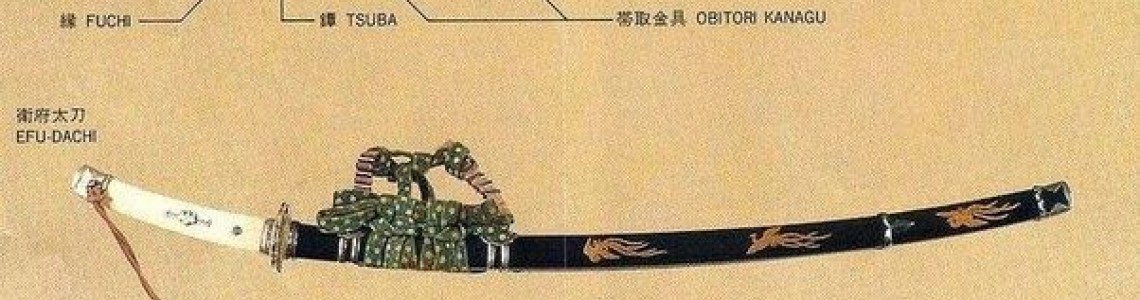
Tachi (Ōdachi) Sword: History, Design, and Differences From Katana
The Tachi (太刀) is one of the most important sword types in Japanese history. Before the katana became the symbol of the samurai, the tachi was the primary sword used by Japanese warriors, especially during the Heian and Kamakura periods.
Known for its elegant curve, long blade, and traditional mounting style, the Japanese Tachi sword was designed for battlefield use, particularly for mounted samurai. Unlike the later katana, the tachi was worn with the cutting edge facing downward and suspended from the waist.
Today, tachi swords remain highly valued by collectors and sword enthusiasts because they represent an important stage in the development of Japanese sword craftsmanship. Large versions such as the Ōdachi sword also attract attention because of their impressive size and historical importance.
What Is a Tachi Sword?
A Tachi sword is a traditional Japanese curved sword that was developed before the widespread use of the katana. The word “tachi” refers to a sword designed to be worn hanging from the belt with the cutting edge facing downward.
The tachi usually features a longer and more deeply curved blade compared with later katana designs. This shape was especially suitable for mounted combat because the curve helped create effective cutting movements from horseback.
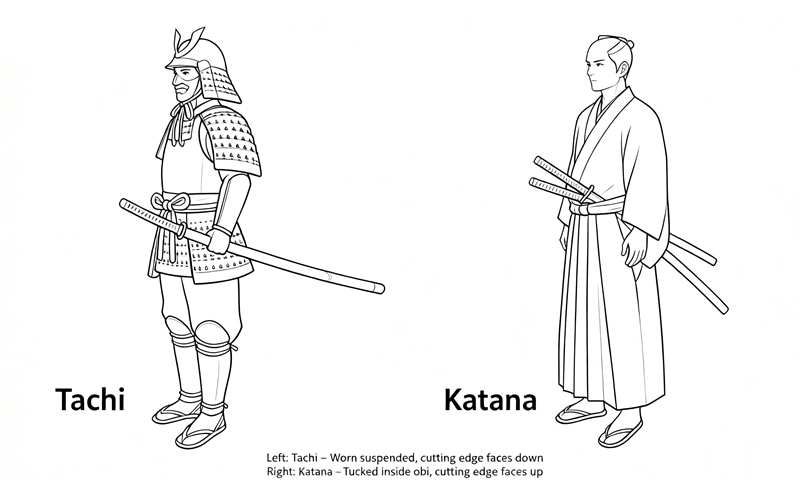
Although tachi and katana share many similarities in blade construction, their main difference comes from how they were worn and used. A tachi was suspended edge-down, while a katana was worn edge-up through the sash for faster drawing techniques.
History and Development of the Japanese Tachi Sword
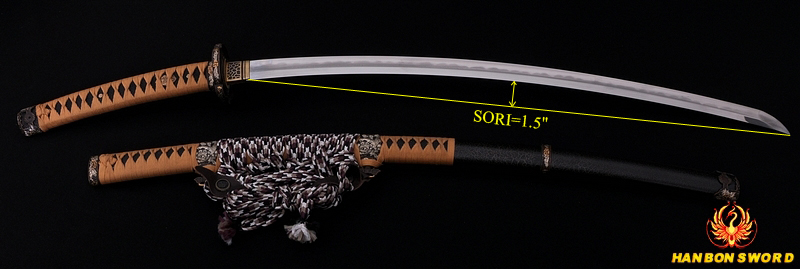
The development of the tachi marked an important transition from earlier straight swords to the curved Japanese sword style recognized today. During the Heian period (794–1185), Japanese swordsmiths developed curved blades with improved strength, balance, and cutting ability.
As the samurai class became more influential, the tachi became the main weapon of warrior elites. Its design was closely connected with mounted warfare, where samurai needed a sword capable of powerful cutting attacks while riding a horse.
During later periods, especially when infantry combat became more common, shorter swords such as the uchigatana and katana became more practical. However, many famous historical Japanese swords preserved today are originally tachi blades. :contentReference[oaicite:2]{index=2}
Main Features of a Tachi Blade
A traditional Japanese Tachi sword has several characteristics that distinguish it from other Japanese sword types.
- Deep Curvature (Sori): Tachi blades generally have a stronger curve compared with many later katana, helping improve cutting performance from horseback.
- Long Blade Length: Traditional tachi were usually longer than standard katana, providing greater reach.
- Single-Edged Blade: Like most Japanese swords, tachi have a sharpened edge on one side with a strong spine for durability.
- Shinogi-Zukuri Construction: Many tachi use the classic ridged blade geometry that provides strength and cutting efficiency.
- Tachi Koshirae Mounting: The sword was traditionally fitted with special mountings that allowed it to hang from the waist with the cutting edge downward.
These features made the tachi an effective battlefield weapon while also becoming a symbol of samurai status and craftsmanship.
What Is an Ōdachi Sword?
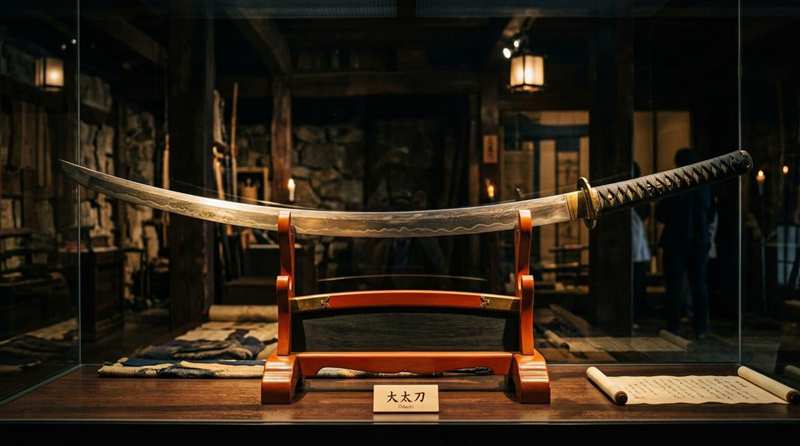
An Ōdachi (大太刀), also called a Nodachi, is a large Japanese sword that developed from the traditional tachi style. The name means “large sword” and refers to blades that are much longer than ordinary swords.
Because of their size and weight, Ōdachi swords were difficult to use in normal close combat. They were often associated with battlefield use, ceremonial purposes, or as symbols of power and status.
Some surviving Ōdachi examples are extremely large, showing the advanced forging skills of Japanese swordsmiths.
Tachi Sword vs Katana: What Is the Difference?
The Tachi sword and Katana are both iconic Japanese swords, and they share many similarities in blade construction. However, their design purpose, wearing method, and historical use are different.
| Feature | Tachi | Katana |
| Wearing Style | Worn edge downward, hanging from the waist | Worn edge upward through the sash |
| Historical Period | Mainly used before and during the early samurai period | Became dominant after the Muromachi period |
| Combat Style | Designed especially for mounted combat | Designed for faster drawing and close combat |
| Blade Shape | Often longer with deeper curvature | Generally shorter with moderate curvature |
Although the katana eventually replaced the tachi as the main samurai sword, the tachi remains an important foundation in the evolution of Japanese sword design.
Tachi Blade Geometry and Construction
The performance of a Tachi sword depends on its carefully designed blade geometry. Traditional Japanese swordsmiths developed specific shapes to create a strong, balanced, and effective weapon.
Most traditional tachi blades feature Shinogi-Zukuri construction, which includes a raised ridge line along the blade. This structure improves strength while allowing the cutting edge to remain sharp and efficient.
Important elements of tachi blade construction include:
- Sori (Curvature): The curve of the blade improves cutting efficiency and allows smoother movement.
- Shinogi: The ridge line that strengthens the blade structure.
- Hamon: The visible temper line created through differential heat treatment.
- Kissaki: The pointed tip section designed for control and precision.
- Nakago: The tang inserted into the handle that provides structural support.
A well-made tachi combines these elements to achieve both practical performance and artistic beauty.
How Did Samurai Use the Tachi Sword?
The tachi was closely connected with the traditional fighting style of mounted samurai. During early Japanese warfare, warriors often fought on horseback, requiring swords with enough length and curvature for powerful cutting attacks.
The downward-facing mounting position allowed the sword to hang naturally from the waist. This design protected the blade while making it convenient for mounted combat.
Besides battlefield use, high-quality tachi swords were also important symbols of samurai rank and were often decorated with elaborate fittings.
Why Are Tachi Swords Popular Among Collectors?
Modern collectors appreciate Japanese Tachi swords because they represent an earlier and highly important stage of Japanese sword history.
Compared with standard katana, tachi swords often have a more dramatic curve and longer profile, giving them a unique appearance. Their historical connection with samurai cavalry also makes them highly attractive to sword enthusiasts.
For collectors who want a sword with historical character, a custom tachi can combine traditional design with modern craftsmanship.
Choosing a Custom Tachi Sword
When choosing a custom Tachi sword, buyers should consider several important factors, including blade material, craftsmanship, historical style, and intended purpose.
- Blade Steel: High-quality steel such as T10 steel or 1095 carbon steel can provide excellent performance and durability.
- Heat Treatment: Proper clay tempering creates a stronger edge and traditional hamon pattern.
- Blade Length: Tachi swords are usually longer than standard katana, so balance and handling should be considered.
- Koshirae: Traditional fittings, saya, and handle designs greatly influence the final appearance.
A carefully crafted tachi allows collectors to experience the historical beauty of one of Japan’s most important sword designs.
Frequently Asked Questions About Tachi and Ōdachi Swords
What is a Tachi sword?
A Tachi sword is a traditional Japanese sword developed before the katana. It was worn with the cutting edge facing downward and was commonly used by samurai, especially during mounted combat.
What is the difference between Tachi and Katana?
The main difference between a Tachi and a Katana is the wearing style and historical usage. A Tachi was worn edge-down and designed mainly for mounted warfare, while a Katana was worn edge-up and optimized for quick drawing techniques.
What is an Ōdachi sword?
An Ōdachi is a large Japanese sword related to the Tachi design. It features a much longer blade and was used as a battlefield weapon, ceremonial object, or symbol of power.
Were Tachi swords used by samurai?
Yes. Tachi swords were one of the main weapons used by early samurai. Their long curved blades were especially suitable for mounted warriors during the Heian and Kamakura periods.
Is a Tachi sword longer than a Katana?
Many Tachi swords are longer and more deeply curved than typical Katana, although the exact dimensions vary depending on the historical period and swordsmith style.
Can I customize a Tachi sword?
Yes. Modern sword makers can create custom Tachi swords with different blade lengths, steel types, hamon styles, polishing options, and traditional fittings.
Final Thoughts
The Tachi sword represents one of the most important stages in the history of Japanese sword development. Before the katana became the famous symbol of the samurai, the tachi served as the primary sword of Japanese warriors.
With its elegant curvature, long blade, and traditional mounting style, the tachi reflects the skill of Japanese swordsmiths and the fighting style of early samurai.
Whether you are a collector interested in Japanese history or looking for a unique custom sword, a well-crafted Tachi or Ōdachi offers a connection to the craftsmanship and tradition of ancient Japan.