Basic Shapes of Katana Tsuka: Understanding Japanese Sword Handle Designs

The tsuka (柄) is one of the most important parts of a Japanese sword. Although many people focus mainly on the blade, the shape, size, and construction of the katana handle directly affect the sword’s balance, grip comfort, and overall appearance.

A well-designed katana tsuka allows the swordsman to control the blade more naturally. Traditional Japanese sword makers developed different handle shapes based on sword schools, fighting styles, and personal preferences. These designs are not only decorative but also influence how the sword feels in the hands.

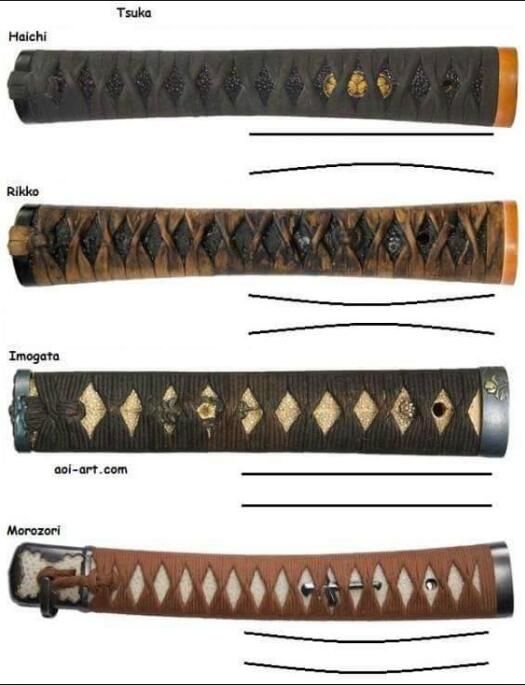
In this guide, we will explain the basic shapes of katana tsuka, including Haichi Tsuka, Rikko Tsuka, Imogata Tsuka, and Morozori Tsuka. Understanding these traditional Japanese sword handle shapes can help collectors and buyers choose a katana that matches their needs.


What Is a Katana Tsuka?

The tsuka is the handle of a Japanese sword where the swordsman holds and controls the blade. A traditional katana handle is usually made from a wooden core, covered with samegawa (ray skin), and wrapped with tsuka-ito (handle wrapping material).

Inside the tsuka is the sword tang, known as the nakago, which is secured with one or two bamboo pegs called mekugi. The combination of the wooden core, ray skin, wrapping, and fittings creates a strong connection between the blade and the user’s hand.

Traditional katana handles are generally oval-shaped rather than completely round. This oval profile helps the user naturally understand the blade direction without looking at the sword. The correct orientation of the edge and spine is especially important during Japanese sword techniques.


Why Does Katana Tsuka Shape Matter?

The shape of a katana handle affects more than appearance. Different tsuka designs provide different levels of control, comfort, and handling characteristics.

A properly shaped Japanese sword handle helps improve:

  • Grip stability during sword movement
  • Control of the blade during cutting practice
  • Balance between the blade and handle
  • Comfort during extended use
  • The traditional appearance of the katana

When choosing a custom katana, the tsuka shape should be considered together with blade length, sword weight, wrapping style, and personal preference. A handle that looks attractive but does not fit the user’s hand may reduce the overall experience of owning and using a Japanese sword.


The Four Basic Shapes of Katana Tsuka

Historically, Japanese sword craftsmen created different types of tsuka shapes depending on sword traditions and practical requirements. The four most commonly recognized katana handle shapes are:

  • Haichi Tsuka – The most common traditional katana handle shape
  • Rikko Tsuka – An hourglass-shaped handle design
  • Imogata Tsuka – A simple straight-sided handle shape
  • Morozori Tsuka – A curved handle style following the shape of the saya

Each tsuka style has its own visual characteristics and historical background. The choice of handle shape can change both the appearance and the feeling of the sword in hand.


1. Haichi Tsuka (平一柄) – The Most Common Katana Handle Shape

Haichi Tsuka is one of the most traditional and widely used katana handle designs. The shape is relatively straight, with a gentle oval profile that provides a simple and comfortable grip.

Because of its balanced design, Haichi Tsuka became popular among many Japanese sword makers and martial artists. It offers good control and allows the user to change hand positions smoothly during sword movements.

Many modern katana swords use this style because it combines traditional appearance with practical handling. For collectors looking for a classic Japanese sword design, Haichi Tsuka is one of the safest choices.

Main characteristics:

  • Straight and symmetrical appearance
  • Comfortable for different hand sizes
  • Traditional samurai sword style
  • Suitable for both display swords and functional katana

2. Rikko Tsuka (立鼓柄) – The Hourglass Katana Handle

Rikko Tsuka is a distinctive Japanese sword handle shape with a narrow middle section and wider ends, creating an hourglass-like appearance.

This design provides a more secure grip because the hands naturally lock into position around the thinner center area. The shape can reduce unnecessary movement between the hand and the handle during use.

Rikko Tsuka is often appreciated by collectors who prefer a more elegant and unique katana appearance. Compared with a straight handle, it creates a stronger visual contrast between the handle and fittings.

Main characteristics:

  • Hourglass-shaped profile
  • Improved grip positioning
  • Unique traditional appearance
  • Often chosen for high-end custom katana

3. Imogata Tsuka (芋形柄) – Simple and Practical Handle Design

Imogata Tsuka is a simple handle style with a smooth and slightly rounded shape. The name refers to its appearance, which resembles the shape of a sweet potato.

This tsuka design focuses on simplicity and practicality. It does not have dramatic curves or narrow sections, making it comfortable for users who prefer a natural and relaxed grip.

Many traditional Japanese swords used relatively simple handle shapes because functionality was more important than decoration. Today, Imogata Tsuka remains a popular choice for those who appreciate minimalist Japanese sword aesthetics.

Main characteristics:

  • Smooth and rounded design
  • Simple traditional appearance
  • Comfortable long-term grip
  • Suitable for classic-style katana

4. Morozori Tsuka (諸反柄) – Curved Katana Handle Shape

Morozori Tsuka is a curved handle design that follows the traditional curved shape of Japanese swords. The handle and blade create a more continuous visual line.

This style gives the katana a graceful appearance and is often selected for swords inspired by historical Japanese designs. The curved shape can also provide a different feeling when holding and presenting the sword.

Morozori Tsuka is especially attractive for collectors who want a katana with a strong traditional Japanese aesthetic.

Main characteristics:

  • Curved handle profile
  • Elegant traditional appearance
  • Matches classic Japanese sword proportions
  • Popular for custom-made katana projects

Comparison of Different Katana Tsuka Shapes

Tsuka StyleShapeMain FeatureRecommended For
Haichi TsukaStraight ovalClassic balanced gripMost katana collectors
Rikko TsukaHourglassSecure hand positioningUnique custom katana designs
Imogata TsukaRounded simple shapeComfortable and practicalTraditional style lovers
Morozori TsukaCurved shapeElegant appearanceHistorical Japanese sword collectors

How to Choose the Right Katana Tsuka Shape?

Choosing the right katana tsuka shape depends on your purpose, hand size, personal preference, and the style of sword you want. There is no single perfect handle design because each traditional shape provides a different appearance and handling experience.

For beginners and general collectors, Haichi Tsuka is usually the best option because it offers a classic appearance and comfortable grip. It is widely used on modern handmade katana and suits many different sword styles.

Collectors who prefer a more distinctive design may choose Rikko Tsuka or Morozori Tsuka. These styles create a stronger visual identity and are often selected for custom katana projects.

For those who appreciate simple traditional Japanese aesthetics, Imogata Tsuka provides a clean and elegant appearance while maintaining comfortable handling.


Relationship Between Tsuka Length and Katana Handling

The length of a katana handle also affects the overall balance of the sword. A longer tsuka provides more space for hand movement and can change the leverage of the blade, while a shorter handle creates a more compact feeling.

Traditional Japanese sword makers carefully matched the tsuka length with the blade size to create proper proportions. When ordering a custom katana, buyers can usually request different handle lengths according to their preference.

A well-balanced combination of blade length, tsuka shape, and fittings creates a katana that feels natural and comfortable in the hand.


Frequently Asked Questions About Katana Tsuka

What is the most common katana tsuka shape?

The most common katana tsuka shape is Haichi Tsuka. Its simple oval design provides a comfortable grip and traditional appearance, making it popular for many Japanese swords.

Why are katana handles not completely round?

Katana handles are usually oval-shaped because this helps the user naturally recognize the blade direction. The shape improves control and prevents the sword from rotating incorrectly during movement.

What is the best katana handle shape for beginners?

For beginners, Haichi Tsuka is usually recommended because it provides a balanced and comfortable grip. It is suitable for many types of Japanese swords and custom katana designs.

Can I customize the shape of my katana tsuka?

Yes. Many handmade katana makers offer custom tsuka options, including different handle shapes, lengths, wrapping styles, samegawa colors, and fittings. A customized tsuka allows collectors to create a sword that matches their personal preference.

Does tsuka shape affect katana performance?

Yes. The tsuka shape influences grip comfort, sword control, and overall handling. While the blade quality is important, a properly designed handle is also essential for a well-balanced Japanese sword.


Final Thoughts

The katana tsuka is much more than a simple handle. It represents centuries of Japanese sword craftsmanship and plays an important role in the sword’s balance, appearance, and usability.

Understanding different Japanese sword handle shapes helps collectors make better decisions when choosing a katana. Whether you prefer the classic Haichi Tsuka, the elegant Rikko Tsuka, the simple Imogata Tsuka, or the curved Morozori Tsuka, each design has its own unique character.

At HanBon Forge, customers can customize katana designs with different handle styles, fittings, wrapping materials, and blade options to create a Japanese sword that matches their personal vision.