
What is Shinogi-Zukuri Blade Shape? Complete Katana Guide
What Is Shinogi-Zukuri? Japanese Katana Blade Shape Explained
When most people imagine a traditional Japanese katana, they are usually picturing a Shinogi-Zukuri blade. This classic blade geometry is the most common and recognizable shape used on Japanese swords such as the katana, tachi, and many wakizashi.
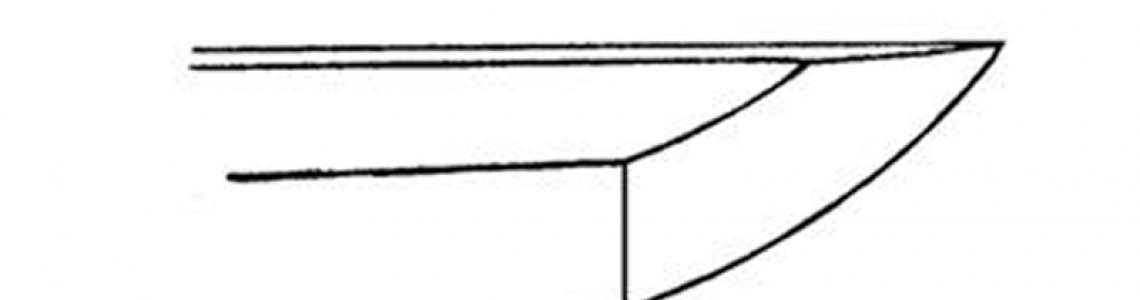
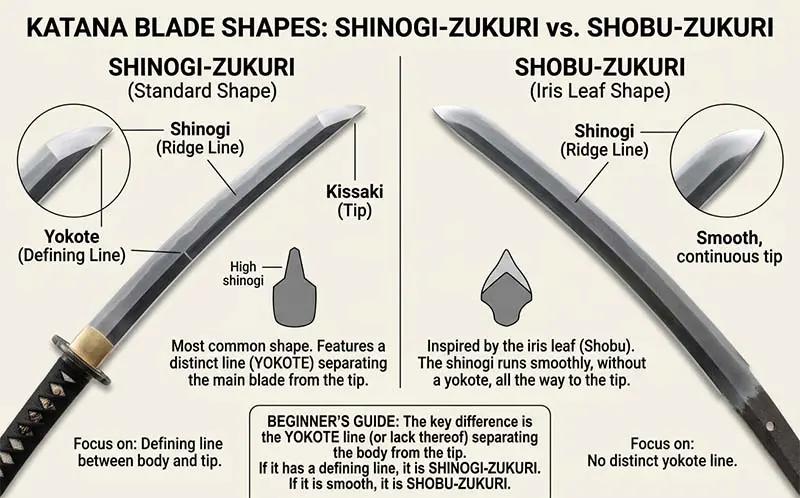
The design is known for its distinctive ridge line, called the shinogi, which gives the blade its characteristic faceted profile. Shinogi-Zukuri is also commonly associated with a clearly defined yokote, separating the main body of the blade from the kissaki, or tip.
But what exactly does Shinogi-Zukuri mean, and why did this Japanese sword blade shape become so closely associated with the katana?
What Does Shinogi-Zukuri Mean?
Shinogi-Zukuri (鎬造り) is a traditional Japanese sword blade construction characterized by a prominent ridge called the shinogi.
The shinogi runs lengthwise along the blade and separates the upper portion of the sword from the angled surfaces that lead toward the cutting edge. This creates several distinct planes across the blade rather than a simple flat surface.
In simple terms, if a katana has the familiar ridge running along both sides of the blade, it is likely based on a Shinogi-Zukuri blade shape.
What Is the Shinogi on a Katana?
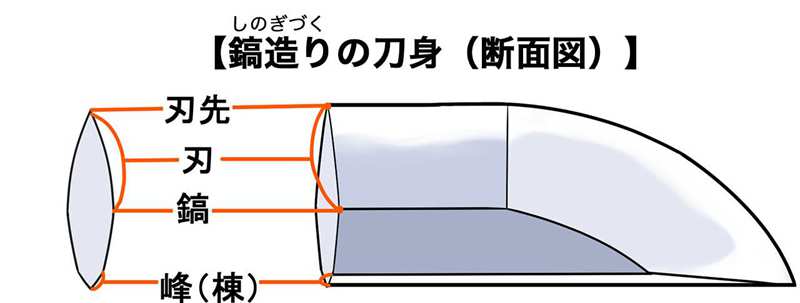
The shinogi is the ridge line that defines the geometry of a Shinogi-Zukuri blade. It is one of the most important visual and structural features of a traditional Japanese sword.
Above the shinogi is the shinogi-ji, while the lower part of the blade leads toward the cutting edge, known as the ha. Together, these surfaces create the familiar profile seen on many traditional katana.
The exact placement of the shinogi can vary depending on the sword's design, historical style, and intended use. Small changes in blade width, thickness, and ridge placement can noticeably affect the appearance and handling of the sword.
Main Features of a Shinogi-Zukuri Blade
A traditional Shinogi-Zukuri katana can usually be recognized by several distinctive features:
- A prominent shinogi: The ridge running along the length of the blade.
- Shinogi-ji: The surface between the shinogi and the spine of the sword.
- Angled blade surfaces: The planes extending from the ridge toward the cutting edge.
- A defined yokote: A visible transition between the main blade and the kissaki.
- A structured blade profile: Designed to balance strength, weight, and cutting characteristics.
These characteristics make Shinogi-Zukuri very different from flatter Japanese blade shapes such as Hira-Zukuri.
Why Is Shinogi-Zukuri the Most Common Katana Blade Shape?
Shinogi-Zukuri became one of the most popular Japanese sword blade shapes because it offers a practical balance between several important characteristics.
- A strong and recognizable blade structure
- Efficient weight distribution
- Versatile cutting characteristics
- Suitability for longer Japanese swords
- The classic appearance associated with traditional katana
For these reasons, Shinogi-Zukuri eventually became the blade geometry most closely associated with the Japanese katana. Modern traditional-style katana continue to use this design because it remains both visually appealing and highly versatile.
How Does Shinogi-Zukuri Affect Cutting Performance?
A Shinogi-Zukuri blade can be designed for different types of use. Some blades are made lighter and thinner for easier handling and light target cutting, while others are built with more thickness and blade mass for heavier targets.
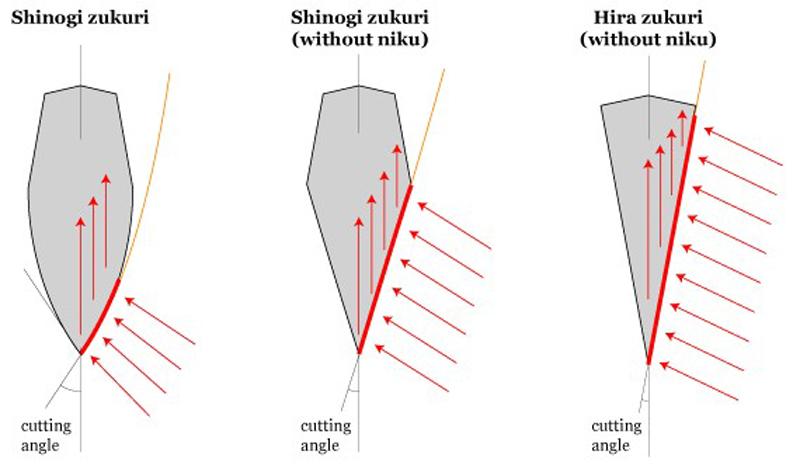
The cutting characteristics of a katana do not depend on the Shinogi-Zukuri shape alone. Other important factors include blade thickness, width, edge geometry, heat treatment, sharpness, and the amount of niku.
Niku refers to the amount of material or convexity behind the cutting edge. A blade with more niku generally has a more robust edge geometry, while a thinner geometry may prioritize easier cutting through softer targets.
This is why two Shinogi-Zukuri katana can look similar while performing very differently. The overall blade geometry matters just as much as the basic blade shape.
What Is the Yokote on a Shinogi-Zukuri Katana?
One of the easiest ways to recognize a traditional Shinogi-Zukuri blade is to look near the tip for the yokote.
The yokote is the transition that separates the main body of the blade from the kissaki, or tip. On a traditional Shinogi-Zukuri katana, the kissaki has its own distinct geometry rather than simply being a continuation of the main blade.
The yokote is therefore an important visual feature when identifying different Japanese sword blade shapes.
Shinogi-Zukuri vs Shobu-Zukuri: What Is the Difference?
Shobu-Zukuri is often compared with Shinogi-Zukuri because both blade styles use a shinogi ridge. At first glance, they can look quite similar.
The biggest difference is found near the tip.
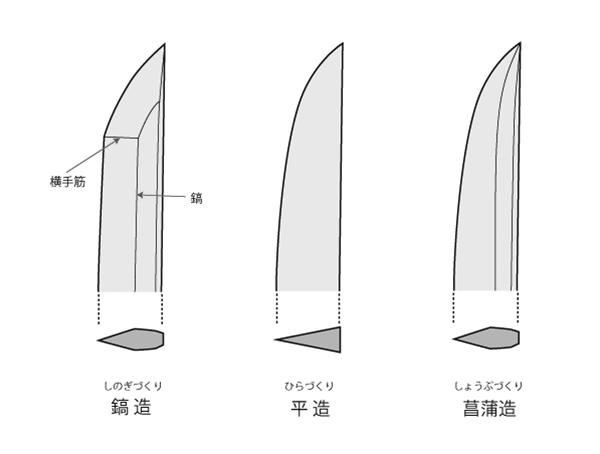
A traditional Shinogi-Zukuri blade usually has a clearly defined yokote separating the main blade from the kissaki. A Shobu-Zukuri blade, on the other hand, does not have this distinct separation. Its lines continue smoothly toward the tip.
| Feature | Shinogi-Zukuri | Shobu-Zukuri |
|---|---|---|
| Shinogi ridge | Yes | Yes |
| Defined yokote | Usually present | Not traditionally defined |
| Tip geometry | Distinct kissaki section | Smooth transition toward the tip |
| Overall appearance | Classic katana profile | Long, flowing blade profile |
Although the two styles share certain characteristics, the subtle differences in their lines, angles, surfaces, and tip geometry give them very different visual identities.
Shinogi-Zukuri vs Hira-Zukuri
Another important Japanese sword blade shape is Hira-Zukuri.
Unlike Shinogi-Zukuri, a Hira-Zukuri blade does not have a prominent shinogi ridge. Its blade profile is generally flatter and simpler in construction.
Hira-Zukuri is commonly seen on many tanto and shorter Japanese blades, while Shinogi-Zukuri became especially popular for longer swords such as katana and tachi.
Is Shinogi-Zukuri Good for a Katana?
Yes. Shinogi-Zukuri is one of the most practical and historically recognizable blade shapes for a traditional-style katana.
Its popularity comes from its versatility. Depending on the exact dimensions and blade geometry, a Shinogi-Zukuri katana can be designed for collecting, display, martial arts training, or different types of target cutting.
For buyers looking for the classic appearance of a Japanese samurai sword, Shinogi-Zukuri is usually the blade shape they expect to see.
How to Identify a Shinogi-Zukuri Blade
If you are examining a Japanese sword and want to identify a Shinogi-Zukuri blade, look for the following characteristics:
- A visible ridge running lengthwise along the blade.
- A shinogi-ji surface between the ridge and the spine.
- Angled surfaces extending from the shinogi toward the cutting edge.
- A distinct kissaki with a visible yokote.
- The familiar multi-faceted profile associated with a traditional katana.
These features make Shinogi-Zukuri one of the easiest Japanese blade geometries to recognize once you understand the basic parts of a katana.
FAQ About Shinogi-Zukuri
What is Shinogi-Zukuri?
Shinogi-Zukuri is a traditional Japanese sword blade shape characterized by a prominent ridge called the shinogi. It is the most common blade geometry associated with katana.
What is the shinogi on a katana?
The shinogi is the ridge line running along the blade. It separates different blade surfaces and is one of the defining features of a Shinogi-Zukuri sword.
Is Shinogi-Zukuri the most common katana blade shape?
Yes. Shinogi-Zukuri is the most recognizable and widely used traditional blade geometry for katana and many other longer Japanese swords.
What is the difference between Shinogi-Zukuri and Shobu-Zukuri?
The main difference is the tip geometry. Shinogi-Zukuri normally has a defined yokote separating the main blade from the kissaki, while Shobu-Zukuri has a smoother transition toward the tip without a traditionally defined yokote.
What is a yokote on a katana?
The yokote is the visible transition between the main body of the blade and the kissaki, or tip. It is a common feature of traditional Shinogi-Zukuri blades.
Is Shinogi-Zukuri good for cutting?
Shinogi-Zukuri is a versatile blade shape that can be adapted for different cutting purposes. However, actual cutting performance depends on the complete blade geometry, including thickness, width, niku, edge shape, heat treatment, and overall construction.
Which Japanese swords use Shinogi-Zukuri?
Shinogi-Zukuri is commonly found on katana, tachi, and many wakizashi. It is particularly associated with longer Japanese sword designs.
Final Thoughts
Shinogi-Zukuri is one of the most important blade shapes in Japanese sword history. Its distinctive ridge line, balanced geometry, and recognizable profile helped make it the defining blade shape of the traditional Japanese katana.
Understanding the shinogi, yokote, kissaki, and other parts of the blade makes it easier to compare different Japanese sword styles and choose the right blade geometry for your interests.
Whether you are a collector, a katana enthusiast, or simply learning about Japanese sword blade shapes, Shinogi-Zukuri is one of the essential designs to understand.