
Types of Katana Hamon: Suguha, Gunome, Choji & Notare
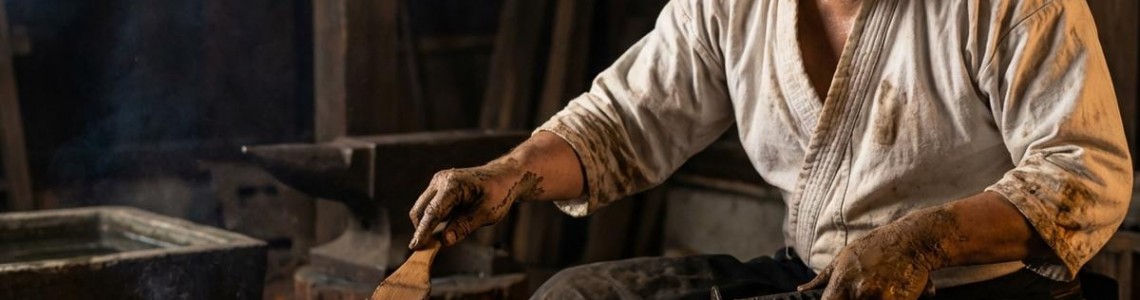
Types of Katana Hamon: Suguha, Gunome, Choji and Notare
The hamon is one of the most recognizable features of a traditional Japanese katana. This distinctive pattern runs along the blade near the cutting edge, creating a visual boundary between different areas of the steel. Depending on the blade's heat-treatment process, the hamon may appear as a straight line, rounded waves, flower-like shapes, or broad flowing curves.
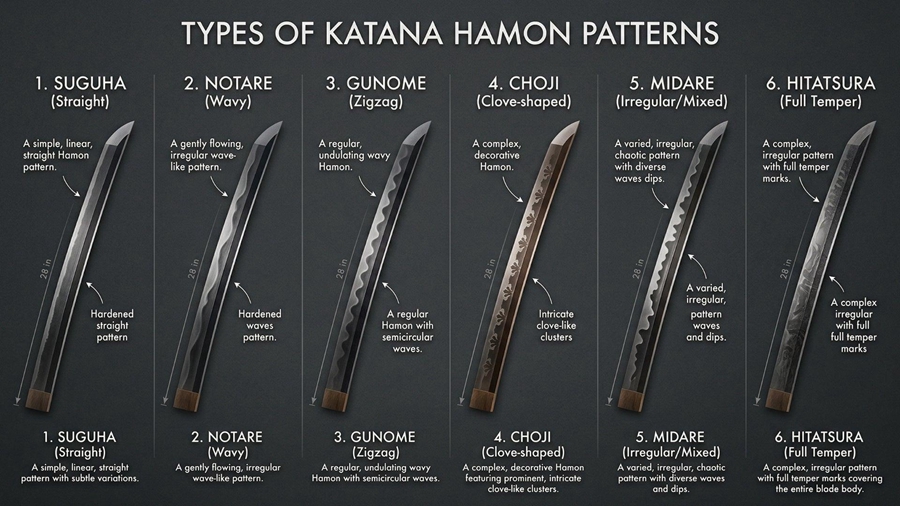
Among the many traditional Japanese sword patterns, Suguha, Gunome, Choji, and Notare are four well-known hamon styles. Each has its own visual character and reflects a different approach to Japanese swordmaking. Understanding these patterns can help collectors and sword enthusiasts appreciate the craftsmanship behind a katana and choose a blade that matches their preferences.
1. What Is a Katana Hamon?
A hamon is the visible temper line formed during the differential hardening of a Japanese sword blade. In traditional clay-tempering methods, the swordsmith applies a specially prepared clay mixture to different areas of the blade before heating and quenching it. The cutting edge cools more rapidly and typically becomes harder, while the spine cools more slowly and generally retains a different steel structure.
The boundary between these areas can become visible after polishing. This boundary is known as the hamon. Its shape depends on several factors, including clay application, blade geometry, steel composition, heating temperature, and quenching conditions.
A hamon is not simply a decorative line painted onto the blade. On a properly differentially hardened sword, it reflects the underlying heat-treatment process. However, not every visible line on a sword represents a genuine hardened boundary, so it is important to understand how the blade was made.
The appearance of a hamon can also vary depending on the polishing method, lighting, and viewing angle. Some patterns are easy to recognize, while others require careful inspection.
2. Suguha Hamon: The Straight Temper Line
Suguha is one of the most recognizable traditional hamon patterns. The Japanese term refers to a relatively straight temper line that follows the length of the blade, running parallel to the cutting edge.
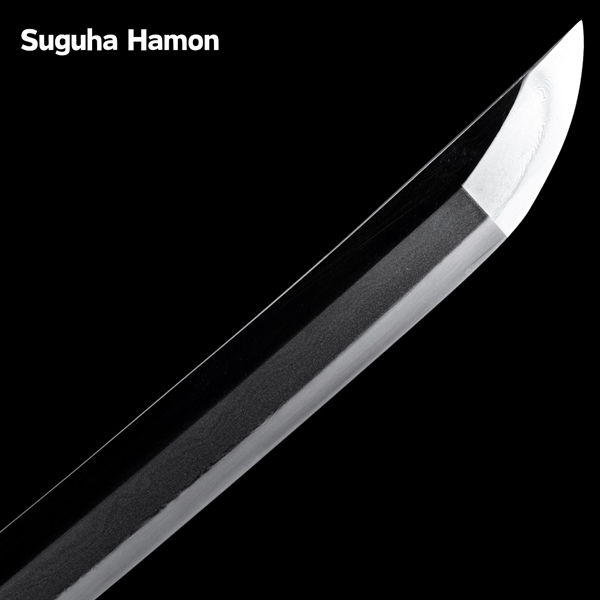
Unlike more elaborate patterns, Suguha does not feature prominent waves or large irregular shapes. Its simple appearance gives the blade a clean, restrained, and elegant character.
Key Characteristics of Suguha
- A relatively straight and narrow temper line.
- Generally follows the curve of the blade.
- Creates a clean and understated appearance.
- Can display subtle variations in brightness and texture after polishing.
Although Suguha may look simple, producing a consistent and visually pleasing pattern requires careful control during heat treatment. Small variations can influence the final appearance of the temper line.
For collectors who appreciate traditional aesthetics and understated details, a Suguha hamon can be an attractive choice.
3. Gunome Hamon: The Rounded Wave Pattern
Gunome is characterized by a series of rounded, repeating waves along the blade. The pattern typically consists of alternating curves that rise and fall in a relatively regular arrangement.
Compared with the straight appearance of Suguha, Gunome creates a more dynamic visual effect. Its rounded shapes can resemble a row of small hills or waves, making the temper line easier to distinguish at a glance.
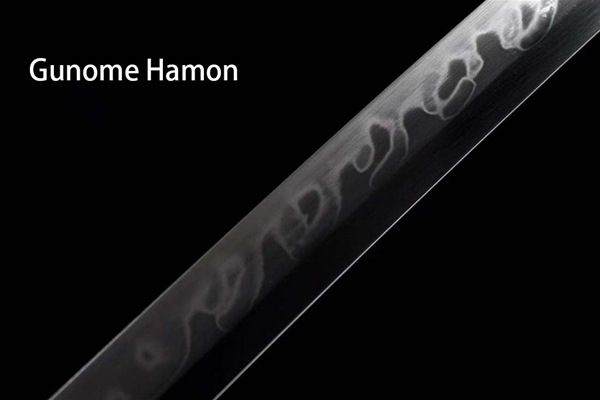
Key Characteristics of Gunome
- Rounded, repeating wave-like shapes.
- Often has a relatively regular rhythm.
- Creates a noticeable pattern along the cutting edge.
- Can appear in different sizes and arrangements.
Gunome is not limited to one exact shape. Some examples have evenly spaced rounded waves, while others feature variations in size and spacing. More complex patterns may combine Gunome elements with other hamon characteristics.
A Gunome hamon is a popular option for people who prefer a distinctive pattern without the more elaborate flower-like appearance of Choji.
4. Choji Hamon: The Clove-Shaped Pattern
Choji hamon is named after the shape of cloves, which its repeating forms are traditionally said to resemble. It features rounded, irregular, and sometimes branching shapes that create a flower-like appearance along the blade.
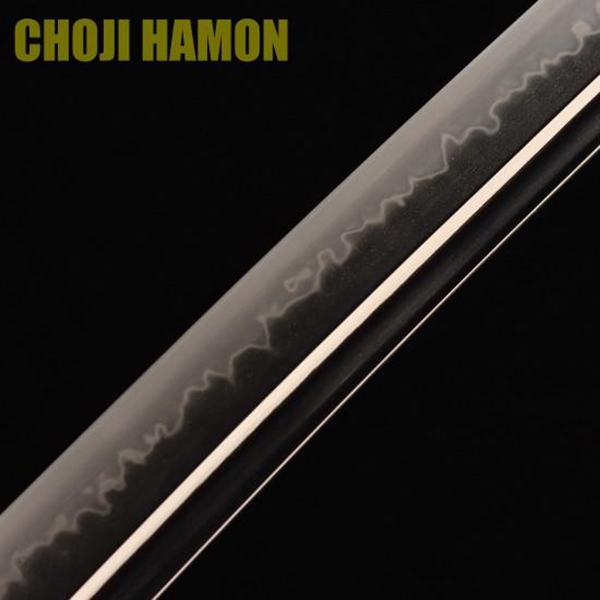
Compared with the more uniform waves of Gunome, Choji often has a more varied outline. Individual shapes may differ in height, width, and spacing, producing a lively and elaborate visual pattern.
Key Characteristics of Choji
- Clove-like or flower-shaped formations.
- Often features irregular rounded peaks.
- Can have a more elaborate appearance than Suguha or basic Gunome.
- May include variations in shape and pattern density.
Choji is associated with several historical Japanese swordmaking traditions and is especially appreciated for its decorative complexity. Different examples can look quite different, depending on the specific arrangement and style of the pattern.
For buyers who prefer a visually expressive blade, a Choji hamon can be an appealing option. Its flower-like forms make it particularly interesting to examine under good lighting.
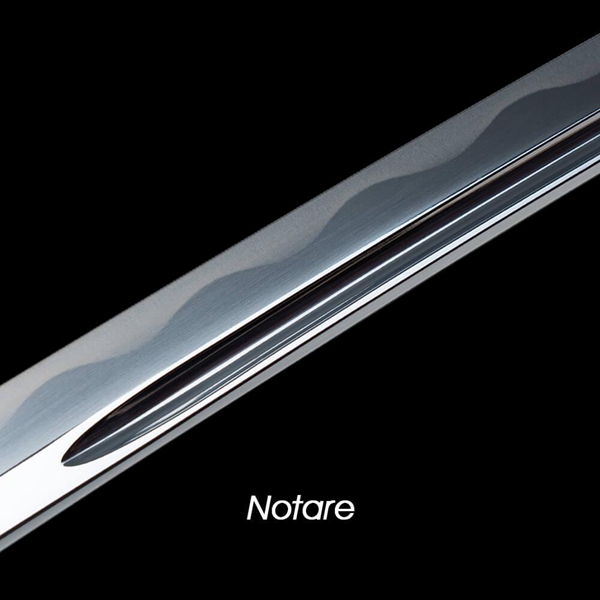
5. Notare Hamon: The Flowing Wave Pattern
Notare is a hamon pattern characterized by broad, gently undulating waves. Rather than forming small, repeated rounded shapes, the temper line rises and falls in larger, flowing curves.
The word Notare is commonly associated with a relaxed or undulating wave-like appearance. Its smooth transitions give the blade a natural sense of movement, creating a softer visual effect than the more pronounced shapes found in some Gunome or Choji patterns.
Key Characteristics of Notare
- Broad and gently curved waves.
- Smooth transitions between high and low sections.
- Often creates a flowing, natural appearance.
- Can vary from shallow undulations to more pronounced waves.
Notare can also appear together with other hamon elements. For example, a blade may feature a Notare-based pattern with additional Gunome-like sections. These combinations make individual blades visually unique.
Collectors who enjoy flowing lines and less repetitive patterns may find Notare especially attractive.
6. Suguha vs. Gunome vs. Choji vs. Notare: What's the Difference?
Although all four patterns are formed through the blade's heat-treatment process, their visual characteristics are quite different. The easiest way to distinguish them is to examine the shape and rhythm of the temper line.
| Hamon Type | Appearance | Visual Character |
|---|---|---|
| Suguha | Relatively straight line | Simple and restrained |
| Gunome | Rounded repeating waves | Regular and dynamic |
| Choji | Clove-like formations | Elaborate and flower-like |
| Notare | Broad flowing waves | Smooth and flowing |
It is worth remembering that traditional hamon patterns are not always completely separate categories. A single blade can contain elements of multiple styles, and the final appearance may vary depending on the swordsmith's technique and the blade's polishing.
7. Does Hamon Affect Katana Performance?
A hamon is closely connected to the heat treatment of a differentially hardened katana. However, the visual pattern alone does not determine the overall performance or quality of a sword.
Differential hardening generally creates a harder cutting edge and a relatively softer spine. This difference in steel structure is an important characteristic of traditionally clay-tempered Japanese blades.
The actual properties of a katana depend on several factors, including:
- Steel composition: The type and quality of steel influence the blade's material properties.
- Heat treatment: Heating and quenching conditions affect hardness, toughness, and the final hardened structure.
- Blade geometry: The blade's thickness, cross-section, and edge geometry influence its structural characteristics.
- Polishing and finishing: These processes affect the visibility of the hamon and the overall appearance of the blade.
A more elaborate hamon does not automatically mean a stronger or sharper katana. Likewise, a simple Suguha pattern should not be considered inferior to a complex Choji pattern. The quality of a sword must be evaluated through its construction, materials, heat treatment, geometry, and finishing rather than its hamon pattern alone.
8. How to Choose the Right Katana Hamon
Choosing a hamon is largely a matter of personal preference, especially when comparing properly made blades with different traditional patterns. Each style offers a distinct visual character.
- Choose Suguha if you prefer a clean, understated, and traditional appearance.
- Choose Gunome if you like rounded waves and a more regular repeating pattern.
- Choose Choji if you prefer elaborate, flower-like formations with varied shapes.
- Choose Notare if you enjoy broad, flowing curves and a natural wave-like appearance.
Beyond the hamon, consider the blade steel, heat-treatment method, blade geometry, fittings, and overall craftsmanship. If you are purchasing a katana for collecting or display, the pattern and finishing may be especially important to your decision.
If you are interested in a custom Japanese sword, you can explore the available options at HanBon Forge's Custom Katana and learn more about the different blade and fittings choices.
Frequently Asked Questions About Katana Hamon
1. What is the most common type of katana hamon?
Several hamon patterns are well known in Japanese swordmaking, including Suguha, Gunome, Choji, and Notare. Their prevalence varies across different historical periods, swordmaking schools, and individual smiths.
2. What is the difference between Gunome and Choji hamon?
Gunome typically features rounded, repeating wave-like shapes. Choji has more irregular clove-like or flower-shaped formations. Some blades combine characteristics of both patterns.
3. Is a visible hamon proof that a katana is clay tempered?
Not necessarily. A visible line alone does not prove that a blade was differentially hardened using traditional clay application. The manufacturing process and the underlying steel structure must also be considered.
4. Does a more complicated hamon mean a better katana?
No. A complicated hamon may require particular skill and can be visually impressive, but it does not automatically indicate better blade quality. Steel, heat treatment, geometry, and finishing are all important.
5. Can a katana have more than one hamon pattern?
Yes. Some blades combine different visual elements, such as Notare with Gunome-like sections. Traditional hamon patterns can vary considerably and do not always fit into one simple category.
6. Why does my katana hamon look different under different lighting?
The visibility of a hamon depends on the blade's polishing, surface condition, lighting direction, and viewing angle. Some details become more apparent when light reflects across the blade at an angle.
Final Thoughts
The hamon is an important part of Japanese swordmaking, connecting the blade's heat treatment with its distinctive appearance. From the straight simplicity of Suguha to the rounded waves of Gunome, the flower-like shapes of Choji, and the flowing curves of Notare, each pattern offers a different way to appreciate a katana.
Understanding these four styles makes it easier to recognize the details of a Japanese sword and choose a blade that suits your taste. Whether you prefer a simple traditional line or a more elaborate pattern, the hamon is one of the many details that makes every katana worth examining.