
Katana Handle Length Guide: How to Choose the Right Tsuka
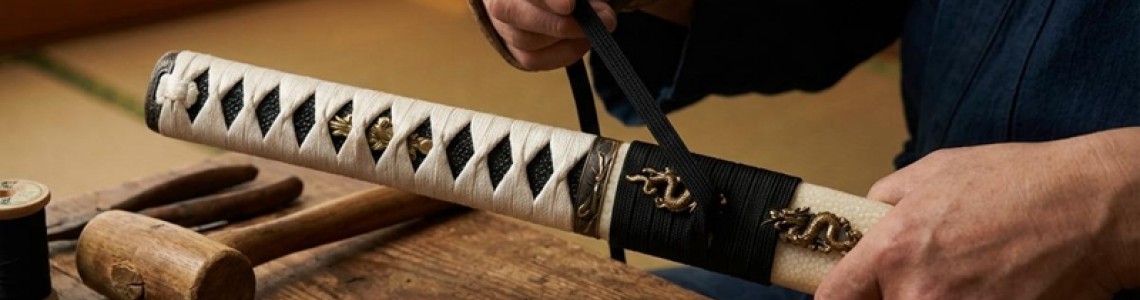
Katana Handle Length Explained: What Should Buyers Know?
When choosing a katana, buyers often focus on blade steel, hamon, fittings, and overall appearance. However, the handle is just as important to the sword's overall proportions and handling characteristics. A handle that looks too short or too long can change the visual balance of the sword and may not suit the intended use.
The Japanese term for a katana handle is tsuka (柄). Its length depends on the sword's design, blade dimensions, mounting style, and intended purpose. There is no single handle length that is correct for every katana.
This guide explains how katana handle length is measured, how it relates to blade length, and what buyers should consider when selecting a sword or requesting a custom build.
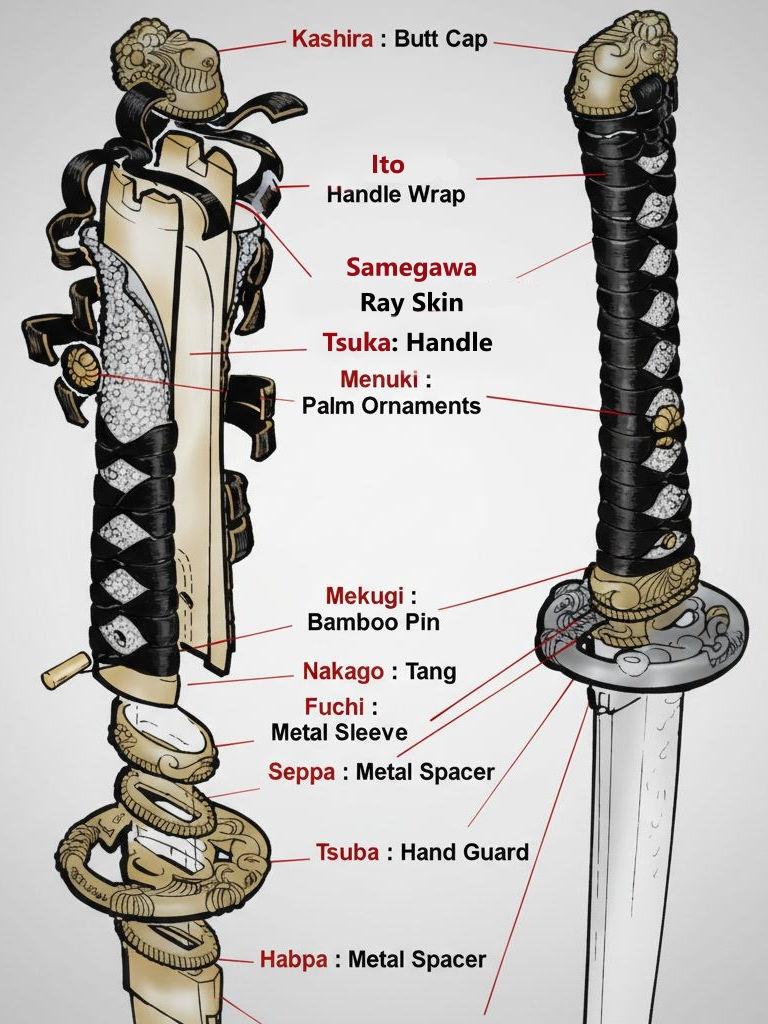
1. What Is a Katana Handle (Tsuka)?
The tsuka is the handle fitted over the tang of a Japanese sword. On a traditionally mounted katana, it commonly includes a wooden core, ray skin covering (samegawa), braided handle wrapping (tsuka-ito), and fittings such as the menuki and fuchi.
The handle is part of the sword's overall design. Its length, thickness, shape, and wrapping can affect the appearance of the mounting and the space available for the hands.
When comparing swords, remember that the visible handle length is not necessarily the same as the length of the internal tang. The tang extends inside the handle, so measurements should be taken from the exterior of the mounted sword unless the manufacturer specifies otherwise.
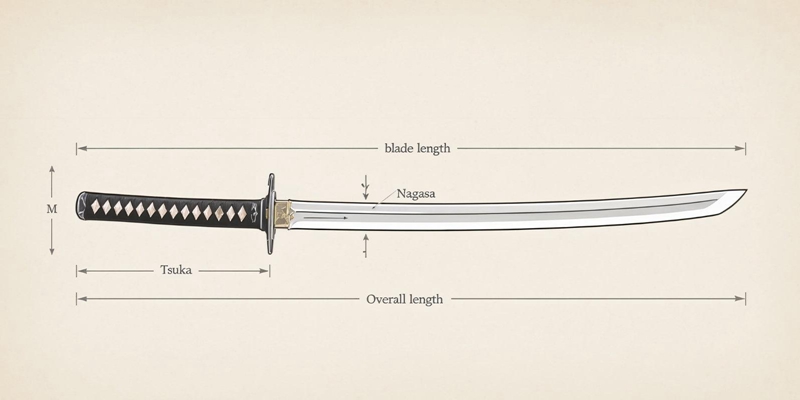
2. How Long Is a Typical Katana Handle?
Many modern katana replicas have handles in the approximate range of 10 to 12 inches (25 to 30 cm). This is a general reference, not a universal historical standard. Traditional Japanese swords vary in their dimensions, and modern replicas may follow different design conventions.
A handle's suitability cannot be determined by length alone. The sword's blade length, overall proportions, handle thickness, fittings, and intended purpose all matter.
| Measurement | What to Know |
|---|---|
| Handle length | Measure the visible exterior handle from the front fitting near the guard to the end of the handle. |
| Blade length | Check how the manufacturer defines blade length, as measurement conventions can differ. |
| Overall length | This may refer to the sword with or without its scabbard, so check the product specification. |
Before buying, check the actual measurements listed on the product page rather than assuming every katana follows the same proportions.
3. How to Measure Katana Handle Length
For a consistent comparison, measure the visible handle of the assembled sword from the front of the handle near the tsuba (guard) to the end of the tsuka. Keep the measuring tape or ruler aligned with the handle's length.
Use the following steps:
- Place the sword securely on a stable surface.
- Identify the front of the handle, immediately behind the tsuba.
- Measure along the handle to its rear end.
- Record the measurement in inches or centimeters.
- Use the same method when comparing another sword.
For custom orders, ask the maker to confirm the measurement points before production. This helps avoid confusion about whether a quoted dimension includes the end fittings.
Do not disassemble a mounted sword solely to measure its handle. If the internal construction or tang length matters, ask the maker for the relevant specifications.
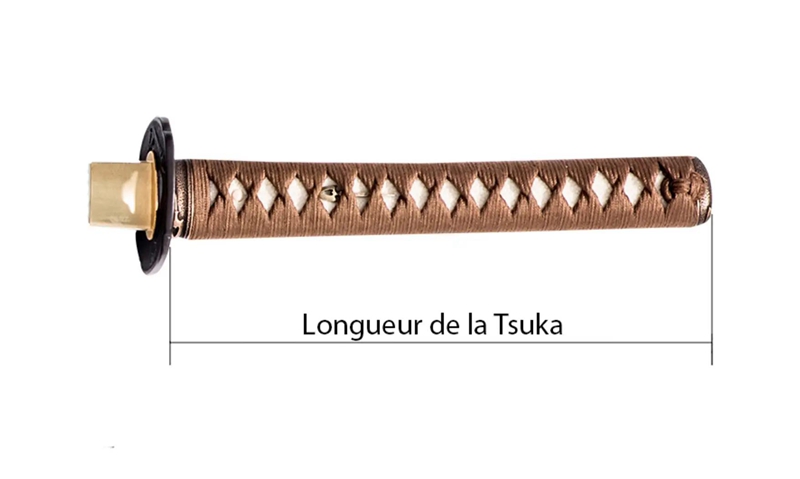
4. How Does Handle Length Relate to Blade Length?
Blade and handle length should be considered together. A longer blade paired with a relatively short handle can create a different visual impression from a shorter blade with a longer handle. However, there is no single blade-to-handle ratio that applies to every Japanese sword.
Historical examples, modern reproductions, and custom swords can all have different proportions. The style of the mounting and the maker's design choices also influence the final appearance.
When evaluating proportions, consider:
- Blade length: Compare the handle with the actual blade measurement provided by the seller.
- Handle thickness: Length alone does not show how substantial or comfortable a handle may feel.
- Fittings: The tsuba, fuchi, and kashira contribute to the visual transition between blade and handle.
- Overall design: The handle should suit the intended style of the sword rather than follow an arbitrary ratio.
For a product comparison, use the published measurements of each sword. Photographs can help you assess appearance, but perspective and camera angle can make proportions difficult to judge accurately.
5. How Should Buyers Choose a Handle Length?
The right handle length depends on why you are buying the sword and which characteristics matter most to you.
For Collectors and Display
Collectors may prioritize visual balance, historical inspiration, and consistency with the sword's overall mounting. Compare the handle with the blade and fittings, and review the product photographs from several angles.
For Training
People considering a sword for martial arts practice should follow their instructor's recommendations and the equipment requirements of their school. Handle dimensions alone do not establish that a sword is suitable for training. Construction, balance, maintenance, and the type of practice are also important.
For Custom Orders
If you want a particular handle length, confirm the exact requested dimension with the maker before production. Include the measurement unit and clarify the start and end points. You can also ask whether the requested length is compatible with the blade and mounting design.
You can explore HanBon Forge's custom sword options if you want to discuss a specific design or set of dimensions.
6. Does Hand Size Determine the Best Katana Handle Length?
Hand size can be relevant to handle comfort, but it does not determine the ideal length on its own. Handle thickness, shape, wrapping, and the spacing available for the hands also affect how a handle feels.
A longer handle is not automatically more comfortable, and a shorter handle is not necessarily unsuitable. The complete design and the intended use must be considered together.
If comfort is a priority, ask the maker about the handle's length and approximate thickness. Where possible, compare the specifications with a similar sword you have already handled.
7. Common Mistakes When Comparing Katana Handles
- Assuming every katana has the same handle length: Dimensions vary by design and maker.
- Judging length from photographs alone: Perspective can distort proportions.
- Confusing handle length with tang length: The tang extends inside the handle and is not fully visible on an assembled sword.
- Ignoring handle thickness: Two handles of equal length may feel different.
- Requesting custom dimensions without defining measurement points: Confirm exactly what the quoted length includes.
- Assuming a longer handle is always better: Suitability depends on the whole sword and its intended purpose.
8. Katana Handle Length Checklist Before Buying
Before placing an order, use this checklist to compare product specifications:
- Confirm the listed handle length and measurement unit.
- Check where the handle measurement begins and ends.
- Compare the handle with the blade length and overall sword design.
- Review handle thickness, wrapping, and fittings where specifications are available.
- For a custom sword, confirm the requested dimensions with the maker before production.
- If buying for practice, follow your instructor's guidance and verify that the sword is appropriate for the activity.
A careful comparison of measurements and construction details will give you a clearer picture than relying on a general rule about handle length.
Frequently Asked Questions
How long is a standard katana handle?
Many modern katana replicas have handles around 10 to 12 inches (25 to 30 cm), but this is only a general reference. Actual dimensions vary by sword design and manufacturer.
What is the Japanese word for a katana handle?
The Japanese word is tsuka (柄). It refers to the handle fitted over the sword's tang.
How do you measure a katana handle?
For a consistent exterior measurement, measure from the front of the handle near the tsuba to the rear end of the tsuka. Confirm the maker's measurement convention when comparing products or ordering a custom sword.
Should a katana handle be longer for larger hands?
Not necessarily. Hand size is only one consideration. Handle thickness, shape, sword proportions, and intended use also matter.
Can I request a custom katana handle length?
Custom dimensions may be possible depending on the sword design. Contact the maker before production to confirm the requested measurement, measurement points, and compatibility with the blade and fittings.
Does a longer katana handle make the sword better balanced?
Not automatically. Balance depends on the entire sword, including blade dimensions, handle construction, fittings, and material distribution. Handle length alone cannot determine balance.
Final Thoughts
Katana handle length is one part of a sword's overall design. Rather than relying on a single standard measurement, compare the tsuka with the blade, review the handle's thickness and fittings, and consider the sword's intended purpose.
For a custom katana, the best approach is to confirm the exact dimensions and measurement points with the maker before production. Clear specifications help ensure that the finished sword matches your expectations.
Leave a Comment