
Bronze Sword vs Iron Sword vs Steel Sword: Key Differences
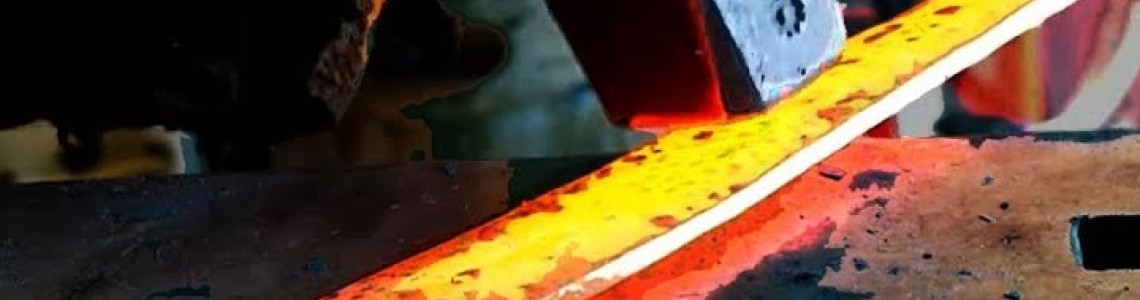
Bronze Sword vs Iron Sword vs Steel Sword: What Is the Difference?
When looking at the history of swords, one of the biggest changes was the transition from bronze to iron and eventually to steel.
The material used for a sword blade affects its hardness, toughness, durability, edge performance, manufacturing process, and even the way a sword is designed.
So, what is the difference between a bronze sword, iron sword, and steel sword?
The answer is more complicated than simply saying that one metal is "better" than another. Ancient bronze and iron swords were made using different technologies, while the performance of a modern steel sword depends heavily on its carbon content and heat treatment.
In this guide, we will compare bronze swords vs iron swords vs steel swords, explain how sword metallurgy developed, and look at why steel eventually became the dominant material for sword blades.
Bronze Sword
Bronze was one of the earliest metals widely used for sword making.
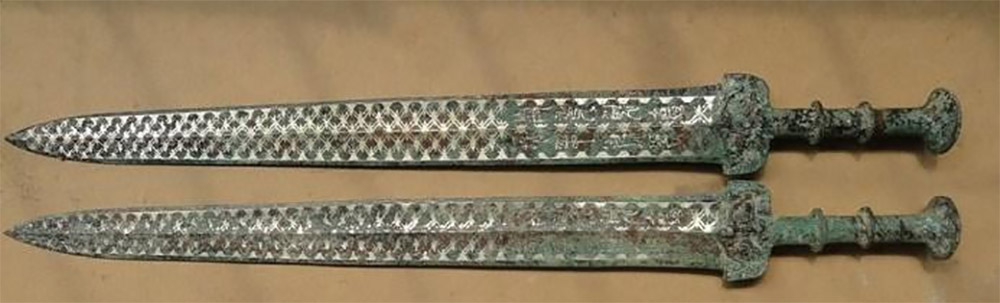
Bronze is primarily an alloy of copper and tin, although historical bronze compositions varied between cultures and periods. During the Bronze Age, advances in copper alloy production allowed craftsmen to make longer and more effective edged weapons than those made from stone or other earlier materials.
Bronze swords were generally produced by casting and could then be finished by grinding, polishing, and, in some traditions, controlled hammering.
Advantages of Bronze Swords
Bronze had several important advantages for early sword makers.
First, bronze could be cast into relatively complex shapes. This gave ancient craftsmen considerable freedom when designing blades, hilts, and other components.
Bronze is also naturally resistant to corrosion compared with ordinary iron. Ancient bronze objects can develop a stable surface patina, which is one reason bronze swords and other archaeological artifacts can survive for thousands of years.
Another important advantage was that bronze could be hardened through suitable working processes. Bronze swords were therefore not simply soft pieces of cast metal.
Disadvantages of Bronze Swords
Bronze also had limitations.
The performance of a bronze sword depended heavily on its alloy composition, manufacturing method, blade geometry, and working process. Some bronze alloys could be relatively hard, while others were more susceptible to deformation or fracture.
Another major issue was the availability of tin.
Tin deposits were not equally accessible in all regions, and long-distance trade was often necessary to obtain it. This made bronze production dependent on established trade networks.
As iron became more widely available, its abundance eventually gave many societies a practical alternative.
Iron Sword
The development of iron metallurgy marked an important transition in ancient sword making.
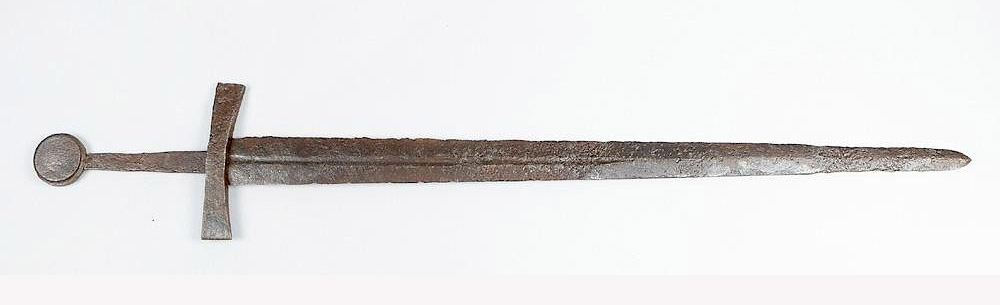
Early iron swords should not be confused with modern steel swords. Ancient iron was often produced using bloomery furnaces, resulting in material with variable carbon content and other impurities.
In other words, an early iron sword was not necessarily made from pure iron, and it was not automatically stronger than every bronze sword.
Why Did Iron Replace Bronze?
One major reason was availability.
Iron ore is relatively abundant in many parts of the world, while the tin required for bronze could be much harder to obtain. As ironworking techniques improved, iron became increasingly practical for producing tools, weapons, and other objects on a larger scale.
The transition was therefore not simply a matter of "iron being stronger than bronze."
Technology, raw materials, economics, manufacturing traditions, and military requirements all played a role.
Early Iron Sword Performance
Early iron could be relatively soft compared with later steels.
Swordsmiths improved its properties through forging and other forms of working. Some blades also contained varying amounts of carbon, which could result in steel-like regions within an otherwise iron-rich blade.
This gradual improvement in metallurgy eventually led to more sophisticated forms of steel production and heat treatment.
Steel Sword
Steel changed the possibilities of sword making.
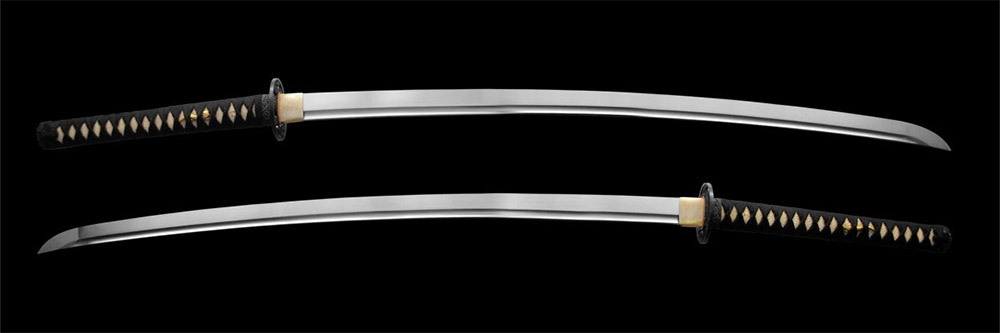
Steel is an iron-based alloy containing carbon, with its properties strongly influenced by carbon content, alloying elements, and heat treatment.
Unlike the simple idea that "coal was added to iron," historical steel production involved several different processes. Over time, swordsmiths learned how to control carbon and use techniques such as quenching and tempering to produce blades with a better balance of hardness and toughness.
This was a major development in the history of sword making.
Why Is Steel Better for Sword Blades?
A well-made steel blade can combine several properties that are important for a sword:
Hardness
Toughness
Strength
Edge retention
Flexibility
Wear resistance
Consistent performance
However, steel is not automatically better simply because it is steel.
The type of steel and the heat treatment are extremely important.
For example, a poorly heat-treated steel sword can be too soft, too brittle, or improperly balanced. A properly heat-treated blade can provide a much better combination of hardness and toughness.
This is why modern sword making focuses not only on steel type but also on blade geometry, heat treatment, construction, and finishing.
Bronze Sword vs Iron Sword vs Steel Sword
The three materials can be compared in a simple way:
| Feature | Bronze Sword | Iron Sword | Steel Sword |
|---|---|---|---|
| Main material | Copper-based alloy | Primarily iron | Iron + carbon |
| Historical use | Bronze Age | Iron Age and later | Ancient to modern |
| Typical production | Often cast and worked | Forged and worked | Forged and heat-treated |
| Hardness | Depends on alloy and working | Often relatively low in early examples | Can be significantly higher |
| Toughness | Depends on alloy and design | Generally useful but variable | Can be carefully engineered |
| Corrosion resistance | Generally good | Relatively poor | Depends on steel and finish |
| Edge retention | Moderate to good depending on alloy | Often limited | Generally excellent when properly heat-treated |
| Manufacturing flexibility | Good for casting | Good for forging | Excellent for modern forging |
| Modern sword use | Mostly historical/reproduction | Rare | Standard material |
The table is a general comparison. Historical swords varied considerably, so material alone cannot determine the performance of an individual blade.
Bronze vs Iron Sword: Which Was Better?
It is tempting to say that iron swords simply replaced bronze because iron was stronger.
The real story is more complicated.
Bronze can have useful mechanical properties, and some ancient bronze swords were carefully designed and manufactured. Early iron could also be relatively soft and inconsistent.
The major advantage of iron was its availability in many regions and the development of increasingly effective ironworking techniques.
As smiths learned to control carbon and improve heat treatment, the boundary between iron and steel became increasingly important.
This eventually gave swordsmiths access to materials with much greater potential for hardness and toughness.
Iron vs Steel Sword: What Is the Difference?
The biggest difference is carbon content and material properties.
Iron with very little carbon behaves differently from steel containing enough carbon to respond effectively to heat treatment.
A properly heat-treated steel blade can achieve a much higher level of hardness than typical wrought iron while still retaining useful toughness.
This makes steel especially suitable for sword blades.
However, hardness should not be confused with overall quality.
A sword that is extremely hard but too brittle can fail under impact. A blade that is too soft may bend easily and lose its edge.
Good sword making is therefore about finding the right balance.
Does a Higher Carbon Steel Make a Better Sword?
Not necessarily.
High carbon steel is popular in sword making because it can achieve high hardness and good edge retention after suitable heat treatment.
However, increasing carbon content does not automatically make a sword better.
Too much hardness without sufficient toughness can increase brittleness. Heat treatment must therefore be carefully controlled.
This is especially important for functional sword blades.
For modern swords, factors such as:
Steel type
Carbon content
Heat treatment
Blade thickness
Blade geometry
Tempering
Tang construction
Manufacturing quality
all contribute to the final result.
Why Are Modern Swords Usually Made of Steel?
Modern sword makers generally use steel because it offers a combination of performance, consistency, and manufacturing flexibility that is difficult to achieve with traditional bronze or ordinary wrought iron.
Modern steel production also provides much more consistent material properties than many historical forms of iron.
Depending on the purpose of the sword, manufacturers may choose different steels.
For example, 1060, 1095, 9260, T10, and various Damascus steels are commonly encountered in modern sword production, with each material offering different characteristics.
The steel itself is only part of the equation.
Heat treatment and blade construction are equally important.
What About Japanese Katana?
The Japanese katana is one of the best-known examples of historical steel sword making.
Traditional Japanese swordsmiths developed sophisticated methods for working with steel, including techniques designed to create different properties in different parts of the blade.
The traditional Japanese sword-making process is very different from modern mass production, but the underlying principle remains important:
A good sword requires the right combination of material, geometry, heat treatment, and craftsmanship.
Modern katana can be made using different steels and production methods, depending on whether the goal is historical reproduction, martial arts practice, collecting, display, or cutting.
Is Steel Always the Best Sword Material?
For most modern functional swords, steel is the practical choice.
But "best" depends on what you want from the sword.
If you are interested in historical authenticity, a bronze sword reproduction may be more appropriate for a Bronze Age collection.
If you are studying early Iron Age weapons, an iron or historically accurate low-carbon steel reproduction may make more sense.
If you want a modern functional sword, properly heat-treated steel is usually the better choice.
The important point is that there is no single best sword material for every purpose.
What Should You Look for When Buying a Steel Sword?
If you are buying a modern sword, don't focus only on the name of the steel.
Instead, look at the complete construction.
1. Steel Type
Find out what steel the blade is made from.
Common modern sword steels include 1060, 1095, 9260, T10, and other carbon or alloy steels.
2. Heat Treatment
Heat treatment has a major influence on the final performance of a sword.
A good steel with poor heat treatment can perform worse than a more ordinary steel that has been properly treated.
3. Blade Construction
For a functional sword, blade construction matters.
A properly constructed full-tang sword can provide a solid connection between the blade and handle, depending on the overall design and assembly.
4. Blade Geometry
Thickness, distal taper, profile, edge geometry, and curvature all influence how a sword handles and performs.
5. Intended Use
Before buying a sword, decide whether you want it for:
Display
Collecting
Historical reproduction
Martial arts practice
Cutting practice
Costume or decoration
A display sword and a functional cutting sword have very different requirements.
Bronze Sword vs Iron Sword vs Steel Sword: The Bottom Line
The evolution from bronze to iron and then to increasingly sophisticated steels was not a simple story of one metal becoming "better" overnight.
Bronze allowed ancient craftsmen to create effective swords long before modern steel existed.
Iron became increasingly important as ironworking technology developed and iron ore was more widely available.
Steel eventually provided swordsmiths with much greater control over hardness, toughness, edge performance, and blade design.
For modern sword buyers, the most important lesson is simple:
Don't judge a sword only by the name of its material.
Steel type, heat treatment, blade geometry, construction, and craftsmanship all matter.
If you're choosing a modern sword, a properly heat-treated steel blade is generally the most practical option. For collectors interested in history, however, bronze and early iron swords remain fascinating examples of how metallurgy shaped the development of the sword.
Frequently Asked Questions
Is a bronze sword stronger than an iron sword?
Not necessarily. The performance of a bronze or iron sword depends on its alloy composition, manufacturing method, blade design, and working process. Early iron was not automatically stronger than every bronze alloy.
Is an iron sword the same as a steel sword?
No. Iron and steel are different materials. Steel is an iron-based alloy containing carbon, and its properties can be significantly improved through controlled heat treatment.
Why did swords change from bronze to iron?
The transition was influenced by several factors, including the availability of raw materials, advances in metallurgy, manufacturing technology, and economic and military changes. Iron ore was more widely available in many regions than the tin needed for bronze.
Why is steel commonly used for modern swords?
Steel can provide a useful combination of hardness, toughness, strength, edge retention, and manufacturing flexibility. Modern steel production also offers much more consistent material properties than many historical forms of iron.
Is high carbon steel good for swords?
High carbon steel can be very suitable for sword blades because it can achieve high hardness and good edge retention after proper heat treatment. However, the steel grade and heat treatment both matter.
What is the best steel for a sword?
There is no single best steel for every sword. Different steels offer different combinations of hardness, toughness, flexibility, edge retention, and ease of heat treatment. The intended use of the sword should be considered first.
Is 1095 steel good for swords?
1095 is a popular high-carbon steel for sword making. When properly heat-treated, it can produce a hard blade with good edge retention. However, its performance depends heavily on heat treatment and blade design.
Is 1060 steel good for swords?
1060 is also widely used for sword blades. It can provide a useful balance of hardness and toughness when properly heat-treated, making it a common choice for functional swords.
Are bronze swords still made today?
Yes. Bronze sword reproductions are still made for historical collections, reenactment, museums, decorative purposes, and collectors interested in Bronze Age weapons.
What is more durable, iron or steel?
In general, properly manufactured and heat-treated steel offers greater potential for hardness, strength, and durability than ordinary wrought iron. However, actual performance depends on the specific material and construction.
Final Thoughts
The history of sword making is closely connected to the history of metallurgy.
Bronze made early swords possible. Iron made large-scale production more practical in many regions. Steel gave swordsmiths greater control over the balance between hardness and toughness.
Today, steel remains the standard material for most modern sword blades because it offers a combination of performance and versatility that bronze and ordinary iron cannot easily match.
Whether you're interested in a historical bronze sword, an Iron Age reproduction, a Japanese katana, or a modern high-carbon steel sword, understanding the material is an important part of choosing the right blade.
For collectors and sword enthusiasts, the evolution from bronze to iron to steel is more than a change in materials. It is a story of technology, craftsmanship, and centuries of experimentation.
Looking for a modern steel sword or a custom-made katana? Explore HanBon Forge's collection of handmade swords and custom sword options.