
Wodao: History, Design and Chinese Japanese-Style Sword

Wodao: History, Design and the Japanese Influence on This Chinese Sword
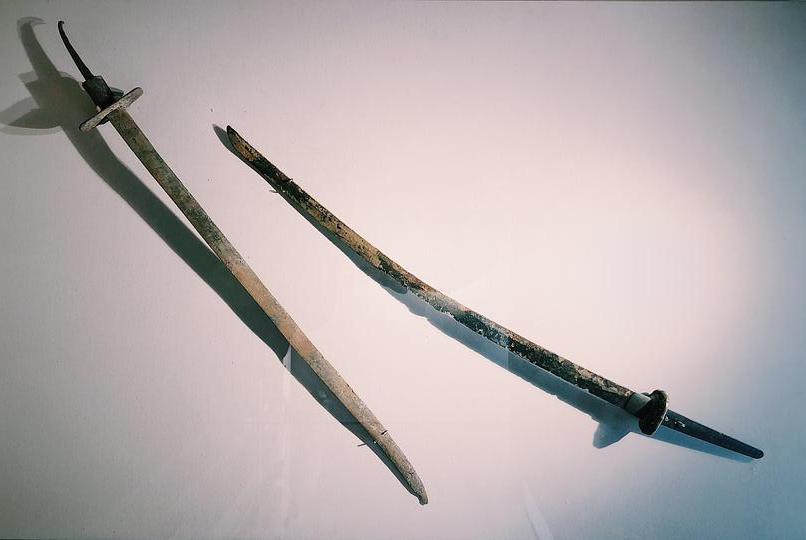
The Wodao (倭刀) is one of the most interesting examples of the interaction between Chinese and Japanese sword traditions. Associated particularly with the Ming Dynasty, the Wodao was a long, single-edged sword influenced by Japanese sword forms and adapted for use in China.
Unlike the straight double-edged jian, the Wodao belongs to the broader family of Chinese dao swords. Its long blade, slight curve, and two-handed handling give it a distinctive appearance that can remind modern collectors of Japanese tachi or other long Japanese swords.
But what exactly was the Wodao? Where did it come from, and how was it used?
This guide explores the history, design, size, use, and Japanese influence of the Wodao sword.
What Is a Wodao?
A Wodao is a traditional Chinese single-edged sword associated primarily with the Ming Dynasty. The Chinese name 倭刀 can be translated literally as a "Japanese sword" or "sword associated with the Japanese," reflecting the close connection between this weapon and Japanese sword forms.
The term does not simply mean a Japanese sword imported into China. In the Ming period, Chinese military forces studied Japanese weapons and swordsmanship and incorporated some of their characteristics into Chinese military practice.
This interaction was particularly important during the conflicts with the Wokou, commonly described in historical sources as Japanese pirates, although these groups included people of different backgrounds.
The resulting Chinese sword forms are an important part of the history of the Wodao.
A Brief History of the Wodao
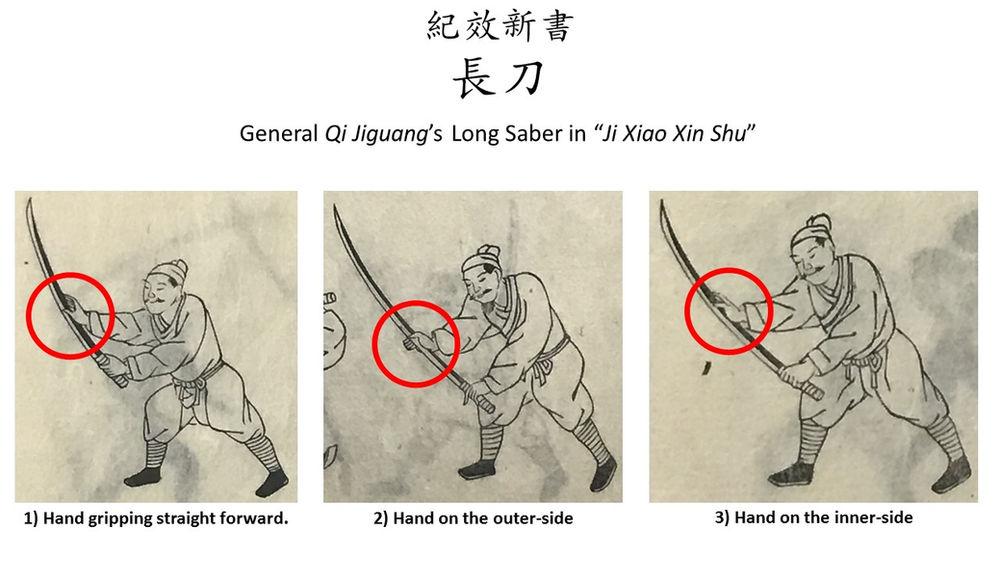
The history of the Wodao is closely connected with the Ming Dynasty (1368–1644) and the coastal conflicts of the sixteenth century.
During this period, Ming China faced repeated attacks from Wokou groups along the southeastern coast. Ming general Qi Jiguang (1528–1588) studied the weapons and fighting methods used by these opponents and introduced changes to the equipment and training of his troops.
One important development was the adoption and adaptation of long Japanese-style swords.
Qi Jiguang documented military swordsmanship and weapons in his famous military manual, Jixiao Xinshu (紀效新書), or New Treatise on Military Efficiency. The work contains detailed discussions of military training, weapons, and sword techniques.
Research into different editions of Jixiao Xinshu shows that Chinese military sword forms incorporated characteristics associated with Japanese swords, including a single-edged blade, a relatively long cutting edge, and a slight curve.
This makes the Wodao an excellent example of how sword design and martial techniques could move between cultures through warfare and contact.
Why Did Chinese Warriors Adopt Japanese-Style Swords?
The adoption of Japanese-style swords was not simply a matter of copying another country's weapon.
Military commanders were primarily interested in practical battlefield advantages.
Japanese swords used by Wokou fighters were noted for their long blades and effective cutting ability. Ming commanders studied these weapons and the techniques used to wield them.
Qi Jiguang subsequently developed organized training methods for his troops. Japanese-style swordsmanship became part of a broader military system that also included spears, shields, firearms, and other weapons.
This is important because the history of the Wodao is not only about the shape of a sword. It is also about the exchange of weapons, tactics, and martial knowledge between China and Japan during the Ming period.
Wodao Design and Blade Characteristics
The Wodao has several characteristics that distinguish it from many other traditional Chinese swords.
Single-Edged Blade
Unlike the traditional Chinese jian, which is normally double-edged and straight, the Wodao has a single cutting edge.
This places it within the dao family of Chinese swords.
Slightly Curved Blade
The Wodao generally has a relatively modest curve rather than the dramatic curvature found on some other sabers.
The combination of a long blade and slight curvature gives the sword an appearance that is visually similar to several Japanese sword types.
Long Blade
Historical descriptions and surviving examples vary in size, so there is no single standard Wodao measurement.
Some surviving examples are associated with blades around 80 cm, while historical long-sword forms connected with Ming military practice could be considerably longer.
For this reason, it is better to think of Wodao as a category of Japanese-influenced Chinese long swords rather than a weapon with one fixed specification.
Two-Handed Handling
Long Wodao-type swords were associated with two-handed use.
The longer handle provided additional control and leverage, while the long blade gave the weapon considerable reach.
This also explains why Wodao should not simply be treated as a longer version of an ordinary Chinese dao.
How Was the Wodao Used?
The Wodao was primarily associated with military swordsmanship rather than civilian sword carrying.
Its long blade and two-handed handling made it suitable for powerful cutting techniques and gave the user greater reach than a shorter saber.
Historical Chinese military manuals show that swordsmanship during the Ming period was closely connected with organized drills and battlefield formations.
The sword was therefore part of a larger combat system rather than an isolated weapon.
The emphasis was on practical training, coordinated movement, speed, and effective use against opponents.
Wodao and Japanese Swords
One of the most interesting questions surrounding the Wodao is its relationship with Japanese swords.
The resemblance is easy to see.
Both Wodao and several Japanese sword types can feature:
A single-edged blade
A relatively long blade
A curved profile
Two-handed handling
A design optimized for cutting
A long grip relative to some Chinese dao
These similarities are not accidental.
Research into Ming military sources indicates that Chinese military practitioners actively studied Japanese sword characteristics and incorporated some of them into their own weapons and training systems.
However, it is misleading to say that the Wodao simply was a Japanese sword.
The Wodao should instead be understood as part of the Chinese adaptation and development of Japanese-influenced sword forms during the Ming period.
Wodao vs Tachi
The Wodao is sometimes compared with the Japanese tachi because the two swords can look remarkably similar.
Both can have long, curved, single-edged blades and are associated with two-handed swordsmanship.
However, they developed within different military and cultural environments.
The tachi developed as part of the Japanese sword tradition, while the Wodao is associated with Chinese military use and the Ming-era exchange of weapons and techniques between China and Japan.
Therefore, the two swords should not be treated as identical weapons.
Key Differences
| Feature | Wodao | Tachi |
|---|---|---|
| Origin | China | Japan |
| Historical association | Ming Dynasty | Medieval Japan |
| Blade | Single-edged | Single-edged |
| Shape | Generally slightly curved | Curved |
| Handling | Often two-handed | Two-handed |
| Cultural context | Chinese military sword tradition | Japanese samurai sword tradition |
| Japanese influence | Significant | Native Japanese development |
The similarities between the two make the comparison useful, but their historical contexts are different.
Wodao vs Katana
The Wodao is also sometimes compared with the katana.
This comparison can be useful for understanding the basic shape, but the two should not be confused.
The katana is a later and highly recognizable form of Japanese sword, while Wodao refers to Chinese sword forms associated with Japanese-style weapons during the Ming and later periods.
The historical development of Japanese swords is much broader than the Wodao story.
If you are interested in Japanese sword construction, it is therefore better to study the Wodao alongside other Chinese dao and Japanese sword types rather than treating it as an early version of the katana.
Why Is the Wodao Important in Chinese Sword History?
The Wodao is important because it demonstrates that sword development was not isolated within national borders.
During the Ming Dynasty, China and Japan interacted through trade, warfare, piracy, and cultural exchange. Weapons were observed, copied, modified, and incorporated into new military systems.
The Wodao represents one of these moments of technological and martial exchange.
It also shows that traditional Chinese sword history includes much more than the famous jian.
Chinese sword traditions include many different types of dao and long swords, each developed for different purposes and historical environments.
Wodao Compared With Other Chinese Swords
The Wodao is particularly interesting when compared with other traditional Chinese swords.
Wodao vs Jian
The jian is usually a straight, double-edged sword.
The Wodao is generally longer, single-edged, and slightly curved.
The two therefore represent very different approaches to Chinese sword design.
Wodao vs Chinese Dao
The Wodao belongs to the broader dao tradition of single-edged Chinese swords.
However, its long blade and Japanese influence make it visually and historically distinct from many shorter Chinese sabers.
Wodao vs Miaodao
Wodao and miaodao are sometimes grouped together because both are associated with long, two-handed Chinese sabers.
However, the terminology used for historical Chinese long swords can vary between periods and sources.
It is therefore better not to assume that every long two-handed Chinese saber was called a Wodao.
Is the Wodao Still Made Today?
Yes.
Modern sword makers produce Wodao-inspired swords for collectors, martial arts practitioners, historical enthusiasts, and decorative purposes.
Because surviving historical examples are relatively uncommon and terminology varies across historical sources, modern Wodao swords can differ considerably in:
Blade length
Blade curvature
Handle length
Weight
Fittings
Scabbard design
Steel type
Heat treatment
Overall construction
For collectors, it is therefore important to check the actual specifications of a sword rather than relying only on the name "Wodao."
What to Look for When Buying a Wodao
If you are considering a modern Wodao sword, pay attention to several basic details.
1. Blade Material
Check what type of steel is used and whether the manufacturer provides clear information about the blade.
2. Construction
For a functional sword, construction is more important than appearance alone. A properly constructed tang and secure mounting are essential.
3. Blade Dimensions
Look at the actual blade length, overall length, thickness, and weight.
A Wodao can be substantially longer than many ordinary Chinese dao, so dimensions have a major effect on handling.
4. Purpose
Decide whether you want the sword for:
Historical collecting
Display
Martial arts training
Reenactment
General sword collecting
A decorative sword and a sword intended for controlled martial arts practice may require very different specifications.
5. Historical Style
If historical appearance matters to you, compare the fittings, blade shape, handle, and scabbard with documented Ming-era examples rather than choosing a sword based only on marketing terms.
Why Collectors Find the Wodao Fascinating
The Wodao has a unique position in Asian sword history.
It combines elements of Chinese and Japanese martial traditions while reflecting a specific period of military change.
For collectors, this makes it more than simply a long curved sword.
It represents a period when Chinese military leaders studied foreign weapons and adapted useful ideas to their own battlefield systems.
That combination of Chinese craftsmanship, Japanese influence, and Ming military history is what makes the Wodao particularly interesting.
Frequently Asked Questions About Wodao
What is a Wodao sword?
A Wodao is a Chinese single-edged sword associated with the Ming Dynasty and influenced by Japanese sword forms. It is generally characterized by a long blade, slight curvature, and two-handed use.
What does Wodao mean?
Wodao (倭刀) literally refers to a "Japanese sword" or sword associated with the Japanese. In historical Chinese sources, the term can refer to Japanese swords as well as Chinese swords influenced by Japanese forms.
Is Wodao a Chinese or Japanese sword?
The historical term has a close connection with Japanese swords, but the Wodao discussed in the context of Ming military history is associated with Chinese use and adaptation of Japanese-style swords.
Was Wodao used by Qi Jiguang?
Japanese-style long swords and swordsmanship were incorporated into the military system associated with Qi Jiguang. His Jixiao Xinshu is an important historical source for understanding this process.
Is Wodao the same as a katana?
No. Although Wodao and katana can share a single-edged curved blade, they belong to different historical traditions. Wodao is associated with Ming Chinese military practice, while the katana is a Japanese sword type with its own later development.
Is Wodao the same as a tachi?
No. Wodao and tachi have similarities in blade shape and handling, but they developed in different historical and cultural contexts.
How long is a Wodao sword?
There is no single standard length. Historical and surviving examples vary, with some examples having blades around 80 cm, while other long Chinese swords associated with this tradition could be significantly longer.
Was the Wodao used with one hand or two hands?
Long Wodao-type swords were generally associated with two-handed handling. The long grip and blade provided leverage and reach for cutting techniques.
Is Wodao still used today?
Modern Wodao-style swords are available for collectors, martial arts practice, historical research, reenactment, and display. Modern examples can differ significantly from historical originals.
What is the difference between Wodao and Jian?
The jian is normally a straight, double-edged Chinese sword. The Wodao is generally a long, single-edged sword with a slight curve and strong Japanese influence.
Final Thoughts
The Wodao is one of the clearest examples of cultural exchange in Asian sword history.
Developed and used in the context of Ming China's military encounters with Japanese-influenced swordsmanship, it combines a Chinese military setting with characteristics associated with Japanese swords.
Its long, slightly curved, single-edged blade makes it visually distinctive, while its history connects Chinese swordsmanship with one of the most important periods of military exchange between China and Japan.
For anyone interested in Chinese swords, Chinese dao, Japanese swords, or Asian sword history, the Wodao is well worth studying.
If you are looking for a Wodao-inspired sword for collecting or martial arts practice, focus on the actual blade dimensions, construction, materials, and intended use rather than the name alone.
Explore More Traditional Swords
Interested in traditional Chinese and Japanese swords? Explore HanBon Forge's selection of Chinese swords, Japanese swords, custom swords, and other traditional sword designs.
For a sword built around your preferred blade length, steel, fittings, and overall style, you can also explore our custom sword options.