Ancient Chinese Weapons: 10 Powerful Weapons in Chinese History

The Most Powerful Ancient Chinese Weapons: A Guide to China's Historic Arms
Ancient China developed one of the world's longest and most diverse weapon traditions. Over thousands of years, Chinese armies used a wide range of weapons designed for different battlefield roles, from close combat and cavalry warfare to long-range attacks and large infantry formations.
When people talk about ancient Chinese weapons, swords are often the first objects that come to mind. However, the history of Chinese warfare included far more than the famous jian and dao. Spears, halberds, dagger-axes, crossbows, heavy maces and other weapons all played important roles during different periods of Chinese history.
Some of these weapons were designed for reach and formation fighting. Others emphasized striking power, cutting ability, or the ability to attack from a distance.
Rather than asking which weapon was simply the “deadliest,” it is more useful to understand how different ancient Chinese weapons were designed and used. A weapon that was effective in a cavalry formation might not have been the best choice for an individual fighter, while a weapon designed for long-range warfare served a completely different purpose from a close-combat sword.
This guide explores some of the most powerful and historically important traditional Chinese weapons, including the mace, steel whip, crossbow, battle axe, halberd, dagger-axe, spear, jian and dao.

Ancient Chinese Weapons and the Changing Nature of Warfare
The development of weapons in ancient China was closely connected with changes in technology, military organization and battlefield tactics.
Early Chinese armies relied heavily on weapons made from bronze. Over time, advances in metallurgy allowed iron and steel weapons to become increasingly important. This transition made it possible to produce stronger and more varied weapons, particularly during the Qin and Han periods.
Ancient Chinese armies used a combination of:
- Long-range weapons such as bows and crossbows
- Long-handled weapons such as spears and halberds
- Heavy striking weapons such as maces and clubs
- Cutting weapons such as axes and dao
- Double-edged swords such as the jian
No single weapon dominated every battlefield. Military effectiveness depended on training, formation, armor, terrain and the tactical situation.
For this reason, the history of Chinese weapons is best understood as the development of a complete military system rather than a collection of individual weapons.
1. The Mace: A Heavy Ancient Chinese Striking Weapon
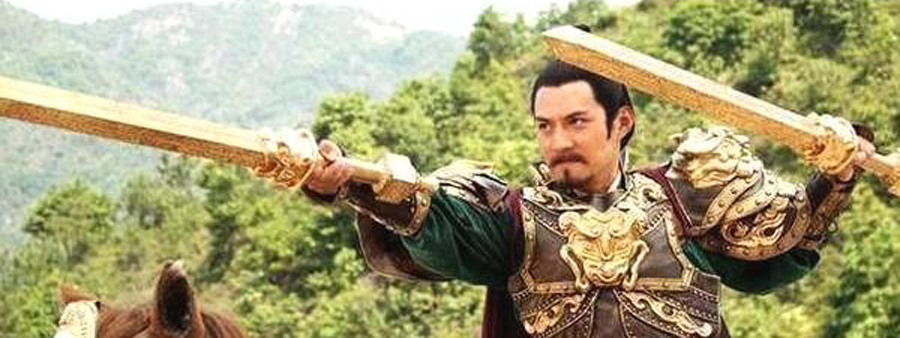
The mace was one of the most straightforward types of heavy striking weapons. Instead of relying on a sharp cutting edge, a mace concentrated force through the impact of its heavy head.
Heavy striking weapons could be useful against opponents protected by armor because they relied primarily on impact rather than slicing through a target.
The exact design of mace-like weapons varied throughout history. Some featured solid metal heads, while others used flanged or shaped striking surfaces. Their effectiveness depended on weight, balance, construction and the skill of the user.
Because heavy weapons require considerable control, weight alone was not necessarily an advantage. A weapon that was too heavy could become difficult to handle, especially during extended combat.
The mace represents an important category of ancient Chinese melee weapons: weapons designed to deliver powerful impact rather than relying on a sharpened blade.
2. Steel Whip: The Rigid Chinese Whip Weapon
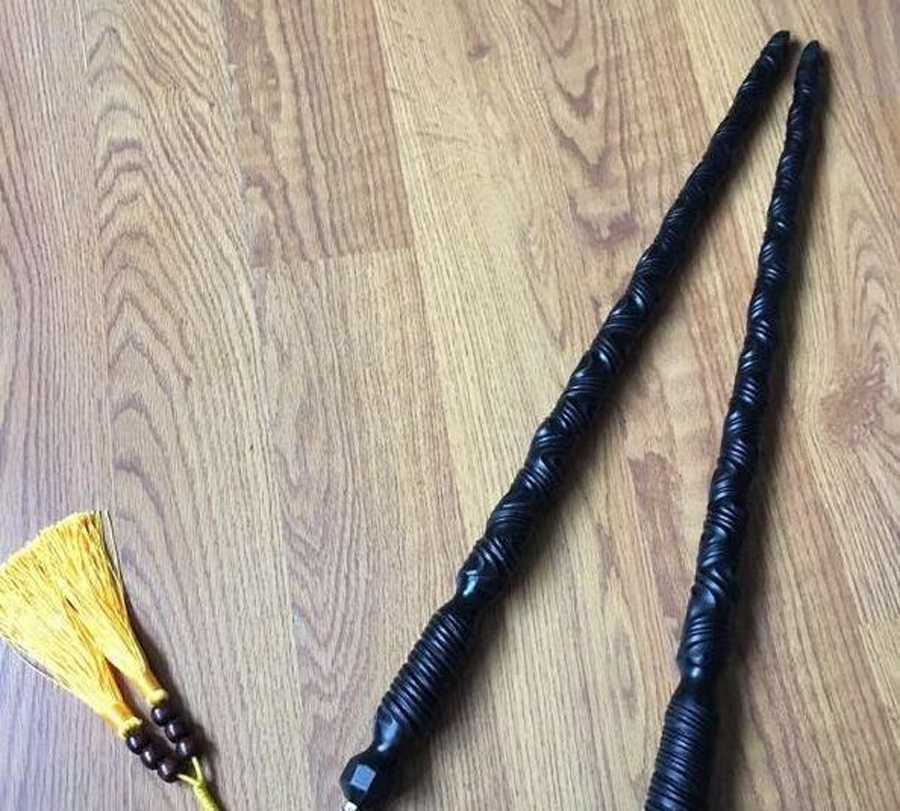
The term steel whip can be confusing because it does not refer to a flexible whip made from rope or leather.
In traditional Chinese weapon terminology, the rigid whip weapon, often associated with the Chinese bian, was a solid or segmented metal weapon designed for striking.
Its construction could vary, but rigid whip weapons generally relied on impact and could be used with different striking movements.
The steel whip became part of the broader tradition of Chinese blunt and impact weapons. These weapons differed significantly from swords because their primary function was not based on maintaining a sharp edge.
For collectors and martial arts enthusiasts, it is important to distinguish between a rigid steel whip weapon and the flexible whip often imagined in popular culture.
3. The Crossbow: One of Ancient China's Most Important Weapons
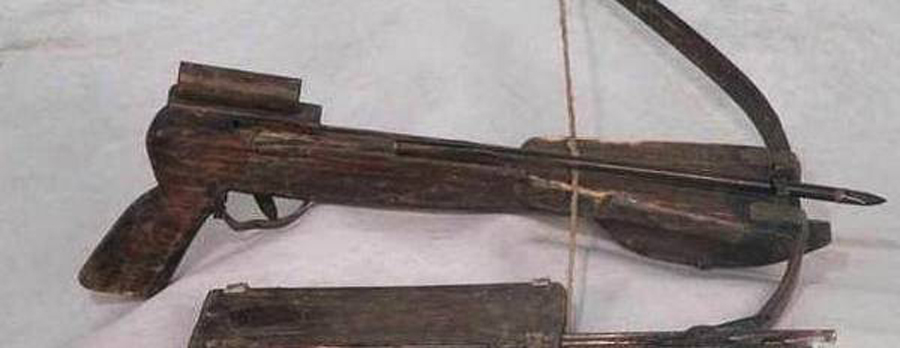
Although it was not a close-combat weapon, the crossbow was one of the most important weapons in ancient Chinese military history.
Chinese armies used bows and crossbows for long-range warfare. The crossbow allowed soldiers to launch projectiles at a distance and became an important part of organized military formations.
Crossbows were particularly significant because they could be incorporated into large armies and coordinated battlefield tactics.
Different periods produced different crossbow designs, and improvements in materials and mechanical construction influenced their development.
In ancient warfare, a well-organized force equipped with long-range weapons could influence the battlefield before close combat even began.
The importance of the crossbow demonstrates that the most effective weapon was not always the one used at close range. Range, formation and military organization could be just as important as individual striking power.
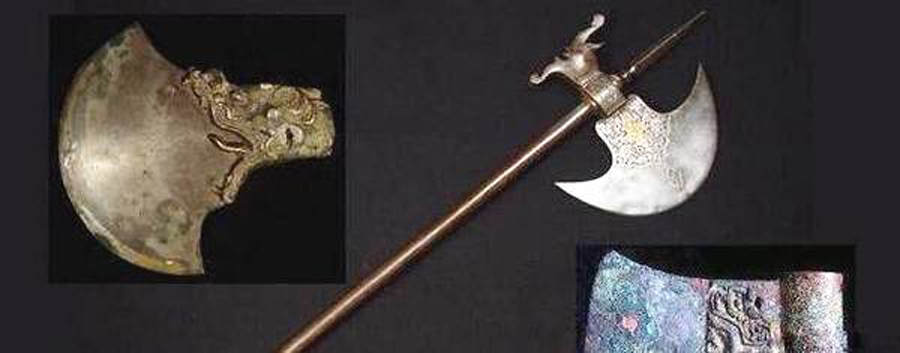
4. The Battle Axe: A Powerful Chopping Weapon
The battle axe was one of the oldest categories of weapons used in China.
Ancient Chinese axes varied considerably in size and purpose. Some were relatively small and practical for combat, while larger ceremonial or military axes carried symbolic as well as practical importance.
An axe concentrates force along a relatively narrow edge, making it fundamentally different from a sword. Its blade geometry emphasizes chopping and impact.
The Chinese fu and related axe forms appeared in different historical periods and could serve military, ceremonial or symbolic purposes.
Heavy axes were not always easy to use in the same way as lighter swords or spears. Their design involved a trade-off between striking power, reach and maneuverability.
For this reason, the battle axe remains one of the most visually impressive examples of an ancient Chinese weapon.
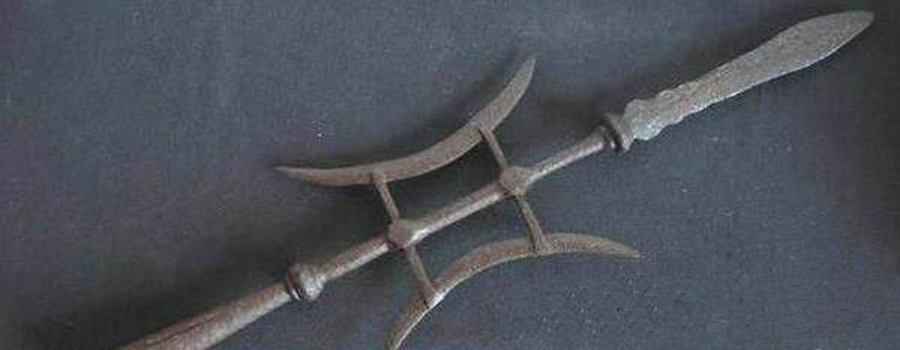
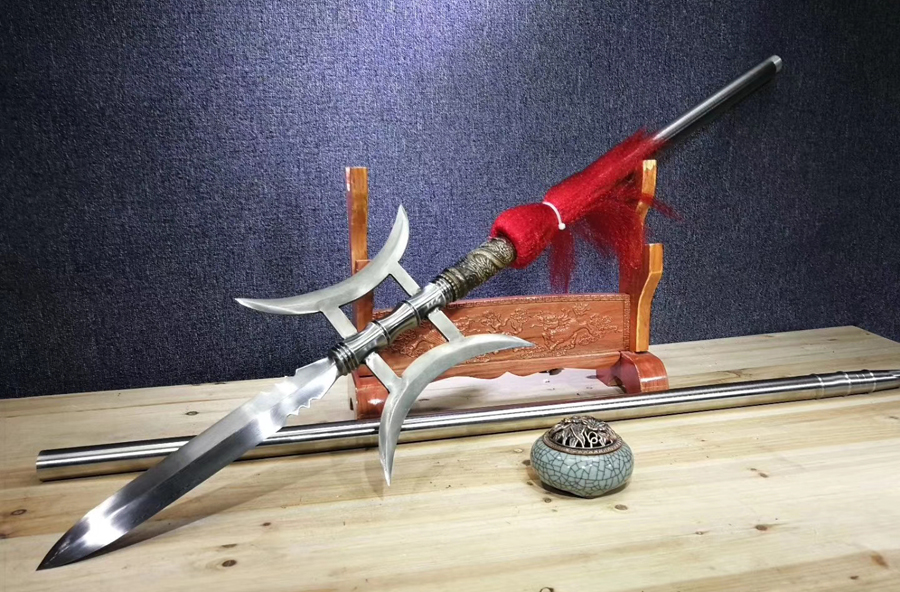
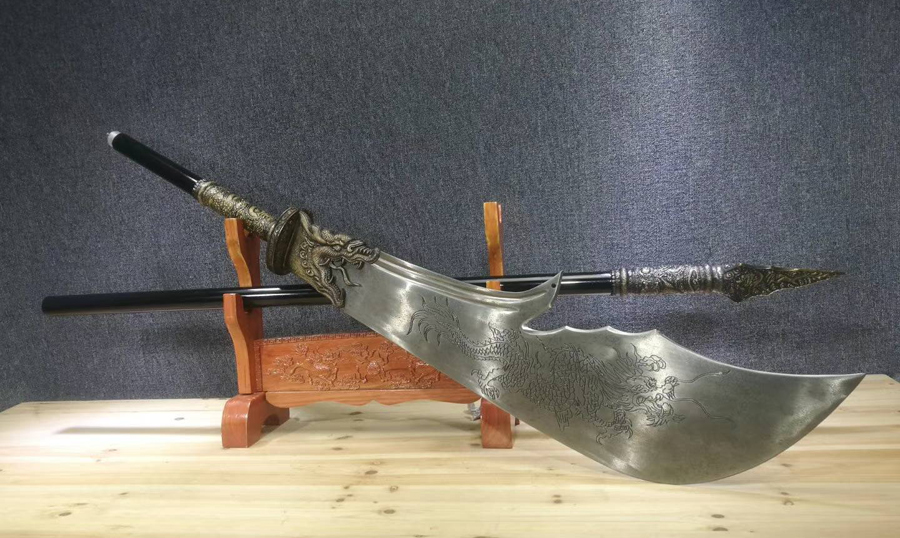
5. The Halberd: A Versatile Chinese Polearm
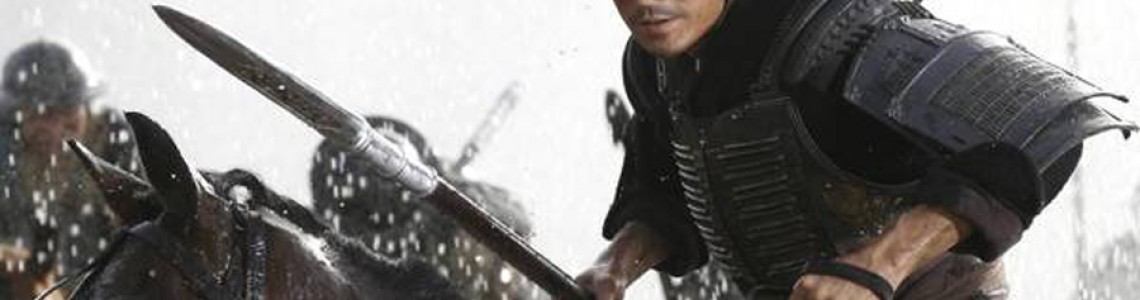
The halberd was one of the most important long-handled weapons in ancient Chinese warfare.
Chinese polearms developed into a wide variety of forms. One of the most famous was the ji, a weapon that combined characteristics associated with the spear and the dagger-axe.
This combination gave the weapon a versatile design. Depending on the specific form, a ji could incorporate elements intended for thrusting and other forms of attack.
The length of a polearm also gave the user an important advantage: reach.
On an ancient battlefield, maintaining distance from an opponent could be extremely important. Long-handled weapons allowed soldiers to attack while remaining farther away than they could with a sword.
The ji became an important part of Chinese military history and remains one of the most recognizable traditional Chinese polearms.
6. The Dagger-Axe (Ge): One of China's Most Distinctive Ancient Weapons
The dagger-axe, known as the ge (戈), is one of the most distinctive weapons developed in ancient China.
Unlike a conventional sword or spear, the dagger-axe had a blade mounted on a shaft in a way that created a unique profile.
The ge was especially important during the Bronze Age and appeared prominently in ancient Chinese warfare.
Its design differed from the spear. A spear primarily places its point directly toward the target, while the dagger-axe incorporated a blade positioned for different forms of engagement.
Over time, Chinese weapon technology continued to evolve, and the dagger-axe became historically important as one of the foundations for the development of more complex polearms.
Today, the ge is one of the easiest weapons to recognize in museums and archaeological collections because of its distinctive shape.
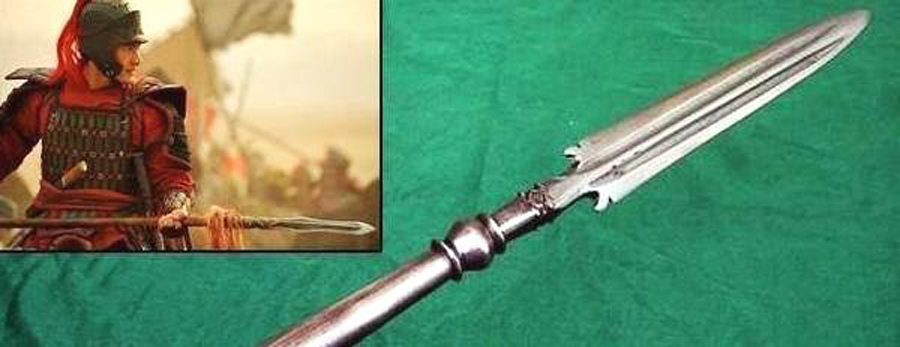
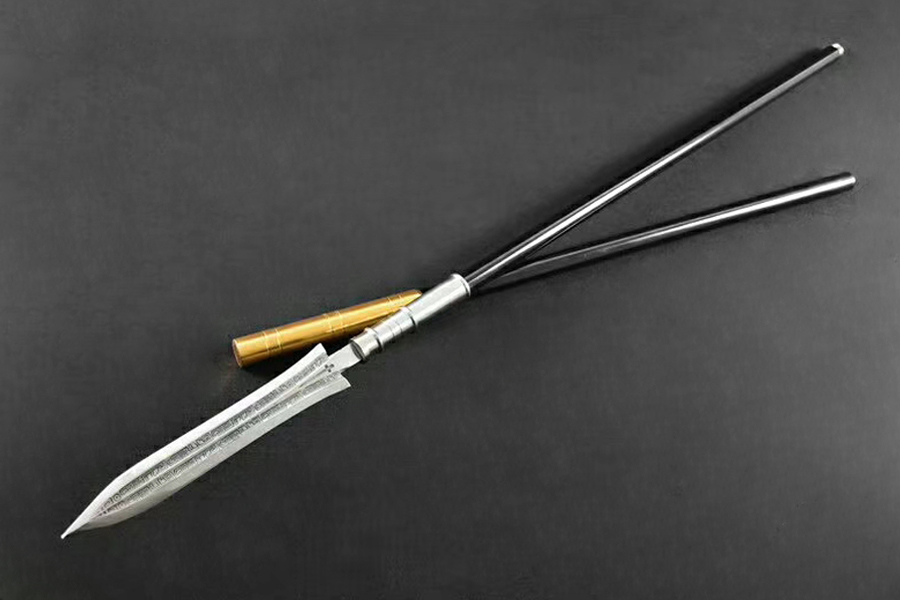
7. Qiang (槍): The Traditional Chinese Spear
The qiang (槍), or Chinese spear, was one of the most practical and widespread weapons in Chinese military history.
Spears were comparatively simple in concept but extremely useful. A long shaft provided reach, while the pointed head allowed the weapon to be used for thrusting.
The spear was particularly suitable for organized formations. Groups of soldiers armed with long weapons could create distance between themselves and opponents armed with shorter weapons.
Different types of Chinese spears developed throughout history, varying in length, blade shape and construction.
The importance of the qiang is reflected in the long history of Chinese martial arts, where the spear is often considered one of the most important traditional weapons.
Among all ancient Chinese melee weapons, the spear was one of the most practical because it combined reach, relative simplicity and versatility.
8. The Long Spear: Reach and Battlefield Formation
Longer forms of the spear played an important role in battlefield warfare.
A long spear could extend the user's reach significantly. This made it useful in organized infantry formations and, depending on the period and design, in situations involving cavalry and chariots.
The effectiveness of a long weapon depends heavily on formation and terrain. In open ground, reach can be a major advantage. In confined spaces, however, a very long weapon can become more difficult to maneuver.
This illustrates an important principle of weapon design: there is no single weapon that is ideal for every situation.
A short sword may be easier to carry and use at close range, while a long spear provides greater distance. Ancient armies therefore relied on a combination of weapons rather than a single universal design.
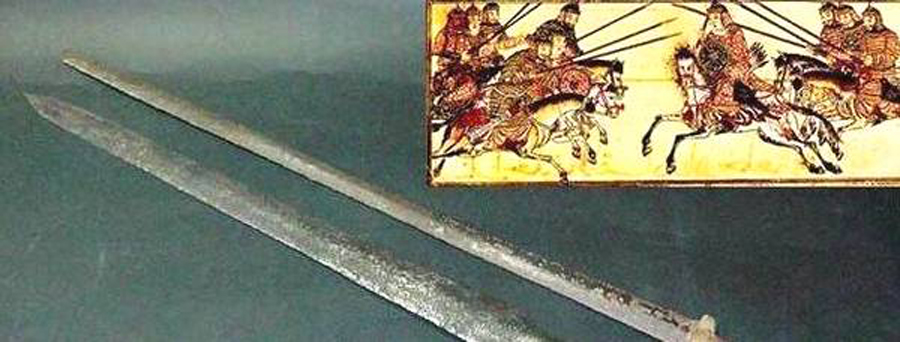
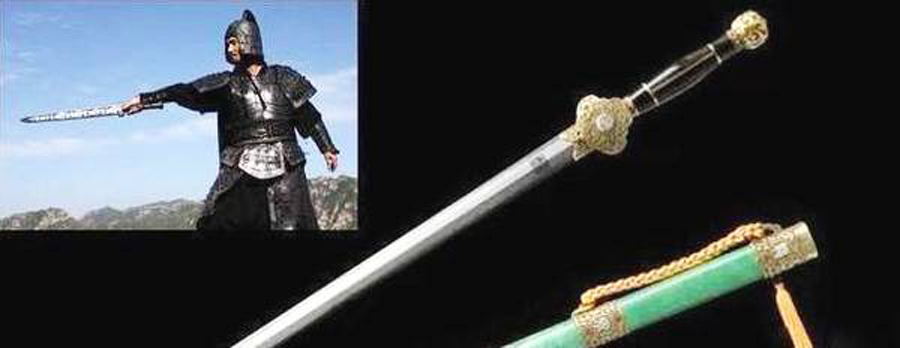
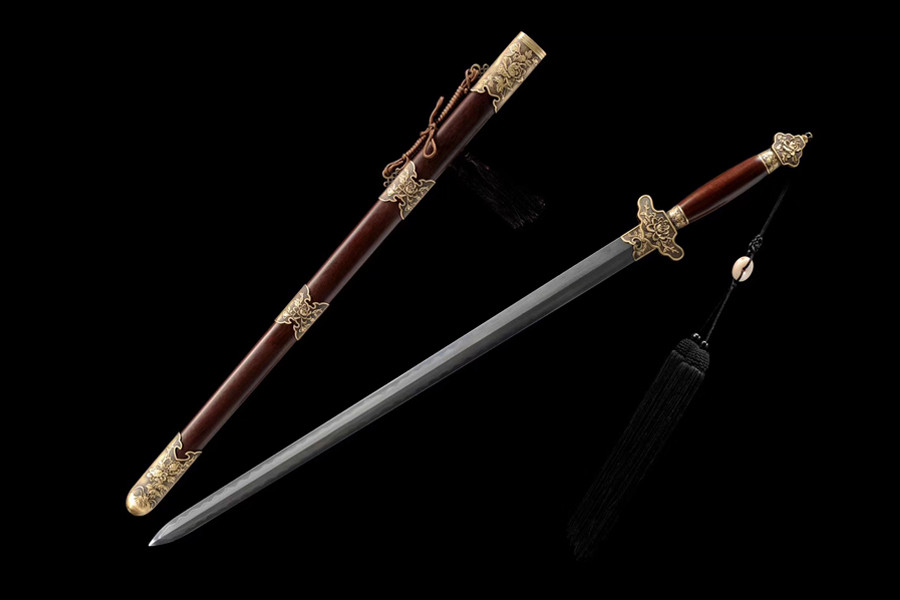
9. Jian (劍): The Traditional Chinese Double-Edged Sword
The jian (劍) is one of the most famous traditional Chinese swords.
A typical jian is characterized by a straight blade with two sharpened edges. Over the centuries, Chinese jian developed in different lengths and forms, reflecting changes in metallurgy, military requirements and swordmaking traditions.
The history of the Chinese jian extends back thousands of years. Early examples were made from bronze, while later developments in iron and steel technology changed the size, construction and performance of Chinese swords.
The jian was used as a military weapon during different periods, but it also developed a powerful cultural identity.
In Chinese tradition, the jian became associated with refinement, scholarship and martial skill. It is often described as one of the most elegant weapons in Chinese martial culture.
For collectors today, the Chinese jian sword remains one of the most important and recognizable forms of traditional Chinese weaponry.
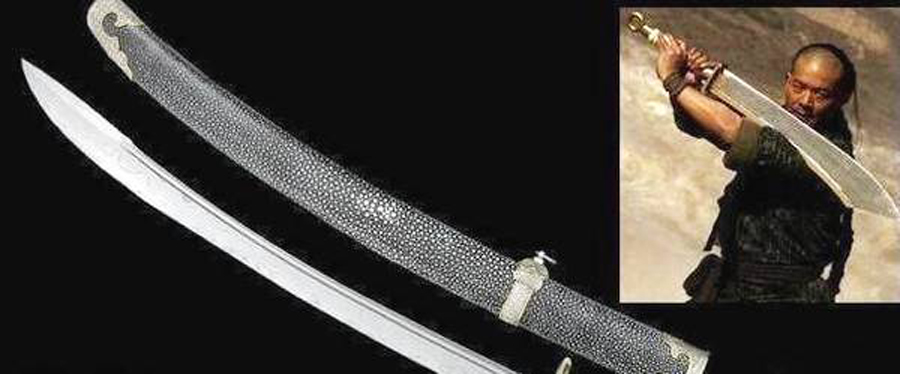
10. Dao (刀): The Single-Edged Chinese Sword
The dao (刀) is another major category of Chinese sword.
Unlike the double-edged jian, a dao generally has a single primary cutting edge. Different types of dao developed throughout Chinese history, ranging from relatively straight military blades to later curved sabers.
The single-edged design allowed the blade to develop around a primary cutting edge and a thicker spine.
The dao became increasingly important in Chinese military history and eventually developed into many regional and historical variations.
Examples of Chinese dao include:
- Han Dynasty ring-pommel dao
- Tang Dao
- Liuyedao
- Yanmaodao
- Various Qing Dynasty sabers
The dao is particularly important when studying the history of Asian swords because Chinese sword traditions influenced weapon development throughout East Asia.
Today, the Chinese dao sword remains one of the most popular categories among collectors and enthusiasts of traditional Chinese weapons.
Jian vs Dao: Two Major Chinese Sword Traditions
The jian and dao represent two of the most important traditions in Chinese sword history.
| Feature | Jian (劍) | Dao (刀) |
|---|---|---|
| Blade Edge | Generally double edged | Generally single edged |
| Blade Shape | Usually straight | Can be straight or curved |
| Historical Role | Military and cultural importance | Major military sword tradition |
| Modern Popularity | Chinese martial arts and sword collecting | Traditional martial arts and historical sword collecting |
Both weapons have a long history, and neither can be reduced to a single purpose. Their exact design changed significantly from one dynasty to another.
Understanding the difference between the Chinese jian and Chinese dao is an excellent starting point for anyone interested in traditional Chinese swords.
Which Ancient Chinese Weapon Was the Most Powerful?
There is no simple answer to this question.
The “most powerful” weapon depended on the situation.
A crossbow offered range. A spear provided reach. A halberd combined different combat functions. A mace emphasized impact, while the jian and dao provided portable bladed weapons for close combat.
The effectiveness of a weapon also depended on:
- The type of battlefield
- Military formation
- Armor
- Training
- Mobility
- Manufacturing technology
- The historical period
For this reason, it is misleading to declare one ancient Chinese weapon universally superior to all others.
The strength of ancient Chinese military systems came from the use of different weapons together.
Why Ancient Chinese Weapons Were So Diverse
Chinese history covers thousands of years and a vast geographical area. Military technology naturally changed during that time.
Weapons developed differently depending on the available materials, metallurgical knowledge, military organization and the types of conflicts being fought.
The transition from bronze to iron and steel, for example, changed the possibilities available to weapon makers.
Likewise, the development of cavalry influenced the importance of certain weapons, while the use of large infantry formations encouraged the widespread use of spears and other polearms.
Ancient Chinese weapons should therefore not be viewed as a single fixed collection of designs. They represent thousands of years of technological and military development.
Ancient Chinese Weapons and Modern Collecting
Today, traditional Chinese weapons remain popular among collectors, martial arts practitioners and people interested in Chinese history.
Modern reproductions make it possible to study the appearance and design of historical weapons, including Chinese jian, dao and other traditional swords.
When choosing a reproduction, it is useful to consider:
- Historical inspiration
- Blade material
- Construction quality
- Overall dimensions
- Fittings and design
- Whether the item is intended primarily for display or martial arts practice
For sword collectors, the jian and dao are particularly important because they represent two of the most influential blade traditions in Chinese history.
Final Thoughts: The Legacy of Ancient Chinese Weapons
The history of ancient Chinese weapons is far more diverse than a simple list of swords.
From the distinctive dagger-axe of the Bronze Age to the spear, halberd and crossbow of organized armies, Chinese warfare produced an extraordinary range of weapons.
Heavy weapons such as maces and axes emphasized striking power. Spears and polearms provided reach. Crossbows changed the nature of long-range warfare. The jian and dao developed into two of the most important sword traditions in Chinese history.
Each weapon reflected the needs of its time.
For modern enthusiasts, studying these traditional Chinese weapons provides a fascinating introduction to Chinese military history, metallurgy and martial culture.
The greatest lesson from the history of ancient Chinese weapons is that effective weapon design was never about a single “ultimate weapon.” It was about creating the right tool for the right battlefield role.
Frequently Asked Questions About Ancient Chinese Weapons
What were the most common ancient Chinese weapons?
Ancient Chinese armies used many different weapons, including spears, halberds, dagger-axes, crossbows, bows, swords and various heavy striking weapons. The importance of each weapon changed depending on the historical period and military system.
What is the most famous ancient Chinese sword?
The jian and dao are two of the most famous traditional Chinese swords. The jian is generally a straight double-edged sword, while the dao is generally a single-edged sword designed primarily around a main cutting edge.
What is a Chinese dagger-axe?
The Chinese dagger-axe, known as the ge (戈), was a distinctive ancient weapon with a blade mounted on a shaft. It was especially important during early periods of Chinese warfare and is commonly associated with Bronze Age military technology.
What is a ji in Chinese weapons?
The ji is a traditional Chinese polearm often described as a type of halberd. Historical forms varied, but the weapon combined features associated with long-handled thrusting and bladed weapons.
What is the difference between a jian and a dao?
A jian is generally a straight double-edged Chinese sword. A dao is generally a single-edged Chinese sword. Both developed in many forms throughout Chinese history.
Were crossbows important in ancient China?
Yes. Crossbows were an important part of ancient Chinese warfare and allowed armies to attack at a distance. They were used alongside other weapons such as spears, polearms and swords.
What was the most powerful ancient Chinese weapon?
There was no single weapon that was the most powerful in every situation. Crossbows provided range, spears provided reach, polearms offered versatility, and swords were effective portable weapons. The best choice depended on the battlefield and historical context.
Did ancient Chinese weapons use bronze or iron?
Both were used. Earlier weapons were commonly made from bronze, while iron and steel became increasingly important as metallurgy developed. The transition between materials took place gradually and varied across different historical periods.